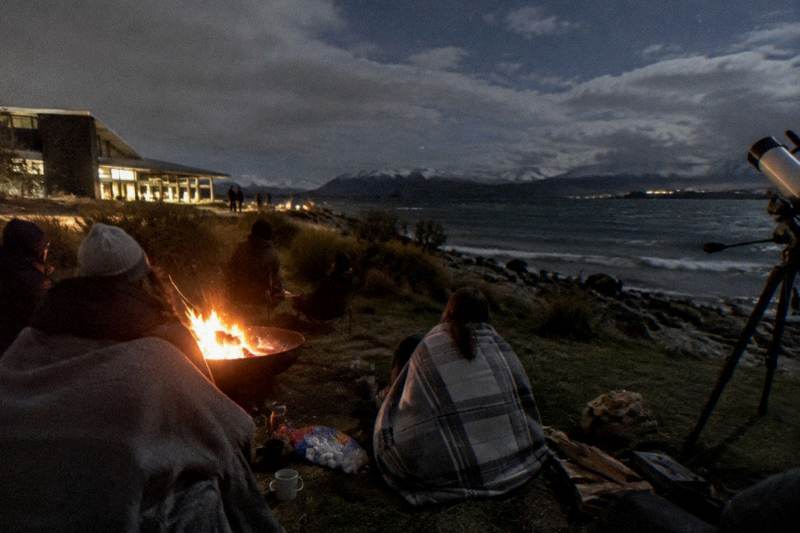
Moon Phase And Stargazing At Lake Tekapo: Which Nights To Book
The Moon decides how much of the Mackenzie night sky you actually see. This calendar tracks every new and full moon from November 2026 to October 2027, counts the moon-free dark hours each month offers, and shows which nights reward booking a stargazing tour.
Short answer
The darkest skies at Lake Tekapo fall within a few nights either side of each new moon. Between November 2026 and October 2027 the new moons run from 9 November 2026 to 30 October 2027, and the month with the most nights offering three or more moon-free dark hours is May 2027, with 21 of 31.
The Moon is the single biggest variable you can plan around at Lake Tekapo. Cloud comes and goes, but the lunar calendar is fixed years in advance, and it quietly decides whether a night shows you faint clusters and the glow of the Milky Way or only the handful of brightest stars. A new-moon night and a full-moon night over the Mackenzie Basin are, in practical terms, two different skies.
Every date, hour count and dusk time on this page comes from computed astronomical tables for the Tekapo lakefront: astronomical darkness means the Sun sits more than 18 degrees below the horizon, and a moon-free hour means the Moon is below the horizon during that dark hour. Nothing here promises a clear night. It tells you which nights have the raw darkness worth booking, so that when the forecast cooperates, you are standing in the right place at the right time.
How Does The Moon Phase Change Stargazing At Lake Tekapo?
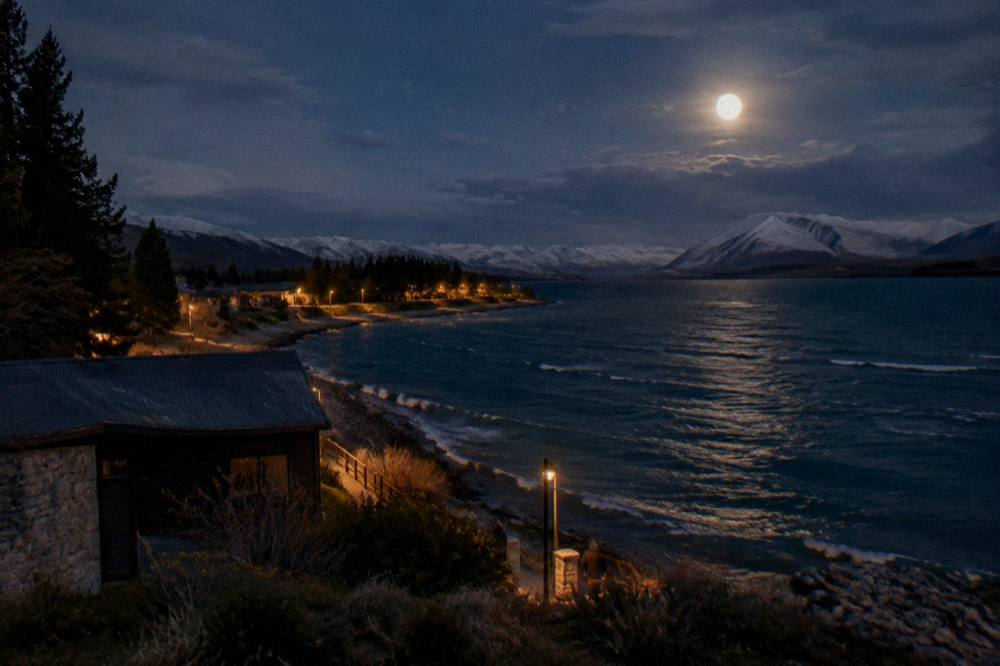
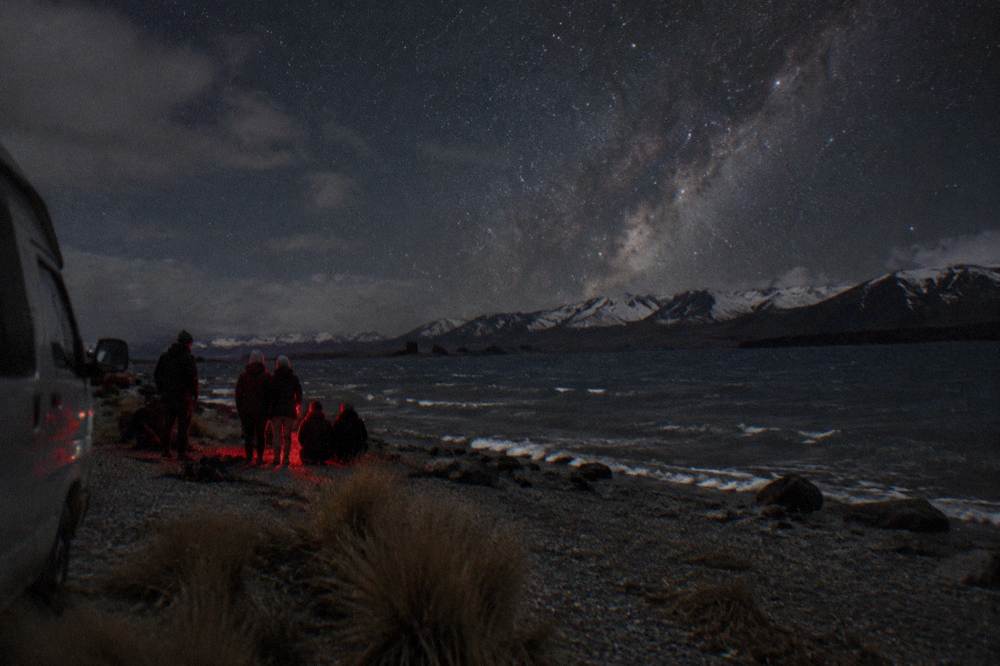
The Moon's phase dramatically changes what you see over Lake Tekapo: near a new moon the sky is at its darkest and the faint band of the Milky Way can dominate the view, while near a full moon the brightened sky washes out faint stars and leaves mostly bright stars and planets. Timing around the lunar cycle is the one planning lever that never changes with weather.
Think of the Moon as a dimmer switch on the entire sky. When it is below the horizon, or a thin crescent that has set early, the Mackenzie Basin's protected darkness does its full work: the Milky Way's glow, faint constellations, star clusters and, on a very good night, satellite glints and Zodiacal light become available to the naked eye. When a gibbous or full Moon is up, its light scatters through the atmosphere and lifts the sky background, so the faint material disappears and only the brighter objects survive. Telescopes still work on a moonlit night, and the Moon itself through a telescope is a genuine highlight, but the sky around it is a paler version of itself.
This is why the lunar calendar matters more at Tekapo than almost anywhere else in a traveller's plans. The reserve, the Aoraki Mackenzie International Dark Sky Reserve designated in 2012, exists because the region keeps its skies dark through district plan lighting rules. Human light is controlled here. The Moon is not, so it becomes the main source of sky brightness you are working with.
The practical rhythm is simple. Roughly once a month there is a new moon, and the nights within about three or four days either side of it are the darkest of that month. Two weeks later the full moon arrives and those nights are the brightest. In between, the Moon rises and sets at shifting times, so part of the night may be moon-free even when the phase is not ideal: a last-quarter moon, for example, rises late and leaves the evening hours dark. The tables further down this page turn that rhythm into specific dates and hour counts.
One more nuance worth holding onto: darkness itself has a season. Summer nights in New Zealand are short, so astronomical darkness starts very late, sometimes after 23:30, and lasts only a few hours. Winter nights are long and dark from early evening. The moon phase sets how much of that dark time is truly dark; the season sets how much dark time exists at all. Both tables on this page are needed to pick a night. To weigh season against moon phase in one place, the planning guide to timing a Lake Tekapo stargazing tour walks through the whole decision.
When Is The New Moon Over Lake Tekapo For The Darkest Nights?
The new moons over Lake Tekapo fall on 9 December 2026, then 8 January, 7 February, 8 March, 7 April, 6 May, 5 June, 4 July, 2 August, 1 September, 30 September and 30 October 2027, with the twin September dates opening and closing that month with a dark-sky window. Book the three or four nights either side of these dates for the darkest sky each month can offer.
The table below lists every new and full moon in the period, in local dates. If your trip dates are fixed, scan this first: knowing where your nights sit relative to the nearest new moon tells you more about what you will see than any other single fact you can gather before you fly.
| Month | New moon (darkest nights nearby) | Full moon (brightest nights) |
|---|---|---|
| November 2026 | 9 November 2026 | 25 November 2026 |
| December 2026 | 9 December 2026 | 24 December 2026 |
| January 2027 | 8 January 2027 | 23 January 2027 |
| February 2027 | 7 February 2027 | 21 February 2027 |
| March 2027 | 8 March 2027 | 22 March 2027 |
| April 2027 | 7 April 2027 | 21 April 2027 |
| May 2027 | 6 May 2027 | 20 May 2027 |
| June 2027 | 5 June 2027 | 19 June 2027 |
| July 2027 | 4 July 2027 | 19 July 2027 |
| August 2027 | 2 August 2027 | 17 August 2027 |
| September 2027 | 1 and 30 September 2027 | 16 September 2027 |
| October 2027 | 30 October 2027 | 16 October 2027 |
A note on how to read "nearby". The Moon does not switch off on new moon night and back on the next; it waxes and wanes. The night of the new moon itself, and a night or two on either side, are effectively moonless for most or all of the dark hours. By four or five nights out, a thin crescent is setting early enough that the first half of the night stays dark. In the other direction, a crescent that rises in the pre-dawn hours leaves the evening pristine. This is why a window, not a single date, is what you book around.
Note also what happens in late October 2027: the new moon on 30 October 2027 opens one more dark window as the nights shorten. Anyone planning a shoulder-season trip with flexible dates has real room to work with.
Once you have a moon window, the next question is how much usable dark time it actually contains, and that changes enormously with the season.
How Many Moon-Free Dark Hours Does Each Month Give At Lake Tekapo?
Astronomical darkness swings from 3.5 to 4 hours per night in December 2026, the shortest dark nights, to about 11.3 to 11.5 per night in June 2027, the longest. Counting nights with three or more moon-free dark hours, December 2026 offers 12 of 31, while May 2027 offers 21 of 31 and June 2027 gives 20 of 30. Autumn and winter multiply your chances; midsummer squeezes them.
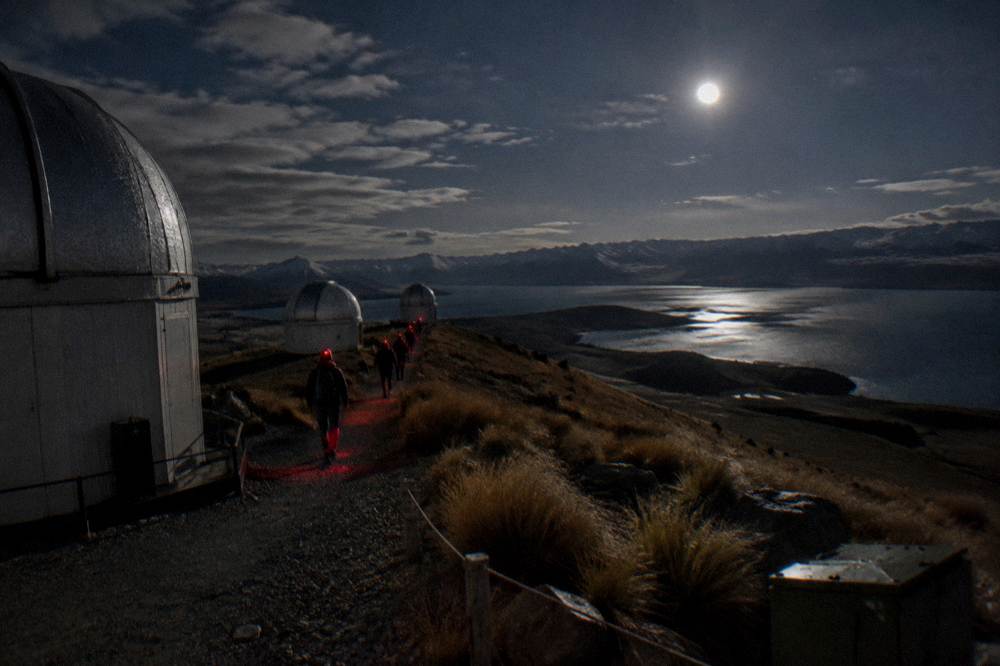
The table below is the core of this calendar. The final column counts the nights in each month where at least three fully dark, moon-free hours line up, which is a realistic minimum for a stargazing tour plus some naked-eye time around it.
| Month | Astronomical darkness per night | Nights with 3+ moon-free dark hours |
|---|---|---|
| November 2026 | 4.1 to 6 hours | 13 of 30 |
| December 2026 | 3.5 to 4 hours | 12 of 31 |
| January 2027 | 3.6 to 5.3 hours | 13 of 31 |
| February 2027 | 5.4 to 7.3 hours | 15 of 28 |
| March 2027 | 7.3 to 9.1 hours | 18 of 31 |
| April 2027 | 9.1 to 10.4 hours | 19 of 30 |
| May 2027 | 10.5 to 11.3 hours | 21 of 31 |
| June 2027 | 11.3 to 11.5 hours | 20 of 30 |
| July 2027 | 10.9 to 11.5 hours | 20 of 31 |
| August 2027 | 9.7 to 10.8 hours | 19 of 31 |
| September 2027 | 8.1 to 9.6 hours | 18 of 30 |
| October 2027 | 6.1 to 8 hours | 17 of 31 |
Two patterns deserve attention. The first is the seasonal one: the hours of darkness per night roughly triple from the December solstice to the June one, so the same new moon delivers far more usable sky in May than in December. The second is that the moon-free count does not track the dark hours exactly, because it also depends on where the new moon lands inside the month and how the lunar cycle slices the calendar. February 2027 has only 28 nights but still posts 15 of them with three or more moon-free dark hours.
For tour booking, this table answers the trip-shaping question. If you can travel in the New Zealand autumn or winter, roughly March through August 2027, most of the month is bookable from a darkness point of view, and you can afford to let weather, not the Moon, make the final call. If you are locked to a midsummer holiday in December or January, the moon-free nights are a scarce dozen or so per month, and aligning your Tekapo night with one of them is the difference between a deep-sky night and a bright-sky one.
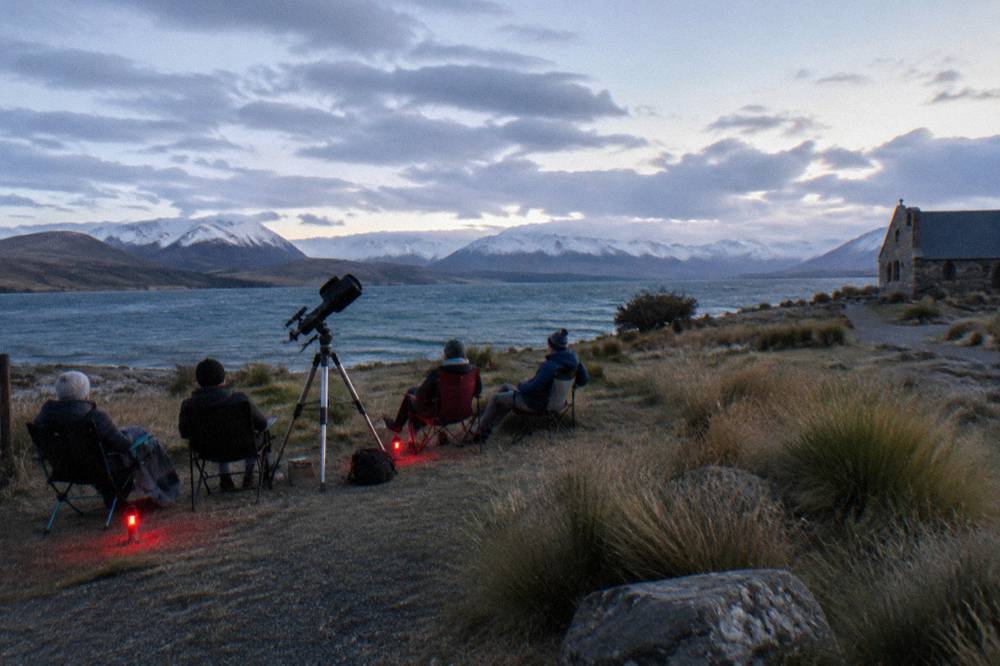
Dark Sky Project says winter months are often the clearest and darkest, which stacks the seasonal case further, though it is cold at night even in summer, and winter on the Mount John summit can bring snow. Anyone weighing the trade-off should read the season-by-season comparison in the winter versus summer stargazing guide.
What Time Does True Darkness Arrive Each Month At Lake Tekapo?
Astronomical darkness, the point when the Sun is more than 18 degrees below the horizon, starts as late as 23:26 to 23:54 local time in December 2026 and as early as 18:56 to 18:58 in June 2027. Daylight saving, which began on 27 September 2026 and runs until early April 2027, pushes summer start times even later on the clock. Book tour start times with this in mind.
The dusk range below shows the local clock time at which true darkness begins on the first and the last night of each month. Anything before that time is twilight, and twilight is not the deep-sky window.
| Month | Darkness starts (first to last night) | Character of the month |
|---|---|---|
| November 2026 | 22:22 to 23:24 | Late starts, short dark nights |
| December 2026 | 23:26 to 23:54 | Darkest sky arrives near midnight |
| January 2027 | 23:53 to 23:12 | Very late starts easing slowly |
| February 2027 | 23:10 to 22:13 | Evenings begin to open up |
| March 2027 | 22:11 to 21:11 | Noticeably earlier each week |
| April 2027 | 21:09 to 19:23 | Clocks end daylight saving in early April |
| May 2027 | 19:21 to 18:56 | Dark before dinner is finished |
| June 2027 | 18:56 to 18:58 | Earliest darkness of the year |
| July 2027 | 18:58 to 19:19 | Still early, slowly stretching |
| August 2027 | 19:19 to 19:49 | Winter dark hours easing |
| September 2027 | 19:50 to 21:26 | Evenings brighten quickly |
| October 2027 | 21:27 to 22:19 | Back to late starts |
The summer implications are worth spelling out. A family on a December holiday around the new moon of 9 December 2026 gets genuinely dark sky only in a window that begins near midnight and lasts under four hours. That can be a superb night if everyone can stay up for it, but it is not a relaxed after-dinner stroll. By June 2027 the same reserve is fully dark before 19:00, and a tour that starts in the early evening runs under a sky that stays dark for over eleven hours.
Winter has its own cost, of course: cold, and on the high Mount John summit, snow and wind exposure. The operators handle this differently. Dark Sky Project's Summit Experience loans an extreme cold weather jacket on the mountain, while its Crater Experience asks guests to layer their own warm clothing. Silver River's Alpine Stargazing Experience with a Guide also provides warm down jackets, per its own booking page. The full clothing picture, including what the Summit demands at 1,029 metres, is laid out in the what to wear guide.
This is also the moment to decide your night, and the Twizel Stargazing Tour with an Astronomer and Telescope, rated 5.0 across 77 reviews and from $67.00 per person, is a strong fit for an early winter darkness window: it meets in Twizel, runs 1 hour 15 minutes with a laser-guided tour and a powerful telescope, and its minimum age of 6 suits families. Read more on the Twizel stargazing tour page, and check availability once your dates line up with a dark window.
Darkness timing also interacts with the drive. At night the region's highways, SH8 and SH80, can carry black ice, frost, freezing fog and stock or wildlife in the cold months, so check conditions on the NZTA Journey Planner before committing to a late drive back from Twizel or Mount Cook.
Does A Full Moon Ruin A Lake Tekapo Stargazing Tour?
No, but it changes what you see. A full moon washes out faint stars and the Milky Way, so the deep faint-sky experience of a new moon night is gone, yet the Moon itself through a telescope is one of the best views in astronomy, and bright stars, planets and clusters still show well. The full moons run from 25 November 2026 through 16 October 2027, listed in full above.
If your travel dates land on a full moon, do not cancel. Reframe. Through a good telescope the lunar surface is startling at full phase: the terrain stands in high relief along the terminator at other phases, but full moon brings the whole disc into view at once, with ray systems around impact craters spread across the face. Several tours here carry serious instruments for exactly this. Chameleon Stargazing's shared tour, rated 4.9 across 789 reviews, from $73.00 per person, runs a 9.25 inch telescope plus a smart telescope, and its 90-minute format moves from about 30 minutes of naked-eye guiding into telescope time, with hot chocolate and marshmallows and a digital souvenir photo included. Its group max is 14 and minimum age 5.
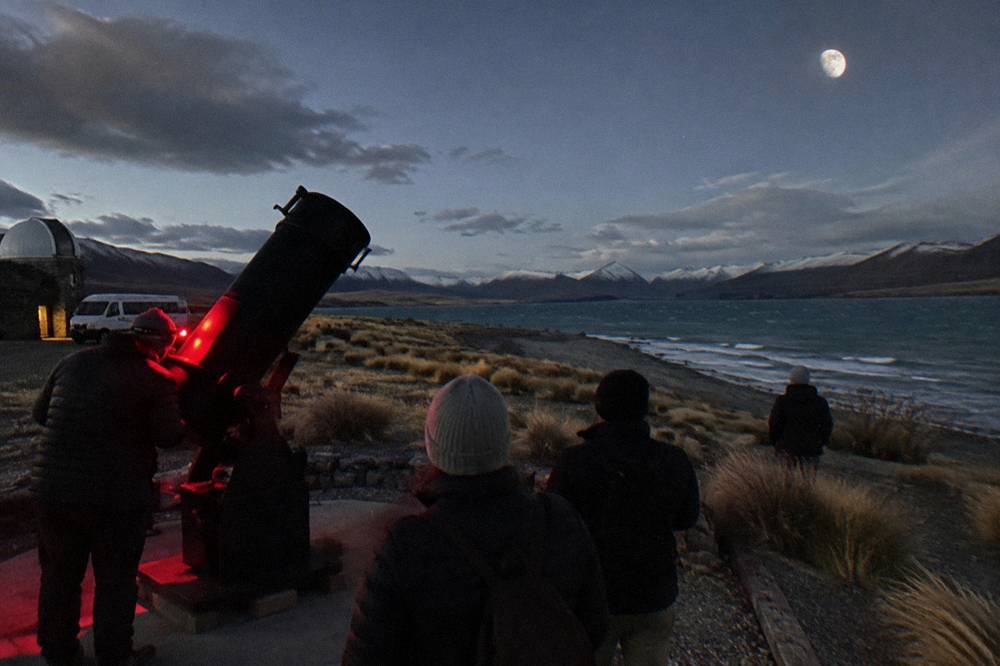
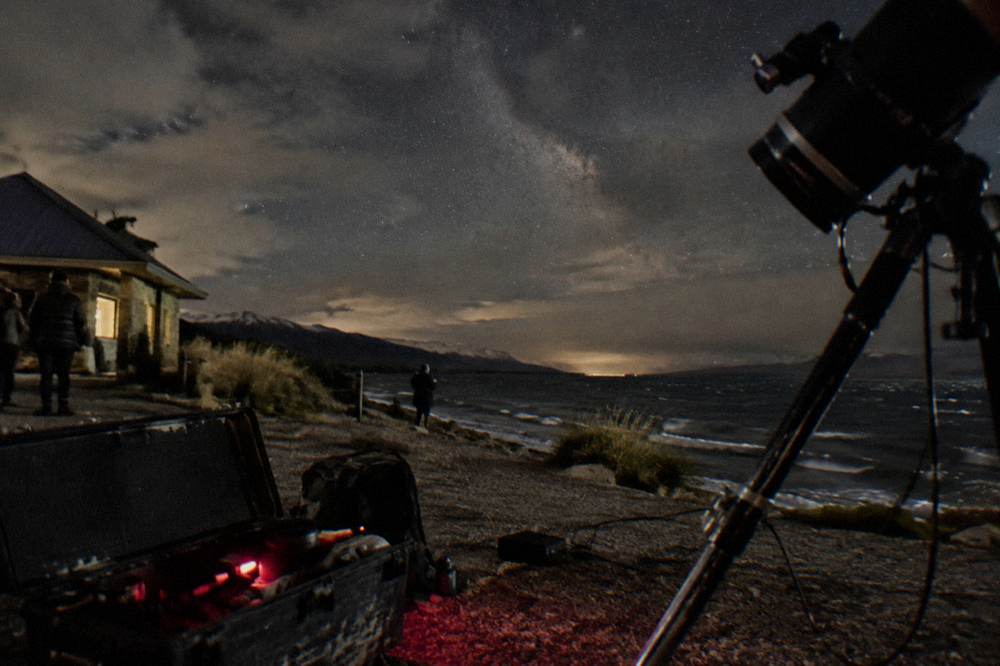
The honest trade-off is the Milky Way. On a moon-free night the band of the galaxy can arch overhead from the Mackenzie Basin's darkness; under a full moon it effectively vanishes. If seeing the Milky Way is the reason you came, the moon calendar matters more than anything else in your planning, and the deeper discussion is in the Milky Way stargazing guide, with the full-moon question examined in detail in can you see the Milky Way on a stargazing tour in a full moon.
There is a middle path worth knowing about: the crescent and quarter phases. A first-quarter moon sets around midnight, darkening the second half of the night; a last-quarter moon rises late, leaving the evening dark. A tour that starts early on a last-quarter night gets nearly new-moon darkness for its first hours. The moon-free hour counts in the monthly table already fold this in, which is why a month can post 15 or more bookable nights even though it has only one new moon.
Weather still outranks everything, and a full-moon clear night beats a new-moon cloudy one every time. How each operator handles cloud, refunds and reschedules differs tour by tour, and the weather and cloud cancellation guide covers those terms operator by operator.
Which Lake Tekapo Tours Suit A Bright Moon Night?
Under a gibbous or full moon, favour tours with strong telescopes and structured guiding: the Moon, planets and bright clusters are the targets, and aperture matters. From the tours covered here, the Mount Cook Stargazing Experience, from $56.00 per person, and the Ultimate Stargazing Experience, from $125.56 per person with a 16 inch telescope, both fit, as does the Crater Experience at Cowan's Observatory with its 14 inch telescopes.
The logic is simple. Naked-eye faint-sky viewing is what a bright moon takes away; telescope viewing of bright objects is what it barely touches. The Moon itself, Jupiter, Saturn, Mars when it is well placed, and bright clusters like the Jewel Box or Omega Centauri punch through moonlight comfortably in a decent instrument. So on a moonlit night you want the tours that centre the telescope, and you want to enjoy the Moon rather than fight it.
The Mount Cook option is a good example. The Mt Cook Stargazing Experience, from $56.00 per person, rated 4.8 across 17 reviews, meets at the Tasman Glacier Car Park in Mount Cook National Park, inside the same dark sky reserve, and runs 1 hour 15 minutes with high-quality telescopes for deep sky observation and a photo included. Mount Cook village is about 1 hour 15 minutes by road from Tekapo, so it suits a night when you are based in or near the national park, and there is no transfer from Tekapo implied. The Hermitage also runs its own Big Sky Stargazing in the national park as a neighbouring option to be aware of.
One caution on pricing comparisons: the cheapest outdoor night among the 12 tours covered here is a three-way tie at from $56.00 per person, held by the Alpine Stargazing Experience with a Guide, the Mt Cook Stargazing Experience and the Twizel Japanese-Language Zen Stargazing Experience. None of the three is "the" cheapest alone. The $34.70 Indoor Dark Sky Cultural Astronomy Experience is an indoor exhibit, weather independent and not an outdoor stargazing night, so it does not enter that comparison at all, though it is a fine cloudy-evening alternative in its own right, with a restored 125-year-old Brashear telescope on display and a maximum of 26 guests per session.
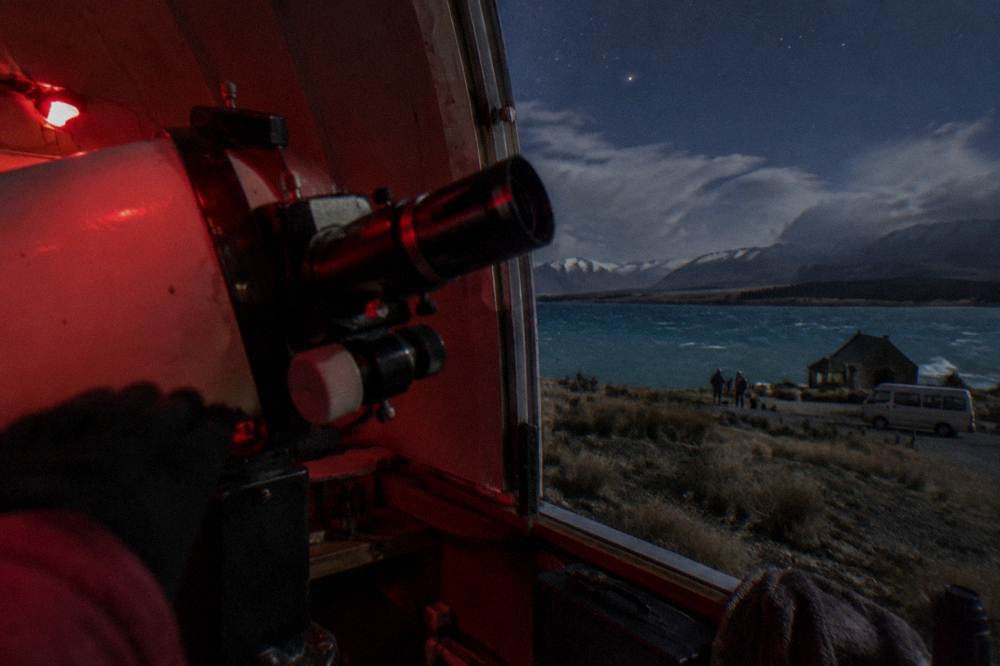
For moonlit nights specifically, the Crater Experience at Cowan's Observatory deserves a mention: 75 minutes, from $78.00 per person, rated 4.6 across 91 reviews, with 14 inch telescopes operated from purpose-built observation craters that shelter guests from wind and stray light at Cowan's Private Observatory, and a minimum age of 5 that admits younger children. Guests are told to layer warm clothing; jackets are not part of that tour. Dark Sky Project's own weather terms for its tours offer an indoor alternative, a reschedule, a voucher or a refund if outdoor stargazing is not possible, a policy that belongs to this operator alone.
Should You Book Around The Moon Or Around The Weather?
Book around the moon first, then let the weather decide the final night, and protect yourself with the cancellation terms. All twelve tours covered here state free cancellation up to 24 hours before the start for a full refund, so you can lock in a new-moon date months ahead and still walk away inside 24 hours if the forecast turns. The moon calendar is fixed; the cloud forecast is not.
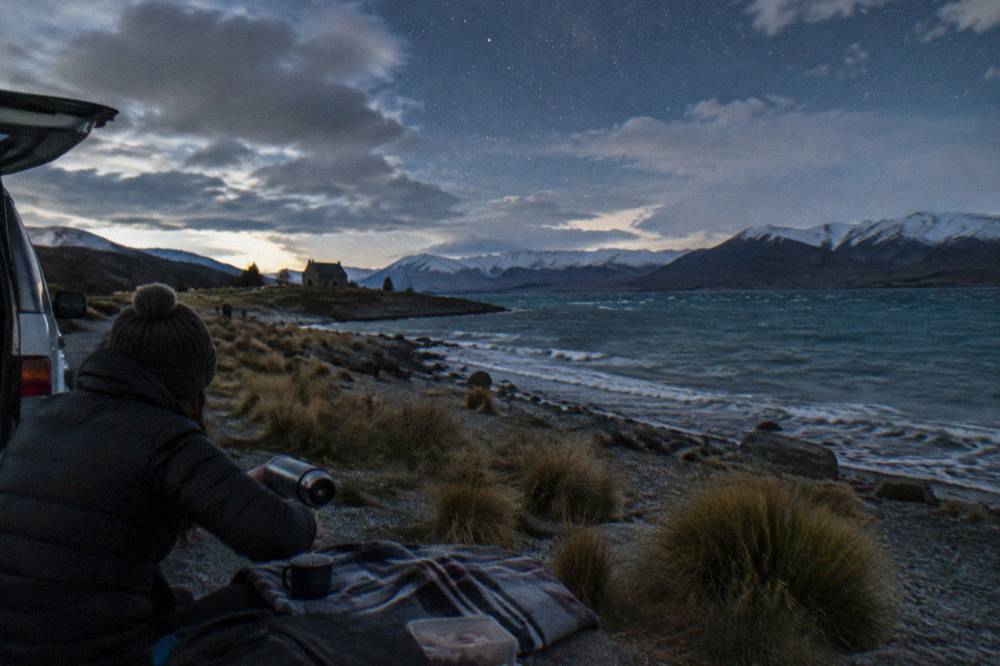
The sequence that works: as soon as your travel dates exist, find the nearest new moon window from the table above and put your Tekapo night inside it. Book the tour that fits your group and budget. Then watch the sky forecast in the days before, knowing that in the Mackenzie Basin the topography often blocks low cloud, so a cloudy regional forecast does not always mean a cancelled night; Dark Sky Project, for one, says its team decides as close to departure as possible because forecasts are indicative only.
Operator weather policies genuinely differ, so read the specific terms rather than assuming. Astro Tekapo, for example, states a full refund if sky conditions are too cloudy for stargazing. Silver River's own cloud policy is a reschedule or refund by preference and availability. The Hot Pools and Stargazing night at Tekapo Springs runs even when cloud limits telescopes, with an indoor virtual reality session and the hot pools still included, and a 25 percent refund if under 30 minutes of telescope viewing happens. None of that transfers to another operator, and the 24-hour free cancellation window is a booking rule, not a weather policy.
A little local astronomy knowledge also helps you judge a night yourself. Beyond the moon phase, the clarity of the sky after a southerly change, the absence of low cloud over the basin, and darkness away from village lights all shape what you see. The practical signs are collected in how to know if a night is good for stargazing at Lake Tekapo.
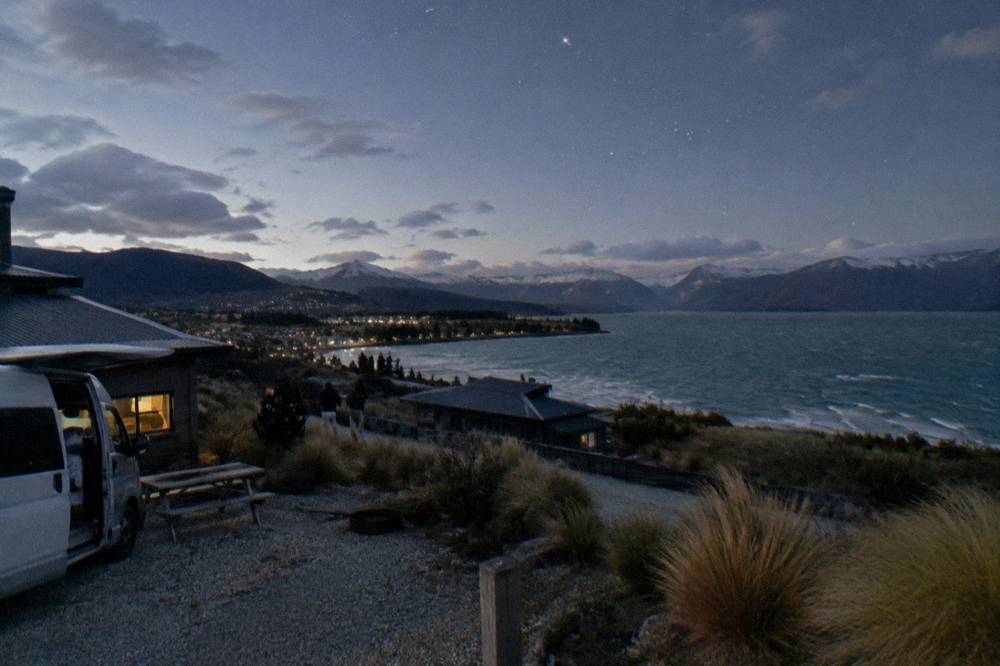
For travellers combining the region, the same moon window works everywhere in the reserve: Lake Tekapo, Twizel and Aoraki / Mount Cook all sit inside the Aoraki Mackenzie International Dark Sky Reserve, the largest dark sky reserve in the Southern Hemisphere at 4,367 square kilometres, as DarkSky International's reserve designation records from 2012. Where you base yourself is a trade-off between convenience, price and driving at night, weighed out in the Mount Cook, Twizel or Tekapo comparison.
What About Moon Phase And The Free Stargazing Spots?
The free viewpoints around Lake Tekapo obey the same lunar arithmetic as the paid tours, and arguably benefit more: with no telescope and no guide, a new-moon night is what makes the Milky Way visible to the naked eye from the lakeshore, while a full moon reduces the free experience to bright stars. Use the same calendar, and save the free nights for the darkest windows.
The lakefront away from the village lights, the public paths around the outskirts of Tekapo, and the darker corners of the region all reward the darkest nights disproportionately. A tour can rescue a moonlit evening with aperture and expertise; a DIY night cannot. So if your trip includes both, a sensible split is to put a paid tour on the brightest viable night and keep the free night for the new moon, when the unaided sky does its most impressive work.
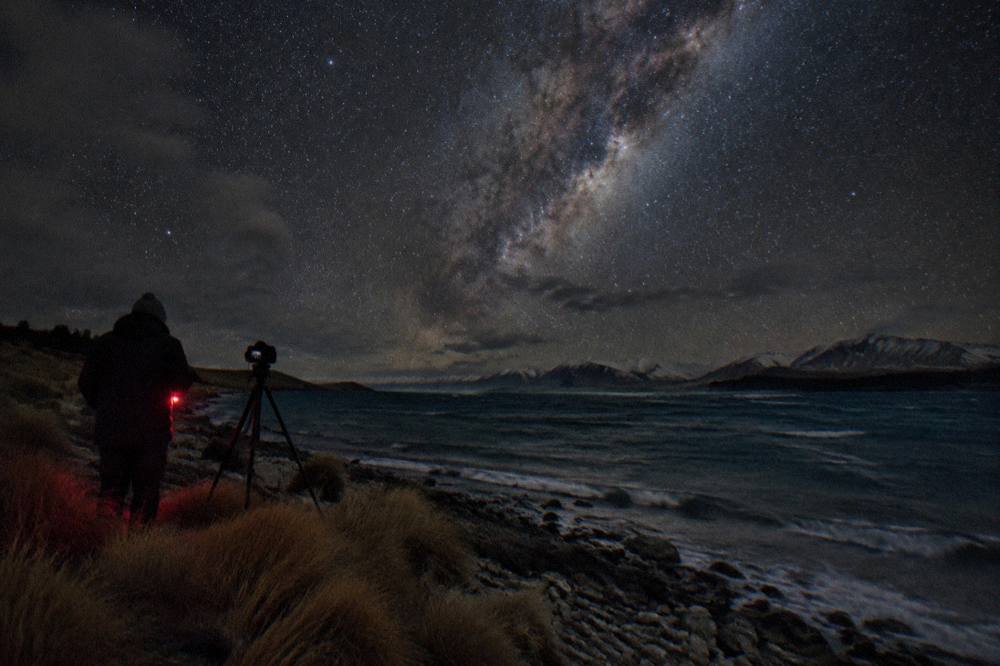
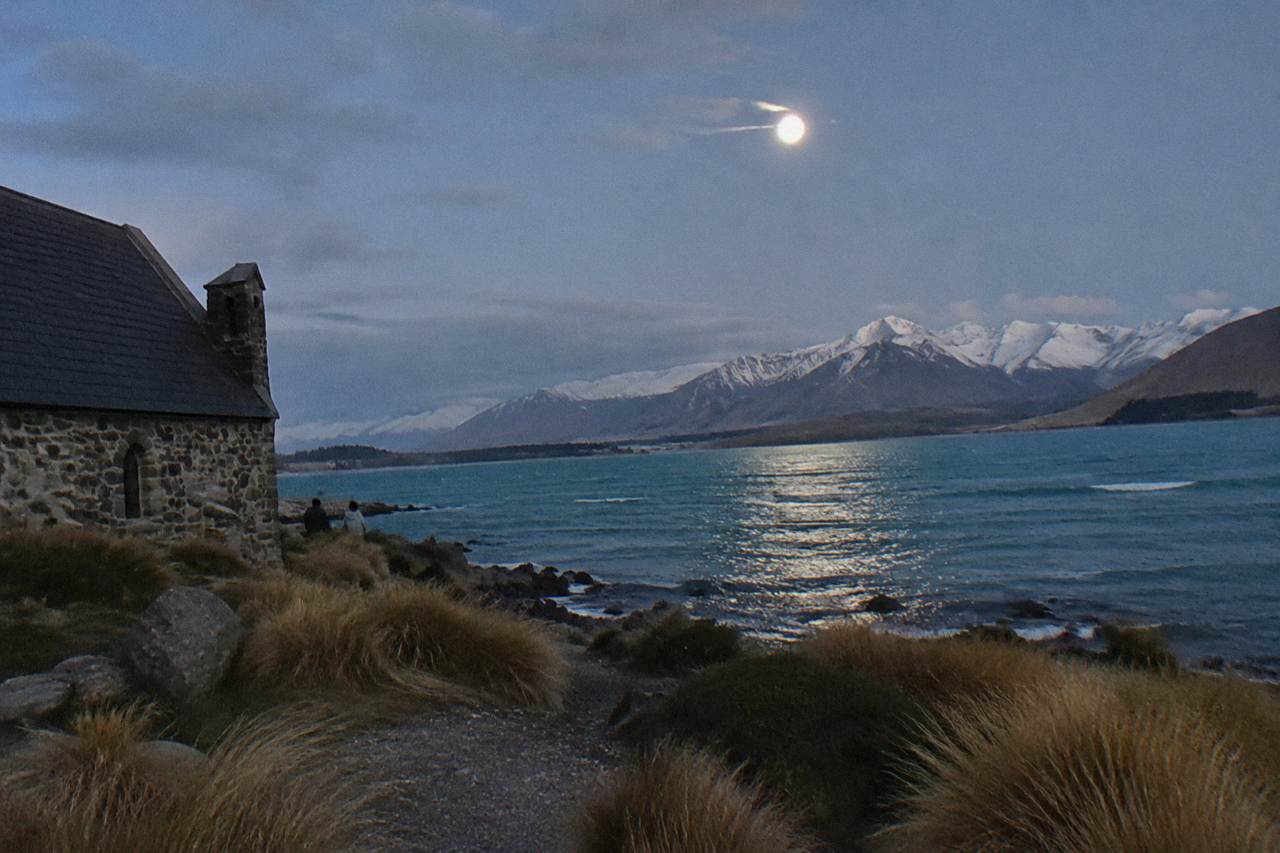
One local rule matters for photographers: the Church of the Good Shepherd, the famous stone church on the lakefront, cannot be accessed inside its fence at night; the gates close at dusk, so any night photo is taken from outside the fence on public paths. It is a working, protected sacred site, drones are not permitted around the church or the village, and no tour in the 12 covered here visits it. Plan the shot from the public side.
Timing the free night also means timing your body clock. In December 2026 true darkness does not begin until between 23:26 and 23:54, so a free stargazing session means a very late night indeed; in June 2027 you can be on the lakeshore before 19:00 with over eleven hours of darkness ahead. Pair the moon table with the dusk table above and the plan writes itself.
Dark Sky Project also notes that moon-free nights are the darkest, and its tours often sell out, with same-day booking sometimes possible but never reliable. The busiest dark windows in this region are the nights around each new moon in peak travel season, so the December 2026 new moon on 9 December and the January 2027 new moon on 8 January are exactly when advance booking earns its keep. The advance booking question is covered in full elsewhere.
A One-Year Booking Checklist For Moon-Phase Stargazing
Work the calendar backwards: pick the new moon window, check the month's moon-free night count, match a tour to your group's ages and budget, confirm the dusk start time, then watch the weather inside the free-cancellation window. May 2027 posts the most nights with three or more moon-free dark hours, 21 of 31, and June 2027 the longest dark nights at about 11.3 to 11.5 hours.
In practice the checklist runs like this. First, take your feasible travel dates and lay them against the new moon table: 9 December 2026, 8 January, 7 February, 8 March, 7 April, 6 May, 5 June, 4 July, 2 August, 1 and 30 September, and 30 October 2027. Second, check the moon-free count for that month, because a fixed summer trip has only about a dozen top nights to aim at while an autumn trip has close to three weeks of them. Third, match a tour: minimum ages range from 5 on the Crater and Chameleon tours, 6 on Astro Tekapo and the Stargaze Mackenzie Twizel tour, to 10 on the Mount John Summit and the Hot Pools night, and prices among the outdoor tours start at the from $56.00 three-way tie already noted.
Fourth, confirm the darkness start time for your month so the booking slot and your energy levels match; a December midnight start is not for everyone. Fifth, inside the final day, check the forecast and the road conditions, remembering that all twelve tours' booking pages state free cancellation up to 24 hours before the start for a full refund, which is the last off-ramp if the sky turns.
For a broader frame, this page is part of a season series on Lake Tekapo Stargazing, and the calendar answers one narrow question: which nights have the raw darkness. The winter-versus-summer guide handles the temperature and clarity side of the same decision, and the moon phase calendar here is the piece you can plan from your kitchen table, months before the cloud forecast exists.
Common Questions About Lake Tekapo Stargazing Moon Phase
When Is The Next New Moon For Stargazing At Lake Tekapo?
The new moons in this calendar period fall on 9 December 2026, then 8 January, 7 February, 8 March, 7 April, 6 May, 5 June, 4 July, 2 August, 1 and 30 September, and 30 October 2027. The nights within three or four days of these dates are the darkest of each month.
Does A Full Moon Ruin Stargazing At Lake Tekapo?
It changes it rather than ruining it. A full moon washes out faint stars and the Milky Way, but the Moon itself through a telescope, plus planets and bright clusters, still show well. Tours with larger telescopes, such as the Ultimate Stargazing Experience's 16 inch instrument or the Crater Experience's 14 inch telescopes, suit bright nights.
Which Month Has The Most Moon-Free Dark Hours At Lake Tekapo?
By count of nights with three or more moon-free dark hours, May 2027 leads with 21 of 31, followed by June and July 2027 with 20 each. June 2027 has the longest dark nights overall, about 11.3 to 11.5 hours of astronomical darkness per night.
How Late Does It Get Dark In Summer At Lake Tekapo?
Astronomical darkness starts between 23:26 and 23:54 in December 2026 and between 23:53 and 23:12 in January 2027. Daylight saving, which began on 27 September 2026 and ends in early April 2027, pushes summer darkness very late on the clock, and the dark window lasts only a few hours.
Can I Book A Stargazing Tour Around A New Moon And Cancel If It Is Cloudy?
Yes. All twelve tours covered here state free cancellation up to 24 hours before the start for a full refund. Weather policies differ by operator, so read the specific tour's terms; several operators offer a reschedule or refund if cloud cancels the night, and the Hot Pools tour runs with an indoor virtual reality session instead.
Do Moon Phases Matter The Same At Twizel And Mount Cook As At Lake Tekapo?
Yes. Lake Tekapo, Twizel and Aoraki / Mount Cook all sit inside the same dark sky reserve, so the same lunar calendar applies across the region. The new and full moon dates and the moon-free hour counts in this calendar can be used for any of the three bases.