Milky Way Stargazing At Lake Tekapo: What A Tour Shows
The Milky Way over Lake Tekapo is real but conditional: it depends on the moon, the cloud and the season. Here is what the tours covered here can show, and how to pick the night.
Short answer
Yes, the Milky Way can be seen from Lake Tekapo, but only when the moon is down and the sky is clear. Outdoor tours run from $56 to $135 per person and last 75 minutes to 2 hours. A full moon washes out faint stars, so new moon nights, from $56, are the strongest bet for Milky Way viewing.
Can You See The Milky Way At Lake Tekapo?
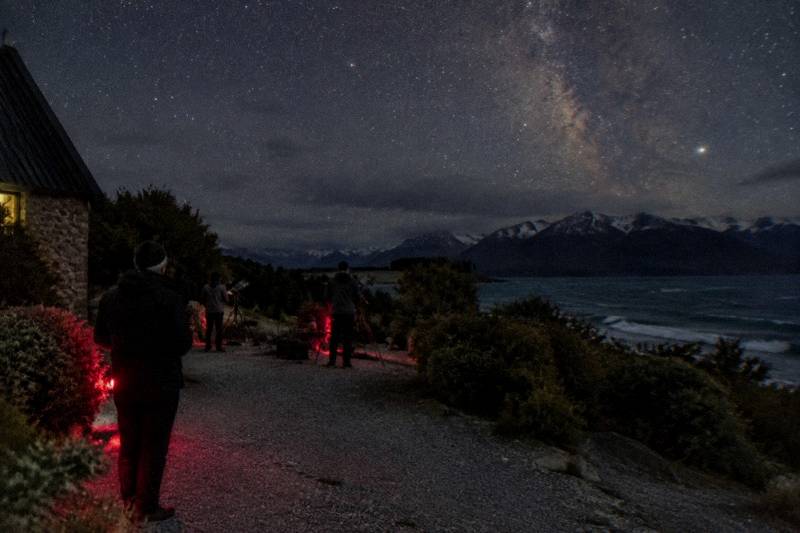
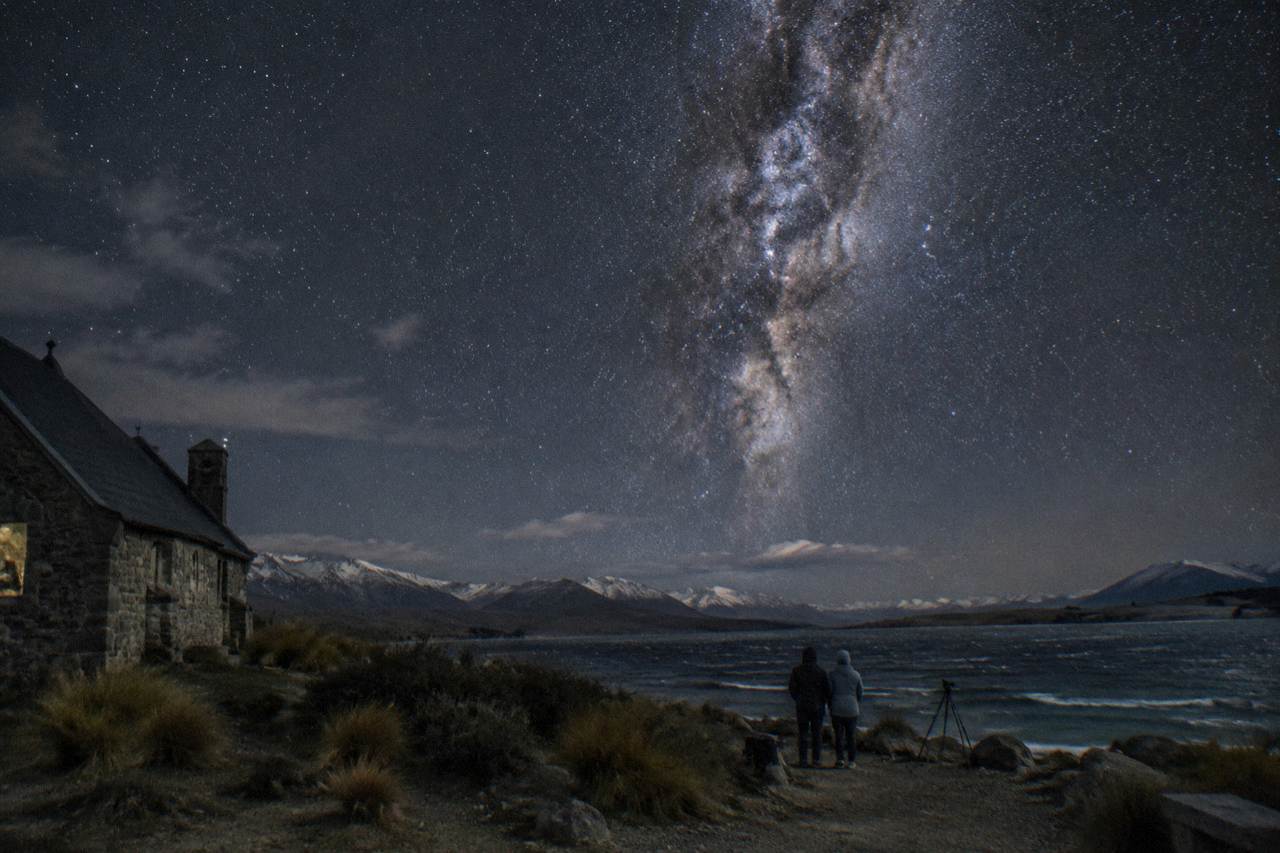
The band of the galaxy rises over the lake on clear, moon-free nights, and guides point it out with lasers. No operator can promise it on any given night, because cloud and moonlight decide the outcome, not the ticket.
The Aoraki Mackenzie International Dark Sky Reserve spans 4,367 square kilometres, taking in Aoraki / Mount Cook National Park and the Mackenzie Basin, and DarkSky International lists it as an International Dark Sky Reserve designated in 2012. Lake Tekapo sits inside it. District plan lighting rules apply across the whole reserve. That regulatory floor is why the faint glow of the Milky Way, normally erased near towns, survives over the lake.
What that means in practice is that the Milky Way can be visible on clear, moon-free nights, and cloud and moon can both get in the way. On a night with the moon below the horizon and a clear sky, the galactic band can be visible to the naked eye from the lakefront. Under a full moon, it fades: Dark Sky Project's own FAQ says a full moon washes out faint stars and the Milky Way, while a new moon gives the darkest sky. That single fact shapes every recommendation on this page.
One thing worth being blunt about: no tour guarantees the Milky Way. Dark Sky Project states plainly that it cannot guarantee clear skies, the Milky Way or the Aurora Australis, and it runs no aurora tours. Every operator's weather policy differs, and each is described exactly where that tour appears below. If a night is clouded out, the operator's own terms, not a general rule, decide what happens to your booking. For a broader look at everything a guide can point out, the companion piece on what a tour shows at Lake Tekapo covers planets, clusters and nebulae beyond the galaxy band.
What Does A Lake Tekapo Milky Way Tour Actually Show?
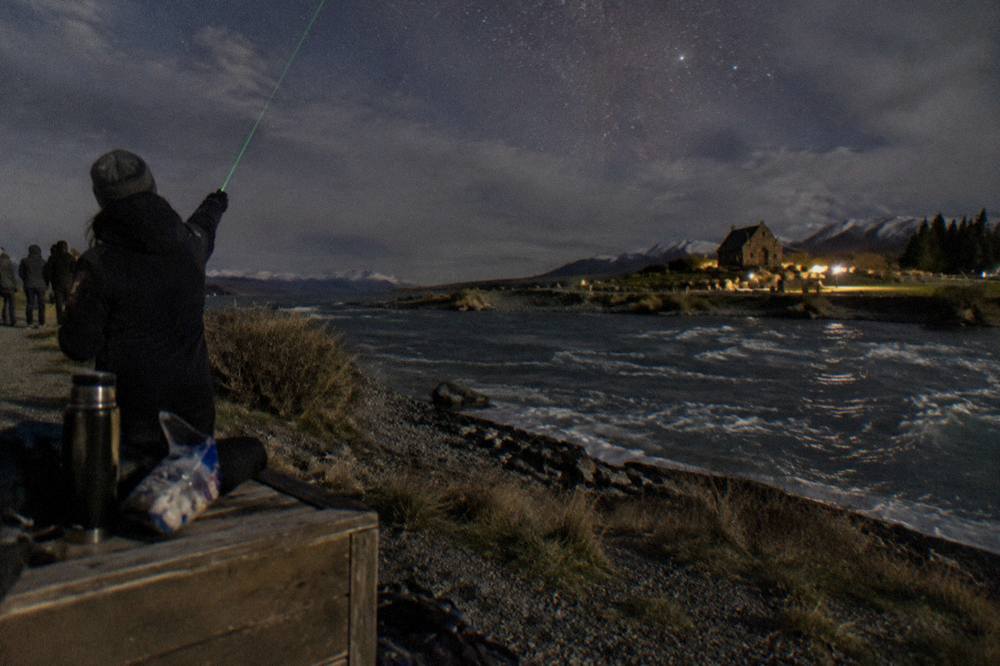
A guided tour splits the Milky Way into two experiences: naked-eye viewing of the galactic band, with a guide tracing its shape with a laser, then telescope time on objects inside and around it, such as star clusters and nebulae. Chameleon Stargazing structures this explicitly, with about 30 minutes of naked-eye sky reading before the telescopes come out.
The naked-eye half is the Milky Way half. Under dark skies the band is wide enough that a telescope is the wrong tool for seeing it whole; the guide's laser and your own eyes do that work. Chameleon Stargazing's signature tour, 90 minutes from $73 per person and rated 4.9 across 789 reviews, spends roughly the first 30 minutes on the naked-eye sky before moving to its 9.25 inch telescope and a smart telescope. Groups cap at 14, minimum age 5, hot chocolate and marshmallows are served, and a digital souvenir photo is included. Check in is at 70 Andrew Don Drive,.
The telescope half adds depth rather than width. The Mount John Summit Stargazing Experience, 1 hour 45 minutes from $135 with Dark Sky Project, includes coach transport up to the observatory summit at 1,029 metres, naked-eye guiding with lasers, and telescopes including a 16 inch instrument inside the dome. It is rated 4.6 across 348 reviews, minimum age 10, and an extreme cold weather jacket is loaned. The Alpine Stargazing Experience with a Guide, from $56 and rated 4.6 across 864 reviews, runs 1 hour 15 minutes on a private 50,000-acre farm reached by shuttle from check-in at 12 Rapuwai Lane, with 14 inch telescopes, astro-lasers and warm down jackets provided.
What the guides actually point at depends on the season and the sky, but the structure is consistent: orientation to the southern sky, the Milky Way band where the moon allows it, then telescope targets chosen for the conditions. Photos are allowed on the Summit with the flash off, and the guides share astrophotography tips, so a camera with a manual mode earns its place in your bag.
Between the headline tours, the mid-priced options cover the same two-part structure in a shorter window. The Crater Stargazing Experience at Cowan's Observatory, 75 minutes from $78, uses purpose-built observation craters that shelter viewers from wind and stray light, with 14 inch telescopes, minimum age 5, rated 4.6 across 91 reviews. The Astro Experience from Astro Tekapo, 90 minutes from $59, meets at its own stargazing site in Takapo Regional Park, four minutes by car from the village, with a premium 9.25 inch telescope, a smart telescope, hot chocolate, a moon chair and a fleece blanket; minimum age 6.
The Ultimate Stargazing Experience from Silver River Stargazing, 2 hours from $125.56, is the longest session among the tours covered here and is rated 5.0 across 17 reviews, with a 16 inch telescope and a group cap of 10. Two hours buys more time at the eyepiece and more patience with a sky that needs a cloud to drift through. Every one of the 12 tours covered here states free cancellation up to 24 hours before the start for a full refund, which matters when the sky is the product.
When Is The Milky Way Visible At Lake Tekapo?
The Milky Way can be visible at Lake Tekapo on dark nights when the moon is down and cloud allows, and darkness itself varies hugely by season: from about 3.5 to 4 hours of true darkness per night in December to about 11.3 to 11.5 hours in June. In summer, astronomical darkness may not begin until after 23:30; in winter it can start before 19:00. For help picking a night that pairs moonless skies with enough darkness, the planning guide to choosing the best time for Lake Tekapo stargazing walks through the seasonal tradeoffs.
Those numbers come from a computed darkness model for the Tekapo lakefront, where astronomical darkness means the Sun is more than 18 degrees below the horizon, and they are the only reliable way to compare seasons. Daylight saving stretches the evening further: NZDT began on 27 September 2026 and runs to early April 2027, so on midsummer nights the sky is not fully dark until close to midnight, and tour start times shift accordingly. Winter compresses the day and hands the night hours back.
| Month | Darkness per night | Dusk range (local) | Nights with 3+ moon-free dark hours |
|---|---|---|---|
| November 2026 | 4.1 to 6 hours | 22:22 to 23:24 | 13 of 30 |
| December 2026 | 3.5 to 4 hours | 23:26 to 23:54 | 12 of 31 |
| January 2027 | 3.6 to 5.3 hours | 23:53 to 23:12 | 13 of 31 |
| March 2027 | 7.3 to 9.1 hours | 22:11 to 21:11 | 18 of 31 |
| June 2027 | 11.3 to 11.5 hours | 18:56 to 18:58 | 20 of 30 |
| September 2027 | 8.1 to 9.6 hours | 19:50 to 21:26 | 18 of 30 |
The moon-free column is the one that matters for the Milky Way, because a moon above the horizon brightens the sky whether or not you can see it clearly. Roughly 12 to 15 nights per month in the warmer half of the year give at least three hours of dark, moon-free sky, rising to about 19 to 21 nights a month through the colder months. The difference between a good month and a great one is measured in a handful of nights, not weeks.
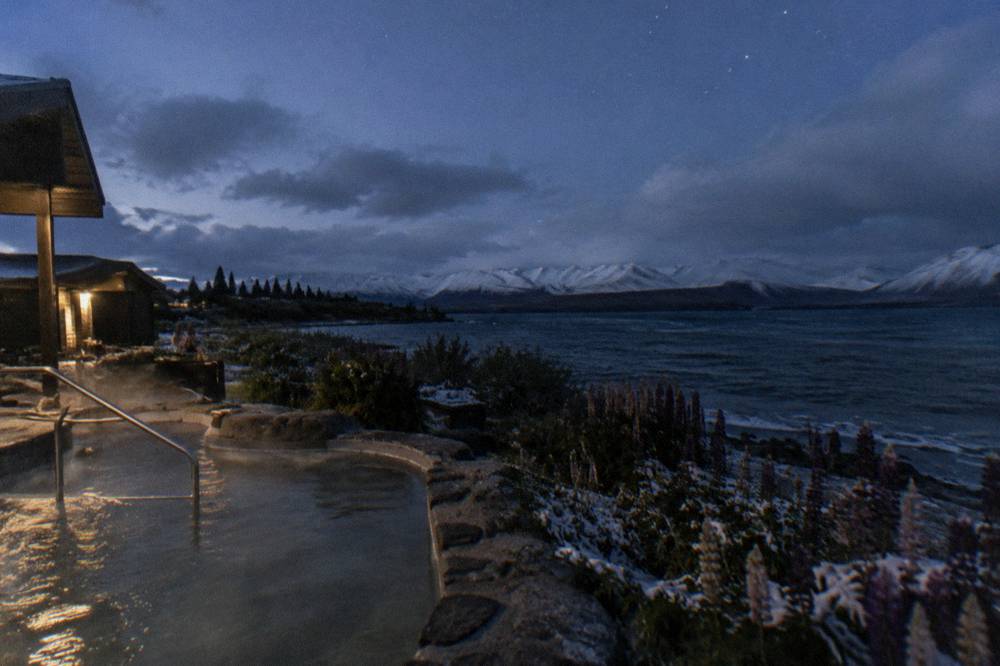
No month is named here as the best, because no operator promises one and the weather does not read calendars. Dark Sky Project says only that winter months are often the clearest and darkest, and that it is cold at night even in summer. The practical read: more darkness means more tour windows and more moon-free nights, and cold means you dress for it. The guide on winter versus summer stargazing at Lake Tekapo works through the trade-offs in detail, and the moon phase calendar maps the exact new and full moon dates against those dark hours.
Does A Full Moon Ruin Milky Way Viewing At Lake Tekapo?
A full moon substantially washes out the Milky Way from Lake Tekapo: Dark Sky Project's own FAQ says a full moon brightens the sky and erases faint stars and the galactic band, while a new moon gives the darkest sky. Tours still run under a bright moon, and telescope targets like the Moon itself, planets and clusters hold up better than the galaxy's faint glow.
The mechanism is simple. The Milky Way's band is a diffuse river of dim light from millions of unresolved stars, and any broad light source in the sky, moonlight included, raises the background until that faint river sinks below it. Brighter objects survive: a telescope view of the Moon under a full moon is spectacular in its own right, planets are unaffected, and double stars and compact clusters still resolve well. What you lose is the wide, naked-eye sweep that most people picture when they book a stargazing tour.
This is why the new moon dates matter more than any other planning figure. The next new moons fall on 9 December 2026, 8 January 2027 and 7 February 2027, with the corresponding full moons on 25 November 2026, 24 December 2026, 23 January 2027 and 21 February 2027. The nights either side of a new moon, plus or minus a few days while a waxing or waning moon sets early or rises late, are the window. The blog post on seeing the Milky Way during a full moon takes the question head on.
There is a planning trick worth knowing even under a bright moon: the moon rises and sets roughly an hour later each night, so a night or two after full moon can still deliver dark hours before moonrise, especially in winter when darkness stretches past ten hours. The computed table above only counts nights with three or more moon-free dark hours, which is a strict threshold; shorter moon-free gaps still show the band to a patient viewer. Nothing here promises a moonless night, only a way to raise the odds.
Which Lake Tekapo Tours Suit Milky Way Viewing Best?
The tours that serve Milky Way viewing well are the ones with a long naked-eye component and small groups: Chameleon Stargazing at 14 people maximum, the Alpine Stargazing Experience and the Ultimate Stargazing Experience at 10 each, and the Mount John Summit with its high, dark summit site. Prices run from $56 to $135 per person across the outdoor options.
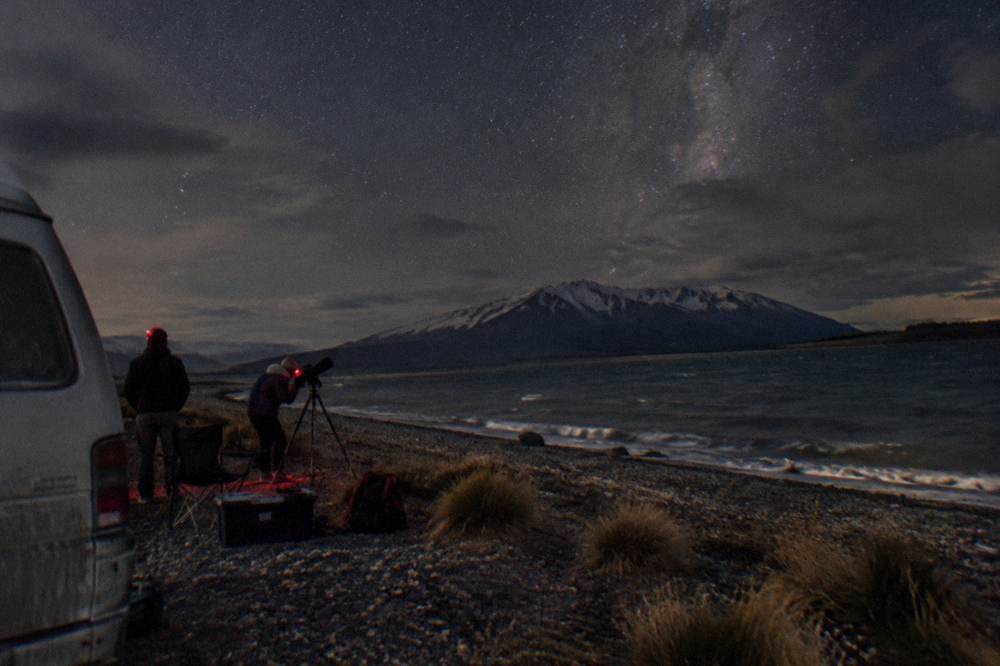
The logic is that the Milky Way is a wide-field object, so the tours that spend real time orienting you to the whole sky, not just queuing at an eyepiece, deliver the view people come for. Chameleon's roughly 30 minutes of naked-eye sky reading before the telescopes is the most explicit version of this. The Summit's 1,029 metre site above the village lights, reached only by the operator's coach at night, is the most elevated version. The Alpine tour's private 50,000-acre farm site is the most remote from artificial light, with jackets supplied so the cold does not cut the night short.
| Tour | From (USD) | Duration | Group max | Naked-eye focus | Rating and reviews |
|---|---|---|---|---|---|
| Chameleon Stargazing Shared Tour | $73 | 1 hour 30 | 14 | About 30 min guided naked eye, then telescopes | 4.9 from 789 reviews |
| Mount John Summit Stargazing | $135 | 1 hour 45 | - | Lasers plus dome telescopes at 1,029 m | 4.6 from 348 reviews |
| Alpine Stargazing Experience | $56 | 1 hour 15 | 10 | Astro-lasers on a private farm | 4.6 from 864 reviews |
| Ultimate Stargazing Experience | $125.56 | 2 hours | 10 | Longest session, 16 inch telescope | 5.0 from 17 reviews |
| Crater Stargazing at Cowan's | $78 | 75 minutes | - | Wind-sheltered observation craters | 4.6 from 91 reviews |
Budget and appetite decide the rest. The three-way tie for the cheapest outdoor night sits at $56, shared by the Alpine, Mt Cook and Twizel Zen tours, so no single one of them is the cheap pick on its own. At the other end, the Summit at $135 buys the coach, the dome and the summit darkness. The $34.70 Indoor Dark Sky Cultural Astronomy Experience is an indoor exhibit, a 45 minute guided walk through four zones with a restored 125-year-old Brashear telescope on display and the Maori understanding of the sky; it involves no outdoor sky viewing, so it is not a Milky Way option, but it is a sound cloud-proof complement the same evening.
Is The Milky Way Better From Mount Cook Or Twizel?
Mount Cook and Twizel sit inside the same 4,367 square kilometre dark sky reserve as Tekapo, with darker surrounds than the village and their own tour options: the Mt Cook Stargazing Experience from $56 and three Twizel tours from $56 to $68.23. None includes a transfer from Tekapo, so each needs its own drive of about 1 hour 15 minutes to Mount Cook village, with Twizel on the way.
The Mt Cook Stargazing Experience, from $56 and rated 4.8 across 17 reviews, meets at the Tasman Glacier Car Park on Tasman Valley Road, 1 hour 15 minutes of high-quality telescopes for deep sky observation, a guide, and a photo included. Aoraki / Mount Cook village is about 1 hour 15 minutes by road from Tekapo. Mount Cook is inside the same reserve, so the darkness is the same protected quality, with fewer village lights than Tekapo and a mountain wall for a horizon. The Hermitage also runs its own Big Sky Stargazing in the national park, worth knowing about as a neighbouring option if you are based at the village.
Twizel sits between Tekapo and Mount Cook and hosts three of the 12 tours covered here. The Twizel Stargazing Tour with an Astronomer and Telescope, from $67 and rated 5.0 across 77 reviews, is a laser-guided session with a powerful telescope, minimum age 6, photo included. The Twizel Stargazing Experience with a Guide, from $68.23 with 7 reviews so far, is the largest group option at 20 people. The Japanese-language Zen Stargazing Experience, from $56, is a new listing with no reviews yet; it is conducted in Japanese and meets at Market Place in Twizel, with telescope viewing of the Moon, planets and star clusters, a hot drink and a photo included. For a fuller picture of what these night-sky sessions actually reveal, the guide to what a Lake Tekapo stargazing tour shows explains everything from laser-guided constellation pointing to how cloud and moonlight change the view.
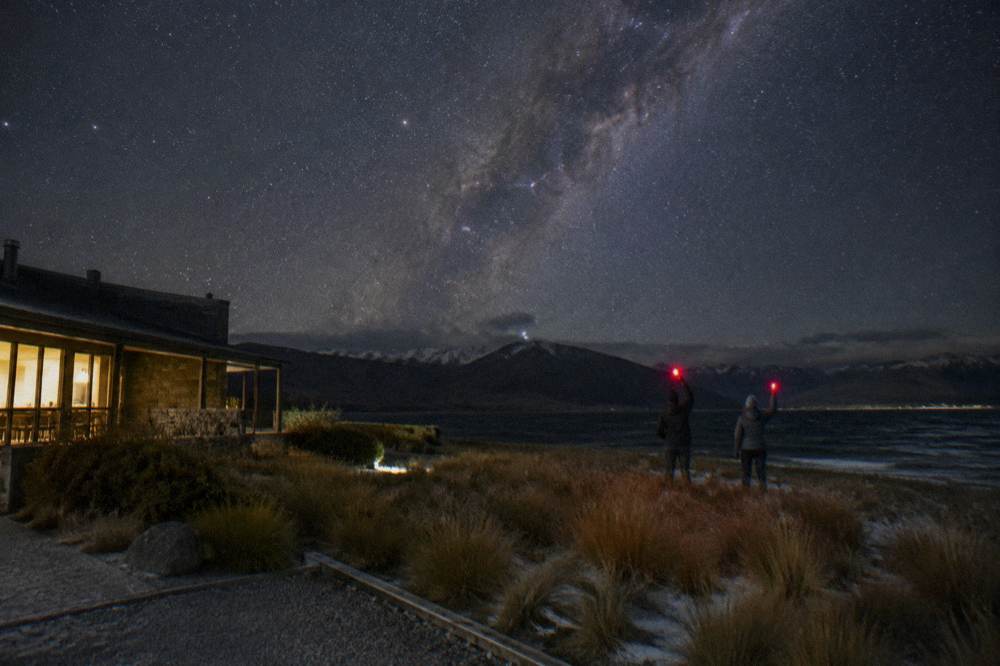
The honest comparison is not sky quality, which is protected across the whole reserve, but logistics. If the Milky Way is the whole point of the trip, the piece on basing at Mount Cook, Twizel or Tekapo works through the trade. At night SH8 and SH80 can carry black ice, frost, freezing fog and stock or wildlife in the cold months, so check conditions on the NZTA Journey Planner before committing to a drive after dark.
The Mt Cook stargazing tour guide covers the glacier car park start, what to expect of the session and how it compares with the Tekapo options.
What Should You Wear On A Lake Tekapo Milky Way Night?
Dress for alpine night cold even in summer, because the best Milky Way nights are the darkest ones and darkness at Tekapo means temperatures that drop fast after dusk. Dark Sky Project advises thermals, long pants, a jersey, a jacket and a hat in summer, and adds gloves, a scarf, a snow jacket and sturdy ankle-covering shoes for winter. Only some tours loan jackets.
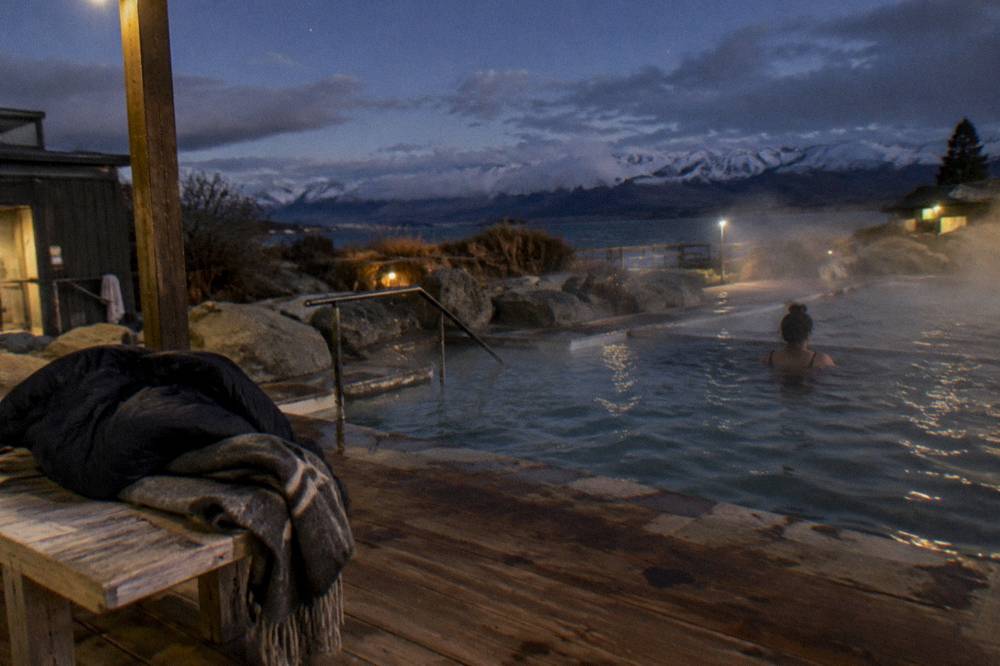
The jacket question is per tour, and worth checking before you pack light. The Summit tour loans an extreme cold weather jacket, and the Alpine tour provides warm down jackets. For the Crater tour, guests are told to layer warm clothing and no jacket loan is stated. Chameleon offers outdoor seats and blankets; Astro Tekapo provides a moon chair and a fleece blanket; the Hot Pools and Stargazing night wraps you in a woolen blanket between soaks. The full clothing breakdown, including footwear, lives in the guide on what to wear on a stargazing tour.
| Tour | What the operator provides against the cold |
|---|---|
| Mount John Summit | Extreme cold weather jacket loan |
| Alpine Stargazing | Warm down jackets, chairs |
| Chameleon Stargazing | Outdoor seats and blankets |
| Astro Tekapo | Moon chair and fleece blanket |
| Hot Pools and Stargazing | Hot pools, woolen blanket, hot drinks |
| Crater at Cowan's | - |
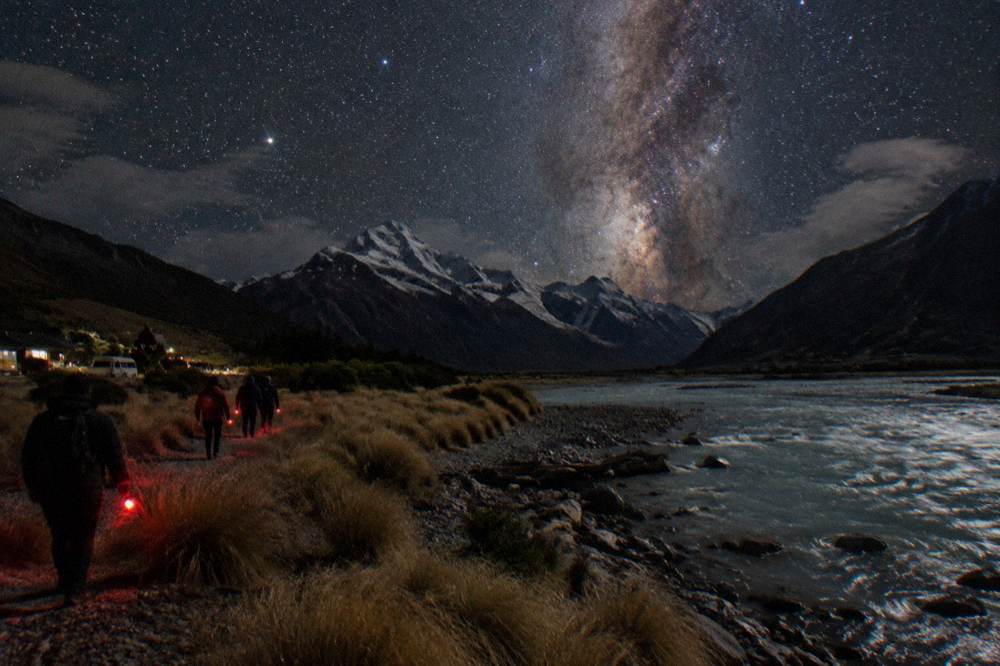
A red-light torch or a phone on its dimmest red setting preserves your night vision, which takes many minutes to build and one white flash to lose. Photos are permitted on the Summit with the flash off, and guides there share astrophotography tips. If a Milky Way photograph is the goal, a tripod and a camera with manual exposure control matter far more than any phone mode, and a small head torch with a red setting beats a bright screen every time.
How Do You Pick The Right Night And Tour For The Milky Way?
Pick the night first, then the tour: aim for a date near a new moon with three or more moon-free dark hours, book the tour that matches your budget and group tolerance from $56 upward, and hold the 24 hour free cancellation window in mind. Weather still decides on the night, and each operator's cloud policy is its own, so read the specific terms before booking.
The sequence matters because the best tour on the wrong night shows you cloud. Work from the new moon dates and the moon-free counts above, cross-check the moon phase calendar, then choose among the tours: Chameleon for the structured naked-eye session, the Summit for the observatory dome, Alpine for the farm site and the lowest outdoor price tier, the Ultimate for two full hours, or the Mount Cook and Twizel options if you are based away from the village. The tour comparisons across all Lake Tekapo stargazing tours lay the full field side by side.
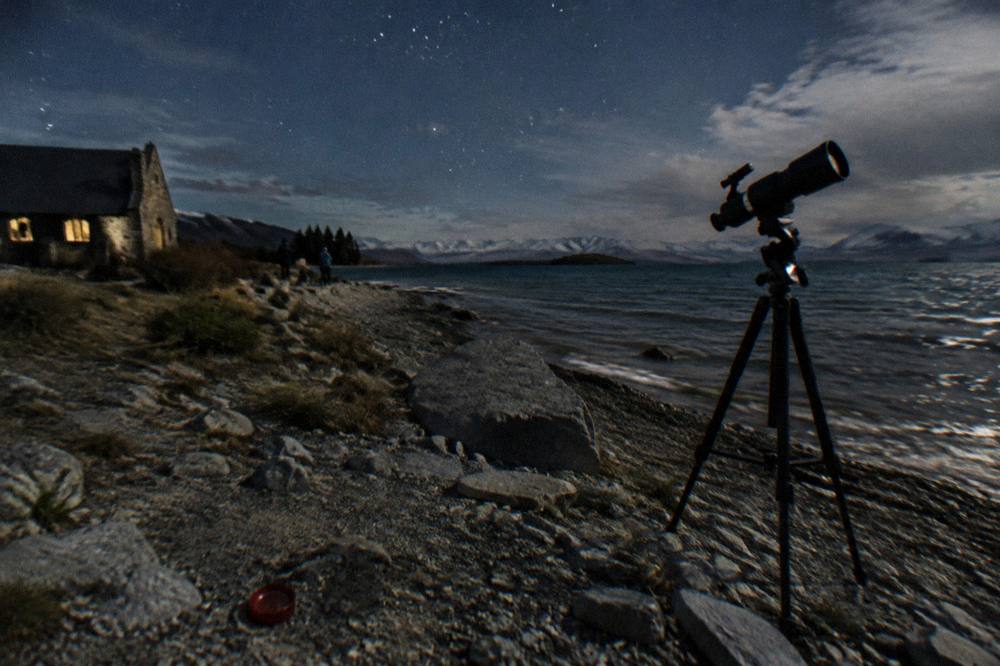
Weather policies differ operator to operator and each applies only to its own tours. Dark Sky Project decides as close to departure as possible, notes that low cloud is often blocked by the basin's topography so cloud alone does not always cancel, and offers an indoor alternative, a reschedule, a voucher or a refund if outdoor stargazing is not possible. Astro Tekapo offers a full refund if sky conditions are too cloudy for stargazing. Stargaze Mackenzie in Twizel runs only in clear conditions and offers a refund or a reschedule if weather cancels. The Hot Pools night runs even when cloud limits telescopes, with an indoor virtual reality session instead, the hot pool stays included, and a 25 percent refund applies if under 30 minutes of telescope viewing happens.
Check-in times eat into the evening too. Dark Sky Project asks guests to check in at its lakefront base 15 to 20 minutes before departure; Chameleon asks for 10 to 15 minutes early at 70 Andrew Don Drive; Silver River checks in about 15 minutes early at Kiwi Treasure, 12 Rapuwai Lane, before its farm shuttle. Booking ahead keeps the moon-free nights, the scarcest resource in the reserve, from filling while you deliberate. Free cancellation up to 24 hours before the start for a full refund is stated on all 12 booking pages, so an early reservation costs you nothing but a decision.
Common Questions About Milky Way Stargazing At Lake Tekapo
Can You See The Milky Way At Lake Tekapo?
Yes, on clear nights when the moon is below the horizon. Lake Tekapo sits inside a 4,367 square kilometre international dark sky reserve designated in 2012, and the Milky Way band can be visible to the naked eye there when darkness and moon conditions allow. No tour can guarantee it.
Does A Full Moon Ruin Milky Way Viewing At Lake Tekapo?
Substantially, yes. Dark Sky Project's own FAQ says a full moon washes out faint stars and the Milky Way, while a new moon gives the darkest sky. Telescope views of the Moon, planets and compact clusters still hold up under a bright moon.
When Is The Milky Way Visible At Lake Tekapo?
Whenever the sky is astronomically dark and moon-free, which varies from about 3.5 to 4 hours per night in December to about 11.3 to 11.5 hours in June. Roughly 12 to 21 nights per month offer at least three moon-free dark hours, peaking in the colder months.
Which Lake Tekapo Tours Suit Milky Way Viewing Best?
Tours with long naked-eye segments and small groups: Chameleon Stargazing at up to 14 people, the Alpine and Ultimate experiences at 10 each, and the Mount John Summit at 1,029 metres. Outdoor prices run from $56 to $135 per person.
Is The Milky Way Better From Mount Cook Or Twizel?
Both sit inside the same dark sky reserve, so the protected darkness is the same, with fewer village lights than Tekapo. The trade is logistics: an hour or more of night driving each way, on roads that can carry ice and wildlife in the cold months, versus Tekapo's wider choice of tours.
Are Warm Jackets Provided On A Lake Tekapo Milky Way Night?
On some tours. The Mount John Summit loans an extreme cold weather jacket and the Alpine tour provides down jackets; the Crater tour states no jacket loan and asks guests to layer up. Others offer blankets, seats or hot drinks rather than jackets.