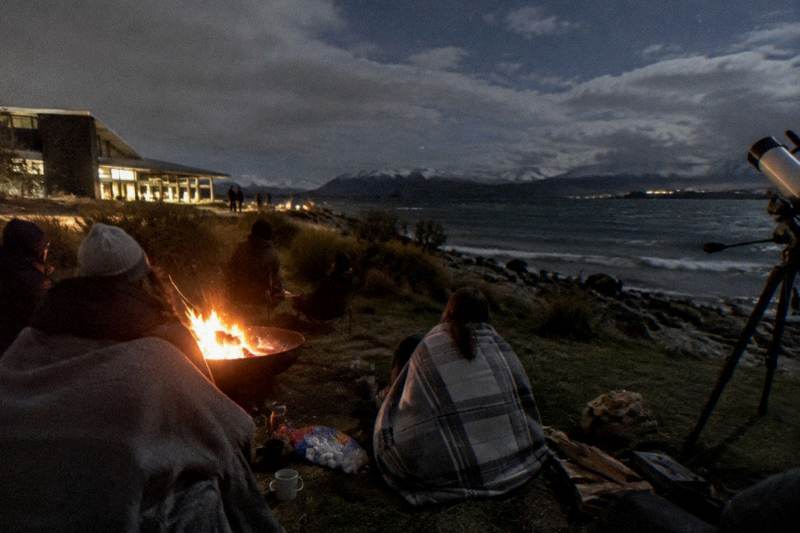
Lake Tekapo Stargazing In Winter Vs Summer: When To Book A Tour
Winter nights at Lake Tekapo run about 10.5 to 11.5 hours of astronomical darkness from May to July, while December nights give just 3.5 to 4 hours and darkness may not begin until near midnight. Here is how that difference, plus cold, clothing and tour logistics, should shape the season you book.
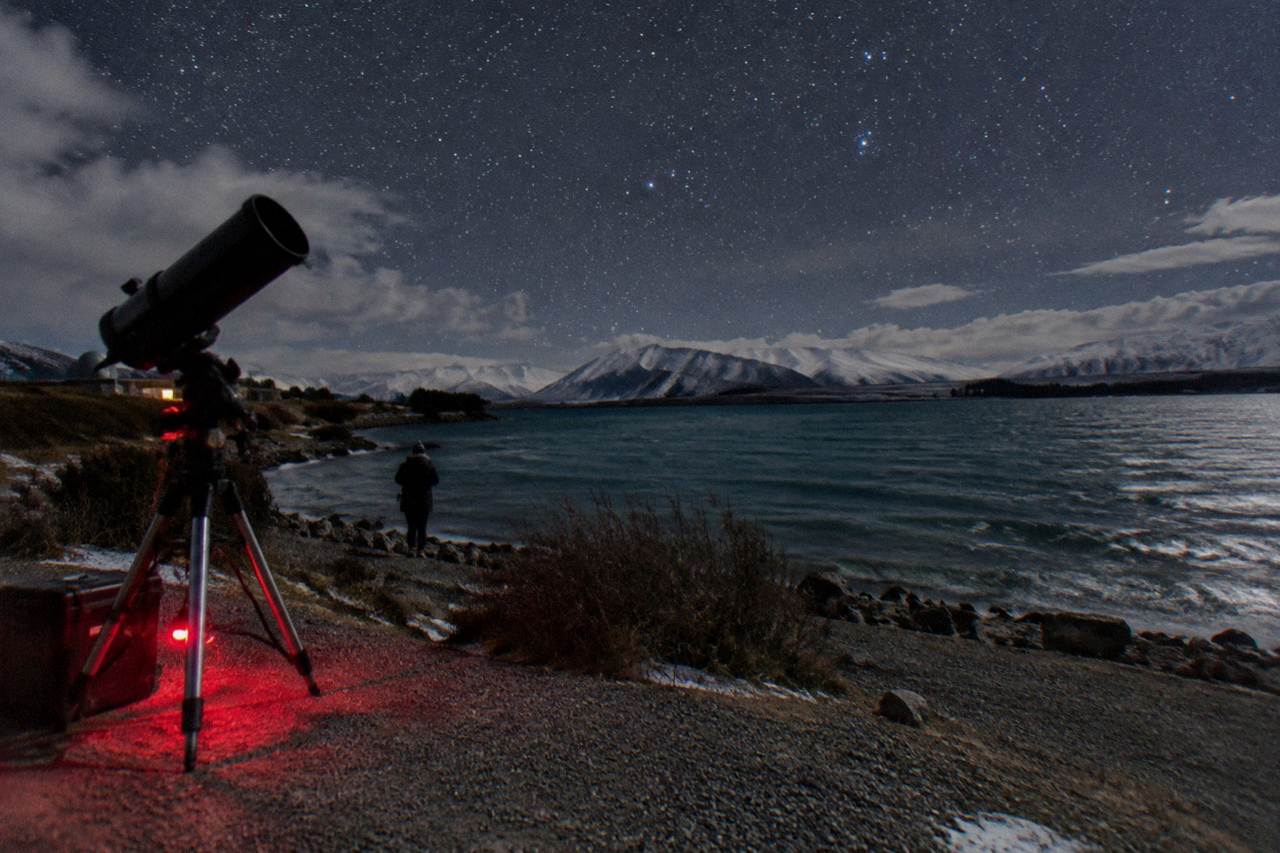
Short answer
Winter offers about 10.5 to 11.5 hours of darkness per night from May to July, against 3.5 to 4 hours in December when darkness starts between 23:26 and 23:54. Dark Sky Project says winter months are often the clearest and darkest, but no operator promises a clear night in any season, and tour prices do not change between them.
Is Winter Or Summer Better For Lake Tekapo Stargazing?
Neither season is guaranteed to be clearer on any given night, and no tour operator here promises a sky. What the seasons do change is measurable: winter nights give about 10.5 to 11.5 hours of darkness from May to July, while December nights give 3.5 to 4 hours. The trade is simple, more dark hours and colder air in winter, milder evenings and a very late start in summer.
That trade is the whole decision, and it is worth slowing down on it because most first-time visitors get it half right. People arrive in December and January expecting the postcard version of a New Zealand night sky, discover that true darkness does not begin until roughly 23:26 to 23:54 local clock time in December, and then find that tour slots that evening are limited to the small window after that. The sky above them can be excellent. The clock is simply against them.
Winter flips the problem. Darkness in June can begin before 19:00 local time and stretch about 11.3 to 11.5 hours, which means more tour departure options, more flexibility if one night clouds over, and a sky that is often at its most transparent after a cold, still day. Dark Sky Project, the operator on the Mount John summit and at Cowan's Observatory, says winter months are often the clearest and darkest. That is a general statement about the season, not a promise about your night. The same operator is explicit that it cannot guarantee clear skies, the Milky Way or the Aurora Australis on any departure. For a fuller picture of what a tour can realistically deliver, the guide to honest southern lights expectations at Lake Tekapo explains when the sky is darkest and what to book if the aurora is the goal.
Cold is the other half of the ledger. Lake Tekapo sits high in the Mackenzie Basin, and it is cold at night even in summer, in Dark Sky Project's own words. On the Mount John summit at 1,029 metres the wind exposure is high and it often snows in winter. The clothing answer changes by season, and this guide covers it in full further down, including which specific tours lend warm jackets.
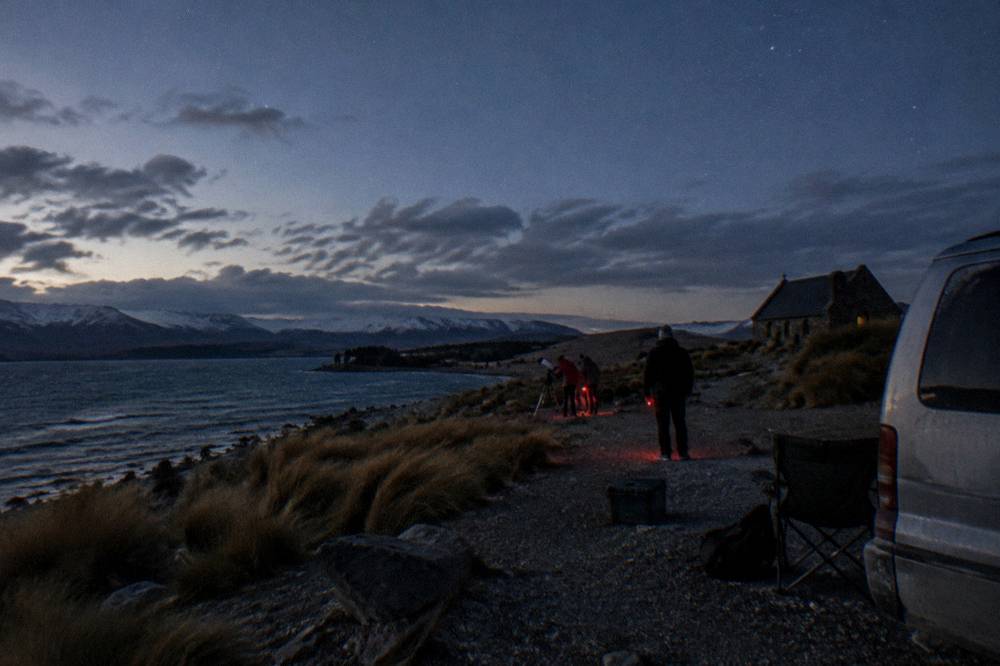
Price, notably, does not move with the season in the figures available. Every price in this guide is a from-price per person in US dollars, fixed in the booking data regardless of whether you travel in June or January. The Chameleon Stargazing Shared Tour is from $73.00, the Mount John Summit Stargazing Experience is from $135.00, and the Mt Cook Stargazing Experience is from $56.00 in every month. What changes between seasons is your experience of darkness, cold and scheduling pressure, not the fare.
If you want the short version of a recommendation: travellers who can pack for serious cold, and who want the most chances at a good night, lean winter. Travellers with children, tight road-trip schedules or a low tolerance for sub-zero standing around, lean summer, book the earliest available departure slot, and treat the late dusk as a feature, since dinner and a 22:00 tour can share one evening. For more on the group-size side of that choice, see the companion piece on small group stargazing tours at Tekapo.
How Long Are Winter Nights At Lake Tekapo?
Astronomical darkness at Lake Tekapo runs about 10.5 to 11.3 hours per night in May 2027, about 11.3 to 11.5 hours in June, and about 10.9 to 11.5 hours in July. Darkness can begin between about 18:56 and 19:21 local clock time across those months. Those numbers are computed for the Tekapo lakefront, where astronomical darkness means the Sun sits more than 18 degrees below the horizon.
That is a lot of usable night, and it changes what an evening can hold. A winter tour that begins at 20:00 still has ten hours of full darkness behind it, so an operator has room for early departures, late departures, and a second attempt another night if cloud rolls through. Compare that with December, covered in the next section, where the entire dark window is barely longer than some tours themselves.
The monthly detail, from the computed darkness table, looks like this:
| Month | Astronomical darkness per night | Darkness begins (local clock) | Nights with 3+ moon-free dark hours |
|---|---|---|---|
| May 2027 | 10.5 to 11.3 hours | 19:21 to 18:56 | 21 of 31 |
| June 2027 | 11.3 to 11.5 hours | 18:56 to 18:58 | 20 of 30 |
| July 2027 | 10.9 to 11.5 hours | 18:58 to 19:19 | 20 of 31 |
| August 2027 | 9.7 to 10.8 hours | 19:19 to 19:49 | 19 of 31 |
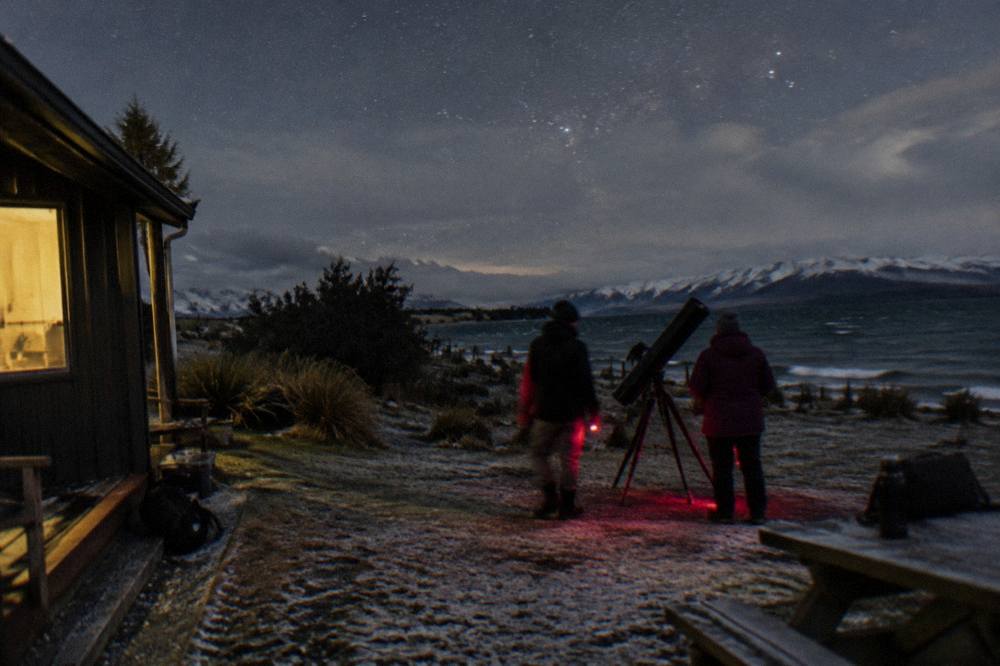
Notice the moon column, because darkness hours and moon-free hours are different things. A June night offers about 11.3 to 11.5 hours of darkness, but the Moon is above the horizon for part of most nights, and only 20 of the 30 nights in that month carry at least three hours of darkness with the Moon below the horizon. The moon interacts with the season in a way many visitors miss, and this guide returns to it in its own section.
There is one more winter effect worth naming. Dark Sky Project says moon-free nights are the darkest, and its own FAQ notes that a full moon washes out faint stars and the Milky Way. In winter, with eleven hours of darkness, a rising moon can wipe out the second half of the night even after a perfect first half. In summer the dark window is so short that a moon in the sky can consume nearly all of it. Neither season protects you from the Moon; the calendar of new and full moon dates does that, and the section below on the moon carries the numbers. To line up a tour with the right conditions, the guide to picking the best time for Lake Tekapo stargazing pairs the moon calendar with seasonal darkness windows.
Practically, winter's long nights also soften the blow of a cancellation. If one evening is clouded out in June, an operator with multiple departure times has other slots that same night or the next. Silver River Stargazing's own cloud policy, for its Alpine and related tours, is a reschedule or a refund by preference and availability, and other operators each carry their own terms, which the weather section of this guide attributes tour by tour.
What Time Do Stargazing Tours Start At Lake Tekapo In Summer?
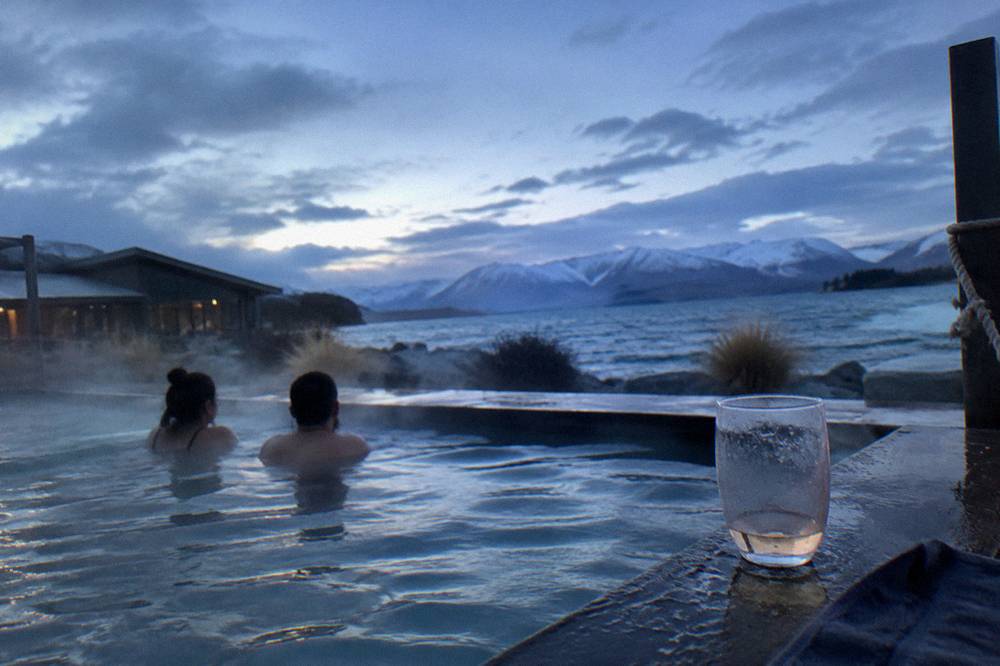
In December 2026 astronomical darkness at Lake Tekapo begins between 23:26 and 23:54 local clock time, and summer nights give only 3.5 to 4 hours of darkness. Tours therefore depart late, often close to the onset of darkness, and the practical evening is short. Daylight saving, which began on 27 September 2026, ends in early April 2027, so summer clock times carry that shift. With such a narrow window of darkness, knowing exactly how long each option runs matters more than usual, and the guide to Lake Tekapo stargazing tour durations breaks down every departure alongside check-in lead times.
That late dusk surprises people more than any other fact about summer stargazing here. The Sun sets, the sky looks dusky, tourists photograph the lake, and yet true astronomical darkness, the point where faint stars and the Milky Way can appear at their best, may be ninety minutes or more away. A summer tour with a 22:30 check-in is not padding the evening. It is waiting for the sky to be ready. To plan the rest of your evening around that late start, the full breakdown of Lake Tekapo stargazing tour durations shows how long each outing runs from check-in to finish.
The summer side of the computed table reads:
| Month | Astronomical darkness per night | Darkness begins (local clock) | New moon | Full moon |
|---|---|---|---|---|
| November 2026 | 4.1 to 6 hours | 22:22 to 23:24 | 9 November | 25 November |
| December 2026 | 3.5 to 4 hours | 23:26 to 23:54 | 9 December | 24 December |
| January 2027 | 3.6 to 5.3 hours | 23:53 to 23:12 | 8 January | 23 January |
| February 2027 | 5.4 to 7.3 hours | 23:10 to 22:13 | 7 February | 21 February |
A few practical consequences follow. First, summer tours compress into a narrow band of departure times, so the popular ones fill their few slots quickly; booking ahead matters more in December than in June even though winter is the famous season for stars. Second, a 75-minute or 90-minute tour can consume a quarter or more of the entire night's darkness, so the tour you choose matters more, not less, in summer. Third, families with young children face a genuine constraint: several tours carry minimum ages, 10 for the Mount John Summit Stargazing Experience and the Hot Pools and Stargazing night, 5 for the Crater Experience at Cowan's Observatory and the Chameleon tour, 6 for Astro Tekapo's tour and Stargaze Mackenzie's Twizel tour, and a 23:30 start is a big ask regardless of age rules.
Summer's quiet advantages are real too. Roads are generally easier, daylight runs long for the drive in from Christchurch or Queenstown, about three hours by road from either on the main highway, and you will not be dressing for snow. It is cold at night even in summer, but it is a different order of cold, and the walking surfaces are usually dry.
One seasonal trap deserves a direct warning for summer road-trippers: nights still get cold enough for black ice, frost and freezing fog on the state highways in the cold months, and the roads to Mount Cook and Twizel carry stock and wildlife after dark. The NZTA Journey Planner is the reference for conditions before you drive to any of these start points.
The Chameleon Stargazing Shared Tour is a good example of a summer-friendly format: 90 minutes, a group capped at 14, minimum age 5, outdoor seats and blankets, hot chocolate and marshmallows, and a digital souvenir photo, from $73.00 per person, rated 4.9 across 789 reviews. It runs 4.9 from one of the larger review pools of the 12 tours, and the seated format and hot drink take the edge off a late, chilly December midnight.
How Cold Is A Lake Tekapo Stargazing Tour In Winter?
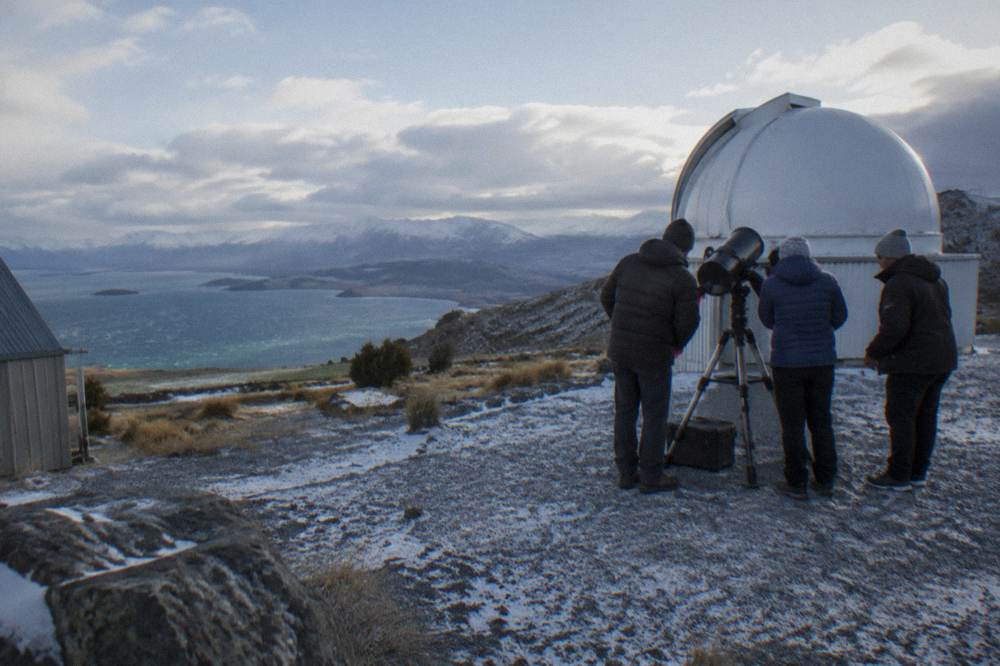
The Mount John summit sits at about 1,029 metres with high wind exposure and it often snows there in winter, and Dark Sky Project says it is cold at Lake Tekapo at night even in summer. Winter tours demand thermals, a snow jacket, gloves, a scarf, a hat and sturdy ankle-covering shoes; summer tours still call for thermals, long pants, a jersey, a jacket and a hat. Cold is a season difference in degree, not in kind.
Those clothing lists are Dark Sky Project's own, published for its summit tour, and they map well onto every outdoor tour in the area because the basin's night cold is regional. Standing still for 75 minutes to 2 hours, which is the duration range of the tours covered here, drains body heat fast at any time of year. The difference between seasons is whether inadequate clothing is merely miserable or genuinely unsafe.
Here is the clothing picture by season, following the operator's own guidance:
| Season | What the cold feels like on a night tour | Clothing an operator advises |
|---|---|---|
| Summer (Dec to Feb) | Cold at night even in summer; still air can drop fast once the sky clears | Thermals, long pants, jersey, jacket, hat |
| Autumn and spring | Frost possible; wind chill on exposed sites | Summer list plus warm layers you can add |
| Winter (May to Aug) | Often below freezing; snow and high wind exposure on the summit | Thermals, snow jacket, gloves, scarf, hat, sturdy ankle-covering shoes |
Two structural points sit inside that table. One is footwear: sturdy ankle-covering shoes are a winter requirement on the summit tour, where the walk includes a 100 metre gravel incline and a few steps in the dark, not a flat paved viewing deck. The other is that the summit itself is the coldest seat in the region: 1,029 metres, high wind exposure, and it often snows in winter. The Crater Experience at Cowan's Observatory sits lower, in purpose-built observation craters that shelter from wind and light, and its advice is to layer warm clothing.
Some of that cold can be outsourced. The Mount John Summit Stargazing Experience loans an extreme cold weather jacket to its guests, and Silver River Stargazing provides warm down jackets on its Alpine Stargazing Experience. Those are the two jacket loans stated among the tours here; the next section sets out exactly who supplies what, because jacket provision is one of the clearest season-driven differences between tours.
For a fuller treatment of layers, footwear and what to leave in the car, the dedicated what to wear on a Lake Tekapo stargazing tour guide carries the detail.
Which Lake Tekapo Stargazing Tours Lend Warm Jackets?
Two of the twelve tours covered here state a warm jacket loan: the Mount John Summit Stargazing Experience, from $135.00 per person, which loans an extreme cold weather jacket, and the Alpine Stargazing Experience with a Guide, from $56.00, which provides warm down jackets. The Crater Experience at Cowan's Observatory tells guests to layer warm clothing and states no jacket loan.
That difference matters most in winter, when a jacket you did not have to carry can decide whether the second half of a tour is pleasant or painful. It also matters on a summer trip with limited luggage, since flying into Christchurch or Queenstown for a summer itinerary rarely includes packing for sub-zero nights.
| Tour | From price per person | Duration | Warm jacket loan | Other stated comforts |
|---|---|---|---|---|
| Mount John Summit Stargazing Experience | $135.00 | 1 hour 45 minutes | Yes, extreme cold weather jacket | Coach to the summit, telescopes and an observatory dome |
| Alpine Stargazing Experience with a Guide | $56.00 | 1 hour 15 minutes | Yes, warm down jackets | 14 inch telescopes, astro-lasers, private 50,000-acre farm site, digital photo |
| Chameleon Stargazing Shared Tour | $73.00 | 1 hour 30 minutes | - | Outdoor seats and blankets, hot chocolate and marshmallows, digital photo |
| Astro Experience (Astro Tekapo) | $59.00 | 1 hour 30 minutes | - | Hot chocolate, moon chair, fleece blanket |
| Hot Pools and Stargazing (Soak in the Stars) | $102.63 | 1 hour 30 minutes | - | Exclusive hot pool use, floating hammock, wool blanket, hot drinks |
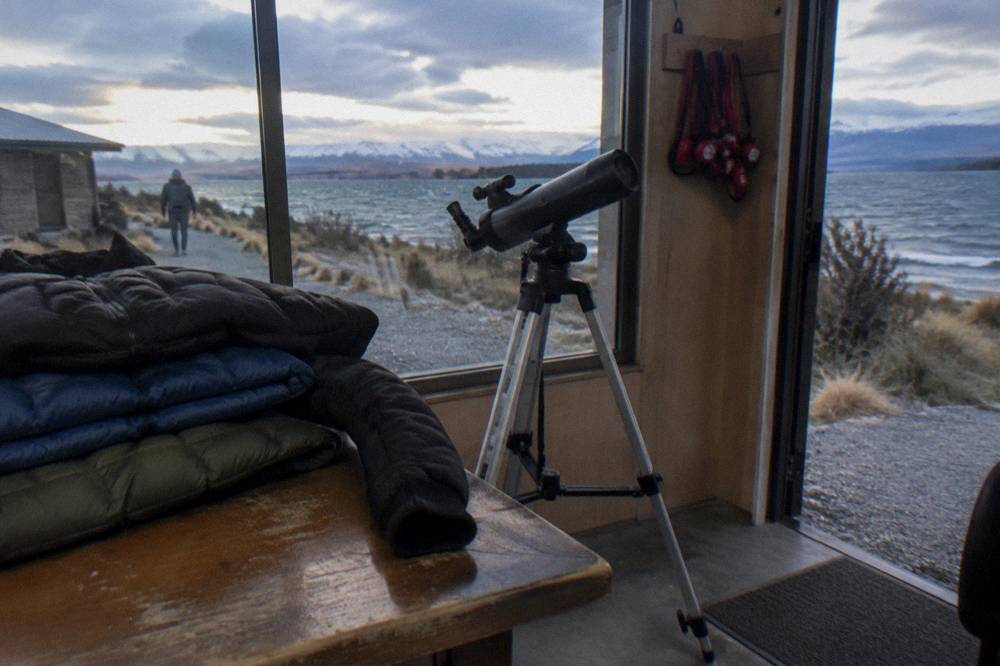
Read the blank cells carefully: a dash means the booking information does not state a jacket loan either way, so treat those tours as bring-your-own and dress for the coldest plausible hour. Blankets, seats and hot drinks, which three of the tours above do state, take the edge off standing cold but are not substitutes for a proper jacket in winter.
The jacket question is really a proxy for a bigger planning point. In winter, choose tours that actively manage your warmth: jacket loans, seated viewing, hot drinks, or in the case of the Hot Pools and Stargazing night, a 38-degree pool as the viewing platform. In summer, when the cold is sharp but not dangerous for a reasonably dressed adult, the choice can lean toward format, price and group size instead.
The Mount John summit tour earns its price for winter visitors in exactly this way, and it is the most winter-proofed tour on the lakefront: the coach ride up, the loaned jacket, and the observatory dome on the summit.
Do Lake Tekapo Stargazing Tours Run All Winter?
Yes, the tours covered here operate through winter, and Dark Sky Project says winter months are often the clearest and darkest, but every outdoor tour is weather dependent and each operator sets its own cancellation and refund terms. All twelve booking pages state free cancellation up to 24 hours before the start for a full refund. No operator promises a clear sky in any season.
Winter weather cuts both ways. The same cold, stable air that can make a winter sky exceptionally transparent also brings snow, ice and cloud, and each operator handles the resulting cancellations differently. It is worth knowing the terms before you book, because they differ more than the prices do.
Dark Sky Project, for its two outdoor tours, decides as close to departure as possible and notes that low cloud is often blocked by the basin's topography, so cloud on the forecast alone does not always cancel a night; if outdoor stargazing is not possible, guests are offered an indoor alternative, a reschedule, a voucher or a refund. Astro Tekapo states a full refund if sky conditions are too cloudy for stargazing. Silver River Stargazing's stated policy for its Ultimate tour is a different date or a full refund if poor weather cancels it. Stargaze Mackenzie in Twizel runs only in clear conditions and offers a refund or reschedule if weather cancels.
The Hot Pools and Stargazing night has the most distinctive terms of the twelve: it runs even if some or none of the sky is visible, switching to an indoor virtual reality session with the hot pool still included, and a 25 percent refund applies if under 30 minutes of telescope viewing happens. For a winter traveller nervous about losing the whole evening to cloud, that structure is a genuine consideration. The deeper comparison of weather terms tour by tour lives in the guide to Lake Tekapo stargazing weather and cloud cancellations.
Two winter-specific logistics points close this out. First, road conditions: the drive from Tekapo to Twizel or to the Mount Cook area, about 1 hour 15 minutes to the village, can carry black ice, frost and freezing fog on winter nights, so build margin around any start point outside the village. Second, booking pace: winter's long nights give operators more slots, but the season also concentrates serious stargazers, and Dark Sky Project notes its tours often sell out, with same-day booking sometimes possible but never to be relied on. The question of whether you need to book a Tekapo stargazing tour in advance has its own full answer.
Does The Moon Matter More Than The Season At Lake Tekapo?
On many nights, yes: the Moon can matter as much as the season, because a full moon washes out faint stars and the Milky Way, while a new moon gives the darkest sky, in Dark Sky Project's own FAQ wording. A December night near the 9 December 2026 new moon can outperform a June night near the 19 June 2027 full moon. The season sets the length of the night; the Moon sets its quality.
This is the piece of the puzzle most itineraries ignore. Visitors block out a week in winter assuming darkness equals spectacle, then land in the middle of a bright moon phase and wonder why the faint stars are missing. The fix is cheap: align the trip dates, or at least the tour night, with the moon calendar.
| Period | New moon (darkest sky) | Full moon (washes out faint stars) | Nights with 3+ moon-free dark hours |
|---|---|---|---|
| November 2026 | 9 November | 25 November | 13 of 30 |
| December 2026 | 9 December | 24 December | 12 of 31 |
| May 2027 | 6 May | 20 May | 21 of 31 |
| June 2027 | 5 June | 19 June | 20 of 30 |
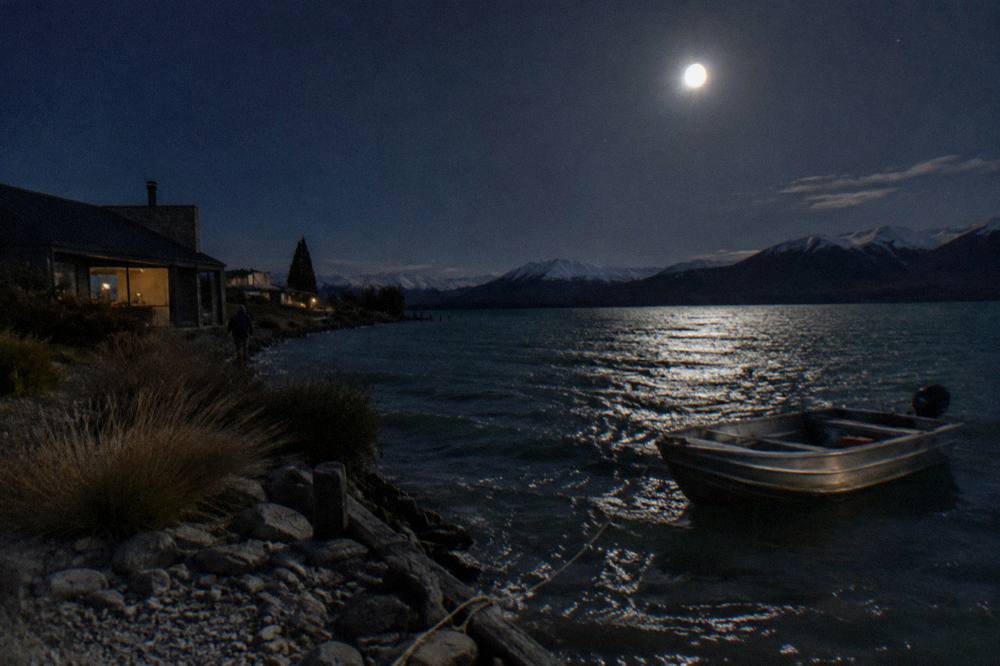
Note how the seasons interact with the Moon in that last column. Winter months carry more nights with at least three fully dark, moon-free hours, 20 or 21 nights a month in May and June, against 12 or 13 in November and December. That is partly night length and partly lunar geometry, and the combined effect is why winter has its reputation: not just cold, clear air, but more nights per month where nothing bright shares the sky.
A summer trip is not disqualified by the Moon, but it needs the calendar more. With only 3.5 to 4 hours of darkness in December, a moon above the horizon can consume most of the usable window, so the nights either side of the 9 December new moon are disproportionately valuable. If your December dates are fixed by flights, check the full Lake Tekapo stargazing moon phase calendar before choosing which night to book, and hold the tour for the darkest of them. A moonless December night is ideal for stars, but the aurora is a separate question, and a look at what a Lake Tekapo stargazing tour can and cannot show helps set honest expectations before a night is booked.
Which Tours Suit A Winter Trip Versus A Summer Trip?
For winter, the tours that manage cold best are the Mount John Summit Stargazing Experience at from $135.00 with its loaned extreme cold weather jacket and coach, and the Alpine Stargazing Experience at from $56.00 with warm down jackets. For summer, the seated Chameleon tour at from $73.00 and the hot pools night at from $102.63 suit late, mild evenings. A new listing, the Japanese-language Zen tour, meets in Twizel, not Tekapo.
The reasoning behind those pairings is straightforward. Winter rewards tours where the operator carries the warmth: coach transport instead of a self-drive to a dark site, a loaned jacket, or an enclosed observatory setting. Summer rewards comfort of a different kind, seating, hot drinks, a short and late program, and a format children on school holidays can finish near midnight.
| Tour | From price per person | Duration | Winter fit | Summer fit |
|---|---|---|---|---|
| Mount John Summit Stargazing Experience | $135.00 | 1 hour 45 minutes | Strong: loaned jacket, coach, dome | Good, min age 10 and a late start to manage |
| Alpine Stargazing Experience with a Guide | $56.00 | 1 hour 15 minutes | Strong: down jackets provided | Good: short format, photo included |
| Chameleon Stargazing Shared Tour | $73.00 | 1 hour 30 minutes | Good: seats, blankets, hot chocolate | Strong: min age 5, comfortable late-night format |
| Hot Pools and Stargazing (Soak in the Stars) | $102.63 | 1 hour 30 minutes | Good: pool warmth, indoor VR if cloudy | Strong: min age 10, mild-evening soak |
| Mt Cook Stargazing Experience | $56.00 | 1 hour 15 minutes | Consider road ice to Tasman Glacier car park start | Strong: ties into a Mount Cook summer itinerary |
The Mt Cook Stargazing Experience deserves its own note in any season comparison. It starts at the Tasman Glacier Car Park in the national park, not in Tekapo, and there is no transfer from the village, so it suits travellers already based at Mount Cook or driving that road. Rated 4.8 across 17 reviews, it shares the from $56.00 price of the Alpine tour in Tekapo. Winter visitors should weigh the night drive; summer visitors get a natural fit with daytime hiking in the park.
Families, finally, should let minimum ages narrow the field before price does. The Chameleon tour and the Crater Experience both welcome children from age 5, Astro Tekapo and Stargaze Mackenzie from age 6, while the Mount John summit tour and the hot pools night both set age 10. The Zen stargazing tour in Twizel, a new listing conducted in Japanese, has no reviews yet, so there is no rating to compare. Whether children thrive on a 23:30 summer start is a family-by-family judgement, and winter's earlier darkness can actually suit young stargazers better despite the cold.
Common Questions About Lake Tekapo Stargazing Seasons
Is Winter Or Summer Better For Lake Tekapo Stargazing?
Winter gives about 10.5 to 11.5 hours of darkness per night from May to July and Dark Sky Project says winter months are often the clearest and darkest, while summer nights are mild but short, 3.5 to 4 hours in December with darkness starting near midnight. Neither season guarantees a clear sky, and prices do not change between them.
What Time Do Lake Tekapo Stargazing Tours Start In Summer?
In December astronomical darkness begins between 23:26 and 23:54 local time, so summer tours depart late, often close to the onset of darkness. Book ahead, because few slots fit the short dark window.
How Cold Are Lake Tekapo Stargazing Tours In Winter?
The Mount John summit sits at about 1,029 metres with high wind exposure and often snows in winter. Operators advise thermals, a snow jacket, gloves, a scarf, a hat and sturdy ankle-covering shoes, and note it is cold at night even in summer.
Which Lake Tekapo Stargazing Tours Provide Warm Jackets?
Two tours state a jacket loan: the Mount John Summit Stargazing Experience, from $135.00, with an extreme cold weather jacket, and the Alpine Stargazing Experience with a Guide, from $56.00, with warm down jackets. Dress warmly on the others.
Do Lake Tekapo Stargazing Tours Run In Winter?
Yes, and winter is a popular season for them, but every outdoor tour is weather dependent and each operator sets its own cancellation and refund terms. All twelve booking pages state free cancellation up to 24 hours before the start for a full refund.
Does The Moon Matter More Than The Season At Lake Tekapo?
Often yes. A full moon washes out faint stars and the Milky Way, while a new moon gives the darkest sky. A December night near the new moon on 9 December 2026 can show more than a June night near the full moon on 19 June 2027.
Whatever season you choose, the planning order stays the same: pick the dates by the darkness and moon tables, pick the tour by cold management and group size, then confirm the start point. Winter delivers the long, dark, often clear nights at the price of serious cold; summer delivers comfort and a family-friendly pace at the price of a late start and a short window. Once those tradeoffs narrow the choice down to a season, the guide to choosing the best night for Lake Tekapo stargazing helps match moon phases and darkness windows to specific dates.