What Can You See On A Lake Tekapo Stargazing Tour?
A plain-language rundown of what Lake Tekapo stargazing tours actually show: naked-eye constellations, laser-guided pointing, telescope views of the Moon, planets and star clusters, and how cloud and moonlight change the night.
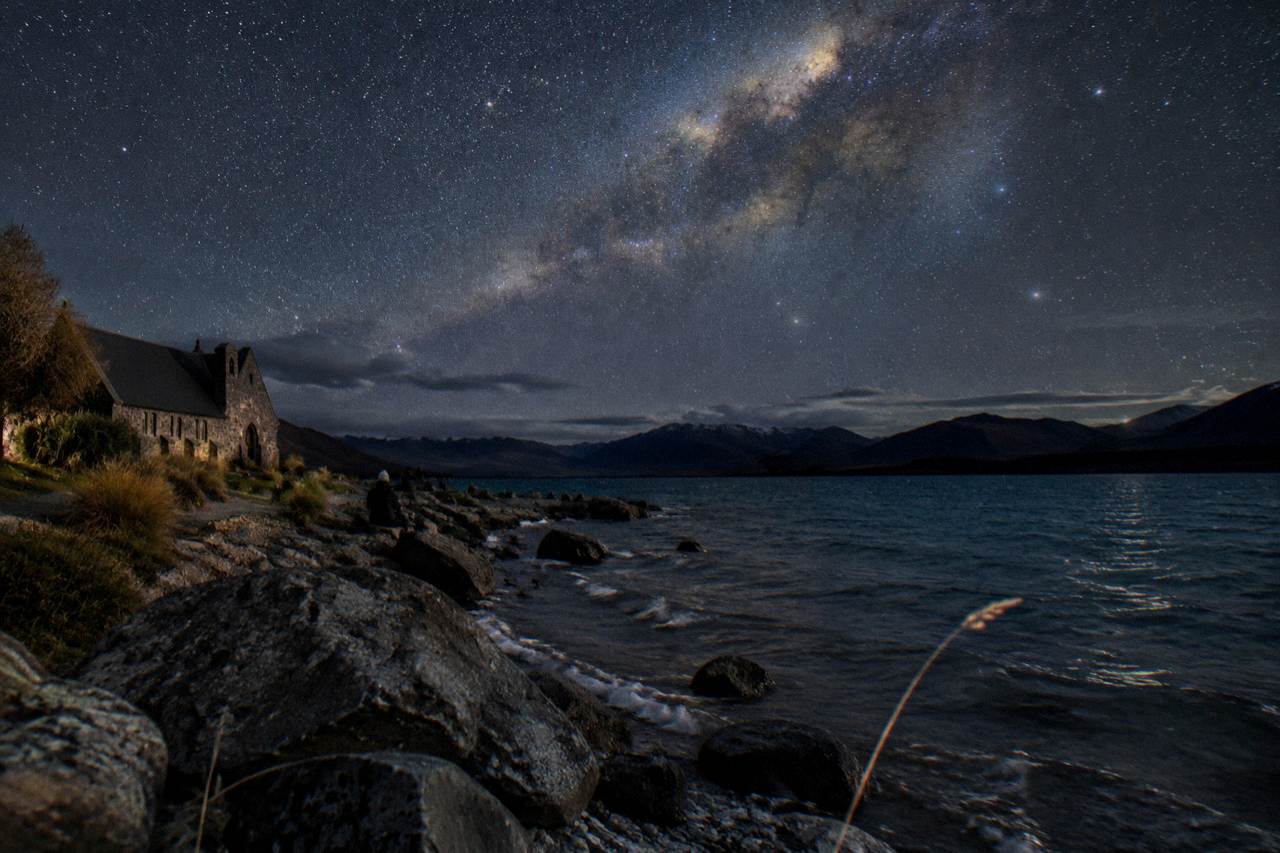
On a Lake Tekapo stargazing tour you can see a dense field of southern stars and constellations with the naked eye, planets and the Moon through a telescope, star clusters and other deep sky objects where a tour's optics allow, and, when the sky is dark and moon-free, the Milky Way's bright band overhead. What appears on any given night depends on cloud, season and the Moon, and no operator can guarantee a specific object or a clear sky.
That is the short version. The longer version is worth reading because the 12 tours covered here describe their skies in quite different ways, and the difference between a good night and an ordinary one often comes down to two things entirely outside any operator's control: cloud cover and moonlight. The Mackenzie Basin's clean, dark air is the reason the area holds international dark sky reserve status, but darkness alone does not fill a telescope eyepiece. Timing does a lot of work too, and the season matters more than most visitors expect.
What follows breaks the question into the pieces a reader actually asks about: the naked-eye sky, the telescope targets, the Moon and planets, the Milky Way, the southern lights, and the practical matter of where tours look from. Each section stands alone, so you can jump to the part that matters for your trip.
Most tours described here are guided, and all 12 booking pages state free cancellation up to 24 hours before the start for a full refund, which matters when the sky is the product.
Which Stars And Constellations Can You See At Lake Tekapo?
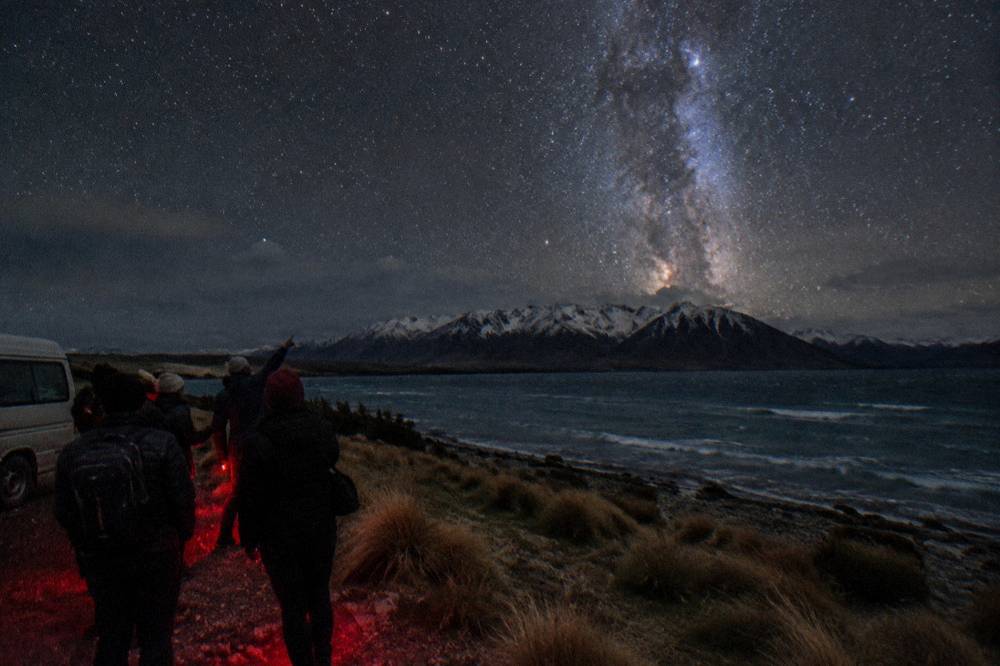
With the naked eye you can see the bright southern constellations, the Southern Cross, its two pointer stars, and a far denser star field than most visitors from the Northern Hemisphere have ever seen, with guides pointing out patterns using lasers. Chameleon Stargazing's tour spends about its first 30 minutes on naked-eye viewing before telescopes come out, and Dark Sky Project's Summit tour pairs guide lasers with the summit's elevated, unshielded horizon at 1,029 metres.
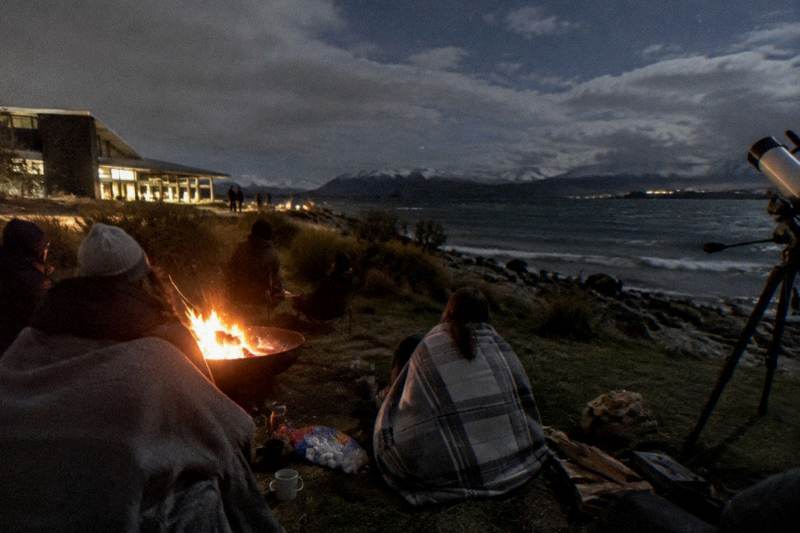
The naked-eye portion is not a warm-up act; on several tours it is the core of the experience. Chameleon Stargazing, rated 4.9 across 789 reviews, describes about 30 minutes of its 90-minute tour as naked-eye sky-reading from outdoor seats, with blankets, hot chocolate and marshmallows while a guide traces constellations. That structure suits visitors who want to understand the sky rather than simply queue at an eyepiece, and the group maximum of 14 keeps the pointing legible for everyone.
Dark Sky Project's Mount John Summit Stargazing Experience, from $135.00 per person for 1 hour 45 minutes, uses guide lasers on the summit for naked-eye orientation before telescopes and the observatory dome's 16 inch instrument. The elevation and the research-grade surroundings are that tour's signature. Its Crater experience, from $78.00 for 75 minutes, instead uses purpose-built observation craters at Cowan's Private Observatory, walls that shelter the viewing terrace from wind and stray light, with 14 inch telescopes and a minimum age of 5, a better fit for younger families than the Summit's minimum age of 10.
The Alpine Stargazing Experience with a Guide, from $56.00 per person for 1 hour 15 minutes, runs 14 inch telescopes and astro-lasers across a private 50,000-acre farm site, capped at 10 guests, with warm down jackets provided and a complimentary digital photo. For a fuller comparison of the smaller group formats, the Lake Tekapo small group stargazing tours guide sets out the differences side by side.
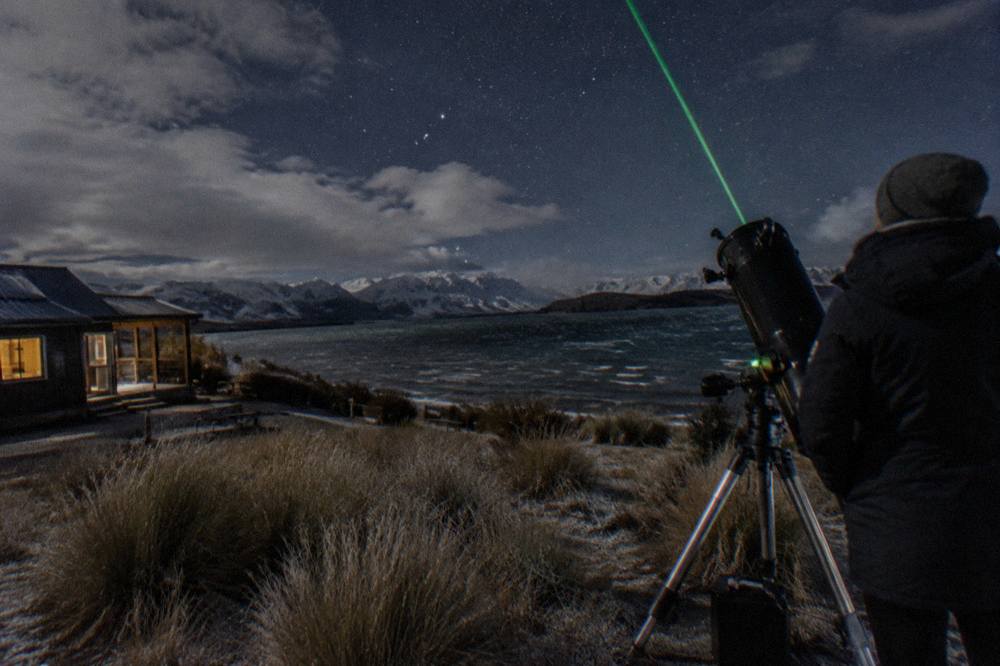
A word on expectations. The southern sky is genuinely different for northern visitors: the Southern Cross, the pointers, the Magellanic Clouds as faint smudges on dark nights, and overhead constellations that never rise from Europe or most of North America. Guides on every tour here lean into that. But faint smudges and dim constellations are exactly what a full Moon erases, which is why the moon section further down matters as much as any telescope choice.
What Do The Telescopes Show On A Lake Tekapo Stargazing Tour?
Through the telescopes you can typically see the Moon's craters in sharp detail, planets as discs or with visible features, and star clusters, nebulae and other deep sky objects depending on the instrument, with the Mt Cook tour naming deep sky observation specifically and the Twizel Zen tour naming the Moon, planets and star clusters. Every outdoor tour here includes telescope viewing, though cloud can shorten or replace it under each operator's own policy.
The instrument sizes tell you a lot. The Twizel Stargazing Tour with an Astronomer and Telescope, rated 5.0 across 77 reviews and from $67.00 per person, pairs a powerful telescope with a laser-guided tour of the sky, minimum age 6, and a photo included. Silver River's Ultimate Stargazing Experience carries a 16 inch telescope, the largest single instrument among the small-group tours, across 2 hours from $125.56 per person, capped at 10 guests. Chameleon and Astro Tekapo each field a 9.25 inch telescope plus a smart telescope, the smart unit useful for stacking live views of faint objects on screen.
Astro Tekapo's Astro Experience, from $59.00 for 90 minutes at its site in Takapo Regional Park, includes hot chocolate, a moon chair and a fleece blanket alongside the telescope time, with a full refund offered by that operator if sky conditions are too cloudy for stargazing. The group maximum is 10 and the minimum age is 6. Its weather terms are its own; other operators handle cloud differently, and the Lake Tekapo stargazing weather and cloud cancellations guide covers each policy operator by operator.
| Tour | From (USD, per person) | Telescope described | Named targets | Group max |
|---|---|---|---|---|
| Twizel Stargazing Tour with an Astronomer | $67.00 | Powerful telescope, laser-guided | Night sky tour, photo included | - |
| Alpine Stargazing Experience with a Guide | $56.00 | 14 inch telescopes, astro-lasers | Farm-sky deep views | 10 |
| Ultimate Stargazing Experience | $125.56 | 16 inch telescope | Photo included | 10 |
| Astro Experience (Astro Tekapo) | $59.00 | 9.25 inch plus smart telescope | Hot drink and photo included | 10 |
| Mt Cook Stargazing Experience | $56.00 | High-quality telescopes | Deep sky observation | - |
| Twizel Japanese-Language Zen Experience | $56.00 | Telescope viewing | Moon, planets, star clusters | - |
The Mt Cook Stargazing Experience, from $56.00 for 1 hour 15 minutes, meets at the Tasman Glacier Car Park inside the national park, about 1 hour 15 minutes from Tekapo, and names deep sky observation as its telescope specialty. The Zen experience in Twizel is a Japanese-language tour, 1 hour 30 minutes from $56.00, a new listing with no reviews yet, naming the Moon, planets and star clusters; it meets at Market Place in Twizel, with a hot drink and photo included.
One tour needs a clear boundary drawn. The Indoor Dark Sky Cultural Astronomy Experience, from $34.70 for 45 minutes, is an indoor exhibit with a restored 125-year-old Brashear telescope on display and guided storytelling across four zones. It offers no outdoor sky viewing at all, which makes it a poor answer to this article's question but a reasonable backup when the sky refuses to cooperate.
Can You See The Moon And Planets At Lake Tekapo?
Yes, the Moon and planets are standard telescope targets on the outdoor tours, with the Zen tour naming the Moon, planets and star clusters outright and others pointing the telescopes at whatever is well placed that night. Whether a specific planet is visible depends on the date and the time, tours run in darkness that starts anywhere from late evening in summer to early evening in winter, so no tour can promise a named planet in advance.
The Moon is the most reliable crowd-pleaser in any telescope because it is bright, detailed and visible through thin cloud that would end faint-object viewing. Craters, mountain rims and terminator shadows resolve sharply even in modest instruments, which is why operators lean on it. The catch is that a bright Moon washes out the fainter sky, so a Moon-rich night trades deep sky drama for lunar detail. Neither is the wrong choice, but they are different nights.
Planets are date-dependent in a way the Moon is not. Each sits in a given patch of sky for weeks at a time, and whether it has climbed above the horizon before a tour's viewing window closes is a question of season and clock time. Guides choose targets on the night accordingly, and a laser-guided sky tour, like the one the Twizel stargazing tour with an astronomer runs, will frame what is available honestly rather than to a script.
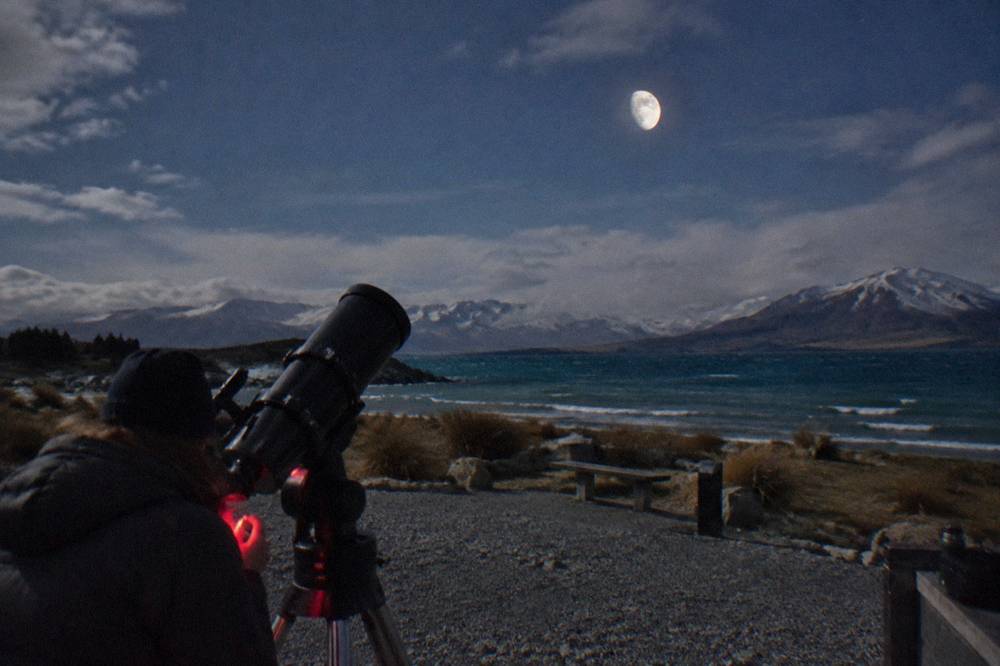
Timing shapes the whole evening more than visitors expect. New Zealand daylight time began on 27 September 2026 and runs until early April 2027, so summer darkness starts very late: astronomical darkness at the Tekapo lakefront begins between 22:22 and 23:24 across November 2026, and between 23:26 and 23:54 in December. Winter flips that, with darkness arriving before 19:00 from late May. The what time do the stars come out article unpacks the clock side in detail.
Can You See The Milky Way From Lake Tekapo?
You can see the Milky Way's bright band from Lake Tekapo on dark, moon-free nights, and it is one of the reasons the reserve exists, but no tour promises it on a given date. A new moon gives the darkest sky and a full moon washes out faint stars and the Milky Way, in Dark Sky Project's own words, and cloud can end the view entirely regardless of the calendar.
The Milky Way question is really a moon-phase question. The computed moon and darkness figures for the Tekapo lakefront make the pattern plain: November 2026 offers 13 of 30 nights with at least three moon-free dark hours, December 12 of 31, and the counts climb through autumn to 21 of 31 nights in May 2027. The nights themselves lengthen too, from 4.1 to 6 dark hours in November to about 11.3 to 11.5 hours in June. Longer, moon-free dark windows simply give faint objects more time above the horizon.
New moons landing mid-month are the dates to circle: 9 December 2026, 8 January 2027, 7 February 2027 and 8 March 2027 each open a run of dark nights either side. Full moons, 25 November 2026 and 24 December 2026 among them, do the opposite. The Lake Tekapo stargazing moon phase calendar tracks this in full, and the dedicated Milky Way stargazing at Lake Tekapo guide covers what the band looks like and when the core rides high.
None of this is a promise of clarity. Cloud is the Mackenzie Basin's other weather story, and Dark Sky Project notes on its own pages that its team decides as close to departure as possible because forecasts are indicative and low cloud is often blocked by the basin's topography, so cloud alone does not always cancel. That operator offers an indoor alternative, a reschedule, a voucher or a refund if outdoor stargazing is not possible. Other operators set their own terms, so read each tour's policy before booking rather than assuming one rule covers all.
Can You See The Southern Lights At Lake Tekapo?
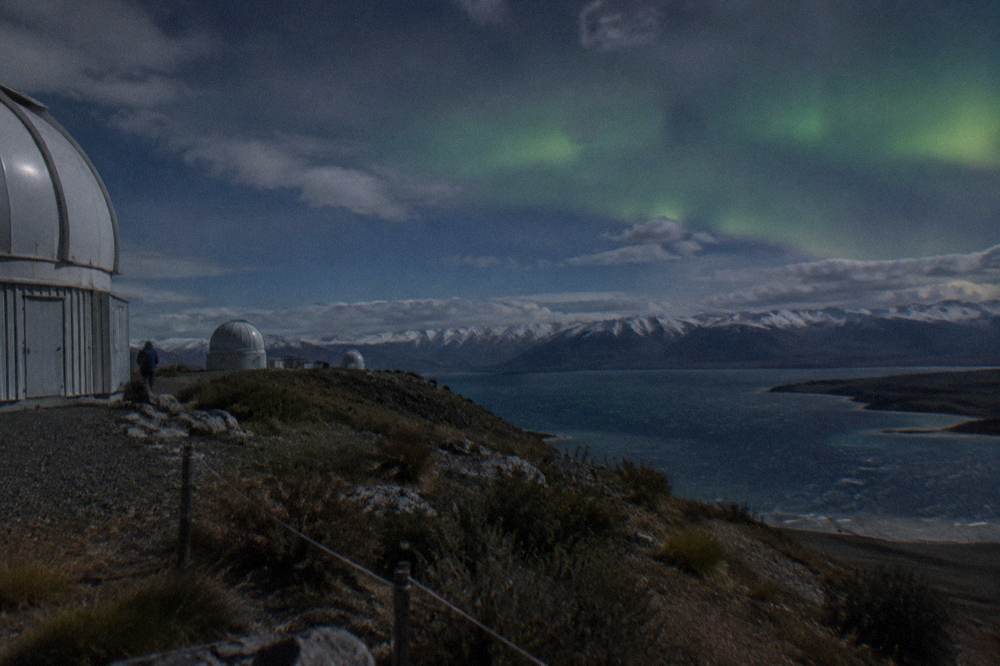
The Aurora Australis can occasionally be photographed and sometimes faintly seen from the Mackenzie Basin on strong geomagnetic nights, but no tour here promises it, and Dark Sky Project states plainly that it cannot guarantee the Aurora Australis and runs no aurora tours. Treat the southern lights as a bonus if a strong display coincides with your visit, never as something a booking buys.
This is the question most worth deflating honestly, because aurora imagery circulates widely and sets expectations no guided tour can meet. The practical read: choose your tour for the stars, telescopes and guiding it actually describes, and count any auroral glow as luck.
The southern lights and stargazing at Lake Tekapo guide goes deeper on what an aurora is and what makes one visible, without pretending any operator can schedule the Sun. Meanwhile the tours themselves stay honest on the point, and so should any article about them.
Where Do Lake Tekapo Stargazing Tours Look From?
The tours look at the same dark reserve sky from different vantage points: Mount John's summit at 1,029 metres, Cowan's private observatory craters, a private 50,000-acre farm site, the lakeside Tekapo Springs pools, a site in Takapo Regional Park, and, outside Tekapo, the Tasman Glacier car park at Mount Cook and three meeting points around Twizel. The vantage changes comfort and horizon, not the fundamental darkness.
Every start point is inside the Aoraki Mackenzie reserve, designated in 2012 and the largest dark sky reserve in the Southern Hemisphere at 4,367 square kilometres, where district plan lighting rules. That is why a Twizel meeting point and a summit above Lake Tekapo deliver comparably dark skies; what differs is the drive, the shelter and the furniture. The reserve's status is explained further by DarkSky International, the body that designates such reserves.
Comfort differences are real. Silver River's Alpine tour hands out warm down jackets and runs from a shuttle after check-in at Kiwi Treasure, 12 Rapuwai Lane. Chameleon seats you outdoors with blankets at 70 Andrew Don Drive. The Hot Pools and Stargazing night, Soak in the Stars, from $102.63 for 90 minutes with a 4.3 rating across 121 reviews, wraps the sky session around exclusive hot pool use with a floating hammock, and it is the only tour here with pickup, on request from the Tekapo township, subject to availability. The what to wear guide is the right companion for all of them, since nights are cold even in summer.
If the sky clouds over, each operator follows its own policy. Tekapo Springs' tour runs even when cloud limits telescopes, swapping in an indoor virtual reality session with the pools still included and a 25 percent refund if under 30 minutes of telescope viewing happens. Silver River's preference is reschedule or refund. Astro Tekapo offers a full refund when cloud blocks stargazing. Match the policy to your travel flexibility before you book and the weather question mostly answers itself.
Before any of that, the drive in deserves respect: Tekapo is about three hours by road from Christchurch or Queenstown, and at night the highways can carry black ice, frost, freezing fog and stock or wildlife in the cold months. The NZTA Journey Planner at journeys.nzta.govt.nz shows current conditions, and it is the right last check before a night drive.
Which Lake Tekapo Tour Should You Pick For The Best View?
Pick by what you want to look at and how you want to look at it: the Twizel astronomer tour for a laser-guided sky read with a 5.0 rating across 77 reviews, Alpine from $56.00 for jackets, lasers and a 10-person cap on a private farm, or Zen, also from $56.00, for the same sky narrated in Japanese. There is no single best view, only the format that fits your night.
Price is a poor proxy here. The three least expensive outdoor nights, Alpine, Mt Cook and Zen, each start at $56.00 per person, tied, while the most reviewed tour of the 12, Alpine with 864 reviews at 4.6, sits in that cheapest tier. The dearest outdoor night, the Mount John Summit at $135.00, buys elevation, an observatory dome and jackets, not a different sky. Choosing on price alone would miss that entirely.
The Twizel astronomer tour earns its place in this article because it answers the headline question directly: a laser-guided tour of the constellations followed by telescope time, 1 hour 15 minutes, from $67.00, minimum age 6, with a photo included and free cancellation up to 24 hours before the start for a full refund. It meets at 50 Kate Cameron Drive in Twizel, which sits between Tekapo and Mount Cook village, so it suits an itinerary spanning the basin rather than a Tekapo-only stay.
Chameleon earns the second mention for the opposite reason: it is the Tekapo village answer, 90 minutes from $73.00, 4.9 across 789 reviews, blending roughly 30 minutes of naked-eye constellation reading with telescope viewing from outdoor seats, hot chocolate and a souvenir photo, capped at 14 guests. Between the two, most readers will find the format that matches the night they want, whether that means understanding the sky by eye or pressing an eye to the eyepiece.
Families should note the age floors: 5 at Chameleon and the Crater experience, 6 at Astro Tekapo and the Twizel astronomer tour, 10 at the Summit and the Hot Pools night. Group caps run from 10 on several small-group tours to 14 at Chameleon, 20 on the Go Tekapo Twizel night and 26 in the indoor session. The stargazing with kids guide works through those numbers in context.
And if Tekapo itself is sold out or you are bedding down elsewhere, the Mount Cook and Twizel tours are genuine alternatives inside the same reserve, not consolation prizes. The Hermitage also runs its own Big Sky Stargazing in the national park as a neighbouring option, separate from the tours here. Comparing the two bases honestly, including the drive between them, is exactly what the Mount Cook, Twizel or Tekapo basing article does.
Common Questions About What You Can See On A Lake Tekapo Stargazing Tour
What Can You See On A Lake Tekapo Stargazing Tour?
Southern constellations and a dense star field by naked eye with laser-guided pointing, the Moon, planets, star clusters and deep sky objects through telescopes depending on the tour's instruments, and, on dark, moon-free nights, the Milky Way's bright band. Cloud and moonlight change what appears, and no tour can guarantee a specific object.
Can You See The Milky Way On A Lake Tekapo Stargazing Tour?
You can on dark, moon-free nights. A new moon gives the darkest sky and a full moon washes out faint stars and the Milky Way, per Dark Sky Project's own guidance. Around the 9 December 2026 new moons, the dark hours each night run roughly 4 to 6 hours.
Do All Lake Tekapo Stargazing Tours Include Telescope Viewing?
All 11 outdoor tours include telescope viewing; the Indoor Dark Sky Cultural Astronomy Experience does not, it is an indoor exhibit with a restored 125-year-old Brashear telescope on display and no outdoor sky viewing. Telescope sizes range from 9.25 inch instruments with smart telescopes to a 16 inch telescope on the Ultimate experience.
Can You See Planets From Lake Tekapo?
Planets appear as telescope targets when they are well placed on the night, and the Zen tour in Twizel names the Moon, planets and star clusters among its targets. Because planets move through the sky over weeks and darkness starts at different times by season, no tour names a specific planet in advance.
Can You See The Southern Cross From Lake Tekapo?
Yes, the Southern Cross and its two pointer stars are visible to the naked eye and are standard stops on guided sky tours, including Chameleon's naked-eye segment and the laser-guided portions of the Dark Sky Project and Twizel tours.
Does A Full Moon Ruin A Lake Tekapo Stargazing Tour?
It changes it rather than ruining it. A full moon washes out faint stars, clusters and the Milky Way, but the Moon itself through a telescope is a detailed, bright target. Around full moons, 25 November 2026 and 24 December 2026 among them, expect lunar viewing to dominate over faint deep sky objects.