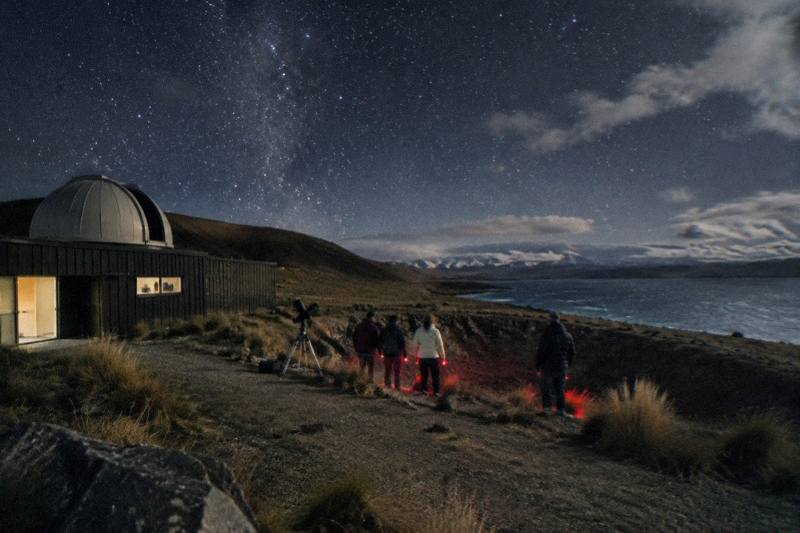
Crater Experience Stargazing At Cowan's Observatory Explained
The Crater Experience at Cowan's Observatory is Dark Sky Project's shorter, lower-altitude stargazing night at Lake Tekapo. Here is what the 75 minute tour includes, what it costs, and how it compares with the Mount John Summit tour.
Short answer
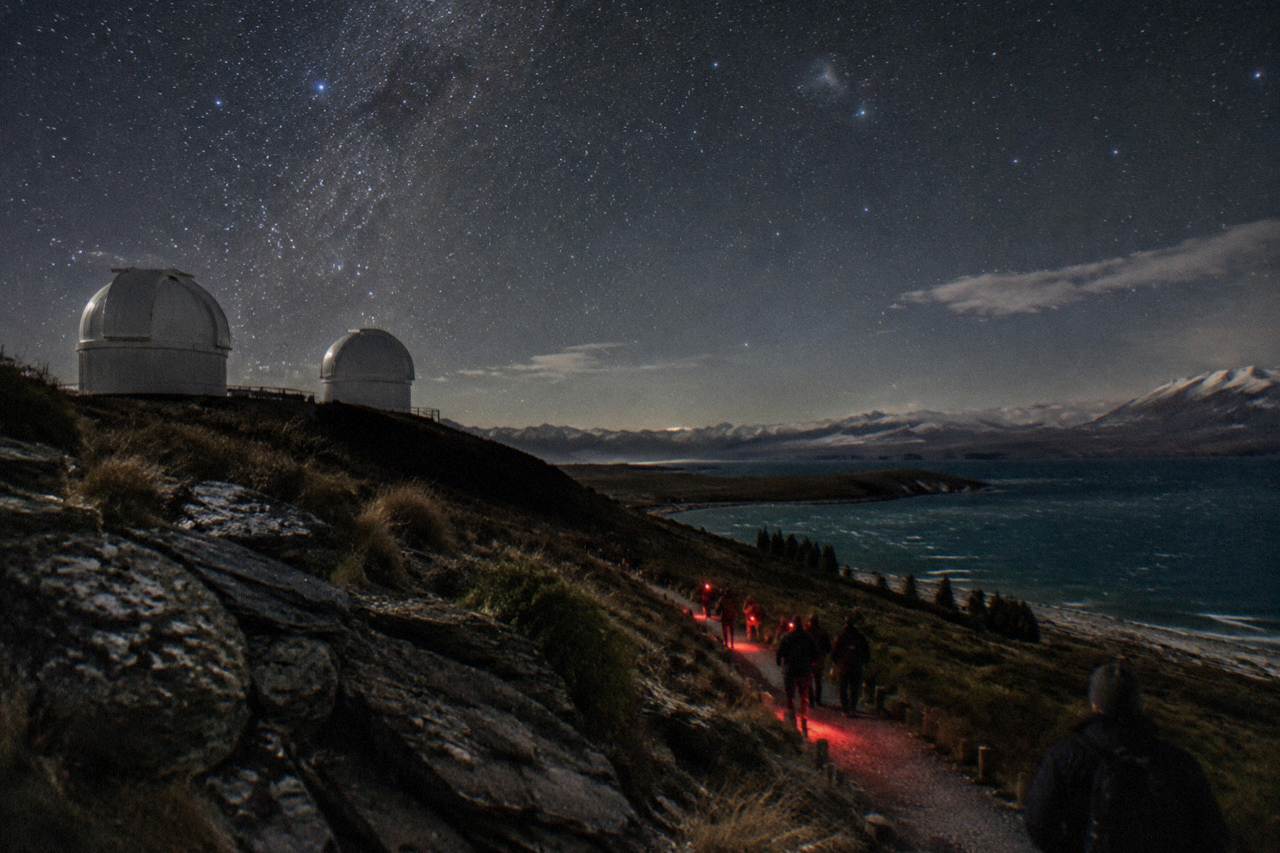
The Crater Experience at Cowan's Observatory runs 75 minutes, from $78.00 per person, rated 4.6 across 91 reviews, minimum age 5. Guests view through 14 inch telescopes from purpose-built observation craters that shelter from wind and light, reaching the observatory by coach from Dark Sky Project's base at 1 Motuariki Lane, Lake Tekapo.
There are a dozen stargazing tours in the area, and one of the most frequent questions from families and first-time visitors is which Dark Sky Project night to pick. The Crater Experience at Cowan's Observatory is the operator's 75 minute option: a coach ride from the lakefront base to a private observatory, viewing through 14 inch telescopes from purpose-built observation craters, with a minimum age of 5. This guide explains what the tour includes, what it costs, how it differs from the Mount John Summit Experience, and what to plan around, from clothing to cloud. If the Summit Experience sounds like the better fit, the Mount John stargazing pricing guide explains exactly what that night costs.
What Is The Crater Experience At Cowan's Observatory?
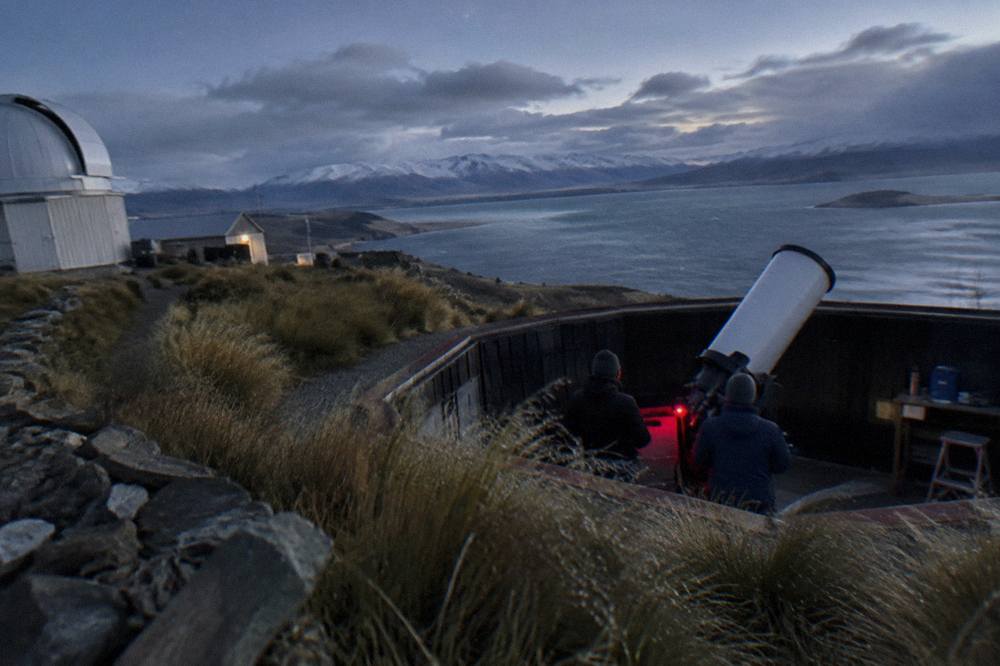
The Crater Experience is Dark Sky Project's 75 minute stargazing night at Cowan's Private Observatory near Lake Tekapo, from $78.00 per person and rated 4.6 across 91 reviews. Guests are coached from the operator's base at 1 Motuariki Lane to a private observatory, where purpose-built observation craters shelter the telescopes from wind and stray light, and the minimum age is 5, one of the youngest on the lakefront.
The observatory itself is the point of difference. Rather than standing in an open field, guests view from sunken observation craters dug into the site, walls that block the breeze and the low-level glow that even a dark sky village produces. The operator describes them as purpose-built for the purpose, and the design means the 14 inch telescopes sit in a steadier, darker pocket of ground than an exposed hilltop would give. For anyone who has shivered through a windy stargazing stop elsewhere in New Zealand, that shelter is a genuine comfort factor.
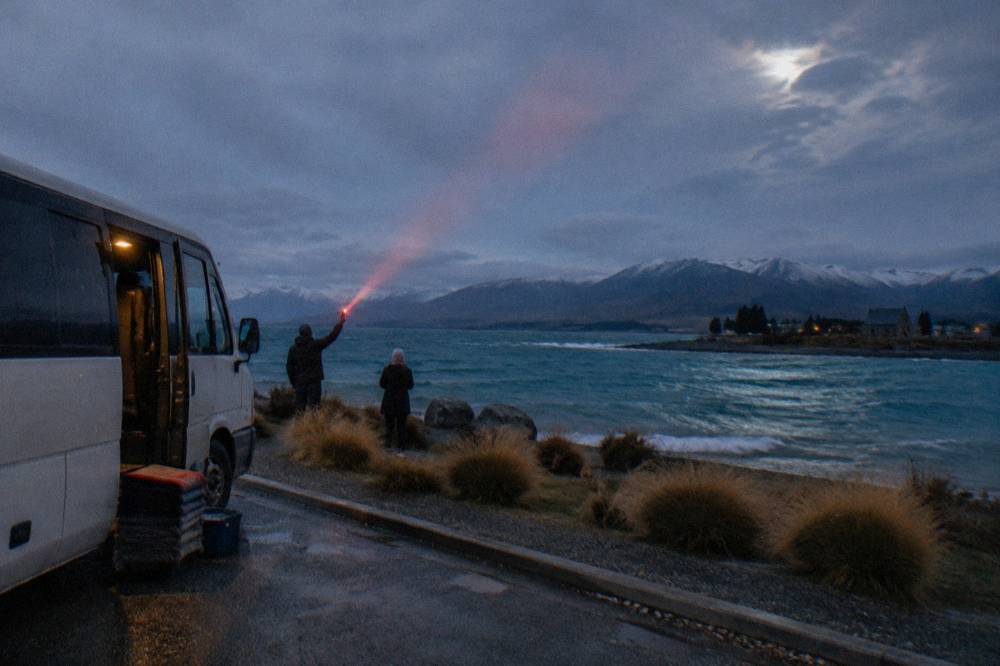
The tour is run by Dark Sky Project, a Ngai Tahu Tourism business based on the lakefront at 1 Motuariki Lane. Check-in happens there, about 15 to 20 minutes before departure, and the coach covers the roughly 5 minute drive to the observatory. The whole night is 75 minutes door to door from that departure, which makes it one of the shorter guided options around the lake: Chameleon Stargazing and Astro Tekapo both run 90 minute sessions, and the Summit Experience runs 1 hour 45 minutes.
The family angle matters. Of the Dark Sky Project nights, only the Crater Experience takes children as young as 5; the Summit Experience sets its minimum at 10. Around the wider lakefront, Chameleon Stargazing also welcomes age 5 and Astro Tekapo age 6, so the Crater sits in the small group of tours a family with young children can realistically book without splitting up. Families weighing the whole lakefront can compare options in the guide to Lake Tekapo stargazing tours compared.
The name describes the sheltered viewing hollows at the observatory. Anyone imagining a hike, or conversely worried about one, can set that aside; the night is a short coach transfer and standing or seated viewing at the instruments.
How Much Does The Crater Experience Cost And How Long Does It Run?
The Crater Experience costs from $78.00 per person and runs 75 minutes, coach transfer included. The price sits between the operator's two other products: the indoor Dark Sky Cultural Astronomy Experience at from $34.70 and the Summit Experience at from $135.00, both per person. Booking pages carry free cancellation up to 24 hours before the start for a full refund.
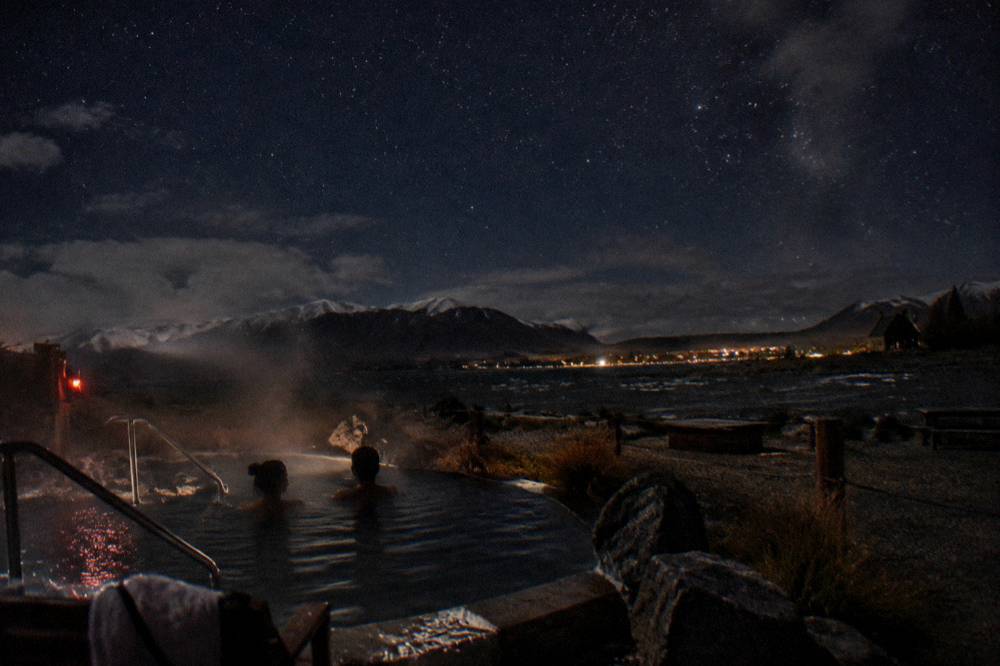
At $78.00 from, per person, the Crater Experience is the middle rung of Dark Sky Project's three-product ladder. The indoor cultural session is a 45 minute exhibit experience with a restored 125 year old Brashear telescope on display and no outdoor sky viewing; the Summit Experience is the 1 hour 45 minute coach trip up Mount John. The Crater splits the difference: real outdoor telescope viewing, at a price below the summit night.
| Tour | Operator | Duration | From (USD, per person) | Rating and reviews | Min age |
|---|---|---|---|---|---|
| Crater Experience at Cowan's Observatory | Dark Sky Project | 75 minutes | $78.00 | 4.6 across 91 | 5 |
| Mount John Summit Experience | Dark Sky Project | 1 hour 45 minutes | $135.00 | 4.6 across 348 | 10 |
| Indoor Dark Sky Cultural Astronomy Experience | Dark Sky Project | 45 minutes | $34.70 | 4.4 across 80 | - |
| Astro Experience (Astro Tekapo) | Astro Tekapo | 1 hour 30 minutes | $59.00 | 4.8 across 11 | 6 |
| Alpine Stargazing Experience with a Guide | Silver River Stargazing | 1 hour 15 minutes | $56.00 | 4.6 across 864 | - |
If you're weighing which of these options offers the best value, the guide to Tekapo observatory stargazing tour prices explains the start points and durations behind each fare.
Around the lake, the $78.00 from-price is not the cheapest outdoor night: the Alpine Stargazing Experience, the Mt Cook Stargazing Experience and the Twizel Japanese-language Zen experience all come in at from $56.00 in a three-way tie, and Astro Tekapo runs from $59.00. Those are different operators with different formats, and several of them are covered in the guide to small group stargazing at Lake Tekapo. What the extra spend buys on the Crater night is the observatory itself: purpose-built sheltered craters, 14 inch telescopes and a dome, rather than a farm paddock or a regional park clearing.
Booking early is wise in peak season. All 12 booking pages covered here state free cancellation up to 24 hours before the start for a full refund, which takes most of the risk out of locking a date in ahead of a trip.
Crater Experience Or Mount John Summit: Which Dark Sky Project Tour Fits?
Pick the Summit Experience for the higher viewpoint, the longer 1 hour 45 minute format, the loaned extreme cold weather jacket and the observatory dome at 1,029 metres, minimum age 10. Pick the Crater Experience for a 75 minute night at from $78.00, younger children from age 5, and sheltered observation craters with 14 inch telescopes. Both are rated 4.6, from 348 and 91 reviews respectively.
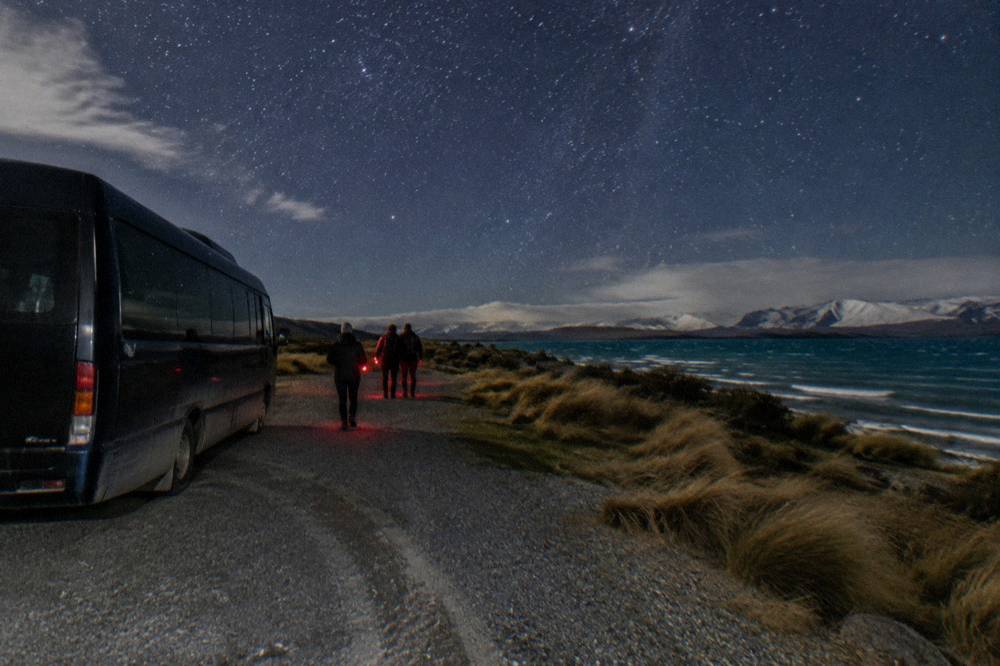
The two nights share a check-in at 1 Motuariki Lane and a coach transfer, and they diverge after that. The Summit coach climbs about 15 minutes each way to the Mount John Observatory summit, where the University of Canterbury runs New Zealand's largest professional research observatory with four research-grade telescopes. Guests get naked-eye guiding with lasers, telescopes, and a 16 inch telescope in the dome, plus a loaned extreme cold weather jacket, and the tour asks for moderate fitness: a 100 metre gravel incline plus a few steps in the dark. It is not wheelchair accessible, and visitors cannot drive up Mount John in the evening; night access is the coach only. If you're wondering whether the daytime rules differ, the guide to driving up to Mount John Observatory explains when the road is open to private vehicles and how the evening coach-only restriction works.
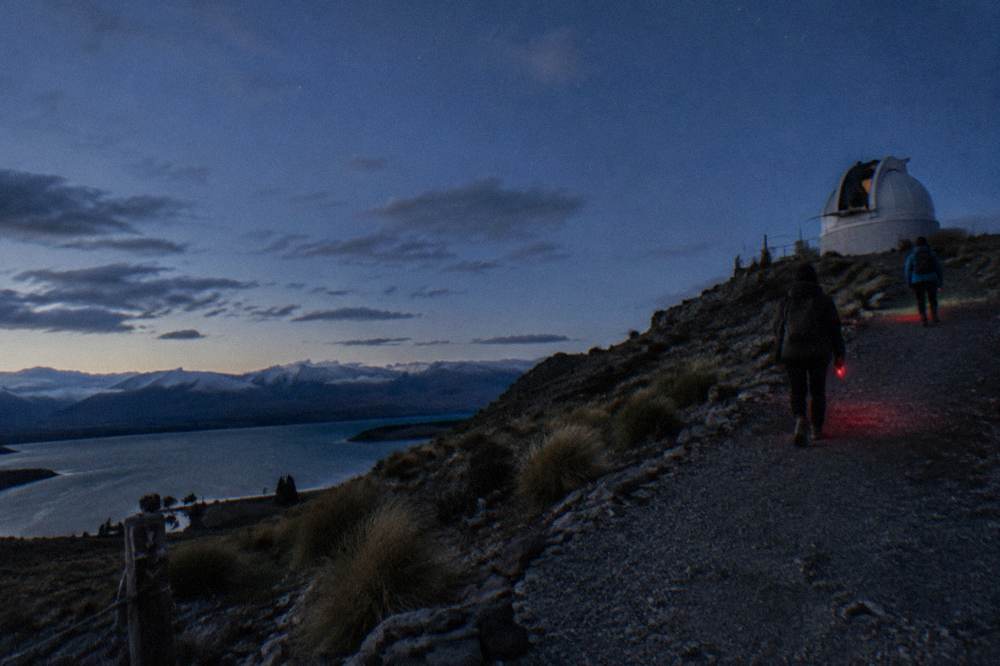
The Crater night trades altitude for shelter and simplicity. Terrain and fitness are not stated, so ask the operator, the coach ride is about 5 minutes, and the observation craters block wind and light at ground level. Wheelchair users can take part by following the coach in their own vehicle, per the operator's own page, a flexibility the Summit night does not offer. Jackets are loaned on the Summit only; the Crater's guidance is simply to layer warm clothing, and the operator's FAQ is blunt about why: it is cold at night around Tekapo even in summer. The full clothing picture, season by season, is set out in what to wear on a Lake Tekapo stargazing tour.
Money is the third axis. The gap between the two from-prices is meaningful for a family of four, and it is the price of moving a whole household up the mountain. Age is the fourth: a 6 year old can do the Crater night and cannot do the Summit. A household with mixed ages and one night in Tekapo often lands on the Crater for exactly those two reasons, while photographers and keener astronomers tend to pick the summit for the dome instrument and the darker, higher site. The deeper side-by-side, including the indoor session, is in Dark Sky Project Summit vs Crater.
Neither night can promise what the sky will do. Dark Sky Project's own position is that it cannot guarantee clear skies, the Milky Way or the Aurora Australis, and it runs no aurora tours; its team decides on weather as close to departure as possible, and low cloud is often blocked by the basin's topography, so cloud alone does not always cancel. If outdoor stargazing is not possible on a Crater night, guests are offered an indoor alternative, a reschedule, a voucher or a refund, and that policy belongs to this operator alone. The wider picture, including how other operators handle cloud, is in the guide to Lake Tekapo stargazing weather and cloud cancellations.
The Mount John question also comes up the other way around: can you skip both tours and just drive up? In the daytime, yes, with a small per-vehicle road fee paid at the gate, and the Astro Cafe up there is a daytime fixture. In the evening, no: night access to Mount John is the tour coach only, a rule worth knowing before planning a self-drive stargazing night. The details are covered in can you drive up to Mount John Observatory.
What Can You See Through The Crater Experience Telescopes?
The Crater Experience puts 14 inch telescopes and a dome at guests' disposal, guided by staff who point the instruments at whatever the night allows, which can include planets, star clusters, double stars and nebulae. No operator can promise the Milky Way or any specific object on any night; what the tour guarantees is the equipment, the guide and the sheltered site, not the sky.
Telescope size is the honest way to compare these nights, and 14 inches of aperture is a serious instrument for a guided tour. For context, Chameleon Stargazing and Astro Tekapo each run a 9.25 inch telescope plus a smart telescope, the Ultimate Stargazing Experience runs a 16 inch telescope, and the Summit Experience's dome instrument is also 16 inches. Aperture gathers light, so bigger scopes pull out fainter detail on any given night, and the Crater's 14 inch instruments sit near the top of the guided-tour range around the lake.
| Tour | Main telescope | Extras at the eyepiece |
|---|---|---|
| Crater Experience | 14 inch telescopes | Purpose-built observation craters and a dome |
| Mount John Summit Experience | 16 inch telescope in the dome | Naked-eye guiding with lasers, other telescopes |
| Ultimate Stargazing Experience | 16 inch telescope | 2 hour format, group max 10 |
| Chameleon Stargazing Shared Tour | 9.25 inch telescope | Smart telescope, hot chocolate, souvenir photo |
| Astro Experience (Astro Tekapo) | Premium 9.25 inch telescope | Smart telescope, moon chair, fleece blanket |
What those instruments show depends entirely on the night, the season and the moon. A new moon gives the darkest sky and a full moon washes out faint stars and the Milky Way, as Dark Sky Project's own FAQ puts it, and the objects on offer shift through the year as the sky rotates. The guide decides targets on the night. Guests on the Summit night get astrophotography tips from guides; on the Crater night the emphasis is the viewing itself from the sheltered craters. Photography policies are simple on the Summit, photos allowed with the flash off; the Crater's page sets no such detail, so anyone chasing a specific shot should read the wider rundown in can you take photos on a Lake Tekapo stargazing tour.
For readers whose real goal is one specific object, two honest notes. The Milky Way question has its own guide, including what a full moon does to it, at can you see the Milky Way on a full moon. And the southern lights, the Aurora Australis, cannot be promised by any operator here, Dark Sky Project included; the sky can show them, but no tour sells them, as the southern lights and stargazing guide explains.
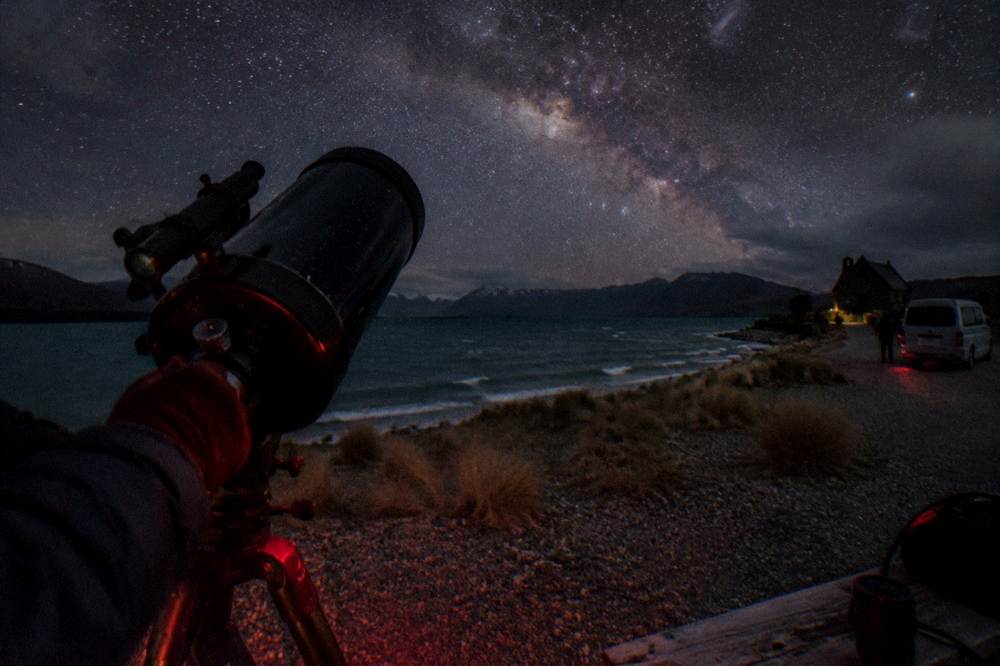
The reserve behind all of this is the Aoraki Mackenzie International Dark Sky Reserve, designated in 2012 and listed by DarkSky International, spanning 4,367 square kilometres across Aoraki / Mount Cook National Park and the Mackenzie Basin. District plan lighting rules apply across the reserve, which is why a sheltered crater five minutes from a village still sits under genuinely dark sky. The reserve story is told in full at the Dark Sky Project site and in the guide to Aoraki Mackenzie dark sky reserve tours.
What Should You Wear And How Do You Get To Cowan's Observatory?
Check in at the Dark Sky Project base, 1 Motuariki Lane on the Lake Tekapo lakefront, 15 to 20 minutes before departure; the coach then covers about a 5 minute drive to Cowan's Private Observatory. Wear layered warm clothing: jackets are loaned on the Summit Experience only, not stated for the Crater, and nights are cold here even in summer.
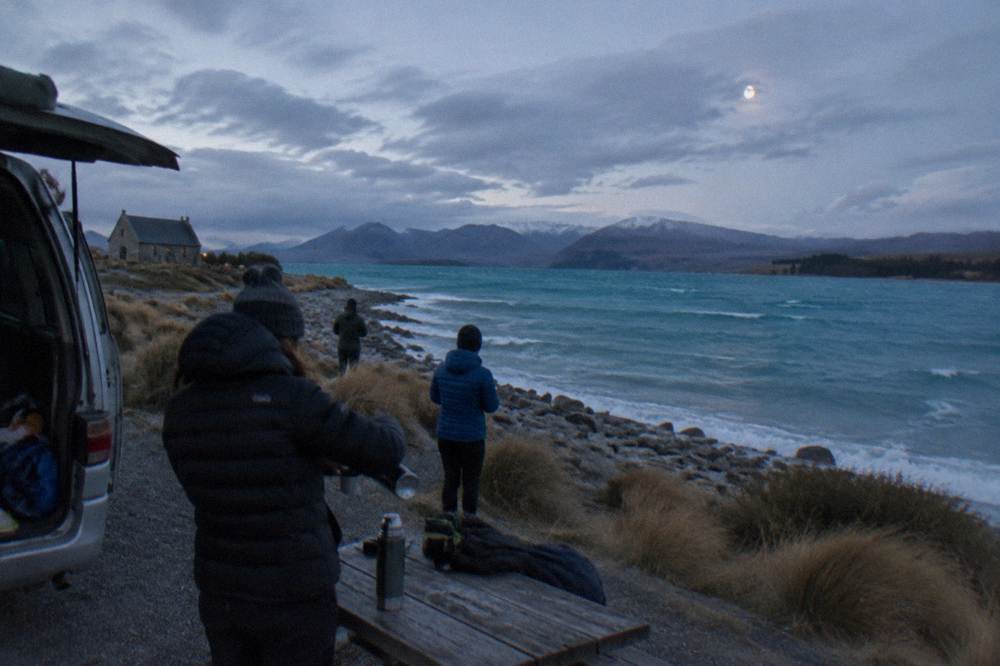
The clothing advice is the single most repeated piece of guidance around Tekapo stargazing, and the operator's own FAQ sets the standard. Summer nights call for thermals, long pants, a jersey, a jacket and a hat. Winter adds a snow jacket, gloves, a scarf and sturdy ankle-covering shoes. The observation craters block wind, which helps, but they do not heat the air, and a 75 minute night standing at a telescope drains warmth from anyone underdressed. Dark Sky Project says winter months are often the clearest and darkest, and moon-free nights are the darkest of all, so the coldest nights are often the best ones to be out for.
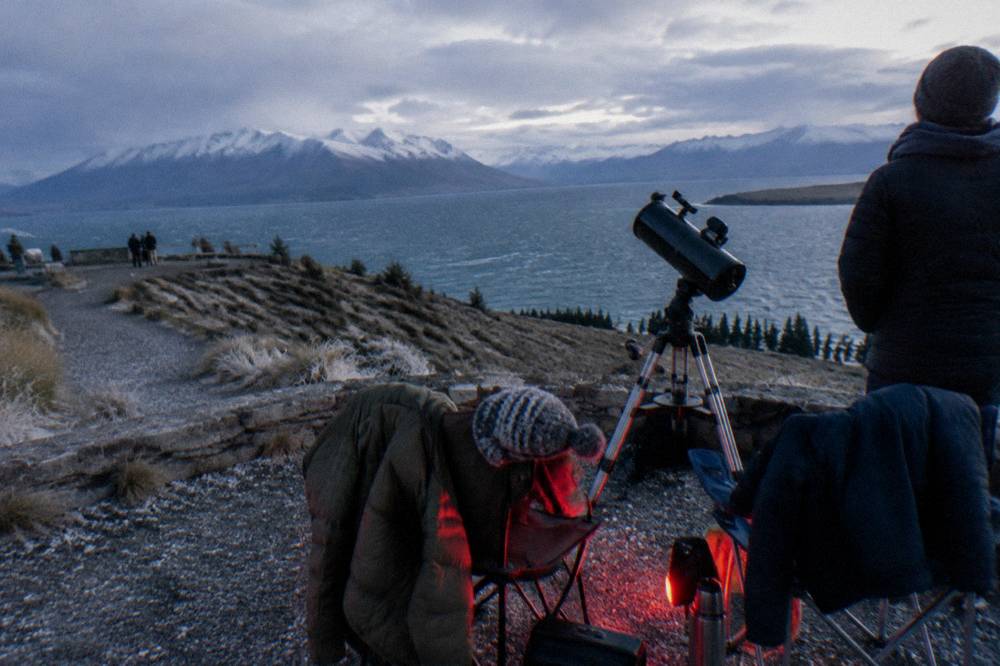
Getting to the check-in is straightforward. The tour itself supplies the transport from there: hotel pickup is not part of the Crater night, which states pickup as not included, so plan to make your own way to Motuariki Lane. Anyone driving in from outside the village at night should check conditions first; SH8 and SH80 can carry black ice, frost, freezing fog and stock or wildlife in the cold months, and the NZTA Journey Planner is the official source for road conditions.
| Need | Crater Experience | Summit Experience |
|---|---|---|
| Check-in | 1 Motuariki Lane, 15-20 min early | 1 Motuariki Lane, 15-20 min early |
| Transfer | Coach, about 5 minutes | Coach, about 15 minutes each way |
| Jackets | Not stated; layer warm clothing | Extreme cold weather jacket loaned |
| Minimum age | 5 | 10 |
| Wheelchair access | Yes, follow the coach in own vehicle | Not wheelchair accessible |
| Fitness needed | Not stated | Moderate, 100 m gravel incline |
Families should weigh the minimum ages against bedtimes as much as budgets. A 75 minute night starting after dark in a New Zealand summer means a late finish for young children: in December 2026, astronomical darkness does not even begin until between 23:26 and 23:54 local time, and November nights start dark between 22:22 and 23:24. In winter the same night can begin before 19:00. The clock, in other words, matters as much as the calendar, and the guide to the best time for Lake Tekapo stargazing works through it month by month.
How Do Weather, Moon And Booking Windows Shape A Crater Night?
Dark Sky Project decides on weather as close to departure as possible and, if outdoor stargazing is not possible, offers an indoor alternative, a reschedule, a voucher or a refund; cloud alone does not always cancel, because the basin often blocks low cloud. Booking pages carry free cancellation up to 24 hours before the start for a full refund. The moon is the one factor no operator controls: new moon nights are darkest, full moon nights wash out faint objects.
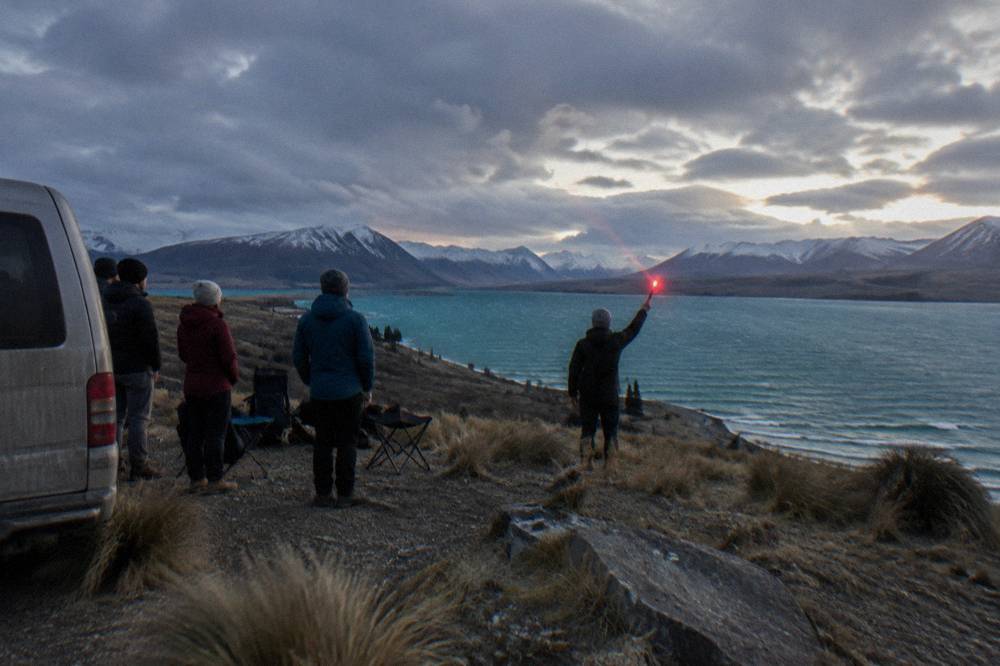
The moon calendar is the most under-used planning tool in Tekapo. The computed darkness figures for the lakefront show why: November 2026 offers 13 of 30 nights with three or more moon-free dark hours, December 12 of 31, and the winter months climb to 20 or 21 nights out of each month with a full three-plus hours of both darkness and no moon. New moons fall on 9 December 2026 and 8 January 2027, with full moons on 25 November and 24 December 2026. None of this guarantees anything about cloud, but it tells you which nights have the potential to be darkest. The full breakdown lives in the Lake Tekapo moon phase calendar.
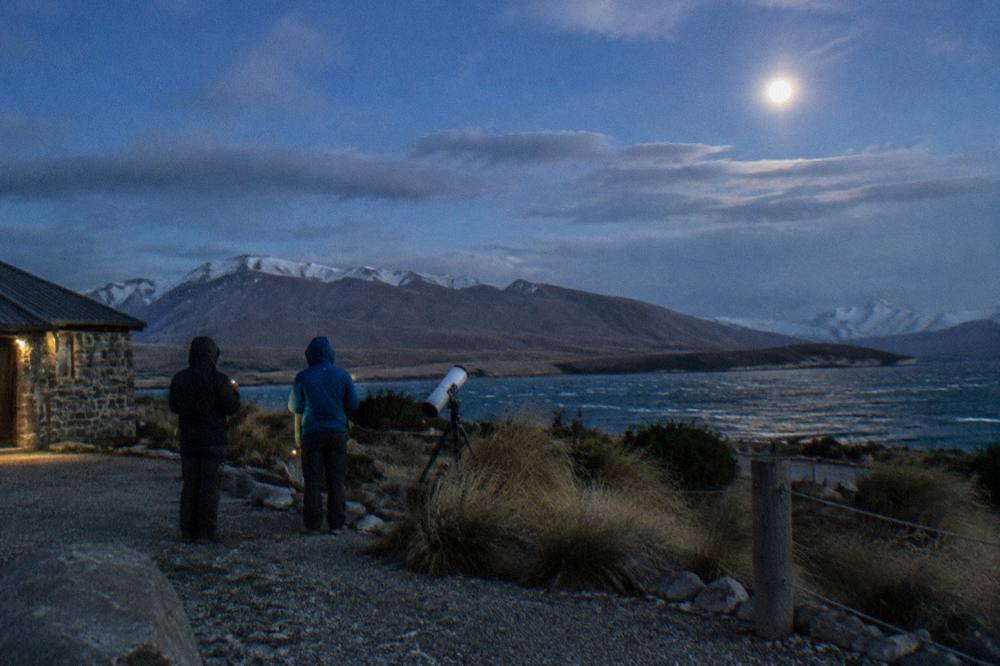
Season length is the other lever. Summer dark windows are short, 3.5 to 4 hours of true astronomical darkness in December, starting very late because NZDT runs until early April 2027. Winter flips that: June 2027 gives 11.3 to 11.5 dark hours a night with darkness starting before 19:00, which is why winter tours start early and why the operator's jacket loan matters so much on the Summit. The trade-offs are set out in Lake Tekapo stargazing winter vs summer.
On booking mechanics, the practical pattern that works for most trips: book the Crater night for your first or second evening in the village, not your last, so a reschedule is possible if weather turns. The 24 hour free cancellation window on all 12 booking pages makes an early booking low-risk, and Dark Sky Project notes tours often sell out, so waiting for a perfect forecast can mean waiting for nothing. If the night is cancelled for weather, the operator's own offer is an indoor alternative, a reschedule, a voucher or a refund, and that wording belongs to Dark Sky Project alone.
Readers also compare the Crater night against the hot pools combination, Soak in the Stars at Tekapo Springs, from $102.63 with hot pool entry included and the only tour here with hotel pickup, on request and subject to availability. That operator's cloud policy is unusually generous in the other direction: the tour runs even when cloud blocks the telescopes, with an indoor virtual reality session, and a 25 percent refund applies if under 30 minutes of telescope viewing happens. The comparison has its own page in hot pools vs observatory stargazing.
Where Does The Crater Experience Sit Among Lake Tekapo's Other Tours?
Among the 12 stargazing tours covered here, the Crater Experience is the mid-priced Dark Sky Project night at from $78.00, best for families with children aged 5 and up, anyone wanting a shorter 75 minute format, and visitors who value sheltered viewing over summit altitude. The most reviewed outdoor tours are the Alpine Stargazing Experience at 4.6 across 864 reviews and Chameleon Stargazing at 4.9 across 789.
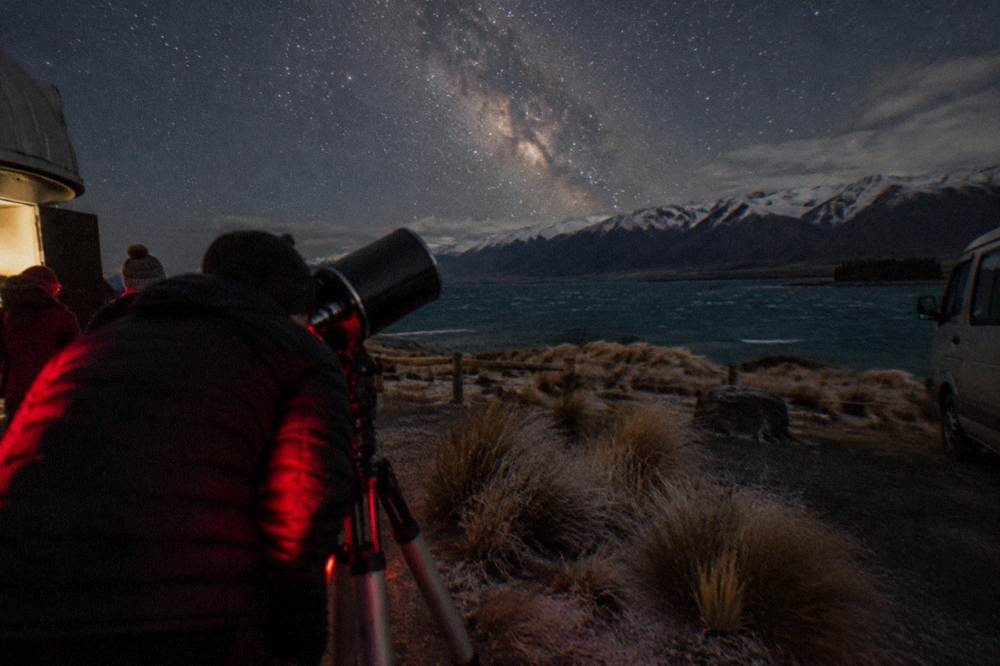
Every night around the lake trades the same five things: price, duration, group size, site and operator style. The Crater's position is compact and institutional, a fixed observatory, 14 inch telescopes, a big tourism operator's coaching operation, and a 75 minute runtime that leaves the evening free for a late dinner. Chameleon Stargazing, at from $73.00 for 90 minutes with a group max of 14, hot chocolate and marshmallows and a souvenir photo, plays the cosy independent card instead. Alpine Stargazing, from $56.00 on a private 50,000 acre farm with loaned down jackets and a group max of 10, plays the wide-open-spaces card. None of the three is objectively better; they answer different travellers.
Further afield, the Mount Cook and Twizel nights extend the same reserve south. The Mt Cook Stargazing Experience meets at the Tasman Glacier Car Park, about 1 hour 15 minutes by road from Tekapo, and the Twizel options meet in Twizel itself, which sits between the two villages. These start points are outside Lake Tekapo, with no transfer from Tekapo implied, so they suit travellers already overnighting in the Mackenzie rather than day-tripping. The Stargaze Mackenzie night in Twizel is the standout performer there, 5.0 across 77 reviews, from $67.00.
For the specific buyer the Crater page serves, the decision usually comes down to three honest sentences. If the group includes a child aged between 5 and 9, the Crater is one of three tours that state a minimum age of 5 or 6. If the budget is tight, three outdoor tours tie at from $56.00 and Astro Tekapo sits at from $59.00. If the goal is the observatory experience itself, sheltered craters, a dome and 14 inch instruments under a reserve designated in 2012, the Crater is the cheapest of Dark Sky Project's two outdoor nights and the shortest route from village to telescope.
Whatever the pick, the site's own planning pages exist to narrow it: start with the comparison guide, then the weather and moon pages, then the clothing guide, in that order, and the remaining choice is usually obvious.
Common Questions About The Crater Experience At Cowan's Observatory
How Much Does The Crater Experience At Cowan's Observatory Cost?
From $78.00 per person for the 75 minute tour, rated 4.6 across 91 reviews. Booking pages carry free cancellation up to 24 hours before the start for a full refund.
How Long Is The Crater Experience At Cowan's Observatory?
75 minutes, including the coach transfer of about 5 minutes each way from the Dark Sky Project base at 1 Motuariki Lane, Lake Tekapo. Check in 15 to 20 minutes before departure.
What Is The Minimum Age For The Crater Experience?
Five years, one of the youngest minimum ages around the lake. The Summit Experience on Mount John sets its minimum at 10.
Are Jackets Provided On The Crater Experience?
Jackets are loaned on the Summit Experience only. For the Crater night the guidance is to layer warm clothing: thermals, long pants, a jersey, a jacket and a hat in summer, with gloves, a scarf and sturdy shoes added in winter.
Can Wheelchair Users Take Part In The Crater Experience?
Yes, wheelchair users can take part by following the coach in their own vehicle, per the operator's own page. The Summit Experience is not wheelchair accessible.
What Happens If The Weather Is Cloudy?
Dark Sky Project decides as close to departure as possible, and cloud alone does not always cancel because the basin often blocks low cloud. If outdoor stargazing is not possible, the operator offers an indoor alternative, a reschedule, a voucher or a refund.