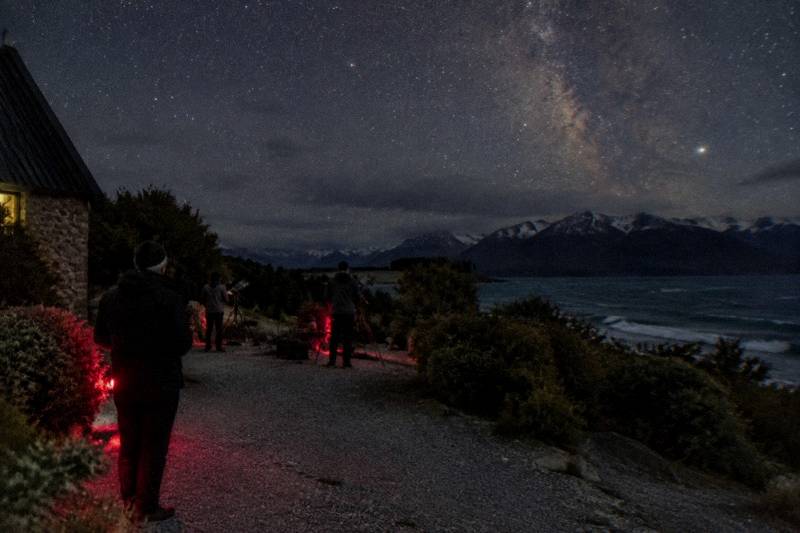
Is Lake Tekapo A Dark Sky Reserve?
Yes, Lake Tekapo sits inside the Aoraki Mackenzie International Dark Sky Reserve, designated in 2012 and covering 4,367 square kilometres. Here is what that status means for a stargazing trip.
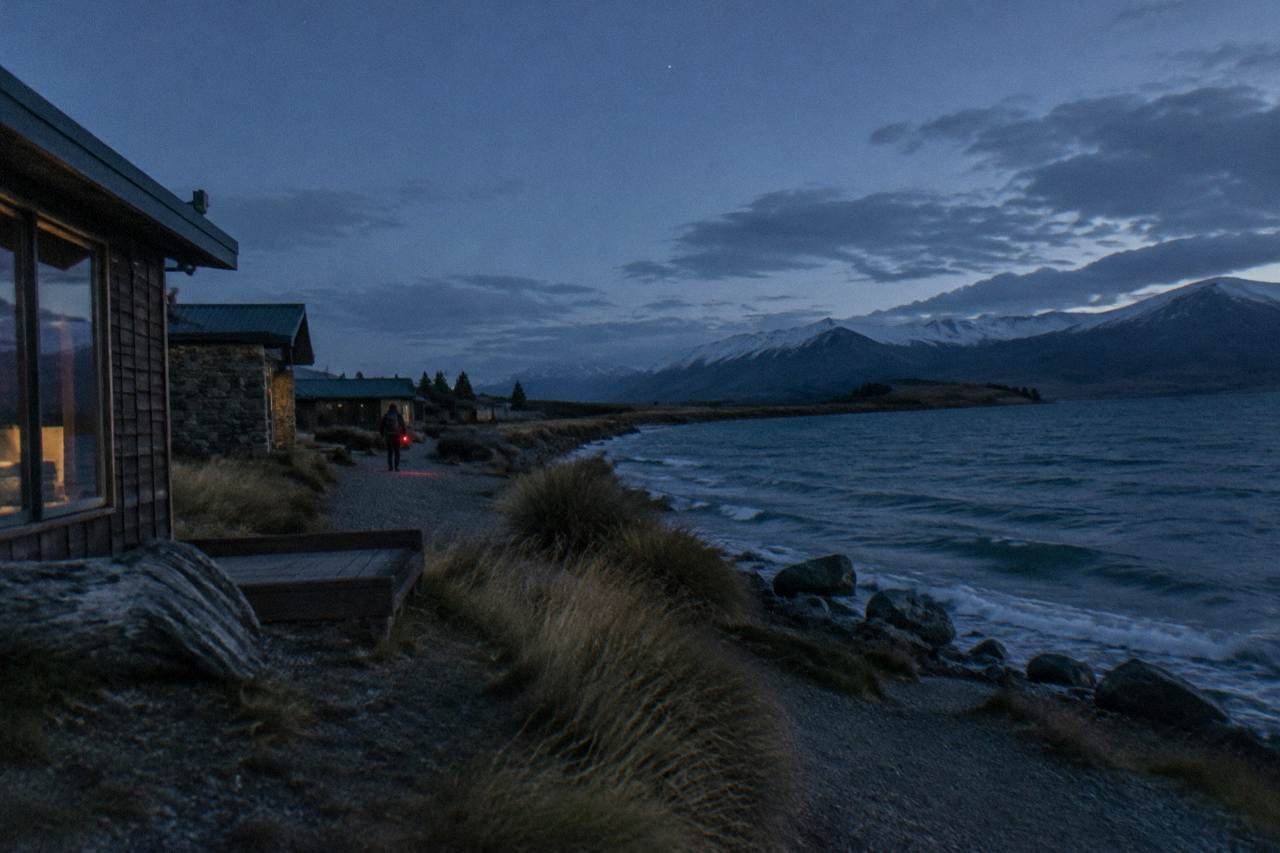
Yes. Lake Tekapo sits inside the Aoraki Mackenzie International Dark Sky Reserve, designated in 2012 by DarkSky International, which lists it as an International Dark Sky Reserve. It covers 4,367 square kilometres made up of Aoraki / Mount Cook National Park and the Mackenzie Basin, and it is the largest dark sky reserve in the Southern Hemisphere. The village, the lake and Mount John all fall inside its boundary.
That single sentence answers the question most visitors ask first, but the details change how a trip is planned. Reserve status is not a fence around one car park, it is a planning framework that spans an entire basin and a national park, with lighting rules that reach from Twizel in the south to the Tasman Valley in the north. Tekapo is simply the best known settlement inside it, and the place where most of the guided stargazing options cluster.
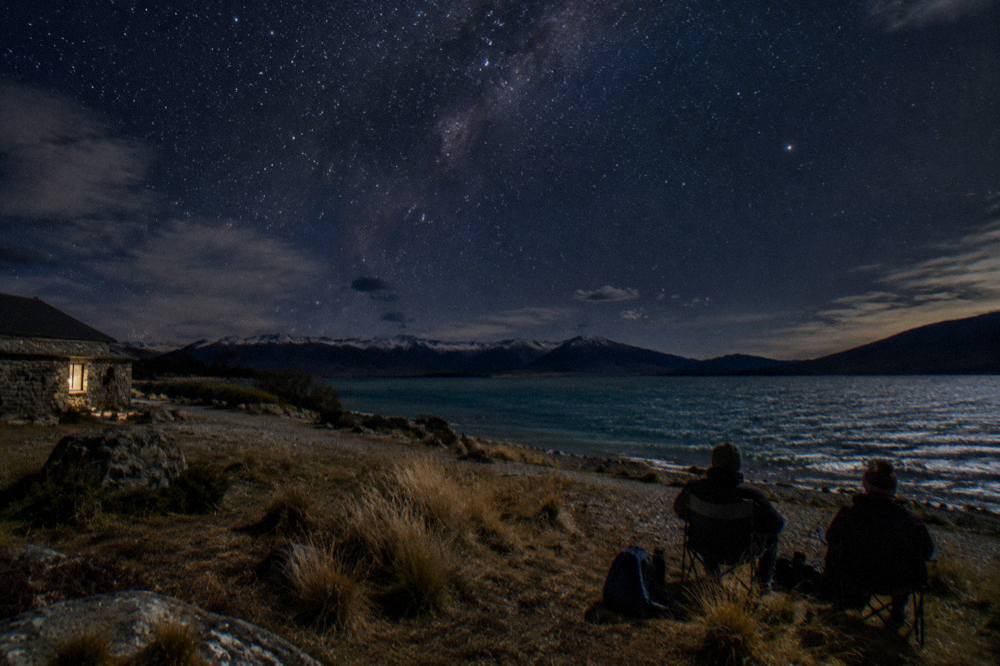
The practical consequence is that a stargazing trip based in Tekapo is not choosing between a dark site and a light polluted one. The reserve's stargazing tours compared run the full span of that geography, from lakefront observatories to glacier car parks.
Because the tours covered here all operate inside the same reserve, the choice between them comes down to format, group size and price rather than sky quality. A first shortlist of three captures the spread.
What Is The Aoraki Mackenzie International Dark Sky Reserve?
The Aoraki Mackenzie International Dark Sky Reserve is a 4,367 square kilometre protected area covering Aoraki / Mount Cook National Park and the Mackenzie Basin, designated in 2012 by DarkSky International, which lists it as an International Dark Sky Reserve. It is the largest dark sky reserve in the Southern Hemisphere, and Lake Tekapo is one of the settlements inside it.
DarkSky International is the body that assesses and designates reserves worldwide, and its designation is not honorary. A reserve status is granted against lighting criteria and kept through ongoing compliance, which in this case is enforced through district plan lighting rules that apply across the whole area. Those rules. That is the mechanism, not sentiment, that keeps the Mackenzie Basin's night sky the way it is.
Dark Sky Project, the operator based at 1 Motuariki Lane on the Tekapo lakefront, calls it the first gold tier reserve, a claim in the operator's own words rather than a neutral description. What is not in dispute is the scale: a single continuous protected area that takes in the national park, the basin's farmland and the townships of Tekapo and Twizel. When people ask whether Tekapo is a dark sky reserve, the honest answer is that Tekapo is a village inside something much larger, and the something larger is what does the work.
The reserve's size also explains why stargazing here is not confined to one hilltop. The Mackenzie Basin's topography matters too: low cloud is often blocked by the basin's shape, which is one reason an operator like Dark Sky Project decides on tour departures as close to departure time as possible rather than cancelling on a forecast alone. Forecasts are indicative, and cloud over Christchurch does not mean cloud over the basin.
Where Does The Reserve Boundary Run Around Lake Tekapo?
Lake Tekapo sits near the centre of the reserve's populated zone, with the boundary encompassing the lake, the village, Mount John and the surrounding basin farmland. Twizel lies to the south inside the same reserve, and Aoraki / Mount Cook village sits about 1 hour 15 minutes by road to the north, also inside it. Every guided stargazing tour in the 12 covered here operates within the reserve's boundary.
That geography matters for planning because it decouples where you sleep from where you stargaze. A visitor based in Tekapo can reach Twizel or Mount Cook for a tour without leaving protected sky, and a visitor based in Twizel can do the reverse. Mount Cook village is about 1 hour 15 minutes from Tekapo, Twizel sits between the two, and the whole corridor stays inside the reserve. The Hermitage hotel runs its own Big Sky Stargazing inside the national park as a neighbouring option to the guided tours covered here.
For a sense of what the same protected sky looks like from a different vantage point, the Mt Cook Stargazing Experience runs from the Tasman Glacier Car Park on Tasman Valley Road, from $56 per person, rated 4.8 across 17 reviews, for 1 hour 15 minutes with high-quality telescopes for deep sky observation. It meets in Mount Cook National Park, so there is no transfer from Tekapo: you drive yourself to the car park, which is roughly 1 hour 15 minutes north of the village.
The Tekapo-based options are, if anything, more concentrated. Dark Sky Project's two outdoor tours, the Mount John Summit Stargazing Experience and the Crater Stargazing Experience at Cowan's Observatory, both check in at 1 Motuariki Lane before heading up to the summit or to Cowan's Private Observatory about a 5 minute drive away. The independent operators fan out from there: Silver River Stargazing checks in at Kiwi Treasure, the information centre at 12 Rapuwai Lane, then shuttles to a private farm site. Astro Tekapo meets at its own stargazing site in Takapo Regional Park, and Chameleon Stargazing checks in at 70 Andrew Don Drive. All of these sit within minutes of the village and all inside the reserve.
What Lighting Rules Protect The Tekapo Night Sky?
District plan lighting rules apply across the entire reserve: lighting is controlled. These rules bind the Tekapo village and every other settlement inside the reserve, and they are the legal backbone that keeps the designation meaningful rather than ceremonial.
For a visitor, the rules are visible in small ways. Away from the lakefront the village goes properly dark. That darkness is why a short walk from the town centre can put you under a genuinely dark sky, a point covered in detail in the guide to free stargazing spots at Lake Tekapo.
| Where | Position in the reserve | Guided tours based there |
|---|---|---|
| Lake Tekapo village | Central, on the lakefront | 8 of the 12 tours covered here |
| Mount John (1,029 m) | Above the village, coach access at night | Mount John Summit Stargazing Experience |
| Twizel | South of Tekapo, inside the reserve | 3 Twizel-based tours |
| Aoraki / Mount Cook village | About 1 hour 15 minutes north by road | Mt Cook Stargazing Experience |
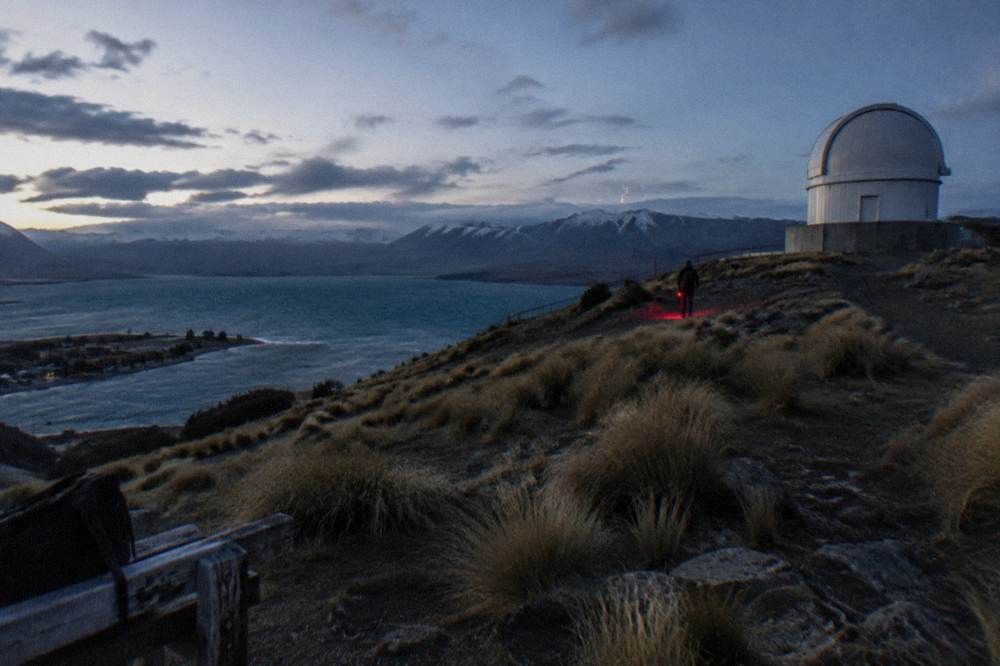
The rules also explain a quirk of the reserve's management that surprises visitors: Mount John, the hill with the observatory, is the University of Canterbury's research facility and New Zealand's largest professional research observatory, with four research-grade telescopes used throughout the year. Night access to the summit road is by tour coach only. During the day the private access road and the Astro Cafe are open with a small per-vehicle road fee paid at the gate, but in the evening you cannot drive up yourself.
Can You Notice The Reserve Status As A Visitor?
Yes, and quickly. Within minutes of arriving after dark, the difference from an ordinary rural town is obvious: the Milky Way can be visible over the village itself, faint stars that a city sky hides are easy to pick out, and the horizon glows only with moonlight rather than townscape.
One of the most reviewed operators in Tekapo illustrates how the protected sky gets used. Chameleon Stargazing's shared tour, rated 4.9 across 789 reviews, spends about 30 minutes on naked-eye viewing under that dark sky before moving to its 9.25 inch telescope and a smart telescope, with group sizes capped at 14 and a minimum age of 5. The tour runs 1 hour 30 minutes from 70 Andrew Don Drive, includes hot chocolate and marshmallows, and a digital souvenir photo, from $73 per person.
What the reserve gives an operator like that is a sky dark enough that the naked-eye segment is a genuine part of the show rather than filler before the telescope. The same logic applies to Silver River's Alpine Stargazing Experience with a Guide, from $56 per person, rated 4.6 across 864 reviews, which runs 1 hour 15 minutes for groups of up to 10 on a private 50,000-acre farm with 14 inch telescopes, astro-lasers, loaned warm jackets and a complimentary photo.
Dark Sky Project's own guidance is that winter months are often the clearest and darkest, and that moon-free nights are darkest, though it is cold at night even in summer. None of that is a promise: no operator can guarantee clear skies, the Milky Way or the southern lights, and Dark Sky Project states plainly that it cannot, and runs no aurora tours.
Which Stargazing Tours Run Inside The Reserve?
All 12 guided stargazing tours covered here run inside the Aoraki Mackenzie International Dark Sky Reserve: 8 operate from Lake Tekapo, 3 from Twizel, and 1 from Mount Cook National Park. They range from $34.70 per person for a 45 minute indoor cultural astronomy experience to $135 per person for the Mount John summit night, and all 12 booking pages state free cancellation up to 24 hours before the start for a full refund. If you're still weighing up which town to base yourself in, the comparison of New Zealand's best stargazing spots looks at how Tekapo, Twizel, and Mount Cook differ beyond the tours themselves.
The three Twizel-based options are worth a look for anyone staying south of Tekapo. Stargaze Mackenzie's Twizel Stargazing Tour with an Astronomer and Telescope, rated 5.0 across 77 reviews, runs 1 hour 15 minutes from 50 Kate Cameron Drive from $67 per person with a powerful telescope and a laser-guided tour, minimum age 6. The Twizel Stargazing Experience with a Guide from Go Tekapo, from $68.23 per person, meets at the Distinction Mackenzie Country Hotel and caps groups at 20. And the Japanese-language Zen Stargazing Experience, from $56 per person, meets at Market Place in Twizel with a Japanese-language guide; it is a new listing with no reviews yet.
| Tour | Base | From (USD) | Duration | Rating |
|---|---|---|---|---|
| Mount John Summit Stargazing Experience | Lake Tekapo | $135.00 | 1 hour 45 minutes | 4.6, 348 reviews |
| Crater Stargazing at Cowan's Observatory | Lake Tekapo | $78.00 | 75 minutes | 4.6, 91 reviews |
| Indoor Dark Sky Cultural Astronomy Experience | Lake Tekapo | $34.70 | 45 minutes | 4.4, 80 reviews |
| Chameleon Stargazing Shared Tour | Lake Tekapo | $73.00 | 1 hour 30 minutes | 4.9, 789 reviews |
| Alpine Stargazing Experience with a Guide | Lake Tekapo | $56.00 | 1 hour 15 minutes | 4.6, 864 reviews |
| Ultimate Stargazing Experience | Lake Tekapo | $125.56 | 2 hours | 5.0, 17 reviews |
| Astro Experience (Astro Tekapo) | Lake Tekapo | $59.00 | 1 hour 30 minutes | 4.8, 11 reviews |
| Hot Pools and Stargazing (Soak in the Stars) | Lake Tekapo | $102.63 | 1 hour 30 minutes | 4.3, 121 reviews |
| Mt Cook Stargazing Experience | Mount Cook | $56.00 | 1 hour 15 minutes | 4.8, 17 reviews |
| Twizel Stargazing Experience with a Guide | Twizel | $68.23 | 1 hour 15 minutes | 4.4, 7 reviews |
| Twizel Stargazing Tour with an Astronomer | Twizel | $67.00 | 1 hour 15 minutes | 5.0, 77 reviews |
| Twizel Japanese-Language Zen Stargazing | Twizel | $56.00 | 1 hour 30 minutes | New listing, no rating |
One entry in that table needs a caveat. The Indoor Dark Sky Cultural Astronomy Experience is exactly what its name says: a 45 minute guided indoor session through four zones with a restored 125-year-old Brashear telescope on display and Maori understanding of the sky, operating regardless of weather. It is not stargazing and involves no outdoor sky viewing, so it belongs in a reserve conversation for cultural reasons rather than as a night-sky tour.
Does Mount Cook Share The Same Dark Sky Reserve As Tekapo?
Yes. Aoraki / Mount Cook National Park is one of the two components of the reserve, alongside the Mackenzie Basin, so Mount Cook village and the Tasman Valley sit under the same designation and the same district plan lighting rules as Tekapo. The two areas are about 1 hour 15 minutes apart by road, with Twizel between them.
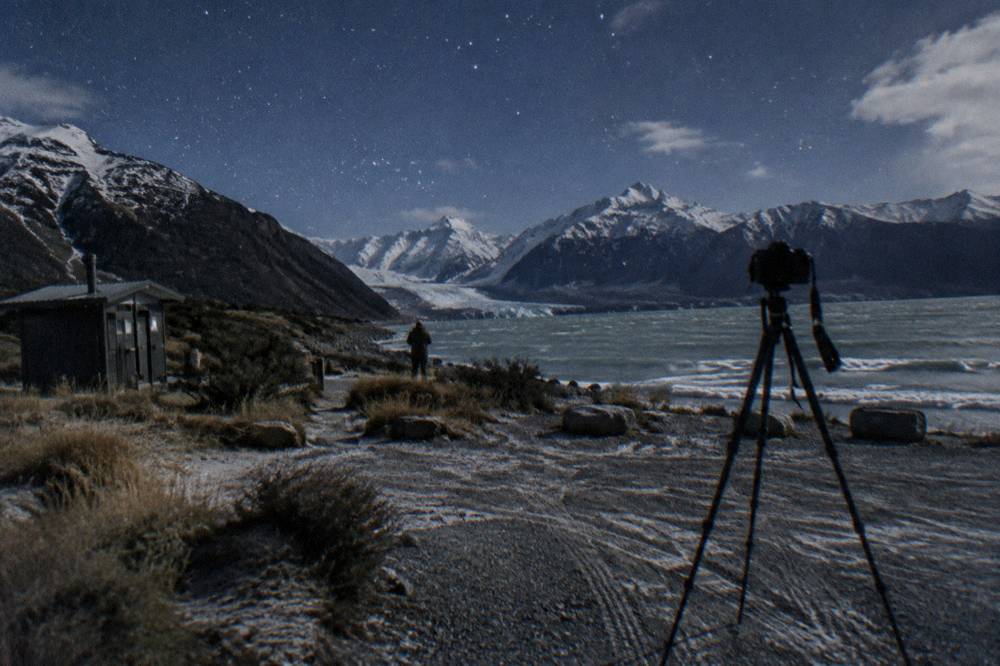
This is the detail that trips up the most planners. People read that Tekapo is famous for stargazing, then find a cheaper or better-timed tour based in Mount Cook or Twizel and wonder whether they are getting a lesser sky. They are not: the reserve is one continuous protected area, and the Mt Cook Stargazing Experience from the Tasman Glacier Car Park, from $56 per person, sits as deep inside it as anything on Mount John. The trade-off is purely logistical, the drive north, and the fact that it meets at the car park rather than offering a transfer from Tekapo.
The Hermitage's Big Sky Stargazing also operates in the national park as a neighbouring option beyond the 12 tours covered here. Whether you choose the Tekapo cluster, with its observatory domes and farm sites, or the Mount Cook end, with its glacier-valley setting, the designation underneath is identical.
When Is The Sky Darkest At Lake Tekapo?
Astronomical darkness at Tekapo runs from 3.5 hours in December 2026 to about 11.5 hours in June 2027, because New Zealand daylight saving pushes summer darkness very late: true dark does not start until between 22:22 and 23:24 in November. A new moon gives the darkest sky and a full moon washes out faint stars and the Milky Way.
The numbers come from computed astronomical data for the Tekapo lakefront, where astronomical darkness means the Sun is more than 18 degrees below the horizon and moon-free means the Moon is below the horizon. In December 2026, darkness lasts only 3.5 to 4 hours per night and does not begin until between 23:26 and 23:54, with 12 of 31 nights offering 3 or more moon-free dark hours. By June 2027 the figures flip: 11.3 to 11.5 dark hours per night, darkness starting before 19:00, and 20 of 30 nights with 3 or more moon-free dark hours.
None of this means a summer tour is a bad idea; it means a summer tour is a late one, and the moon phase deserves a glance before booking. The full moon phase calendar for Lake Tekapo works through the same computed data month by month. Winter brings the longest and often darkest nights, with the cold to match: Dark Sky Project's own clothing advice for the Mount John summit, at 1,029 metres with high wind exposure and frequent winter snow, lists thermals, a snow jacket, gloves, scarf, hat and sturdy ankle-covering shoes. It is cold at night even in summer, and the Summit tour alone among Dark Sky Project's nights loans an extreme cold weather jacket.
The Mount John Summit Stargazing Experience, from $135 per person and rated 4.6 across 348 reviews, is the dearest of the 12 and the only one that puts you on a working research observatory summit at night. It runs 1 hour 45 minutes including about 15 minutes of coach transport each way, with naked-eye viewing using guide lasers, telescopes and a 16 inch telescope in the dome, a minimum age of 10, and a loaned jacket. Moderate fitness helps: there is a 100 metre gravel incline plus a few steps in the dark.
So Is A Reserve Tour The Right Choice For You?
If the question behind the question is whether the reserve designation justifies booking a guided tour, the honest answer is that the designation protects the darkness, not the weather. A free spot outside the village sits under the same protected darkness as a $135 summit night; what a tour adds is a telescope, a guide who knows the sky, and, on the Mount John night, access no self-driver can get after dark.
Budget tiers make the decision easier to frame. The cheapest outdoor nights among the 12 are a three-way tie at $56 per person: the Alpine Stargazing Experience at Tekapo, the Mt Cook Stargazing Experience, and the Japanese-language Zen tour in Twizel. At the other end, the Mount John summit night and the 2 hour Ultimate Stargazing Experience, from $125.56 per person with a 16 inch telescope and a 5.0 rating from 17 reviews, sit near the top, with the hot pools combination, Soak in the Stars at from $102.63 per person rated 4.3 across 121 reviews, as the comfort option. For a full head-to-head, the comparison of Lake Tekapo stargazing tours breaks down all 12.
Whichever way you go, the booking terms are consistent across the 12: free cancellation up to 24 hours before the start for a full refund. Weather terms are not: each operator sets its own policy, from Dark Sky Project's indoor alternative or refund to Soak in the Stars running through partial cloud with a 25 percent refund if under 30 minutes of telescope viewing happens. Read the operator's own terms for the night you book.
Whether the answer to your original question turns into a summit night, a farm paddock with a 14 inch telescope, or a blanket by the lake with a hot chocolate is a matter of budget and taste. The sky over Lake Tekapo is protected either way, and it has been since 2012.
Common Questions About Lake Tekapo's Dark Sky Reserve
Is Lake Tekapo A Dark Sky Reserve?
Lake Tekapo itself is not a reserve; it is a village inside the Aoraki Mackenzie International Dark Sky Reserve, designated in 2012 and covering 4,367 square kilometres of the Mackenzie Basin and Aoraki / Mount Cook National Park. It is the largest dark sky reserve in the Southern Hemisphere.
Who Designated The Aoraki Mackenzie Reserve?
DarkSky International lists it as an International Dark Sky Reserve designated in 2012. Dark Sky Project calls it the first gold tier reserve, in the operator's own words.
Do Lighting Rules Really Apply Across The Reserve?
Yes. District plan lighting rules apply across the entire reserve. This covers Tekapo village, Twizel and the national park.
Is Mount Cook Inside The Same Reserve As Tekapo?
Yes. The reserve is made up of Aoraki / Mount Cook National Park and the Mackenzie Basin, so Mount Cook village, about 1 hour 15 minutes by road from Tekapo, shares the same designation and lighting rules.
Can I Stargaze In The Reserve Without A Tour?
Yes. The same protected sky sits over public spots around the lake, and a short walk from the village can put you under genuinely dark skies. Tours add telescopes, guides and, on Mount John, night coach access that self-drivers cannot get.