Aoraki Mackenzie Dark Sky Reserve Stargazing Tours: What The Status Means
The Aoraki Mackenzie International Dark Sky Reserve covers 4,367 square kilometres of the South Island, and every stargazing tour in this guide runs inside it. Here is what that status means, what it does not mean, and how the tours compare.
Short answer
The Aoraki Mackenzie International Dark Sky Reserve spans 4,367 square kilometres, designated in 2012, covering Aoraki / Mount Cook National Park and the Mackenzie Basin. Twelve stargazing tours run inside it, from $34.70 to $135.00 per person, run by seven operators from Lake Tekapo, Twizel and Mount Cook. The status protects the sky; it does not guarantee a clear night.
The Aoraki Mackenzie International Dark Sky Reserve is the largest dark sky reserve in the Southern Hemisphere at 4,367 square kilometres, made up of Aoraki / Mount Cook National Park and the Mackenzie Basin. DarkSky International lists it as an International Dark Sky Reserve designated in 2012. That single line of status is the reason Lake Tekapo, Twizel and Mount Cook support a genuinely unusual concentration of commercial stargazing: twelve tours, six operators, three distinct bases, all working under the same protected sky. If you're basing yourself at the lake rather than Twizel or Mount Cook, the guide to Lake Tekapo's dark sky reserve status explains what that protection actually means for your night under the stars.
That protection is real, but it is also widely misunderstood. A reserve designation is a planning and lighting achievement, not a weather guarantee, and no tour can sell you the reserve itself. This guide explains what the status means, what it does not mean, and how the tours inside the reserve actually differ, so you can pick one with your eyes open. The figures throughout come from each tour's booking listing and from the computed darkness data for the Tekapo lakefront.
What Is The Aoraki Mackenzie International Dark Sky Reserve?
The Aoraki Mackenzie International Dark Sky Reserve is a 4,367 square kilometre protected zone covering Aoraki / Mount Cook National Park and the Mackenzie Basin, designated by DarkSky International in 2012. It is the largest dark sky reserve in the Southern Hemisphere, and district plan lighting rules govern how light is used across the whole area, day and night, year after year.
The idea behind a dark sky reserve is simple: keep the night sky dark by controlling artificial light. Across the Mackenzie Basin and the national park, district plan lighting rules. The effect is cumulative. A township the size of Tekapo leaks far less light upward than an equivalent town without those rules, and the basin's surrounding hills do the rest, blocking much of the low cloud and stray glow that plagues flatter regions.
Dark Sky Project, the operator based on the Tekapo lakefront, calls the reserve the first gold tier reserve of its kind. That is the operator's own claim, in its own words, and it is worth reading as a proud local statement rather than a ranking. What is verifiable is the designation itself: DarkSky International lists the area as an International Dark Sky Reserve designated in 2012, at 4,367 square kilometres spanning the national park and the basin together.
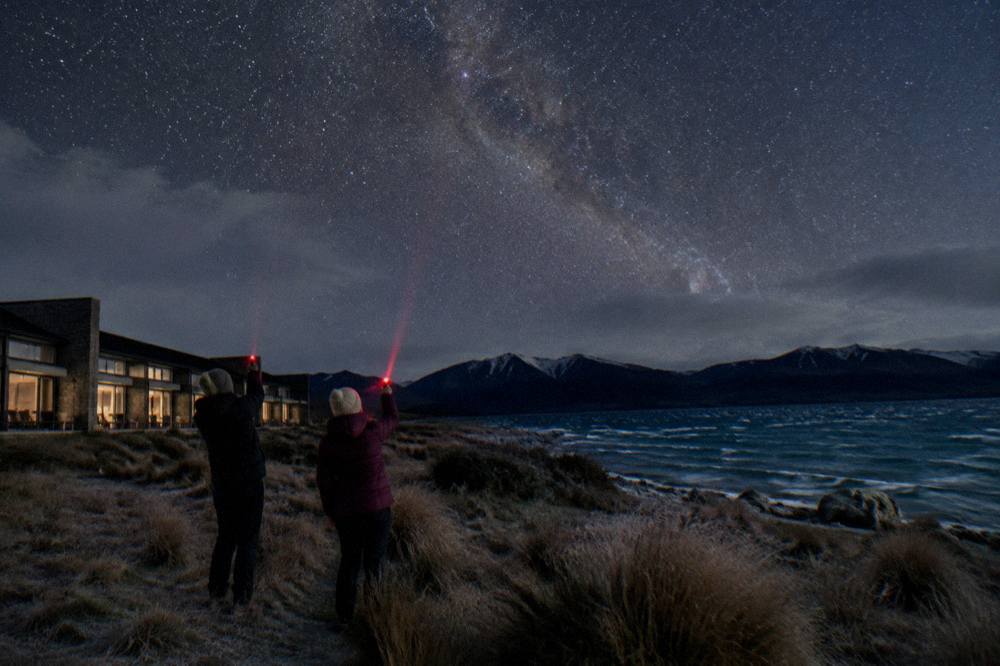
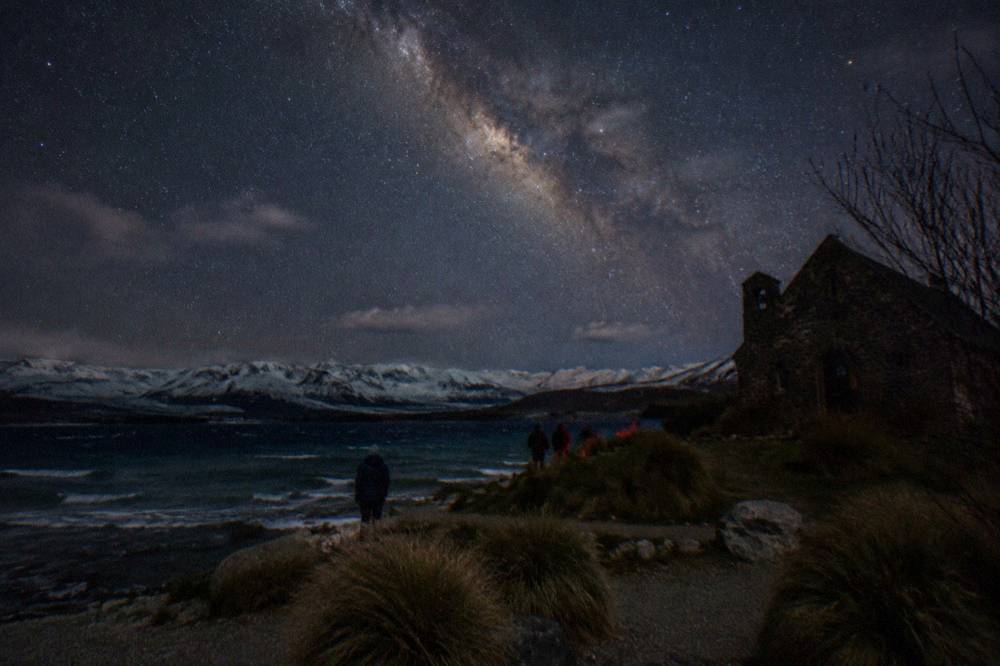
For a traveller, the practical translation is this: anywhere inside the reserve boundary, on a clear night, the naked-eye sky can be remarkable, and the commercial tours exist to interpret it with telescopes, lasers and guides. The boundary does not follow the tourist map, though. Lake Tekapo village, Twizel and Mount Cook village all sit inside it, and every tour in this guide departs from one of those three places.
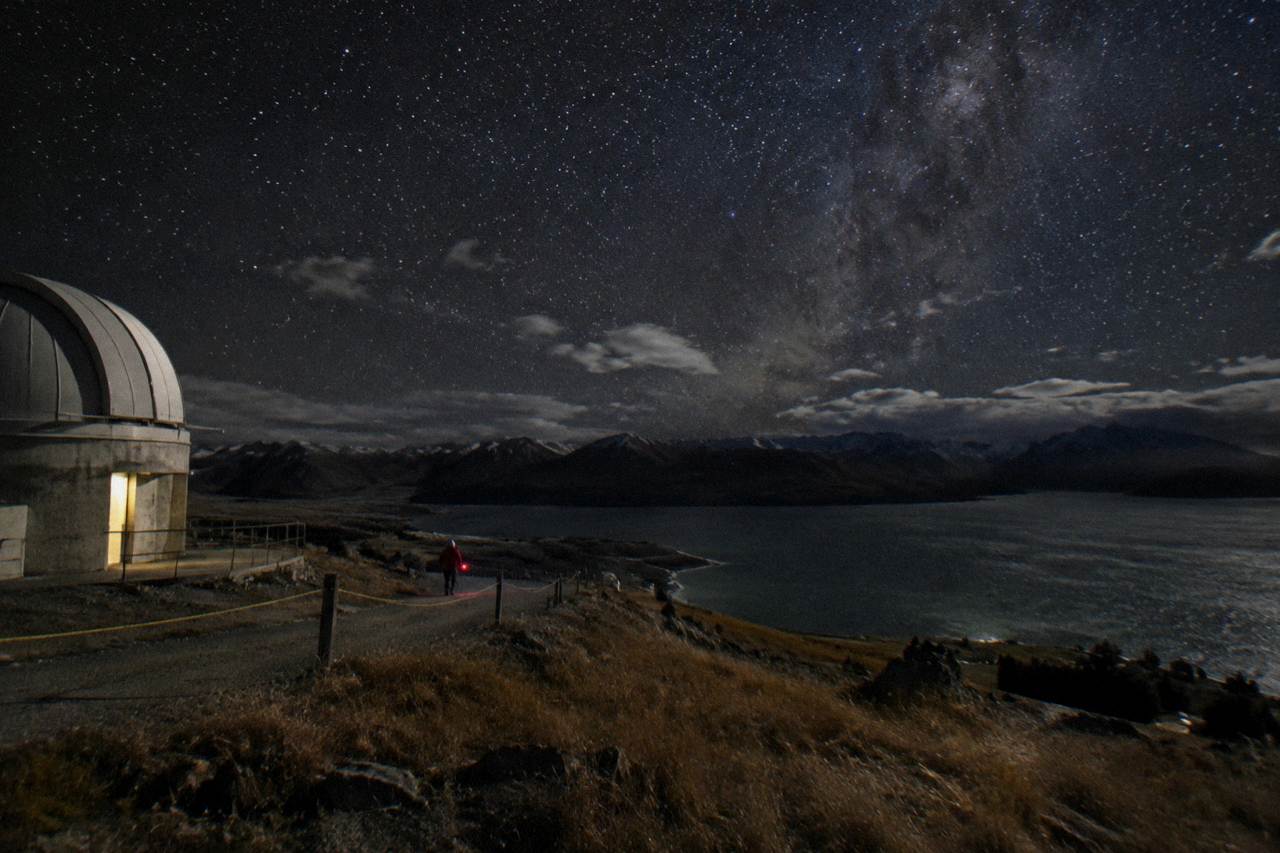
The reserve also sits inside a working landscape. Farms, a hydro canal system, a research observatory and a national park share the same sky, which is partly why the lighting rules exist at all. Mount John, the hill above Tekapo, is the University of Canterbury's research observatory, New Zealand's largest professional research observatory, with four research-grade telescopes used throughout the year. Tourism stargazing and professional astronomy coexist here deliberately.
Where Inside The Reserve Can You Take A Stargazing Tour?
Twelve commercial stargazing tours run inside the reserve, departing from three bases: Lake Tekapo village, the town of Twizel, and Aoraki / Mount Cook village. Eight of the twelve start at Lake Tekapo, three meet in Twizel, and one meets at the Tasman Glacier Car Park inside the national park. To weigh which base suits you best, the comparison of stargazing spots across New Zealand looks at how Lake Tekapo, Twizel, and Mount Cook stack up.
The spread matters when you are planning. Twizel sits between Tekapo and Mount Cook on the main highway, on the way toward the national park from Tekapo, and Mount Cook village is about 1 hour 15 minutes by road from Tekapo. If your itinerary already includes the national park, a Mount Cook or Twizel start can save you a late-night drive back, and night drives on SH8 and SH80 carry real black ice, frost and wildlife risk in the cold months. The NZTA Journey Planner is the place to check conditions before you commit.
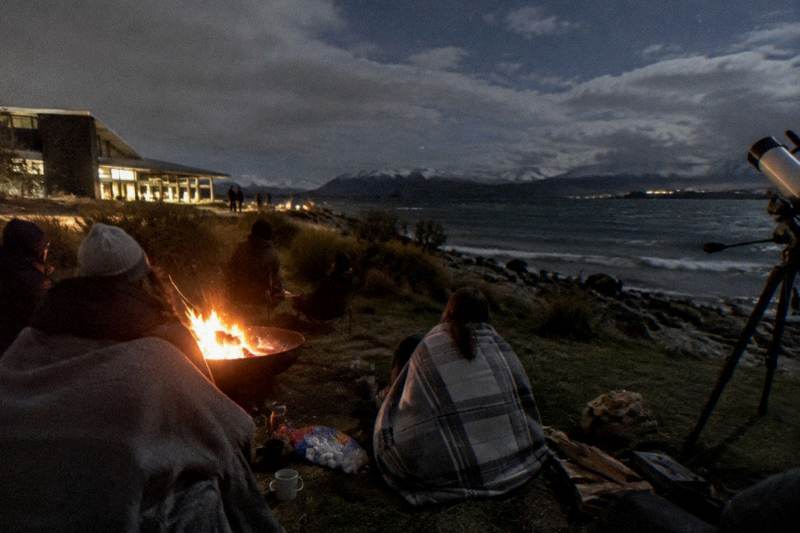
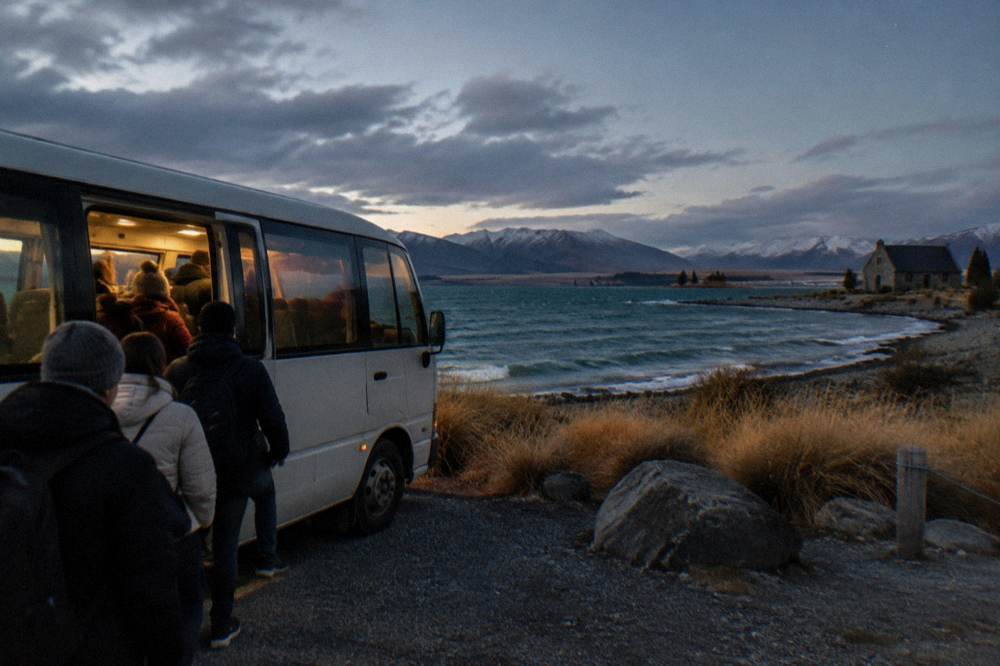
Lake Tekapo is the deep end of the market. Five operators work from the village and its fringes: Dark Sky Project from 1 Motuariki Lane on the lakefront, Chameleon Stargazing from 70 Andrew Don Drive, and Silver River Stargazing, which checks in at Kiwi Treasure, the information centre at 12 Rapuwai Lane, before shuttling to a private 50,000-acre farm site. Astro Tekapo meets at its own stargazing site in Takapo Regional Park, four minutes by car from the village. Tekapo Springs and Tekapo Stargazing run the combined hot pools night from 300 Lakeside Drive.
If you are weighing these against each other, the detailed comparison lives in the Lake Tekapo stargazing tours compared guide, which breaks down every Tekapo option side by side. The short version for reserve purposes: all of them sit under the same sky, and the differences between them are about group size, telescopes, comfort and price, not about which one has access to a darker patch of reserve.
A sensible pick from anywhere in the southern half of the reserve:
The Mount Cook option covers the national park end of the reserve, the Mount John Summit Experience is the flagship Tekapo night on the research observatory hill, and the Chameleon shared tour is the small-group Tekapo alternative with the strongest review pool of the three. Every one of the twelve booking pages states free cancellation up to 24 hours before the start for a full refund, so booking ahead costs you flexibility rather than money.
Which Lake Tekapo Tours Sit Inside The Reserve?
Eight tours depart from Lake Tekapo itself: Dark Sky Project's Summit Experience, Crater Experience and indoor cultural session, Chameleon's shared tour, Silver River's Alpine and Ultimate experiences, Astro Tekapo's Astro Experience, and the Tekapo Springs hot pools night. They range from $34.70 to $135.00 per person and from 45 minutes to 2 hours in duration.
The Tekapo cluster splits into two families. Dark Sky Project, owned by Ngai Tahu Tourism, runs the three tours tied to its lakefront base: the Mount John Summit Stargazing Experience at from $135.00 per person for 1 hour 45 minutes, rated 4.6 across 348 reviews; the Crater Stargazing Experience at Cowan's Observatory at from $78.00 for 75 minutes, rated 4.6 across 91 reviews; and the Indoor Dark Sky Cultural Astronomy Experience at from $34.70 for 45 minutes, rated 4.4 across 80 reviews. That indoor session is an exhibit, a guided walk through four zones with a restored 125-year-old Brashear telescope on display and no outdoor sky viewing, so it belongs on a reserve itinerary only as a cloudy-evening or daytime-style filler, not as stargazing.
The independent operators are smaller and, on the whole, cheaper. The Alpine Stargazing Experience with a Guide, run by Silver River Stargazing, is from $56.00 per person for 1 hour 15 minutes, rated 4.6 across 864 reviews, the most reviewed tour of the twelve. The Ultimate Stargazing Experience from the same family is from $125.56 for 2 hours with a 16 inch telescope, rated 5.0 across 17 reviews. Astro Tekapo's Astro Experience is from $59.00 for 1 hour 30 minutes with a premium 9.25 inch telescope plus a smart telescope, hot chocolate and a fleece blanket; it has 11 reviews, too few for a star rating claim. Chameleon's shared tour is from $73.00 for 1 hour 30 minutes, rated 4.9 across 789 reviews, with a group maximum of 14 and a minimum age of 5.
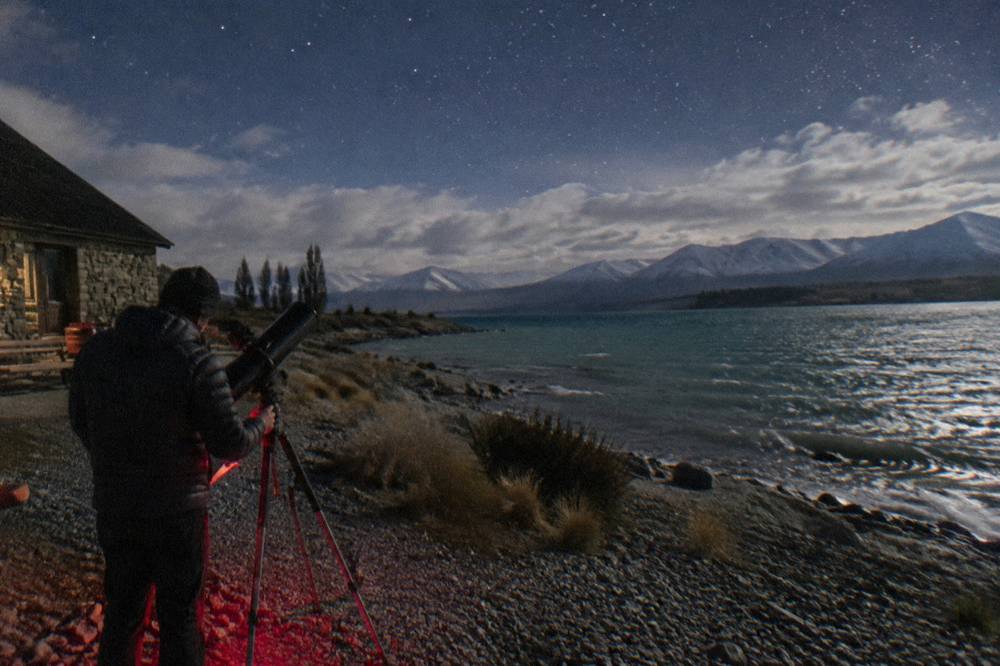
The eighth Tekapo option is the odd one out. Hot Pools and Stargazing, run by Tekapo Springs and Tekapo Stargazing, is from $102.63 per person for 1 hour 30 minutes, rated 4.3 across 121 reviews, minimum age 10, and it is the only tour of the twelve with hotel pickup, from the Tekapo township on request and subject to availability. It mixes exclusive use of the hot pools, a floating hammock, a wool blanket and hot drinks with guided stargazing outside the pools, and it is the one tour that keeps running, with an indoor virtual reality session, when cloud blocks the telescopes.
| Tour | Operator | From (USD, per person) | Duration | Rating and reviews | Group max | Min age |
|---|---|---|---|---|---|---|
| Mount John Summit Stargazing Experience | Dark Sky Project | $135.00 | 1 hour 45 minutes | 4.6 from 348 reviews | - | 10 |
| Crater Stargazing Experience at Cowan's Observatory | Dark Sky Project | $78.00 | 75 minutes | 4.6 from 91 reviews | - | 5 |
| Indoor Dark Sky Cultural Astronomy Experience | Dark Sky Project | $34.70 | 45 minutes | 4.4 from 80 reviews | 26 | - |
| Chameleon Stargazing Shared Tour | Chameleon Stargazing | $73.00 | 1 hour 30 minutes | 4.9 from 789 reviews | 14 | 5 |
| Alpine Stargazing Experience with a Guide | Silver River Stargazing | $56.00 | 1 hour 15 minutes | 4.6 from 864 reviews | 10 | - |
| Ultimate Stargazing Experience | Silver River Stargazing | $125.56 | 2 hours | 5.0 from 17 reviews | 10 | - |
| Astro Experience (Astro Tekapo) | Astro Tekapo | $59.00 | 1 hour 30 minutes | 4.8 across 11 reviews | 10 | 6 |
| Hot Pools and Stargazing (Soak in the Stars) | Tekapo Springs and Tekapo Stargazing | $102.63 | 1 hour 30 minutes | 4.3 from 121 reviews | - | 10 |
A dash in the table means the booking details do not give that figure. Note the tie at the bottom of the price range: the cheapest outdoor nights among the twelve are a three-way tie at $56.00, shared by the Alpine experience at Tekapo, the Mt Cook experience and the Twizel Japanese-language Zen experience. No single tour holds the cheapest slot alone, and the $34.70 indoor session is an exhibit rather than outdoor stargazing.
If a small group is the priority, the Lake Tekapo small group stargazing tours guide works through the capped groups in detail. The shortlist is Chameleon at 14, and Alpine, Ultimate and Astro Tekapo at 10 each.
One structural point worth knowing before you book anything in Tekapo: Dark Sky Project asks guests to check in at the base about 15 to 20 minutes before departure, and same-day booking can be possible but tours often sell out. Chameleon books online only and asks arrivals 10 to 15 minutes early at Andrew Don Drive, a four minute drive or about a 25 minute walk from the village. Silver River checks in about 15 minutes early at Kiwi Treasure before the farm shuttle.
What Does Dark Sky Reserve Status Actually Guarantee You?
Reserve status protects darkness through lighting rules; it does not guarantee a clear sky, a view of the Milky Way, the southern lights, or that any particular tour will run on your night. Weather decisions belong to each operator, cloud can and does cancel tours, and no operator can promise what the sky will show.
This is the gap most first-time visitors trip over. The designation is an achievement of land use planning. It means the darkness is defended against human light pollution. It says nothing about the weather, the Moon, or the clouds rolling off the Southern Alps on any given Tuesday.
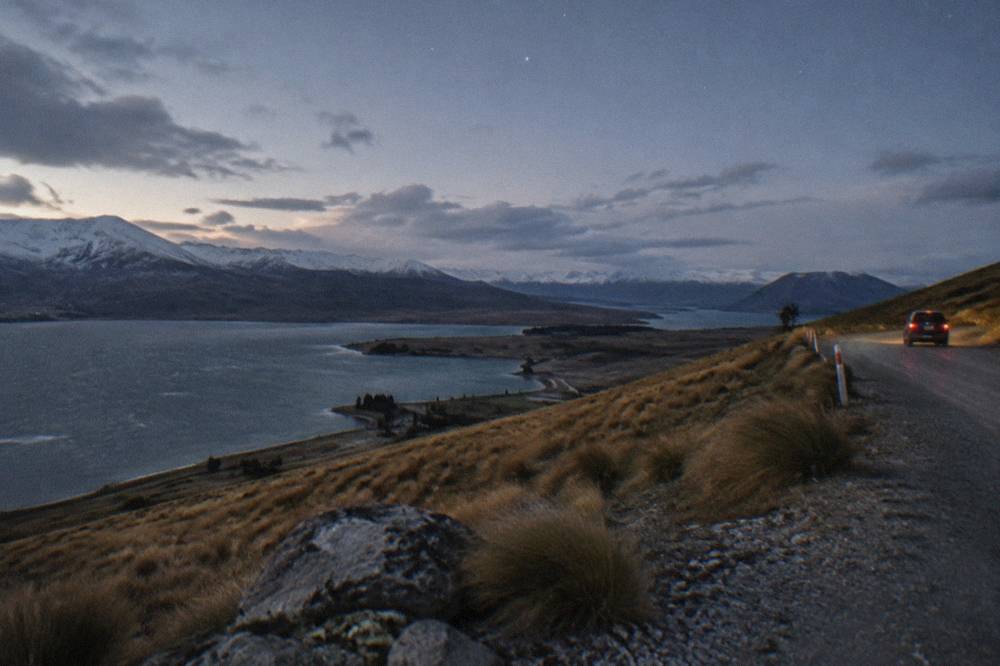
The Moon is the second variable. A new moon gives the darkest sky, and a full moon washes out faint stars and the Milky Way, as Dark Sky Project's own FAQ puts it. The computed darkness data for the Tekapo lakefront shows, for example, that November 2026 offers 13 nights with three or more moon-free dark hours out of 30, with a new moon on 9 November and a full moon on 25 November. December 2026 offers 12 of 31. Planning around the new moon, rather than around any promise of a clear night, is the single most useful thing a visitor can do.
Then there is the weather layer, and it is operator-specific. Dark Sky Project decides as close to departure as possible, notes that forecasts are indicative, and says low cloud is often blocked by the basin's topography, so cloud alone does not always cancel; if outdoor stargazing is not possible, its guests are offered an indoor alternative, a reschedule, a voucher or a refund. Astro Tekapo's policy offers a full refund if sky conditions are too cloudy for stargazing. Stargaze Mackenzie in Twizel runs only in clear conditions and offers a refund or a reschedule if cancelled for weather. The Tekapo Springs hot pools night runs even when cloud limits telescopes, with an indoor virtual reality session and a 25 percent refund if under 30 minutes of telescope viewing happens. These are four different policies from four different operators, and none of them is the reserve's policy, because the reserve has no tours and makes no promises.
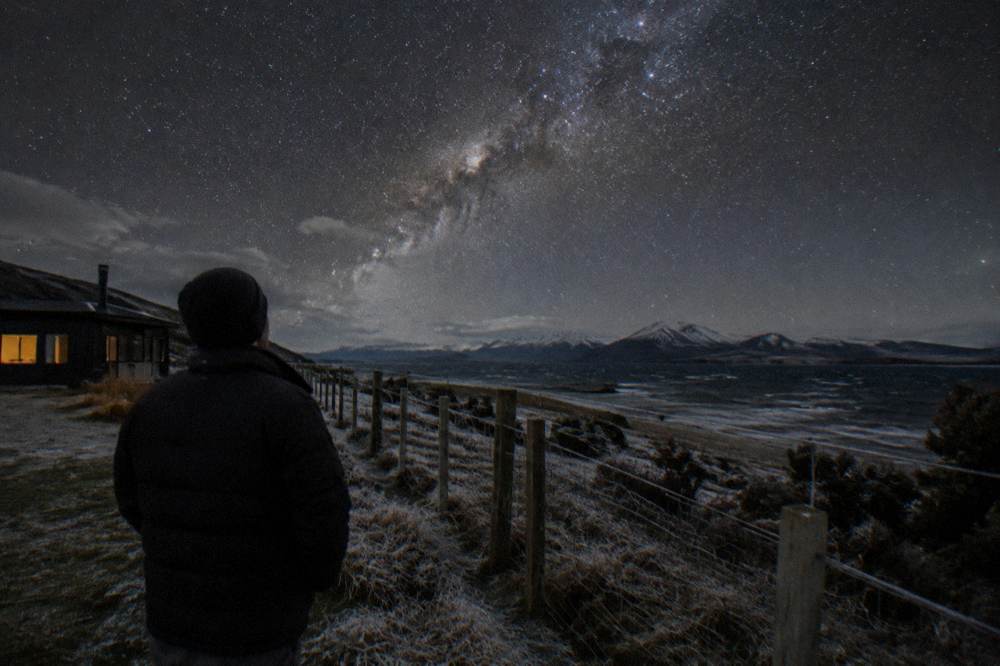
The honest framing, then, is this: book a tour inside the reserve because the reserve makes the darkness worth interpreting, then treat the weather as a separate negotiation between you and the operator you chose. The full operator-by-operator picture is in the Lake Tekapo stargazing weather and cloud cancellations guide. Also worth remembering: Dark Sky Project cannot guarantee clear skies, the Milky Way or the Aurora Australis, and it runs no aurora tours. Nobody else should be assumed to guarantee them either.
How Do The Mount John And Cowan's Observatory Tours Use The Reserve?
The Mount John Summit Stargazing Experience uses the summit of the research observatory hill at 1,029 metres, reached by operator coach only in the evening, while the Crater Experience uses purpose-built observation craters at Cowan's Private Observatory a short drive away. Both are Dark Sky Project tours from the Tekapo lakefront, at from $135.00 and from $78.00 per person.
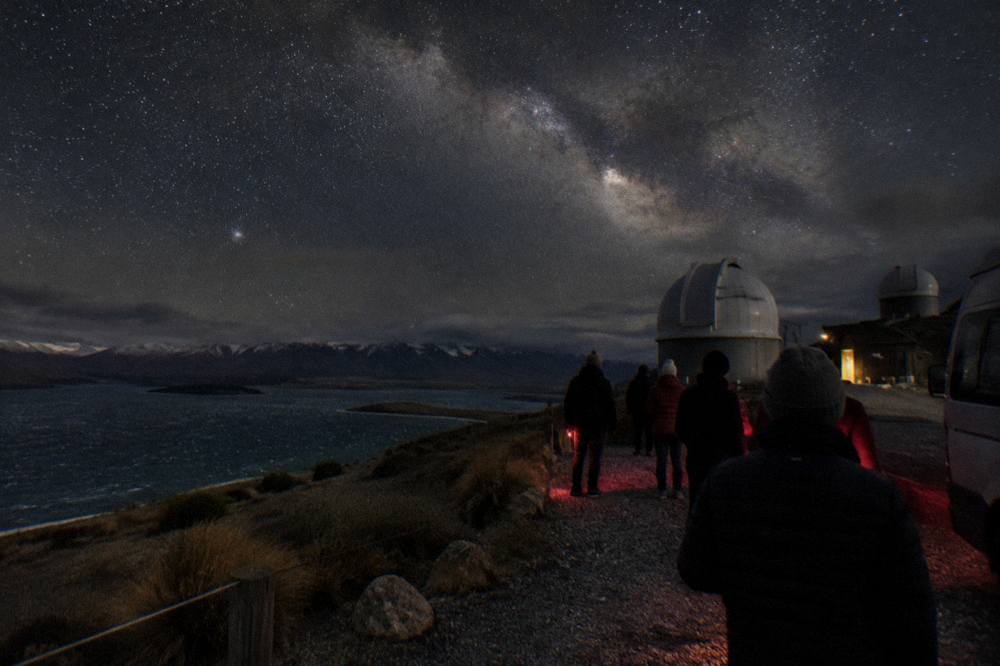
Mount John is the closest thing the reserve has to a signature site, and the Summit Experience is built around it. The 1 hour 45 minutes includes coach transport of about 15 minutes each way, and visitors cannot drive up Mount John in the evening: night access is the coach only. On the summit, the tour uses naked-eye viewing with guide lasers, telescopes, and a 16 inch telescope in the dome. An extreme cold weather jacket is loaned on the Summit tour only, the minimum age is 10, and moderate fitness is needed for a 100 metre gravel incline plus a few steps in the dark. Photos are allowed with the flash off, and guides share astrophotography tips. The tour is rated 4.6 across 348 reviews, the third largest review pool of the twelve.
The Crater Experience takes a different approach to the same darkness. Cowan's Private Observatory, about a 5 minute drive from the lakefront base, uses purpose-built observation craters that shelter viewers from wind and light, with 14 inch telescopes and a dome. It runs 75 minutes, has a minimum age of 5, and asks guests to layer warm clothing; jackets are not part of this tour's inclusions, unlike the Summit. Wheelchair users can take part by following the coach in their own vehicle. At from $78.00 per person it sits mid-range among the Tekapo outdoor tours.
The choice between the two is really a choice between altitude and shelter. The Summit spends its time at 1,029 metres with high wind exposure, where it often snows in winter and it is cold at night even in summer. The Crater trades the summit panorama for wind-shielded craters and a lower price. The dedicated head-to-head is in the Dark Sky Project Summit vs Crater Experience comparison.
What neither tour gives you is the reserve as a product. Mount John's daytime life is separate: the Astro Cafe and the private access road are open in the daytime with a small per-vehicle road fee paid at the gate, vehicles over 12 seats are not allowed, and it is about 15 minutes' drive from the village. That is a daytime visit you can make yourself; the evening summit is the tour's alone.
What About Mount Cook And Twizel Tours In The Reserve?
Four tours depart from the Twizel and Mount Cook side of the reserve: the Mt Cook Stargazing Experience from the Tasman Glacier Car Park at from $56.00, and three Twizel tours, from $56.00 to $68.23 per person. Mount Cook village is about 1 hour 15 minutes by road from Tekapo, and Twizel sits between, so these are itinerary decisions as much as tour decisions.
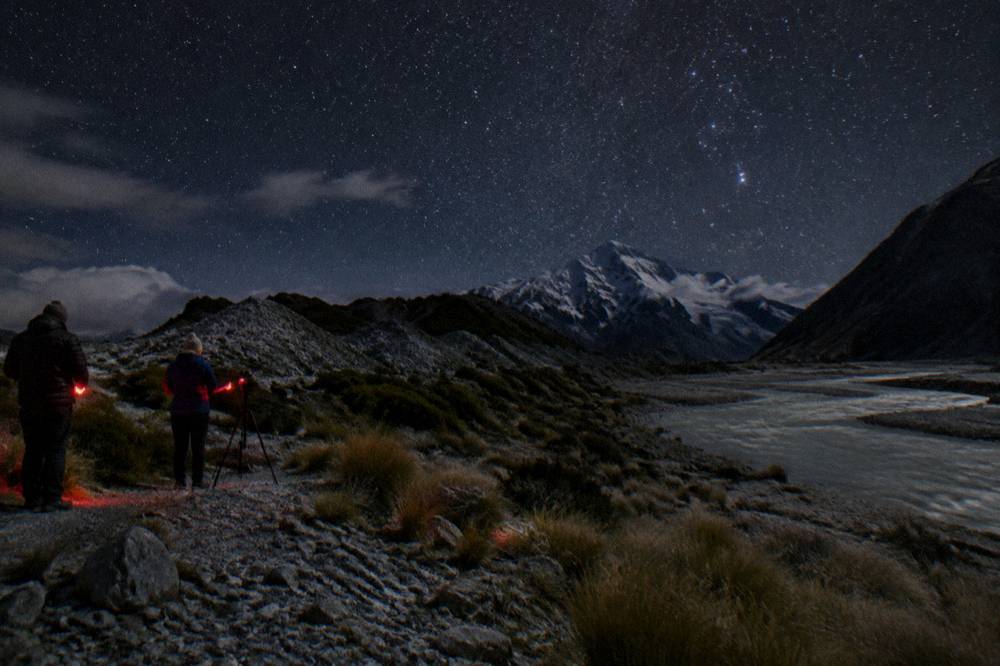
The Mt Cook Stargazing Experience is run by Silver River Stargazing and meets at the Tasman Glacier Car Park on Tasman Valley Road inside the national park. It runs 1 hour 15 minutes at from $56.00 per person, rated 4.8 across 17 reviews, with high-quality telescopes for deep sky observation, a guide and a photo included. There is no transfer from Tekapo: you drive yourself to the car park, which is worth saying plainly, because the reserve is large and a Mount Cook start makes sense only if Mount Cook is already where you are sleeping. The Hermitage hotel runs its own Big Sky Stargazing in the national park as a neighbouring option; it is outside the twelve tours covered here, so no price or policy is offered for it.
Twizel gives you three more options under the same basin sky. The Twizel Stargazing Tour with an Astronomer and Telescope, run by Stargaze Mackenzie from 50 Kate Cameron Drive, is from $67.00 for 1 hour 15 minutes, rated 5.0 across 77 reviews, with a powerful telescope, a laser-guided tour, a minimum age of 6 and a photo included. The Twizel Stargazing Experience with a Guide, run by Go Tekapo from the Distinction Mackenzie Country Hotel, is from $68.23 for the same duration, has a group maximum of 20 and 7 reviews so far. And the Zen Stargazing Experience is a Japanese-language tour meeting at Market Place in Twizel, from $56.00 for 1 hour 30 minutes with a telescope, a hot drink and a photo; it is a new listing with no reviews yet, so nothing can be said about how guests rate it.
The Twizel detail worth repeating: the Zen tour meets in Twizel and is guided in Japanese, and none of the Twizel or Mount Cook tours implies a pickup or transfer from Tekapo. Each meets where it meets. The wider picture of basing yourself at one end or the other, including the drive times and the winter road risk, is worked through in the blog post is it better to base a stargazing trip at Mount Cook, Twizel or Lake Tekapo.
For travellers already committed to the national park end of the reserve, the Mount Cook night is the natural pick, and it carries the lowest outdoor price of the twelve alongside its two $56.00 fellow ties:
Do The Lighting Rules Change What You See On A Tour?
Yes, materially: the district plan lighting rules across the reserve mean, which keeps the sky above Tekapo, Twizel and Mount Cook darker than equivalent unregulated settlements. The rules protect the darkness every tour depends on, though they cannot dim the Moon or lift the cloud.
It helps to picture what the rules prevent. In an ordinary town, unshielded streetlights, signage and commercial floodlighting throw light directly upward, where it scatters and raises the sky's background glow for tens of kilometres. Inside the reserve, district plan lighting rules keep that glow low above the villages. The basin's topography helps too: surrounding hill country blocks distant towns' light from reaching the viewing sites.
The result is that the reserve's darkness is a maintained condition, not a happy accident, and every operator's product rests on it. When Chameleon seats you in an outdoor chair with a blanket, when Silver River shuttles you onto a private 50,000-acre farm, when Stargaze Mackenzie points a telescope skyward in Twizel, the underlying asset is the same protected sky.
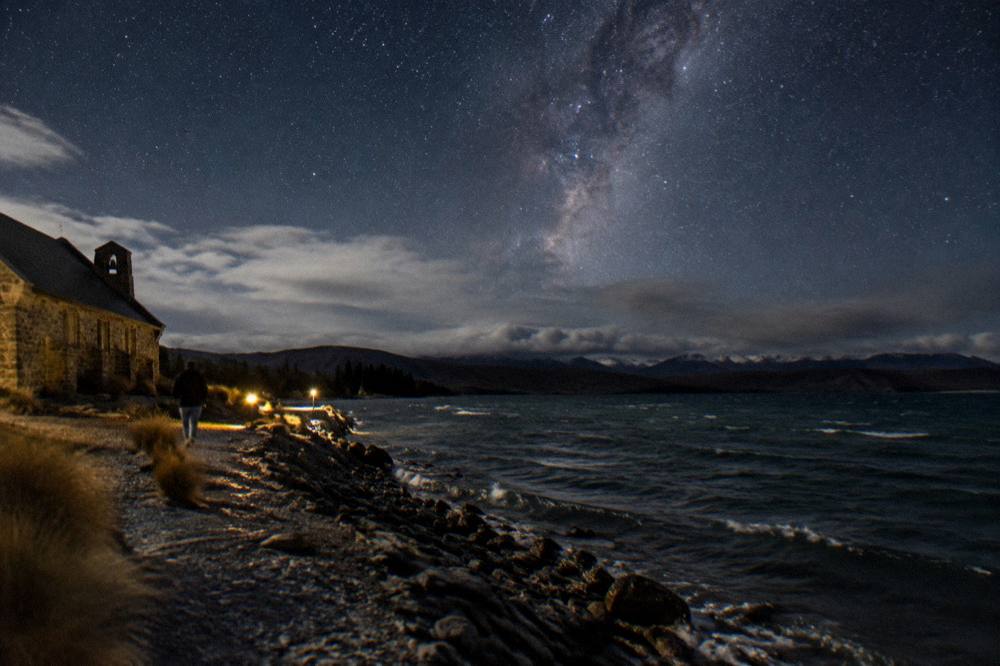
What the rules cannot do is manage natural brightness. Moonlight is the biggest factor in how many faint stars you see, and the computed data shows how much it swings: June 2027 gives about 11.3 to 11.5 hours of astronomical darkness per night with 20 moon-free nights of three or more dark hours, while December 2026 gives 3.5 to 4 hours with 12 such nights. The lighting rules hold the floor; the Moon sets the ceiling. Anyone planning around the Moon should use the Lake Tekapo stargazing moon phase calendar rather than a general rule of thumb.
How Much Do Reserve Stargazing Tours Cost?
Across the twelve tours inside the reserve, prices run from $34.70 for the 45-minute indoor cultural session to $135.00 for the Mount John Summit Experience, per person. Outdoor telescope tours start at a three-way tie of $56.00 (Alpine at Tekapo, Mt Cook, and the Twizel Zen tour), and the mid-range sits between $67.00 and $102.63.
The price ladder maps almost cleanly onto what you get. At the bottom, the indoor session at $34.70 buys a guided cultural and astronomy exhibit, not sky viewing. Between $67.00 and $78.00 sit the Twizel astronomer tour at $67.00, the Twizel Go Tekapo night at $68.23, Chameleon's shared tour at $73.00 with hot chocolate, marshmallows and a souvenir photo, and Cowan's Observatory at $78.00.
Above $100 you are buying either comfort or scale. The hot pools night at from $102.63 bundles exclusive pool use, a floating hammock, a wool blanket, hot drinks and hotel pickup on request, the only tour of the twelve with pickup. The Ultimate Stargazing Experience at from $125.56 stretches to 2 hours with a 16 inch telescope and a group maximum of 10. The Mount John Summit at from $135.00 is the most expensive of the twelve and the only one that puts you on the summit of the research observatory hill at 1,029 metres, with a loaned extreme cold weather jacket and coach transport included in the duration.
| Price band (USD, per person) | Tours | What the band buys |
|---|---|---|
| Under $60 | Indoor session $34.70; Alpine $56.00; Mt Cook $56.00; Twizel Zen $56.00 | Guided interpretation, telescopes on the outdoor nights, an exhibit on the indoor one |
| $60 to $80 | Twizel astronomer $67.00; Twizel Go Tekapo $68.23; Chameleon $73.00; Cowan's Crater $78.00 | Smaller settings, sheltered craters or outdoor seats, drinks and photos on some tours |
| Over $100 | Hot pools $102.63; Ultimate $125.56; Mount John Summit $135.00 | Comfort add-ons, longer durations, the observatory summit, the only pickup option |
Two cost notes that are easy to miss. First, all twelve booking pages state free cancellation up to 24 hours before the start for a full refund, which is a booking rule rather than a weather policy, so a weather cancellation is handled separately under each operator's own terms. Second, prices here are in USD as the booking pages show them, per person; the operators' own sites may quote in New Zealand dollars, and those figures are not reproduced here.
How Dark Is The Reserve Through The Year?
Darkness inside the reserve swings hard with the seasons: from 3.5 to 4 hours of astronomical darkness per night in December 2026 to 11.3 to 11.5 hours in June 2027, with dusk as late as 23:54 in late December and as early as 18:56 in late May. Nights with three or more moon-free dark hours range from 12 of the month in December to 21 in May.
The engine behind those numbers is latitude plus daylight saving. New Zealand daylight time began on 27 September 2026 and runs until early April 2027, so summer dark starts very late: in December 2026, astronomical darkness begins between 23:26 and 23:54 local time. A summer tour therefore starts late and ends later, and the dark window is short. By June 2027 the sky is properly dark before 19:00 and stays that way for over 11 hours.
The moon-free column is the planning lever. A new moon gives the darkest sky and a full moon washes out faint stars and the Milky Way. In November 2026, the new moon falls on 9 November and the full moon on 25 November, with 13 of 30 nights offering three or more moon-free dark hours. In April 2027, those numbers improve to 19 of 30. Winter months are often the clearest and darkest in Dark Sky Project's own words, and it is cold at night even in summer, so the trade is darkness against serious cold.
| Month | Dark hours per night | Dusk range (local clock) | Nights with 3+ moon-free dark hours |
|---|---|---|---|
| November 2026 | 4.1 to 6 | 22:22 to 23:24 | 13 of 30 |
| December 2026 | 3.5 to 4 | 23:26 to 23:54 | 12 of 31 |
| January 2027 | 3.6 to 5.3 | 23:53 to 23:12 | 13 of 31 |
| February 2027 | 5.4 to 7.3 | 23:10 to 22:13 | 15 of 28 |
| March 2027 | 7.3 to 9.1 | 22:11 to 21:11 | 18 of 31 |
| April 2027 | 9.1 to 10.4 | 21:09 to 19:23 | 19 of 30 |
| May 2027 | 10.5 to 11.3 | 19:21 to 18:56 | 21 of 31 |
| June 2027 | 11.3 to 11.5 | 18:56 to 18:58 | 20 of 30 |
No single month is named here as the best, because the honest answer depends on your tolerance for cold, your bedtime and your itinerary. The seasonal trade-offs are laid out in Lake Tekapo stargazing winter vs summer.
Which Reserve Tour Fits Your Trip?
Match the tour to your base and your night, not to the reserve: Tekapo-based travellers have eight tours from $34.70 to $135.00; Mount Cook sleepers should take the Mt Cook night at from $56.00; Twizel-based or Japanese-speaking travellers have three Twizel options; and anyone wanting the observatory summit takes the Mount John Summit Experience.
Start with where you sleep, because the reserve is big and the roads are dark. If Tekapo is your base, the decision tree is short. The most reviewed option is Alpine at 4.6 across 864 reviews and from $56.00. The strongest rating on a large pool is Chameleon at 4.9 across 789 reviews and from $73.00. The summit experience is the one with the observatory dome and the loaned jacket, at from $135.00. Families with children under 10 should note the minimum ages: Summit and the hot pools night both require age 10, Astro Tekapo requires 6, and Stargaze Mackenzie in Twizel requires 6, while the Crater Experience and Chameleon accept age 5. The family angle is covered fully in the Lake Tekapo stargazing with kids guide.
If the national park is your base, the choice essentially makes itself. The Mt Cook Stargazing Experience at from $56.00, rated 4.8 across 17 reviews, puts high-quality telescopes under the same reserve sky 1 hour 15 minutes up the road from Tekapo, without the night drive back. For the full Mount Cook picture including what the reserve designation adds there, see the Mount Cook stargazing tour guide.
Whatever you choose, book ahead rather than hoping for a same-day seat. Dark Sky Project says its tours often sell out, and the smaller independent groups are capped at 10, 14 or 20. With free cancellation up to 24 hours before the start for a full refund on all twelve booking pages, the cost of booking early is low, and the cost of arriving in Tekapo on a sold-out new-moon weekend is high.
Before you commit, it is worth reading what the reserve's status does and does not do for the sky overhead, which is the thread running through every page of Lake Tekapo Stargazing: the designation protects the darkness, the operators interpret it, and the Moon and the weather keep the final word.
Common Questions About The Aoraki Mackenzie Dark Sky Reserve
What Is The Aoraki Mackenzie International Dark Sky Reserve?
It is a 4,367 square kilometre area covering Aoraki / Mount Cook National Park and the Mackenzie Basin, listed by DarkSky International as an International Dark Sky Reserve designated in 2012. It is the largest dark sky reserve in the Southern Hemisphere, and district plan lighting rules apply across it.
Does Dark Sky Reserve Status Guarantee A Good Stargazing Night?
No. The status protects darkness from artificial light; it cannot control cloud or the Moon. Weather decisions belong to each operator under its own policy, and no tour can promise clear skies, the Milky Way or the southern lights. Planning around the new moon improves your odds of a dark sky.
How Many Stargazing Tours Run Inside The Reserve?
Twelve: eight departing from Lake Tekapo, three meeting in Twizel, and one meeting at the Tasman Glacier Car Park in Aoraki / Mount Cook National Park. They are run by six operators across three categories, with prices from $34.70 to $135.00 per person.
Can You Take A Stargazing Tour From Mount Cook Inside The Reserve?
Yes. The Mt Cook Stargazing Experience meets at the Tasman Glacier Car Park on Tasman Valley Road, runs 1 hour 15 minutes, is rated 4.8 across 17 reviews and costs from $56.00 per person. There is no transfer from Tekapo, so it suits travellers already staying at the Mount Cook end of the reserve.
Is The Cheapest Reserve Tour Still Real Stargazing?
The $34.70 Indoor Dark Sky Cultural Astronomy Experience is an indoor exhibit with a restored 125-year-old Brashear telescope on display, not sky viewing. The cheapest outdoor nights are a three-way tie at $56.00: the Alpine experience at Tekapo, the Mt Cook experience, and the Japanese-language Zen tour in Twizel.
Do Lighting Rules Inside The Reserve Apply To Visitors?
The district plan lighting rules bind properties across the reserve. Visitors mainly notice the result, a darker sky over the villages, rather than the rules themselves. Practical steps visitors can take are simple: avoid unnecessary lights and follow the guide's lead on flash use.