Free Stargazing At Lake Tekapo: Self-Guided Spots And When To Pay For A Tour
Lake Tekapo sits inside the largest dark sky reserve in the Southern Hemisphere, and the sky above the lake is free to look at. This guide covers where to stand, how to read the moon and the cloud, the etiquette that keeps the village dark, and the moment when paying for a guided tour starts to make sense.
Short answer
Yes, free stargazing at Lake Tekapo is genuinely good: the lakefront public path and the reserve's dark skies cost nothing. Pick a moon-free night, dress for cold, and use red light only. A paid tour adds telescopes, a guide, warmth and access to Mount John, which is coach-only at night. The cheapest outdoor guided night is from $56 per person, a three-way tie.
Lake Tekapo sits inside the Aoraki Mackenzie International Dark Sky Reserve, a 4,367 square kilometre stretch of the Mackenzie Basin and Aoraki / Mount Cook National Park that DarkSky International designated in 2012. The reserve's darkness is protected by district plan lighting rules. The result is a village where the sky itself costs nothing. You can walk out of your accommodation, look up, and see more stars than most people see in a year.
That free access is real, and this guide takes it seriously. It also answers the question that follows: what does a paid tour actually add, and when is it worth the money? The answer is not always obvious, and it depends on the moon, the cloud, your gear and how far you want to go for a darker horizon.
Where Can You Stargaze For Free At Lake Tekapo?
The best free stargazing at Lake Tekapo is from the public lakefront path outside the village lights. The church grounds themselves close at dusk and night access inside the fence is not permitted, so you view from the public paths outside the fence. Anywhere you can stand legally and safely away from headlights works.
The lakefront path is the practical answer for most visitors. It runs along the water, it is flat, it is a short walk from nearly all village accommodation, and the lake surface reflects whatever the sky is doing that night. On a calm, clear, moon-free night the reflection doubles the effect. On a breezy night the water goes dark and the sky carries the show on its own.
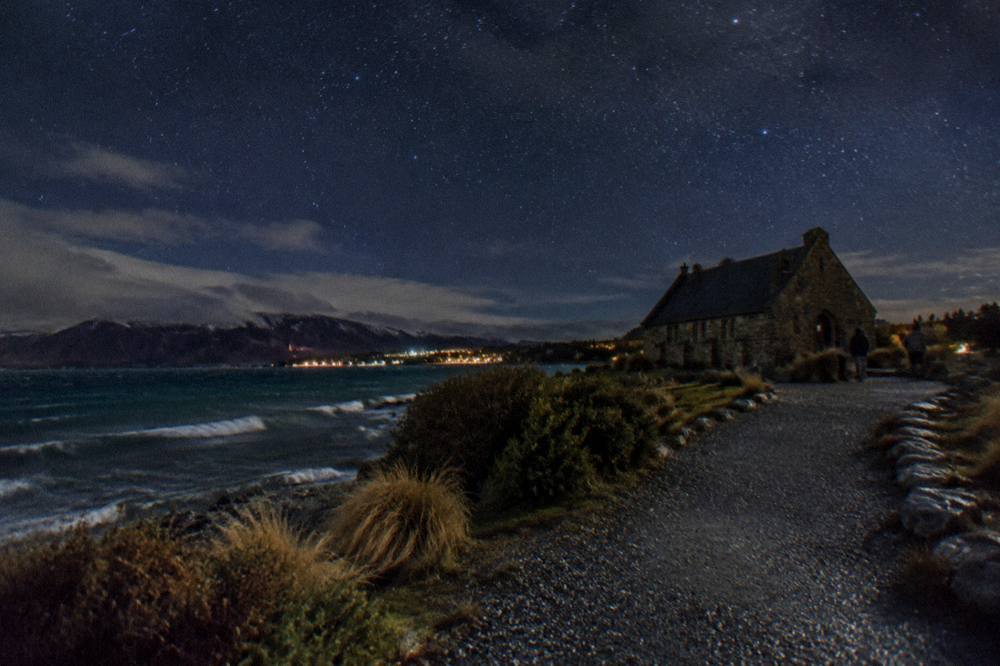
The Church of the Good Shepherd is the postcard landmark on that shoreline, and it deserves careful wording. It is a working, protected sacred site. Gates close at dusk and night access inside the fenced grounds is not permitted, so the famous stone church under stars is photographed from outside the fence on the public path. Photography inside the church is not allowed at any time, drones are not permitted around the church or the village, and a koha is requested. None of that gets in the way of a good night: the exterior view from the path is the one everybody photographs.
Beyond the village, the shores of Lake Tekapo and the roads heading toward Mount Cook and Twizel all sit inside the same reserve, so darkness improves as you leave the streetlights behind. If you have a car, any safe, legal pull-off away from the highway glare gives you a darker sky than the village edge. Two cautions apply. At night the highways can carry black ice, frost, freezing fog and stock or wildlife on the road in the cold months, so check conditions before you drive anywhere for stars, and never park where you block a lane or a gate.
A useful way to think about free spots is how much setup each one asks of you. The table below groups the realistic options by what you give up and what you gain.
| Free spot | Distance from village centre | What it offers | What to watch for |
|---|---|---|---|
| Lakefront public path near the church | A short walk | Easy access, lake reflections, the classic church exterior view | Streetlight glow near the village; the church fence closes at dusk |
| Roadside pull-offs toward Mount Cook | Short drive | Much darker skies, mountain silhouettes | Night driving hazards: ice, frost, fog, wildlife; no facilities |
| Twizel area surrounds | By car | Reserve darkness with a different horizon | You need a car and a careful eye on conditions |
One thing you will not find is a free guided tour. None of the 12 tours covered here is free. The 12 guided tours covered on this site are all paid products, and the cheapest outdoor guided night among them is a three-way tie at from $56 per person. Free stargazing at Tekapo means self-guided stargazing, which is exactly what the rest of this page helps you do well.
When Is The Sky Darkest For Free Stargazing At Lake Tekapo?
The sky over Lake Tekapo is darkest when three things line up: after astronomical darkness begins (roughly 22:22 to 23:24 local time in November 2026, earlier as winter approaches), when the Moon is below the horizon, and when cloud is not covering the basin. Nights with three or more moon-free dark hours run from 12 to 21 per month through the year. Check the moon before anything else.
Astronomical darkness means the Sun is more than 18 degrees below the horizon, which is the point where no twilight glow remains. The local clock time it starts shifts across the year, and daylight saving matters more than most visitors expect. New Zealand daylight time began on 27 September 2026 and runs until early April 2027, so in the middle of summer true darkness does not even begin until nearly midnight. A traveller who books a 9pm dinner and wanders out at 9:30pm in December will see a fading twilight, not the dark sky reserve.
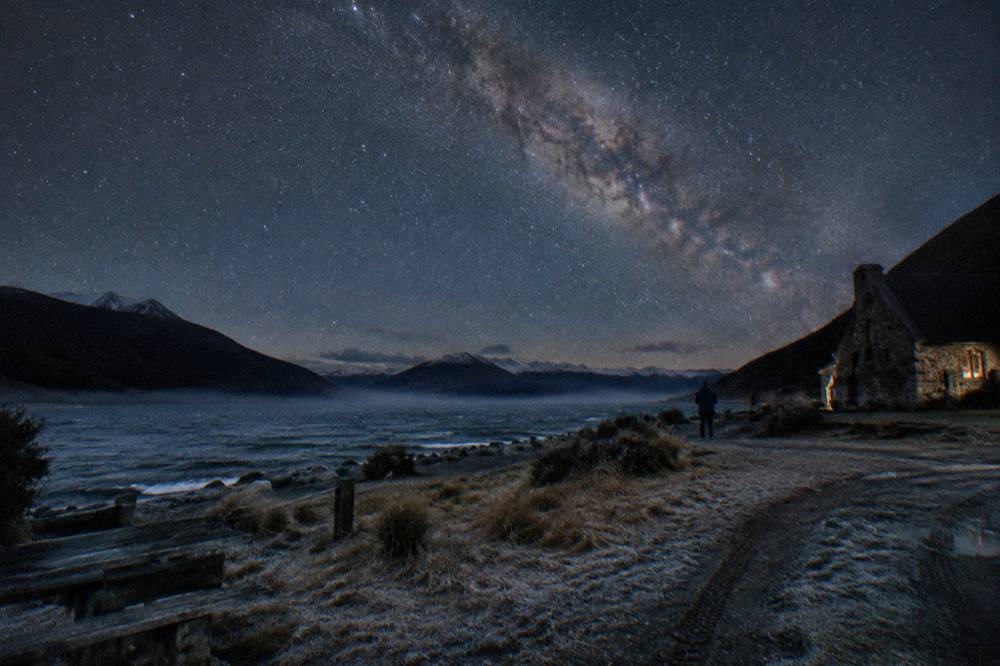
The moon matters just as much. A new moon gives the darkest sky, and a full moon washes out faint stars and the Milky Way, a point Dark Sky Project makes in its own guidance to visitors. The computed moon calendar for the Tekapo lakefront shows the pattern plainly.
| Month | Astronomical darkness per night | Darkness starts (local clock) | New moon | Full moon | Nights with 3+ moon-free dark hours |
|---|---|---|---|---|---|
| November 2026 | 4.1 to 6 hours | 22:22 to 23:24 | 9 Nov | 25 Nov | 13 of 30 |
| December 2026 | 3.5 to 4 hours | 23:26 to 23:54 | 9 Dec | 24 Dec | 12 of 31 |
| January 2027 | 3.6 to 5.3 hours | 23:53 to 23:12 | 8 Jan | 23 Jan | 13 of 31 |
| March 2027 | 7.3 to 9.1 hours | 22:11 to 21:11 | 8 Mar | 22 Mar | 18 of 31 |
| May 2027 | 10.5 to 11.3 hours | 19:21 to 18:56 | 6 May | 20 May | 21 of 31 |
| June 2027 | 11.3 to 11.5 hours | 18:56 to 18:58 | 5 Jun | 19 Jun | 20 of 30 |
The pattern is counter-intuitive if you are used to beach holidays. Winter nights are long and often the clearest and darkest, in Dark Sky Project's own words, but they are seriously cold. Summer nights are short and darkness starts late, but the evening is comfortable. There is no single best month, and any page promising one is guessing. What you can control is the moon: aim within a few nights either side of a new moon, and the faint stars and the Milky Way, when cloud permits, are far more likely to show themselves. For a fuller month-by-month view, the stargazing moon phase calendar breaks the whole year down.
Cloud is the third variable, and the only one nobody can schedule. The basin's topography often blocks low cloud, so a cloud icon on a phone forecast does not always mean a ruined night. The practical free-stargazing routine is simple: check the moon phase, check the cloud forecast, go out anyway if the moon is right, and be ready to be pleasantly surprised. For a fuller rundown on moon, cloud, and wind, the guide to judging a stargazing night at Lake Tekapo also explains how late operators decide whether a tour goes ahead.
If the moon, the clock and the cold all line up against your free night, a guided tour with warm gear and a weather policy starts to look like insurance rather than luxury.
What Gear And Etiquette Do You Need For Free Stargazing At Lake Tekapo?
Free stargazing at Lake Tekapo needs warm layers even in summer, a red light torch instead of a white one, and respect for the dark: no drones near the church or village, no entry inside the church fence at night, and phone screens dimmed or avoided. The village stays dark because of district plan lighting rules, and visitor behaviour is part of that.
Clothing first, because it ends more free stargazing sessions than cloud does. It is cold at night in Tekapo even in summer, and the lakefront is exposed to wind off the water. Dark Sky Project's own clothing advice for its Mount John summit, at 1,029 metres with high wind exposure, is thermals, long pants, a jersey, a jacket and a hat in summer, and thermals, a snow jacket, gloves, a scarf and sturdy ankle-covering shoes in winter. The lakefront is milder than the summit, but the direction of that advice is clear: dress one layer warmer than you think you need. A thermos helps. A folding chair or a blanket to sit on turns a 20-minute look into an hour under the sky.
Red light etiquette is the single habit that matters most to everyone else on the path. A white torch or a bright phone screen destroys the dark adaptation that takes human eyes 20 minutes or more to build, and it does the same to everybody standing near you. A red light torch, or a phone set to its dimmest red-tinted setting, lets you find your footing without ruining the night. If you arrive by car, park so your headlights do not sweep the shoreline when you leave.
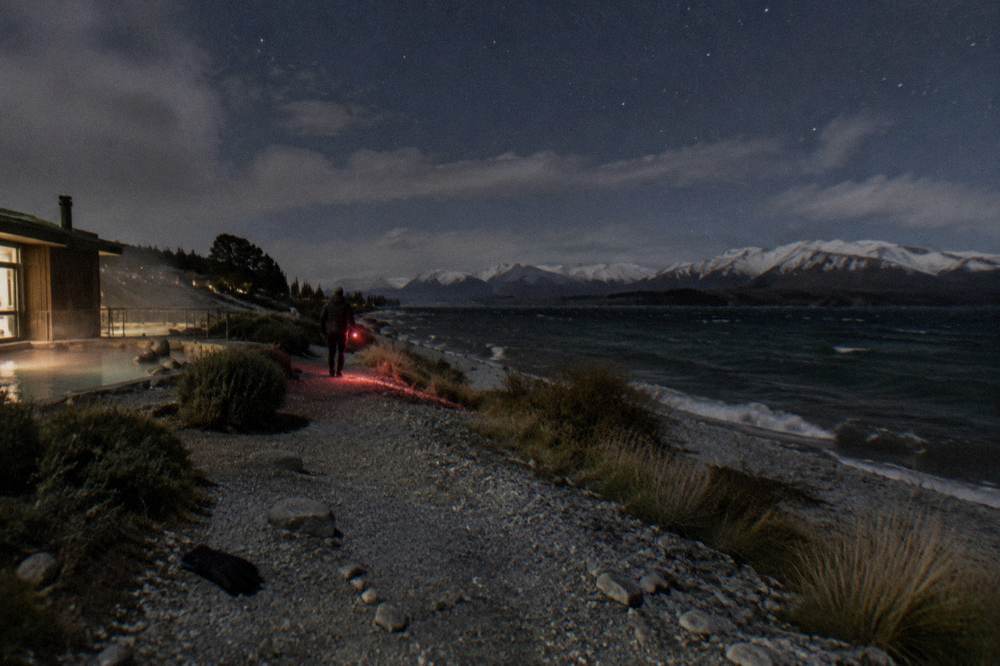
The etiquette rules around the church are firm. Night access inside the fence is not permitted and the gates close at dusk. Photography inside the church is not allowed, drones are not permitted around the church or the village, and a koha is requested at the site. Parking on Pioneer Drive is very limited, so walking the lakefront path is both the friendlier and the easier option. For a fuller kit list, the what to wear on a stargazing tour guide translates the same clothing logic to any night outdoors here.
And if a cold, do-it-yourself night sounds less appealing the more gear you read about, that is a fair signal you might prefer a tour that hands you a warm jacket and a chair.
What Can A Paid Tour Give You That Free Stargazing Cannot?
A paid stargazing tour at Lake Tekapo adds a telescope, a guide who can name what you are looking at, warm gear on some tours, transport to a darker site, and the one thing no free visitor can get: Mount John at night, since the summit road is coach-only after dark. Free stargazing gives you the sky; a tour gives you the sky plus an interpreter and hardware.
The telescope difference is the honest starting point. Free stargazing is naked-eye stargazing, and naked-eye views of a dark reserve are remarkable. But a telescope changes the scale of what you see, and the guided tours here bring serious equipment. Chameleon Stargazing runs a 9.25 inch telescope plus a smart telescope. The Alpine Stargazing Experience with a Guide uses 14 inch telescopes and astro-lasers on a private 50,000-acre farm. The Ultimate Stargazing Experience carries a 16 inch telescope. Dark Sky Project's Summit Experience puts a 16 inch telescope inside the observatory dome on Mount John, alongside naked-eye viewing with guide lasers. The wider set of guides lives on Lake Tekapo Stargazing.
The guide is the difference visitors underestimate. Anyone can find the Southern Cross with a phone app. A guide points out where the cloud-like band of the Milky Way sits, explains what Maori astronomy made of the same sky, and answers the questions an app cannot. The Indoor Dark Sky Cultural Astronomy Experience is built entirely around that idea, a 45-minute guided indoor session with a restored 125-year-old Brashear telescope on display, and it is a reminder that interpretation, not just optics, is what people are paying for.
Warmth and logistics matter more than they sound. The Alpine Stargazing Experience provides warm down jackets and chairs, and the Hot Pools and Stargazing night wraps the whole experience in hot pools at about 38 degrees with a floating hammock, a wool blanket and hot drinks. Several tours include a hot drink and a digital souvenir photo. For a full comparison of the options, the Lake Tekapo stargazing tours compared guide sets the 12 tours side by side.
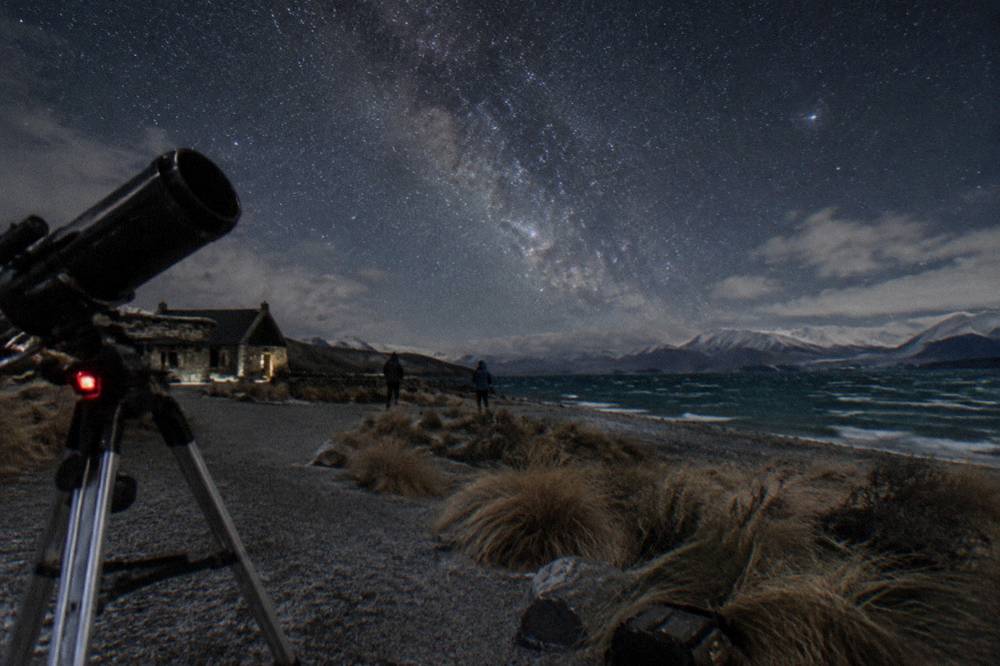
Then there is Mount John, which is the hard boundary between free and paid. Visitors cannot drive up Mount John in the evening: night access is by the tour coach only. In the daytime the Astro Cafe and the private road are open, with a small per-vehicle road fee paid at the gate, and the summit is the site of the University of Canterbury's research observatory, New Zealand's largest professional research observatory. At night, the only way to stand at 1,029 metres looking through the dark of the basin is on a tour. No amount of free-stargazing cleverness reproduces that.
| What you want | Free stargazing | Paid tour |
|---|---|---|
| The dark sky itself | Yes, from public spots | Yes, from darker private or high sites |
| Naked-eye viewing | Yes | Yes, guided with lasers on several tours |
| Telescope viewing | No | Yes, 9.25 to 16 inch instruments across the tours |
| A guide explaining the sky | No | Yes on nearly every guided night |
| Warm jackets and seating | Bring your own | Provided on some tours, including Alpine |
| Mount John summit at night | Not possible, coach only | Yes, on the Summit Experience, from $135.00 per person |
| Cost | Nothing | From $56.00 per person upward for outdoor nights |
Is The Alpine Stargazing Experience The Cheapest Way To Upgrade At Lake Tekapo?
The Alpine Stargazing Experience with a Guide is tied for the cheapest outdoor guided night at from $56.00 per person, alongside the Mt Cook Stargazing Experience and the Twizel Zen tour at the same price. Alpine is the most reviewed of the three, rated 4.6 across 864 reviews, with 14 inch telescopes, warm jackets and a group cap of 10.
That tie matters, and it is worth stating plainly rather than crowning a single winner. Three outdoor tours sit at from $56.00 per person: Alpine at Silver River Stargazing's farm site, the Mt Cook Stargazing Experience from the Tasman Glacier Car Park, and the Japanese-language Zen tour in Twizel. None of the three is cheaper than the others. What separates them is everything besides price.
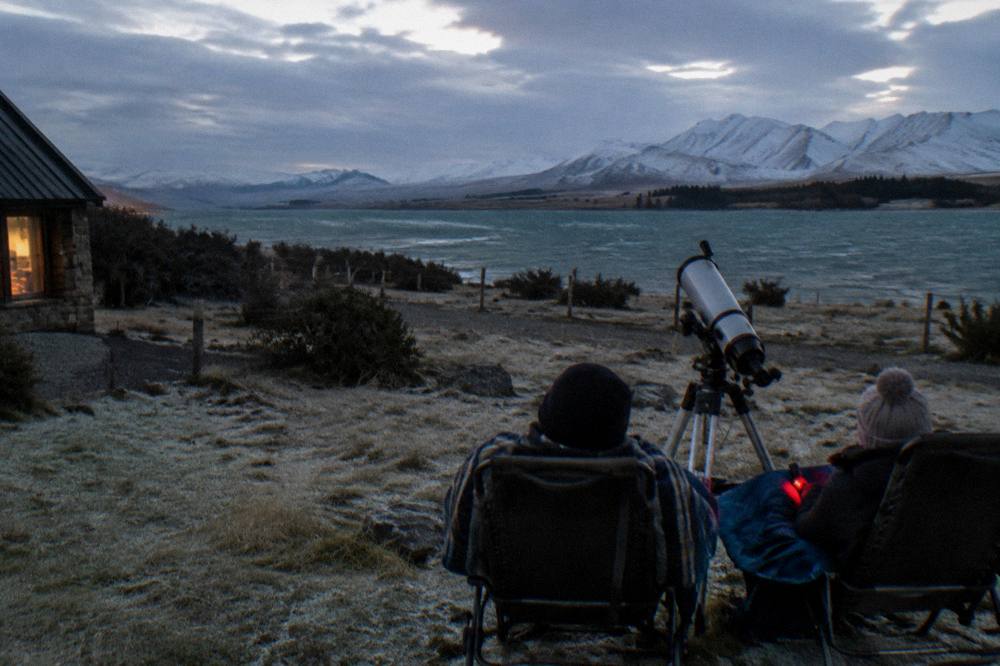
Alpine earns its place as the natural upgrade from a free lakefront night. It runs 1 hour 15 minutes from a check-in at Kiwi Treasure, the Lake Tekapo information centre at 12 Rapuwai Lane, followed by a shuttle to a private 50,000-acre farm site well away from village lights. That shuttle is the quiet point: free stargazing keeps you near the village glow, while Alpine moves you into genuinely dark country without you driving anything at night. It provides 14 inch telescopes, astro-lasers, chairs and warm down jackets, includes a complimentary digital photo, and caps groups at 10.
The review pool is the largest of any tour covered here at 864 reviews, which is why this site treats it as the sensible default recommendation for a first guided night. Silver River Stargazing, listed as Go Tekapo on some booking pages, offers its own cloud policy of reschedule or refund by preference and availability, and the booking carries free cancellation up to 24 hours before the start for a full refund, as all 12 tours covered here do.
If $56 is still more than the budget allows for a guided night, the honest answer is that the free sky is the fallback, and it is a good one. The indoor Dark Sky Cultural Astronomy Experience at from $34.70 per person is cheaper still, but it is an indoor exhibit with a historic telescope on show and no outdoor sky viewing, so it is not a substitute for a night under the reserve. For families weighing the same decision, the stargazing with kids guide runs the age limits and practicalities for children.
How Do You Choose Between Free And Paid Stargazing At Lake Tekapo?
Choose free stargazing if the moon is dark, you have warm clothes, and you are happy with naked-eye wonder from the lakefront. Choose a paid tour if you want a telescope, a guide, warm gear provided, transport to a darker site, or Mount John at night. Many visitors do both: one free night on the path, one guided night with hardware.
The two experiences are complements, not competitors, and the travellers who get the most from Tekapo tend to treat them that way. A free night on the lakefront path teaches you what the reserve sky looks like and how your eyes adapt. A guided night then shows you what lives inside that sky: star clusters, planets when they are up, detail the naked eye cannot reach. Doing the free night first also calibrates your expectations, so the telescope view lands as the reveal it is.
Your own constraints decide the split more than any review does. If you are visiting in midsummer, remember that darkness starts near midnight and lasts only 3.5 to 4 hours in December, so a guided tour that packs a telescope session, a hot drink and a shuttle into 75 to 90 minutes uses your dark window efficiently. If you are visiting in winter, the dark window is enormous, about 10 to 11.5 hours, and a patient, well-dressed free session can run as long as you can stand the cold. If you are travelling with children, note that minimum ages vary by tour: 5 on Chameleon and the Crater Experience, 6 on Astro Tekapo and Stargaze Mackenzie, 10 on the Summit and Hot Pools nights, and the free lakefront has no age limit at all.
Budget is the other honest axis. The guided outdoor nights covered here run from $56.00 to $135.00 per person, with the Ultimate Stargazing Experience at from $125.56 for two hours and a 16 inch telescope. A couple can easily spend more on a single dinner in Tekapo than on the cheapest guided night.
For travellers basing themselves outside Tekapo, the same free-versus-paid logic repeats with different scenery. Twizel runs two English-language guided nights and one Japanese-language night, and Mount Cook village, about 1 hour 15 minutes by road from Tekapo, has its own guided option from the Tasman Glacier Car Park, plus the Hermitage's own Big Sky Stargazing as a neighbouring option in the national park. Mount Cook sits inside the same reserve, so the darkness is the same product with a different horizon.
However you split your nights, the etiquette does not change. Red light only, warm layers always, drones left packed, and the church fence respected after dusk. The reserve stays dark because a whole district agreed to keep it that way, and every visitor is part of the agreement.
Common Questions About Free Stargazing At Lake Tekapo
Can You Stargaze At Lake Tekapo For Free?
Yes. The lakefront public path, the shoreline near the Church of the Good Shepherd viewed from outside the fence, and dark roadside spots inside the reserve all cost nothing. The sky is the same protected dark sky the guided tours operate under. You supply your own warmth, red light and timing around the moon.
Is There A Free Stargazing Tour At Lake Tekapo?
No. No booking platform lists a free guided stargazing tour at Tekapo. The 12 guided tours available are all paid, and the cheapest outdoor guided night is a three-way tie at from $56.00 per person: the Alpine Stargazing Experience, the Mt Cook Stargazing Experience and the Twizel Zen tour.
Where Is The Best Free Stargazing Spot At Lake Tekapo?
The lakefront public path is the most practical spot: flat, close to accommodation, with lake reflections and the Church of the Good Shepherd silhouette. View the church from outside the fence, since gates close at dusk and night access inside the grounds is not permitted. For a darker horizon, drive carefully to a safe pull-off away from village lights, watching for ice and wildlife at night.
What Time Do Stars Come Out At Lake Tekapo?
True astronomical darkness is what matters, and its start time swings with the seasons. In November 2026 it begins between 22:22 and 23:24 local time; in December between 23:26 and 23:54. By June 2027 it starts before 19:00 and lasts over 11 hours. Check the moon too, since a full moon washes out the fainter sky no matter how dark the night.
Do You Need A Red Light For Stargazing At Lake Tekapo?
A red light torch is strongly recommended for any night viewing. White light and bright phone screens destroy the dark adaptation your eyes build over roughly 20 minutes, and they do the same to everyone around you on the public path. Red light lets you walk safely without costing anyone the sky.
Is Free Stargazing At Lake Tekapo As Good As A Tour?
It is a different experience rather than a lesser one. Free stargazing gives you the naked-eye reserve sky at no cost. A paid tour adds a telescope, a guide, warm gear on some tours, transport to a darker site and the only night access to Mount John, which is coach-only after dark. Many visitors do one night of each.