Southern Lights And Stargazing At Lake Tekapo: What A Tour Can And Cannot Show
The southern lights do appear over the Mackenzie Basin, but no tour here sells them and none can promise them. Here is what stargazing operators at Tekapo, Twizel and Mount Cook actually show, and how to plan around the sky you will really get.
Short answer
The Aurora Australis can appear over Lake Tekapo, but only during strong solar activity and it is predictable just a day or two ahead. Dark Sky Project runs no aurora tours and cannot guarantee the southern lights. The 12 stargazing tours here sell stars, planets and telescope viewing, from $34.70 to $135 per person.
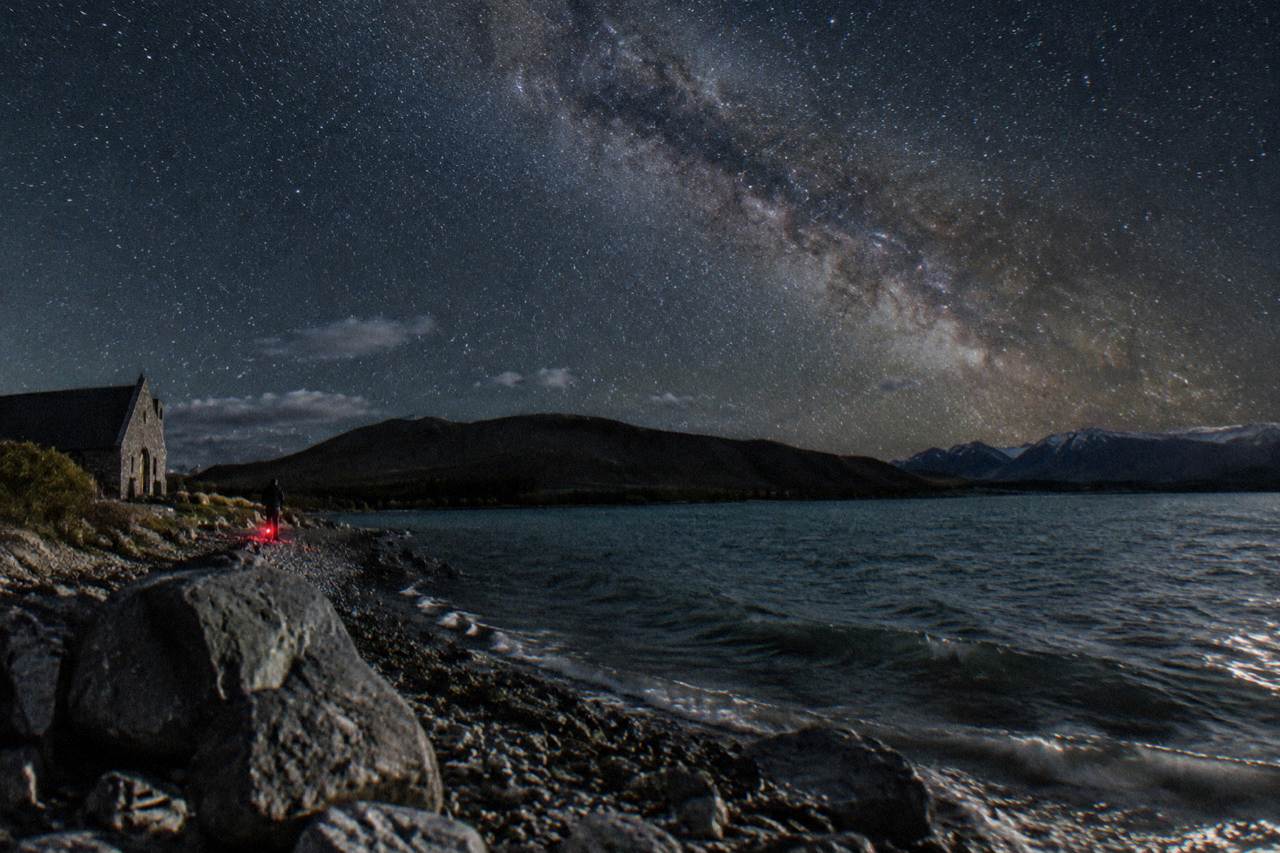
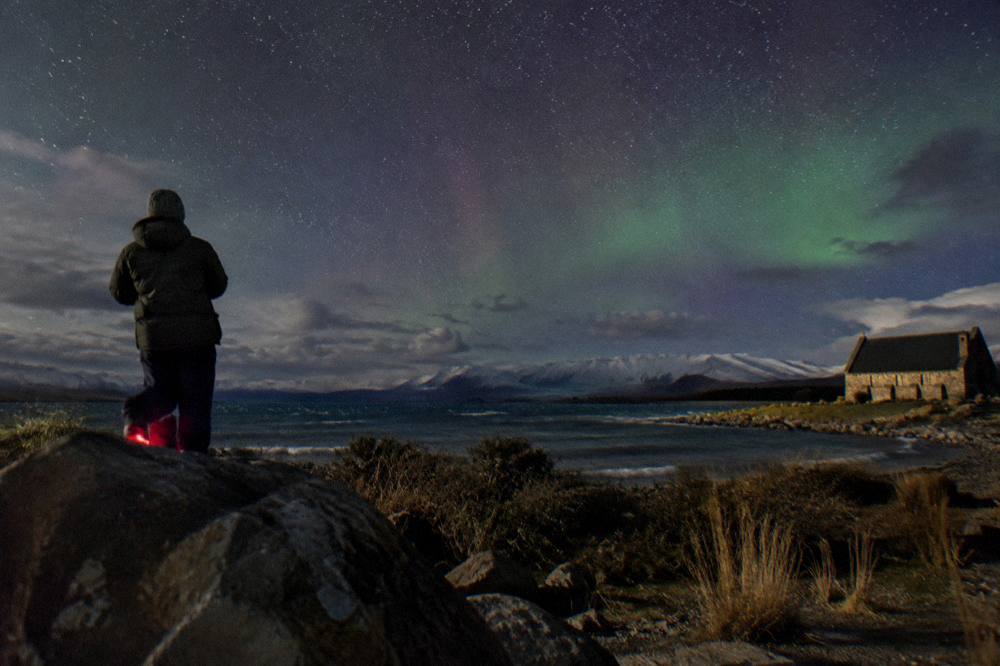
The southern lights sit near the top of many New Zealand wishlists, and Lake Tekapo gets name-checked constantly as the place to chase them. That reputation is half earned. The Mackenzie Basin sits under genuinely dark skies inside the Aoraki Mackenzie International Dark Sky Reserve, a 4,367 square kilometre reserve designated in 2012, and the Aurora Australis does dance over it from time to time. The catch is simpler and more important: aurora needs strong solar activity, it is predictable only a day or two ahead, and no operator here sells it. Dark Sky Project, the operator at Mount John, runs no aurora tours at all and says plainly that it cannot guarantee clear skies, the Milky Way or the Aurora Australis.
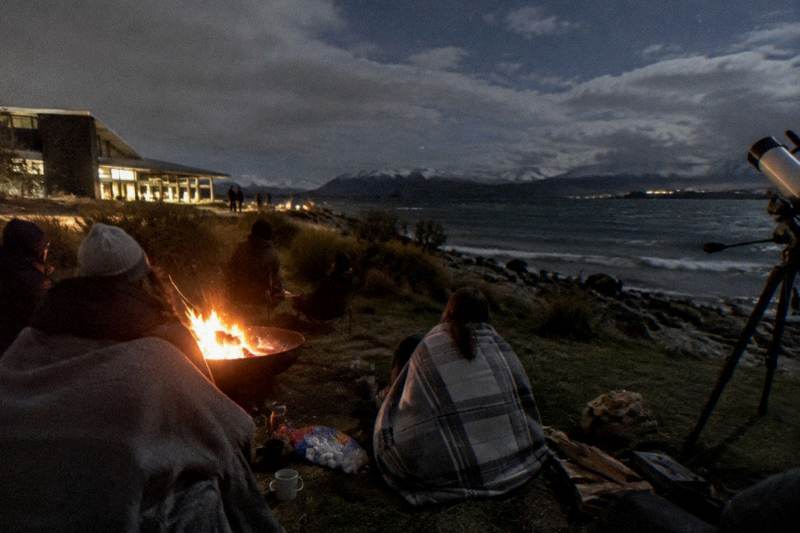
What the region does sell, very well, is stargazing. Twelve tours operate from Lake Tekapo, Twizel and Aoraki / Mount Cook, ranging from a $34.70 indoor astronomy session to a $135 summit experience at 1,029 metres, and several of them are the kind of night where an aurora surprise, when the sun cooperates, becomes possible simply because you are already outside under a dark sky, most with a guide and a telescope. This guide separates the two things honestly: what an aurora hunt at Tekapo actually involves, and what a stargazing tour can and cannot show. For a broader comparison of the options, start with the Lake Tekapo stargazing tours compared guide.
Can You Actually See The Southern Lights At Lake Tekapo?
Yes, but rarely, only during strong solar activity, and never on a schedule. The Aurora Australis is caused by charged particles from the sun striking the upper atmosphere, and it needs an active sun to produce displays bright enough to see from this latitude. Forecasters can only predict a likely display a day or two ahead. No tour, operator or calendar at Lake Tekapo can promise it.
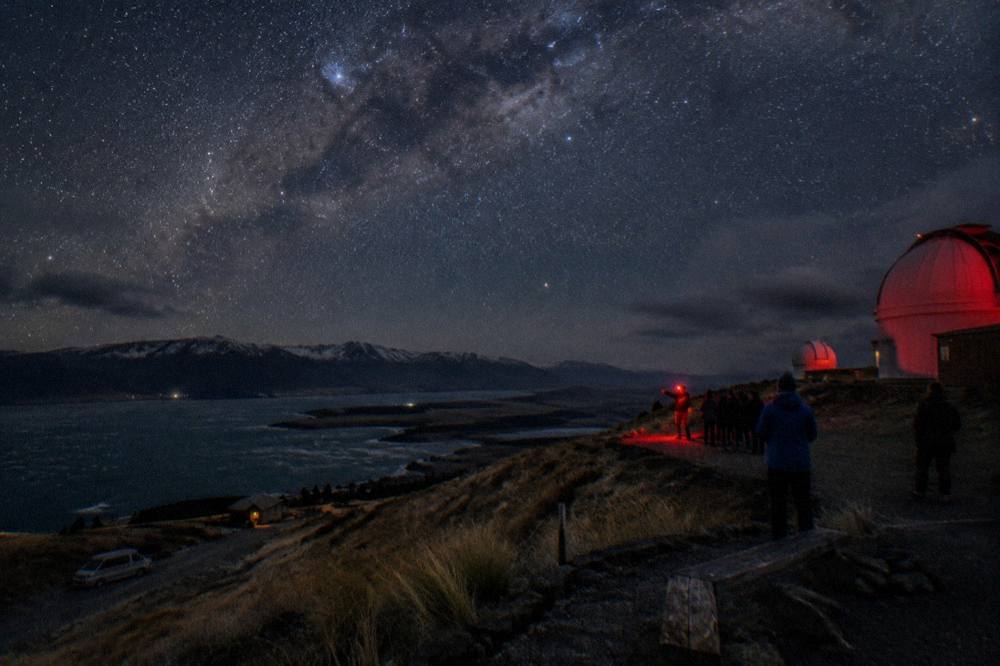
The physics is the part most visitors skip. Aurora displays at mid southern latitudes like the Mackenzie Basin come from geomagnetic storms, and those follow the sun's activity cycle. A quiet sun can go weeks or months without producing anything visible from Tekapo, while a strong storm can paint the southern horizon on successive nights. The practical consequence is that anyone planning a trip months in advance around aurora is planning around a coin that has not been flipped yet. The sun decides the schedule, and it announces that schedule only a day or two in advance.
The second factor is darkness and horizon. Aurora over New Zealand typically sits low in the southern sky, so a display competes with any glow near the horizon and with moonlight. The basin helps here: the Aoraki Mackenzie reserve keeps its skies dark through district plan lighting rules, which is why the reserve exists at all. DarkSky International lists it as an International Dark Sky Reserve designated in 2012. That darkness is what makes a faint aurora visible at Tekapo when the same display would be invisible from a city.
The third factor is honesty from the operators themselves. Dark Sky Project states that it cannot guarantee the Aurora Australis and runs no aurora tours. The same is true across the board: every operator around Tekapo, Twizel and Mount Cook sells stargazing, not aurora. Some guides will point out an aurora if one appears during a tour, and that happens on active nights, but it is a bonus of being outside under a dark sky, not a product anyone can sell you. For a fuller picture of the region's sky and the tours that work it, read the guide to Aoraki Mackenzie dark sky reserve tours.
What Is The Difference Between Aurora Hunting And A Stargazing Tour?
Aurora hunting is a wait-and-see gamble driven by solar activity, while a stargazing tour is a reliable, guided experience of stars, planets, clusters and nebulae through telescopes, with a guide who can read the sky. The tours covered here all sell the second thing. If a display erupts during a tour, guides will usually turn attention to it, but no operator treats aurora as the product.
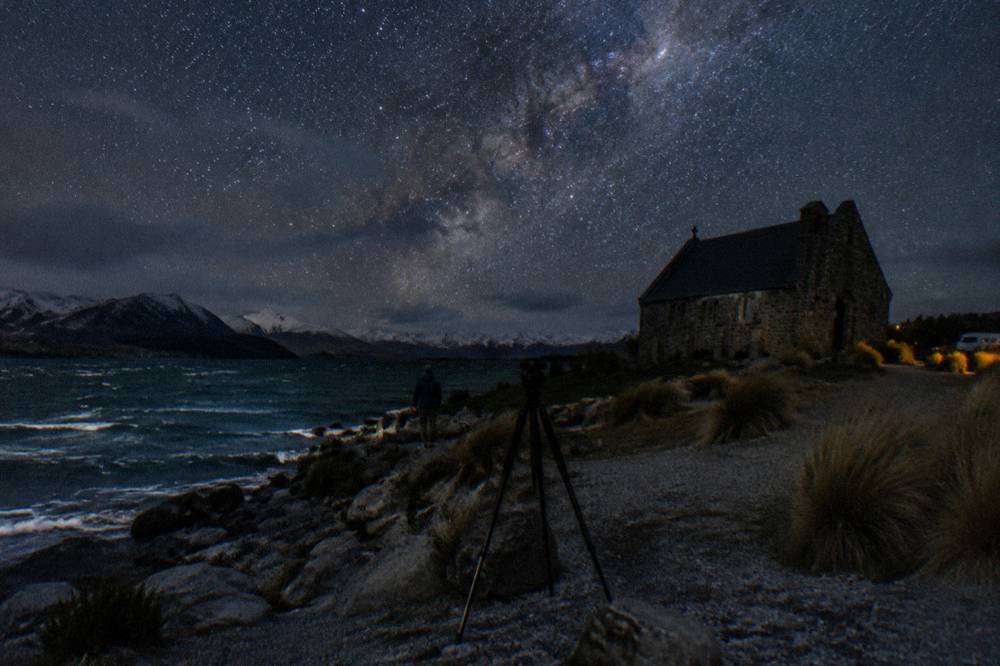
The distinction matters most for expectations and for your wallet. A stargazing tour at Tekapo delivers on its promise almost every clear night: the Milky Way, the Magellanic Clouds, star clusters, planets when they are up, and telescope views of objects invisible to the naked eye. That is what the 12 tours here are built around, with durations from 45 minutes to 2 hours and prices from $34.70 to $135 per person. An aurora hunt delivers nothing on most nights, because the sun is quiet most of the time, and even a good forecast can fade. People who book a stargazing tour expecting aurora are often delighted anyway; people who skip the tour to wait for aurora often see nothing at all.
The smart framing is to book the stargazing and treat any aurora as a possible bonus. Guides on these tours carry lasers, know the southern sky intimately, and will notice a glow on the southern horizon before most visitors do. Several operators photograph the night as part of the experience, the Chameleon Stargazing Shared Tour includes a digital souvenir photo, and the Alpine Stargazing Experience with a Guide includes a complimentary digital photo, which means that on the rare night an aurora does appear, someone on hand may capture it with you in the frame. For what the sky itself can offer beyond aurora, see the guide to Milky Way viewing at Lake Tekapo.
Here is the honest side-by-side:
| Factor | Aurora hunting | A stargazing tour |
|---|---|---|
| What it depends on | Strong solar activity, dark southern horizon, no moon | Clear sky, darkness, a guide and telescope |
| How far ahead it is predictable | A day or two at best | Bookable weeks ahead, runs to a schedule |
| Success rate from Tekapo | Low on any given night | High on any clear night |
| What you get | Nothing, or a display low in the south | Stars, planets, clusters, telescope viewing, guiding |
| Who sells it | Nobody: Dark Sky Project runs no aurora tours | 12 tours from Tekapo, Twizel and Mount Cook |
| Typical cost | Free if you self-drive and wait | From $34.70 to $135 per person |
The self-drive option deserves a sentence, because it is real. The village waterfront and the public paths outside the Church of the Good Shepherd fence, which closes at dusk, are free places to watch the southern horizon on an active night. The trade-offs are cold, no telescope, no guide to confirm whether that pale glow is aurora or cloud, and no one to tell you where to look. The free spots are covered in detail in free stargazing spots at Lake Tekapo.
Which Lake Tekapo Stargazing Tour Suits An Aurora Optimist?
Pick a long, outdoor, dark-sky tour with a small group and a guide who reads the sky: the Chameleon Stargazing Shared Tour at 90 minutes with up to 14 guests, or the Alpine Stargazing Experience on a private farm, give you the most hours outside under the widest sky for the money. The indoor session shows no sky at all, so it cannot deliver an aurora surprise.
The logic is time on sky. An aurora that appears mid-tour is only visible to people who are outdoors looking up, so the tours that maximise your dark-sky hours are the ones that maximise your luck. The Chameleon Stargazing Shared Tour runs 90 minutes, about 30 of them naked-eye under the open sky before the telescopes come out, from $73 per person, rated 4.9 across 789 reviews, with a group cap of 14, hot chocolate and marshmallows, and a minimum age of 5. It checks in at 70 Andrew Don Drive, about a 4 minute drive from the village. The Chameleon Stargazing tour guide covers it in full, and you can also check availability alongside the tour page.
The Alpine Stargazing Experience with a Guide is the other strong fit: 75 minutes from $56 per person, rated 4.6 across 864 reviews, capped at 10 guests, with 14 inch telescopes and astro-lasers on a private 50,000-acre farm reached by shuttle from check-in at 12 Rapuwai Lane. Warm down jackets are provided on this one, which matters on a night spent standing still in the cold hoping the southern horizon lights up. The Ultimate Stargazing Experience, 2 hours from $125.56 per person with a 16 inch telescope and a group cap of 10, is the longest option in the village and therefore the most time on sky.
One caution cuts the other way: weather policies differ by operator, and they matter when you are gambling on the sky. Astro Tekapo's 90-minute experience, from $59 per person at its site in Takapo Regional Park, offers a full refund if sky conditions are too cloudy for stargazing. Silver River's own cloud policy is reschedule or refund by preference and availability. Dark Sky Project decides as close to departure as possible and offers an indoor alternative, a reschedule, a voucher or a refund if outdoor stargazing is not possible. All 12 booking pages state free cancellation up to 24 hours before the start for a full refund, which is worth knowing if you want to hold a spot and rebook around a forecast. The operator-by-operator detail is in the weather and cloud cancellation guide.
How Do You Know If A Southern Lights Night Is Coming?
You cannot know more than a day or two ahead, and that is a hard limit set by physics rather than by local knowledge. Geomagnetic forecasts based on solar wind measurements give the best short-range signal, and a strong forecast can still fizzle. The honest play is to watch the forecast once you are already in the Mackenzie, not to plan the trip around one.
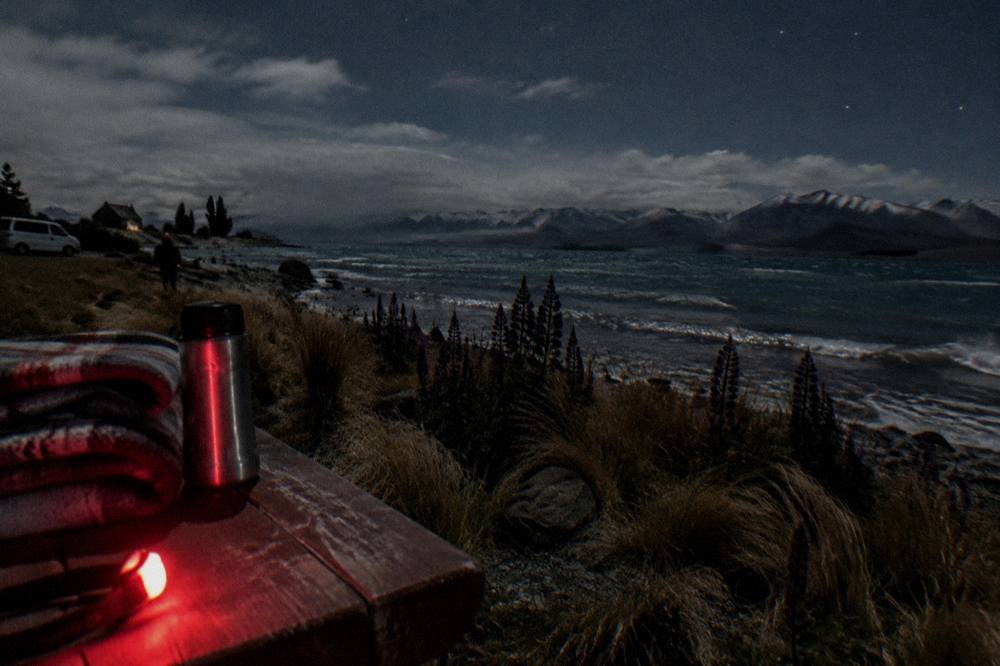
The chain of events works like this: the sun emits charged particles, those particles take roughly a day or two to reach Earth, and satellites measuring the solar wind give the only reliable warning window. That is why every serious aurora forecast you will find is a 30-minute to three-day product, not a monthly one. A calendar that promises aurora on a specific week in a specific month is not a forecast, it is a guess dressed up. When space weather agencies report a strong geomagnetic storm watch, that is the moment to check the southern horizon after dusk, and the darkness table below tells you when dusk actually delivers darkness at Tekapo.
Local conditions then decide what you see. The Mackenzie's darkness does the heavy lifting: a display that would be a faint grey glow from a suburban backyard can show colour and structure from the basin. Moonlight is the enemy, and a full moon washes out faint stars and the Milky Way just as it washes out faint aurora, which is why the moon phase matters as much as the solar forecast. On that front the computed numbers help: in November 2026, for example, the new moon falls on 9 November and the full moon on 25 November, with 13 of the month's 30 nights giving three or more moon-free hours of full darkness. The moon phase calendar guide works through the whole year.
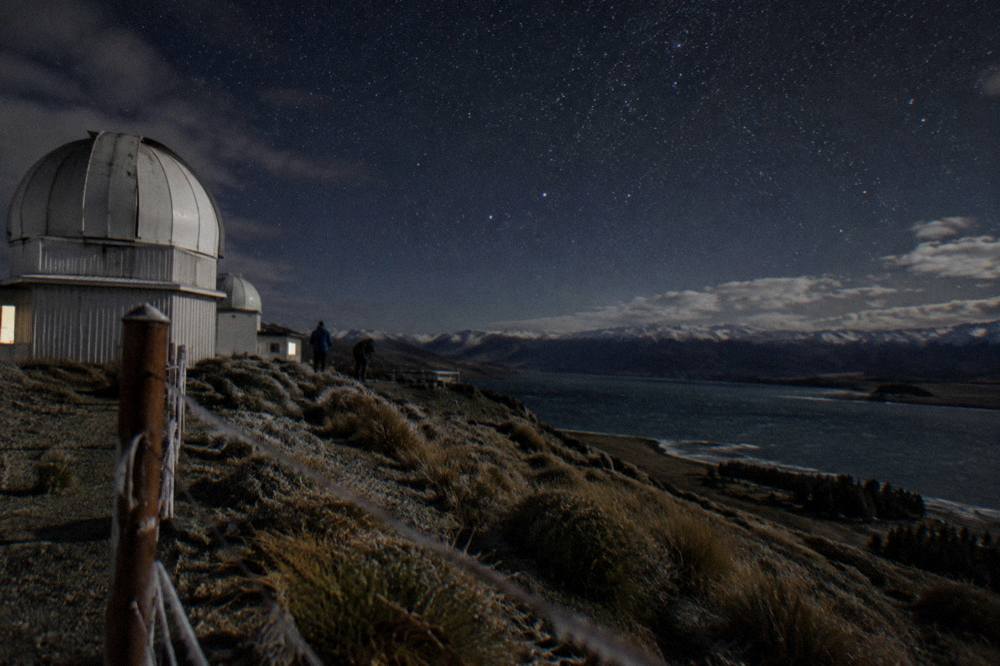
For road conditions on a chase night, winter driving on SH8 and SH80 can mean black ice, frost, freezing fog and stock or wildlife on the road, and the NZTA journey planner at journeys.nzta.govt.nz is the official source for conditions. Dark Sky International's own reserve pages at darksky.org explain what the designation protects, which is the darkness that makes any faint display visible here at all.
What Can You Actually See On A Stargazing Tour At Lake Tekapo?
On a clear night the tours here show the Milky Way, the Magellanic Clouds, star clusters, nebulae, and planets when they are above the horizon, first naked-eye and then through telescopes between 9.25 and 16 inches. What no tour can promise is any specific object on any specific night: the sky rotates, the moon brightens and dims, and cloud decides whether the night runs at all.
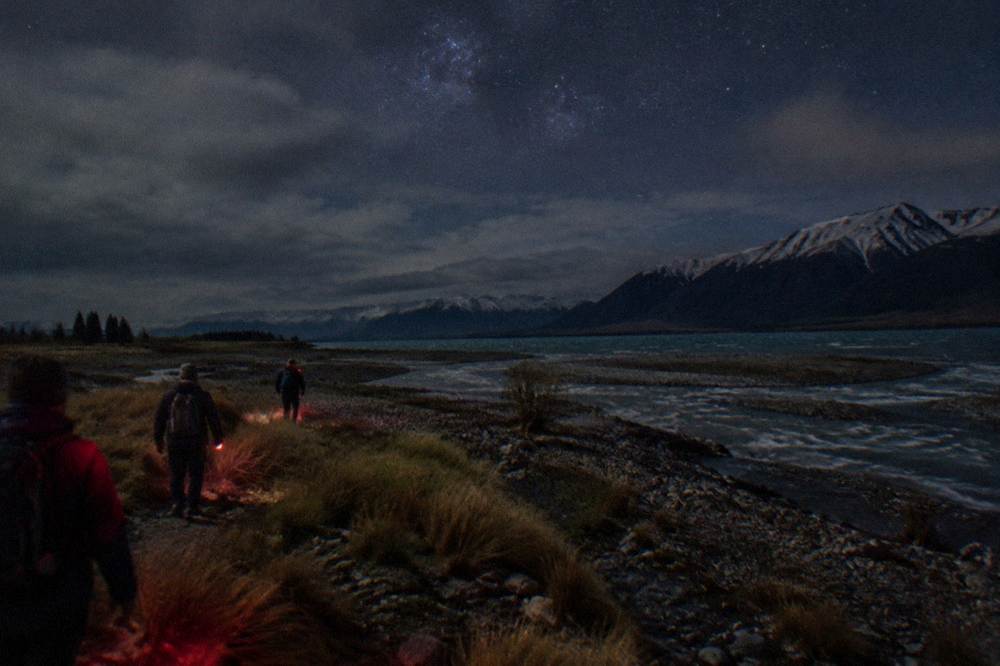
The naked-eye portion is the part first-time visitors underestimate. Telescope time then goes deeper: the Chameleon tour pairs a 9.25 inch telescope with a smart telescope, Astro Tekapo runs the same pairing, the Alpine tour uses 14 inch telescopes, and the Ultimate experience carries a 16 inch telescope. Dark Sky Project's Summit Experience adds a 16 inch telescope inside the observatory dome at 1,029 metres on Mount John.
Here is what each format tends to deliver:
| Tour | Duration | From (USD) | Telescope | What it shows best |
|---|---|---|---|---|
| Chameleon Stargazing Shared Tour | 1 hour 30 minutes | $73 | 9.25 inch plus smart telescope | Naked-eye sky time, then clusters and planets |
| Alpine Stargazing Experience | 1 hour 15 minutes | $56 | 14 inch telescopes, astro-lasers | Deep-sky viewing, group of 10 |
| Astro Experience (Astro Tekapo) | 1 hour 30 minutes | $59 | Premium 9.25 inch plus smart telescope | Moon chairs, hot chocolate, relaxed pace |
| Ultimate Stargazing Experience | 2 hours | $125.56 | 16 inch telescope | The deepest faint-object views, longest night |
| Crater Stargazing at Cowan's Observatory | 75 minutes | $78 | 14 inch telescopes in sheltered craters | Wind-sheltered viewing, minimum age 5 |
Planets deserve a specific caveat. A tour cannot promise Saturn, Jupiter or Mars on a given night, because each is only above the horizon for part of the year and at useful hours for part of the night. Guides will show a planet when one is well placed, and a telescope view of Saturn's rings is for many visitors the single most memorable minute of the night, but the object list changes with the calendar. The honest expectation is a sky full of stars and a telescope pointed at whatever the night offers, which on any clear night is plenty. The what you can see on a Tekapo stargazing tour post goes object by object.
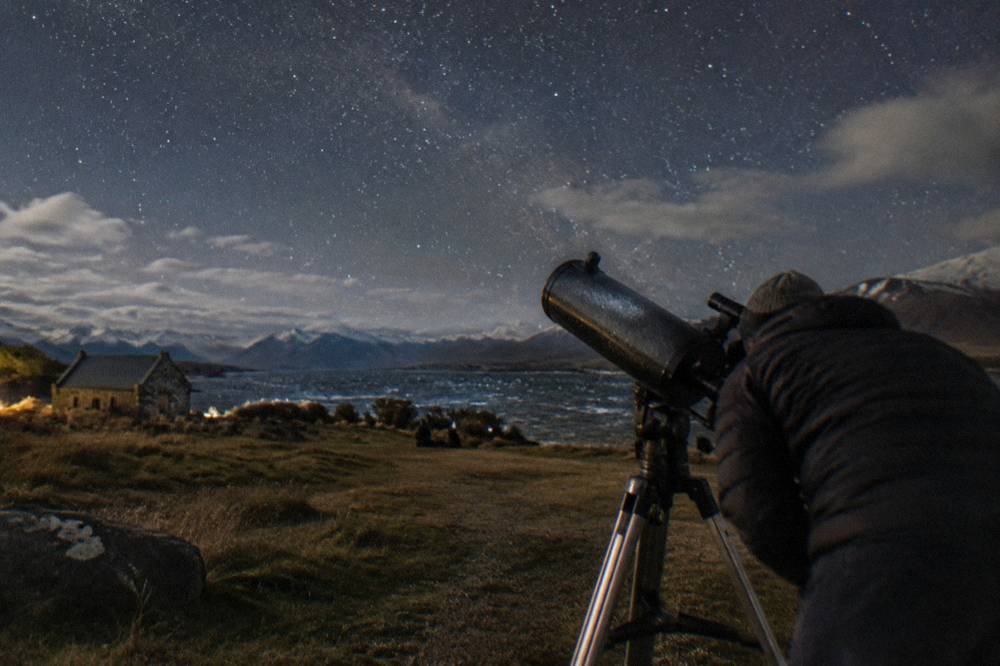
When Is The Sky Darkest At Lake Tekapo?
Astronomical darkness, when the sun sits more than 18 degrees below the horizon, runs from about 3.5 hours a night in December to about 11.5 hours in June, and darkness does not even begin until after 11 pm in the weeks around the summer solstice. Moon-free nights are the darkest of all, and a full moon washes out the faint stars the tours exist to show.
New Zealand daylight time is the summer trap. It began on 27 September 2026 and runs until early April 2027, so through the summer months true darkness starts between roughly 22:20 and 23:54 local time, which pushes every stargazing tour late. Winter flips the problem: darkness falls before 7 pm from May through August, nights run 10 to 11.5 hours of full dark, and Dark Sky Project says winter months are often the clearest and darkest. The trade is brutal cold, with the summit at 1,029 metres exposed to wind and often snow, so layers matter more than any other planning choice, covered in what to wear on a Tekapo stargazing tour.
| Month | Dark hours per night | Darkness starts (local) | New moon | Nights with 3+ moon-free dark hours |
|---|---|---|---|---|
| November 2026 | 4.1 to 6 | 22:22 to 23:24 | 9 Nov | 13 of 30 |
| December 2026 | 3.5 to 4 | 23:26 to 23:54 | 9 Dec | 12 of 31 |
| January 2027 | 3.6 to 5.3 | 23:53 to 23:12 | 8 Jan | 13 of 31 |
| March 2027 | 7.3 to 9.1 | 22:11 to 21:11 | 8 Mar | 18 of 31 |
| June 2027 | 11.3 to 11.5 | 18:56 to 18:58 | 5 Jun | 20 of 30 |
| September 2027 | 8.1 to 9.6 | 19:50 to 21:26 | 1 and 30 Sep | 18 of 30 |
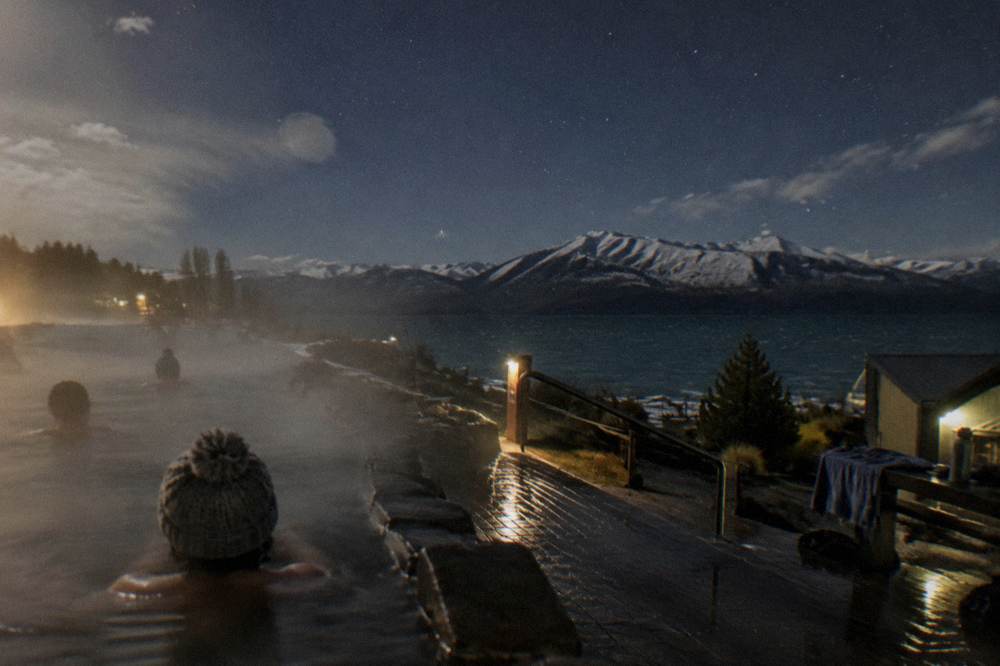
The aurora angle on all of this is straightforward: a moon-free night maximises both stargazing and any faint aurora, and the new moon dates, one per month, are the anchor points around which flexible travellers plan. Nobody can promise a clear or moonless night on a date you choose, but the computed calendar at least tells you which nights have the moon out of the way if the weather and the sun cooperate.
Where Else Near Tekapo Can You Watch For The Southern Lights?
Twizel and Aoraki / Mount Cook sit inside the same dark sky reserve and often have different cloud from Tekapo, which matters when a display is forecast. Twizel and Mount Cook village are the other bases in the reserve, about 1 hour 15 minutes by road to Mount Cook village, and both carry guided stargazing options so you are not limited to the Tekapo township.
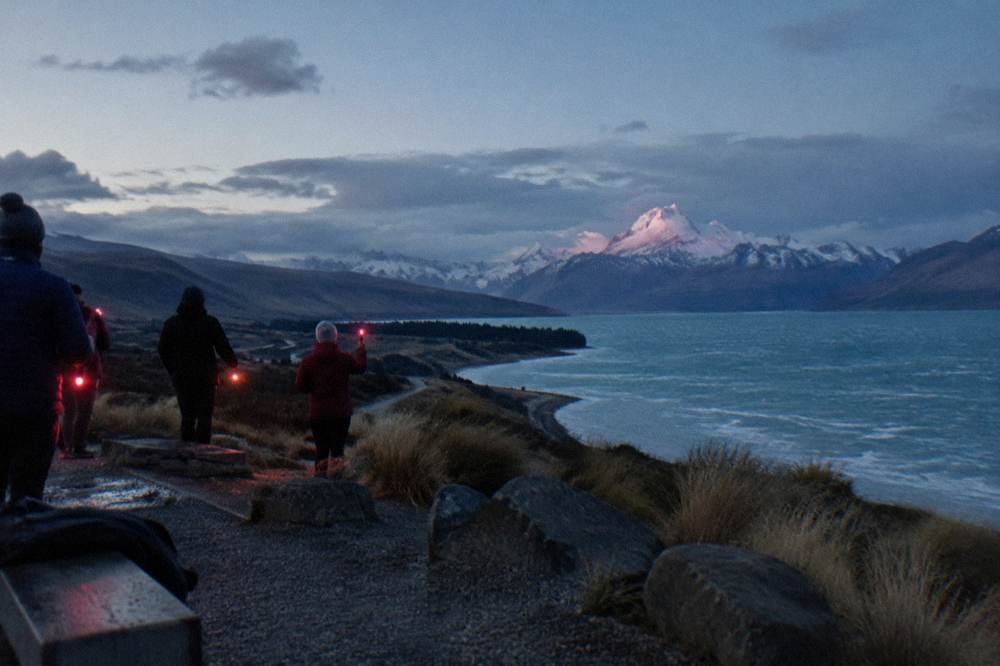
Twizel has become a genuine second base. The Twizel Stargazing Tour with an Astronomer and Telescope, from $67 per person and rated 5.0 across 77 reviews, runs 75 minutes with a powerful telescope and a laser-guided tour from 50 Kate Cameron Drive, minimum age 6, and its weather policy is explicit: it runs only in clear conditions, and if weather cancels you are notified and offered a refund or a reschedule. The Twizel Stargazing Experience with a Guide, from $68.23 per person with a group cap of 20, meets at the Distinction Mackenzie Country Hotel. The Japanese-language Zen Stargazing Experience also meets in Twizel, at Market Place, from $56 per person, a new listing with no reviews yet; it is a Japanese-language tour and there is no Tekapo pickup implied, so it suits Japanese-speaking travellers already in Twizel. The Twizel stargazing tour guide covers the town in depth.
The Mount Cook village adds the alpine backdrop. The Mt Cook Stargazing Experience, from $56 per person and rated 4.8 across 17 reviews, meets at the Tasman Glacier Car Park in the national park, with high-quality telescopes for deep sky observation and a photo included. The Hermitage hotel runs its own Big Sky Stargazing in the park as a neighbouring option with its own terms. The trade-off is distance: nothing here transfers from Tekapo, so these suit travellers basing themselves in the village or driving up for the evening, with the winter road cautions about ice and fog applying to SH80. The comparison of the two bases is worked through in Mount Cook and Twizel versus Lake Tekapo.
What Should You Do If The Southern Lights Are Your Main Goal?
Book a stargazing tour anyway, keep at least one flexible night free for a self-drive watch, and let the short-range forecast decide the chase. That combination gives you a booked guided night under a dark sky, weather permitting, plus a real shot at aurora on the nights the sun cooperates, without gambling the whole trip on a phenomenon nobody can schedule.
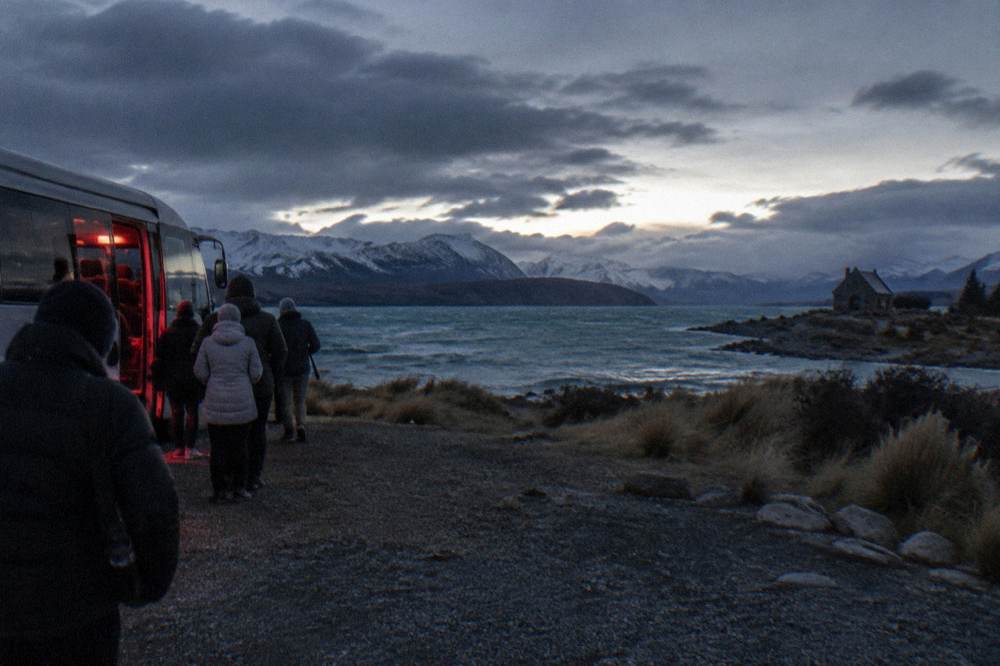
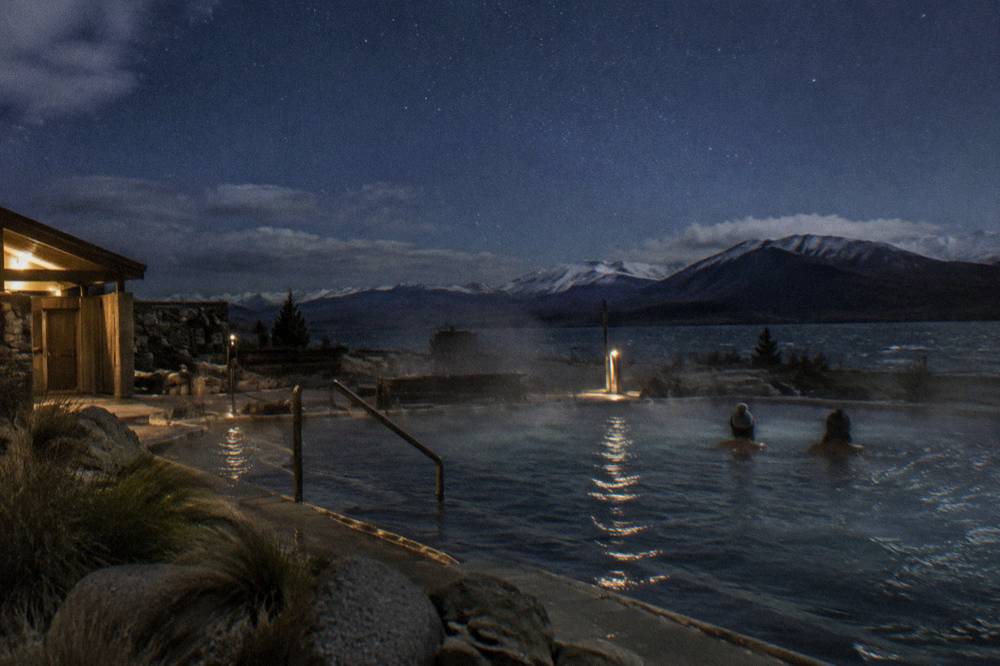
The sequencing works because of the cancellation terms. All 12 tours here carry free cancellation up to 24 hours before the start for a full refund, so you can hold a booked seat for two or three nights of your stay and drop the ones you do not need. When a strong geomagnetic forecast lands, keep the night with the clearest sky, and if the forecast fizzles you still have a tour that delivers stars, clusters and telescope views. Travellers who skip the tour entirely and drive to a dark roadside every night often end the trip having seen cloud. The hot pools option adds a different hedge: Soak in the Stars, from $102.63 per person and rated 4.3 across 121 reviews, runs even when cloud limits telescopes, with an indoor virtual reality session instead, the hot pool entry still included, and a 25 percent refund if under 30 minutes of telescope viewing happens, and it is the one tour with hotel pickup from the township on request, subject to availability.
Two last planning notes. First, the indoor Dark Sky Cultural Astronomy Experience, 45 minutes from $34.70 per person, is a weather-proof floor under any plan: four guided zones, a restored 125-year-old Brashear telescope on display and Maori understanding of the sky, with no outdoor sky viewing, so it is a cultural hour rather than a stargazing night.
Common Questions About The Southern Lights At Lake Tekapo
Can You See The Southern Lights At Lake Tekapo?
Sometimes, during strong solar activity, and never on a schedule. The Aurora Australis is predictable only a day or two ahead and appears low in the southern sky, so the reserve's darkness helps but the sun decides. Dark Sky Project runs no aurora tours and cannot guarantee the southern lights.
Do Any Lake Tekapo Tours Promise The Aurora Australis?
No. Every operator around Tekapo, Twizel and Mount Cook sells stargazing, not aurora. Guides will often point out a display if one appears during a tour, but that is a bonus of being outside under a dark sky, not something any tour can book you into.
Which Stargazing Tour Is Best If I Hope To See Aurora?
Choose a long outdoor tour under a wide sky: the Chameleon Stargazing Shared Tour, 90 minutes from $73, or the Alpine Stargazing Experience, 75 minutes from $56 on a private farm, both with guides who read the sky. The Ultimate Stargazing Experience, 2 hours from $125.56, gives the most time outside.
How Far Ahead Can You Forecast The Southern Lights?
About a day or two. Aurora forecasts rely on satellites measuring the solar wind, so even a strong forecast can fade before nightfall. Watch the forecast once you are already in the Mackenzie rather than planning a trip months ahead around one.
Does A Full Moon Ruin Aurora Viewing At Lake Tekapo?
A full moon brightens the sky and washes out faint stars and faint aurora alike. Moon-free nights are the darkest, and the computed calendar shows which nights give three or more moon-free hours of full darkness, from 12 nights in December to 21 in May.
Can I Cancel A Stargazing Tour If An Aurora Forecast Changes My Plans?
All 12 tours covered here state free cancellation up to 24 hours before the start for a full refund. That booking rule lets you hold several nights and keep the clearest one, separate from each operator's own weather policy.