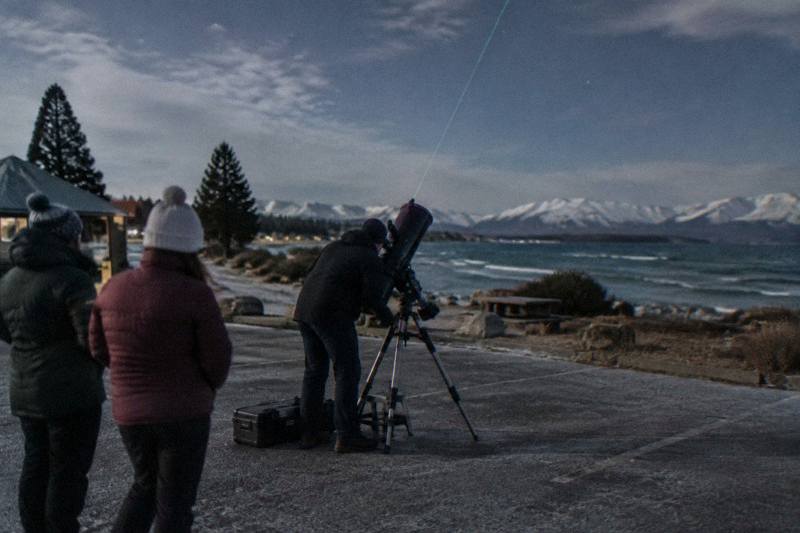
How To Know If A Night Is Good For Stargazing At Lake Tekapo?
A practical checklist for judging a stargazing night at Lake Tekapo: moon phase, cloud, wind, and how late operators make the call on whether a tour runs.
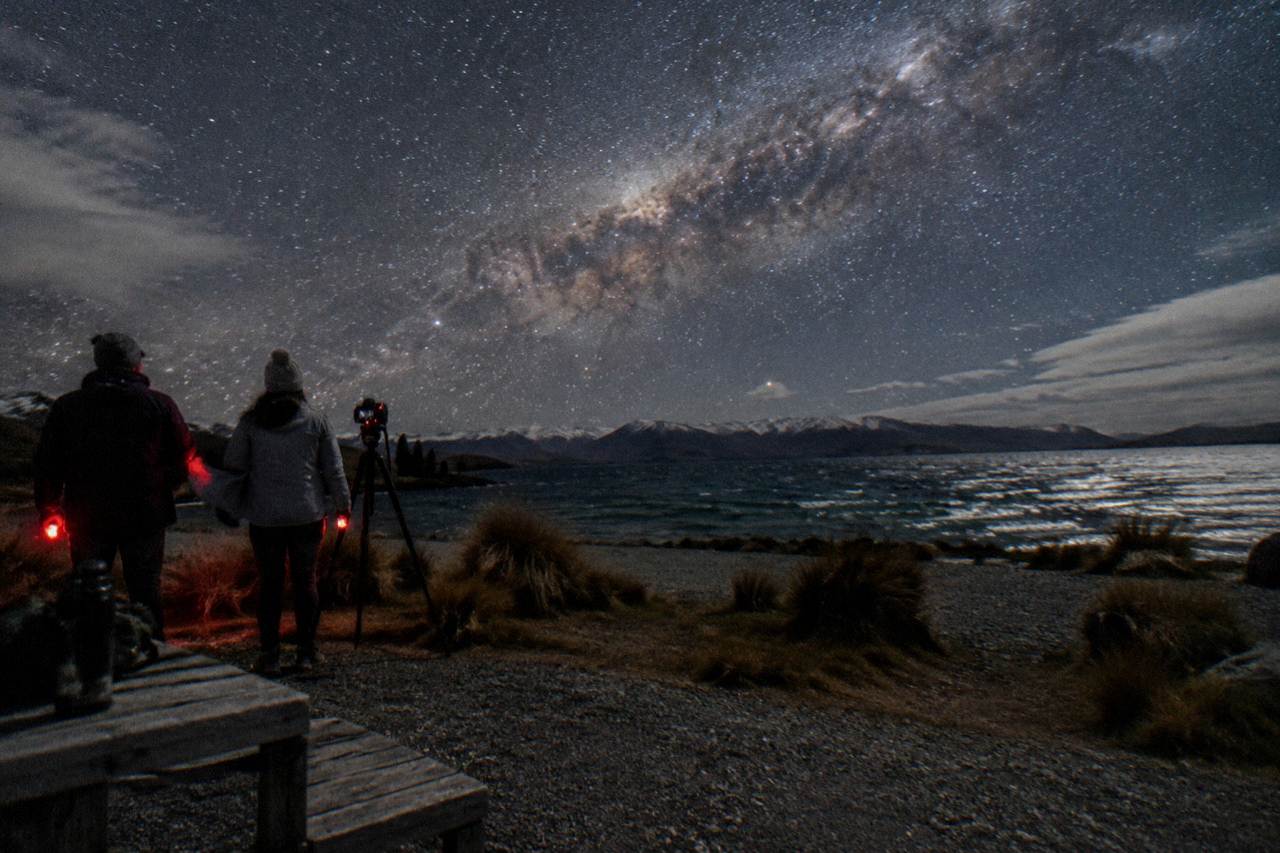
A good stargazing night at Lake Tekapo needs three things to line up: astronomical darkness, a Moon that is absent or below the horizon, and cloud and wind light enough that telescopes can be used. You can judge the first two yourself, weeks ahead, from a moon calendar. The third is only decided close to departure, and each operator handles that call differently.
The Moon is the one variable you can plan around with total confidence, because it runs on a fixed cycle. Cloud is the variable you cannot, because Mackenzie Basin weather moves fast and forecasts are only indicative. That split, the predictable half and the unpredictable half, is what this page works through. Get the Moon right when you choose your dates, then let the operator make the cloud call on the night.
It also helps to know what a "good" night means at this latitude. Lake Tekapo sits inside the Aoraki Mackenzie International Dark Sky Reserve, designated in 2012, which spans 4,367 square kilometres across the Mackenzie Basin and Aoraki / Mount Cook National Park. District plan lighting rules keep ground light low across the whole basin, so on a night when the Moon is out of the sky and the cloud stays away, the viewing can be remarkable. No operator can promise that combination for any given date, and none of them try. If those conditions line up and you want to bring a camera, the guide to photography on a Lake Tekapo stargazing tour explains which operators allow photos, where a free one is included, and why white light rules matter.
If you are reading this because you are choosing between nights for a booked trip, the short version is: pick a night within a few days either side of a new moon, check that astronomical darkness has begun before your tour starts, and trust the operator's weather process after that. The sections below unpack each of those steps, with the computed moon and darkness numbers for the months ahead.
For readers who want to go straight to a booking, these three tours cover the main ways to see the reserve's night sky: the shared small-group format at Tekapo itself, the budget-friendly farm session, and an astronomer-led option over in Twizel.
What Role Does The Moon Play In A Tekapo Stargazing Night?
The Moon is the single biggest controllable factor in whether a night is good for stargazing. A new moon gives the darkest sky, while a full moon washes out faint stars and the Milky Way, a point Dark Sky Project makes in its own FAQ. At Lake Tekapo you can read the Moon's schedule weeks ahead and pick your nights around it, which is why stargazers here plan trips by the lunar cycle rather than the calendar month.
The practical way to use the Moon is simple. Find the new moon date for your travel month, and aim for the nights within about four to five days either side of it. On those nights the Moon is absent from the evening sky, or sets early enough that the darkest hours are moon-free. Avoid the week around a full moon unless you specifically want to see lunar detail through a telescope, which is a genuinely different and worthwhile experience, just not a Milky Way night.
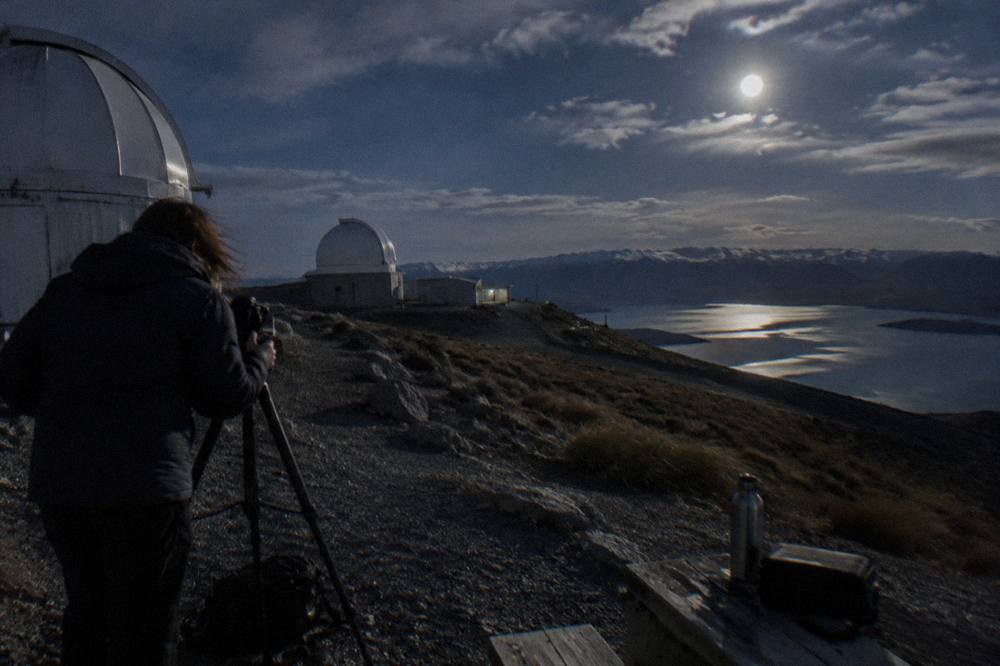
The table below is computed for the Tekapo lakefront: astronomical darkness means the Sun is more than 18 degrees below the horizon, and "moon-free" means the Moon is below the horizon for at least three dark hours. Note how the counts shift through the year, and how few moon-free dark nights midsummer offers compared with winter.
| Month | Dark hours per night | Darkness starts (local clock) | New moon | Full moon | Nights with 3+ moon-free dark hours |
|---|---|---|---|---|---|
| November 2026 | 4.1 to 6 | 22:22 to 23:24 | 9 Nov | 25 Nov | 13 of 30 |
| December 2026 | 3.5 to 4 | 23:26 to 23:54 | 9 Dec | 24 Dec | 12 of 31 |
| January 2027 | 3.6 to 5.3 | 23:53 to 23:12 | 8 Jan | 23 Jan | 13 of 31 |
| February 2027 | 5.4 to 7.3 | 23:10 to 22:13 | 7 Feb | 21 Feb | 15 of 28 |
| March 2027 | 7.3 to 9.1 | 22:11 to 21:11 | 8 Mar | 22 Mar | 18 of 31 |
| April 2027 | 9.1 to 10.4 | 21:09 to 19:23 | 7 Apr | 21 Apr | 19 of 30 |
| May 2027 | 10.5 to 11.3 | 19:21 to 18:56 | 6 May | 20 May | 21 of 31 |
Two patterns matter for planning. First, daylight saving pushes darkness very late in summer: NZDT runs until early April 2027, so a December night does not reach full darkness until about 23:26 to 23:54, and tours simply start late. Second, winter gives both longer dark hours and more moon-free nights, which lines up with Dark Sky Project's own comment that winter months are often the clearest and darkest. Neither fact makes any month a guarantee,.
For a deeper dive into the lunar year, the Lake Tekapo Stargazing moon planner walks through every new and full moon across the seasons, and the companion page on the stargazing moon phase calendar covers what a full moon does and does not ruin.
How Much Cloud And Wind Is Too Much For Stargazing At Lake Tekapo?
There is no fixed cloud threshold that cancels stargazing at Lake Tekapo, because operators do not publish one and conditions change hour to hour. What matters is the type of cloud: high thin cloud often still allows telescope viewing, while low cloud or fog sitting in the basin can end it. Wind matters separately, because it shakes telescopes and chews through clothing at exposed sites.
Cloud is best judged by type and movement rather than by any number. A sky broken with moving cloud can still deliver long clear windows, and the basin's topography works in your favour here: Dark Sky Project notes that low cloud is often blocked by the surrounding landscape, so a cloudy forecast does not automatically mean a cancelled night. A uniform grey deck with no gaps is a different story, and so is fog rolling across the lake itself.
Wind deserves more attention than most visitors give it. At summit and farm sites the difference between a calm night and a gusty one is the difference between a steady eyepiece and a blurry one, and it changes how cold the same temperature feels. The Mount John Summit Experience runs at about 1,029 metres with high wind exposure, and it is the one Dark Sky Project tour that loans extreme cold weather jackets for exactly this reason. At Cowan's Observatory, by contrast, the purpose-built observation craters are designed to shelter viewers from wind and stray light.
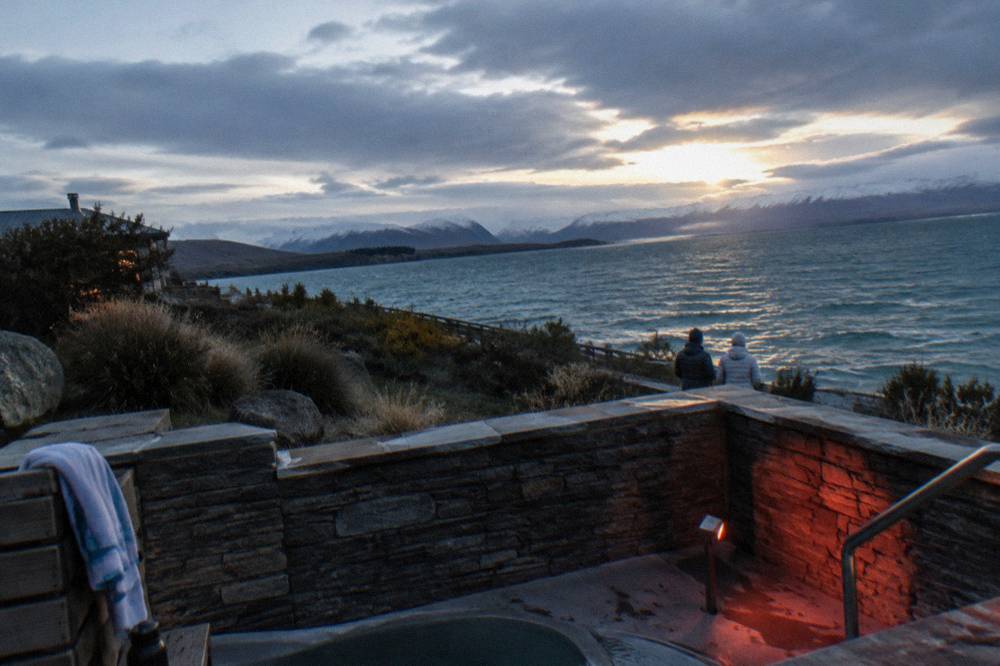
One planning habit worth adopting: watch the trend across the afternoon rather than the sky at lunchtime. Conversely a perfectly clear afternoon can fill in after sunset. Operators know this, which is why their decisions come late, and the page on Tekapo weather and cloud cancellations unpacks what each operator does when the sky refuses to cooperate.
If you are self-driving to a tour or a free viewing spot, remember that the alpine roads around the basin, SH8 and SH80 among them, can carry black ice, frost, freezing fog and stock or wildlife at night in the cold months. The NZTA Journey Planner at journeys.nzta.govt.nz shows live road conditions and is the standard reference before any night drive in the region.
When Do Operators Decide Whether A Tekapo Stargazing Tour Runs?
Each operator sets its own weather rules, and several make the final call as late as possible rather than cancelling on a morning forecast. All 12 booking pages state free cancellation up to 24 hours before the start for a full refund, which is a booking rule, not a weather policy. Knowing which operator you are booked with tells you when and how the night's decision will arrive.
The table below collects the weather and refund position of each operator as stated on their own pages. Read it as what happens if the sky turns bad, not as a promise that any particular night will run.
| Operator | What happens in poor weather |
|---|---|
| Dark Sky Project (Summit, Crater, indoor session) | Decides as close to departure as possible; offers an indoor alternative, a reschedule, a voucher or a refund |
| Astro Tekapo | Weather dependent; a full refund is offered if sky conditions are too cloudy for stargazing |
| Silver River Stargazing (Ultimate and Go Tekapo Twizel) | Requires good weather; a different date or a full refund if cancelled (Ultimate and Twizel tours) |
| Tekapo Springs and Tekapo Stargazing (Hot Pools) | Runs even with limited sky, with an indoor virtual reality session; 25 percent refund if under 30 minutes of telescope viewing |
| Stargaze Mackenzie (Twizel) | Runs only in clear conditions; refund or reschedule if cancelled for weather |
| Zen Stargazing (Twizel, Japanese language) | Rescheduling or a full refund if weather obstructs viewing |
Two of these approaches suit different travellers. If you would rather the night went ahead in some form no matter what, the Hot Pools and Stargazing tour from Tekapo Springs is built that way: the hot pools, the floating hammock and the hot drinks are included regardless, cloud triggers the indoor virtual reality session, and the 25 percent refund only applies when telescope time falls under 30 minutes. If you would rather have a clean yes or no, Stargaze Mackenzie in Twizel runs only in clear conditions, so a night that goes ahead is a night with a sky.
The practical takeaway is to book the tour you actually want, let the operator's process handle the weather, and keep your evening flexible enough to accept a reschedule. Because every booking page states free cancellation up to 24 hours before the start for a full refund, an uncertain forecast is not a reason to delay booking: popular nights do sell out, and Dark Sky Project says as much about its own departures.
Which Lake Tekapo Stargazing Tours Fit Different Conditions?
A calm, moon-free night rewards the biggest telescopes and the darkest sites, so the Ultimate Stargazing Experience with its 16 inch telescope suits those conditions. A night with patchy cloud or a bright Moon favours formats with more to them than the eyepiece, such as the hot pools tour or a cultural indoor session. Budget and language needs narrow it further.
Match the tour to the night you are likely to get, not the night you hope for. On a strong forecast with a new moon, the two-hour Ultimate Stargazing Experience, from $125.56 per person with a group cap of 10, gives the most time at a large instrument, and its 5.0 rating across 17 reviews reflects small groups rather than a large sample. On a marginal forecast, a shorter, cheaper session risks less: the Alpine Stargazing Experience with a Guide is from $56.00 per person, runs 1 hour 15 minutes on a private 50,000-acre farm with 14 inch telescopes, and loans warm down jackets, which matters on the windier nights.
The Alpine session is also the most reviewed outdoor tour of the 12, at 4.6 across 864 reviews, and it ties for the cheapest outdoor night alongside the Mt Cook and Twizel Zen tours, all from $56.00. For families, minimum ages vary more than prices: 5 on the Chameleon and Crater tours, 6 on Astro Tekapo and Stargaze Mackenzie, 10 on the Mount John Summit and Hot Pools tours. That alone can decide the question before the sky does.
Travellers based in Twizel, or staying between Tekapo and Mount Cook, have a genuinely different calculus: the drive is shorter, the sky is inside the same reserve, and the Twizel stargazing tour options include the Stargaze Mackenzie astronomer-led night, from $67.00 per person, rated 5.0 across 77 reviews with a minimum age of 6. Its clear-conditions-only policy means a booking there is effectively a bet on the sky, with a refund or reschedule if it loses. Japanese-speaking visitors have a dedicated option in Twizel too: the Zen Stargazing Experience, from $56.00, is a new listing conducted in Japanese, meeting at Market Place in Twizel rather than in Tekapo.
If your schedule leaves you with a full-moon night only, reframe rather than cancel. A bright Moon is superb for viewing lunar craters and the planets through a telescope, even though it suppresses the Milky Way, and the indoor Dark Sky Cultural Astronomy Experience, from $34.70, is a 45-minute guided exhibit including a restored 125-year-old Brashear telescope and Maori sky lore, with no outdoor viewing at all. The free stargazing spots around Lake Tekapo also cost nothing, which makes an imperfect night an easy one to test on your own.
What Should You Check Before Booking A Tekapo Stargazing Night?
Run five checks in order: the new moon date, the hour darkness begins, the tour's start time and meeting point, the minimum age, and the operator's stated weather terms. Then book, because the 24-hour free cancellation rule on all 12 booking pages removes most of the risk of an uncertain forecast. Checking these in sequence takes about ten minutes.
Start with the moon. The new moons for the season ahead fall on 9 December 2026, then 8 January, 7 February, 8 March and 7 April 2027, so a trip planned inside those windows starts with an advantage. Next, confirm darkness has begun before your tour's start: in high summer, with NZDT running until early April 2027, astronomical darkness can start as late as 23:54 in December, and every operator's schedule reflects that.
Then match the logistics to your group. The Chameleon Stargazing Shared Tour, one of the two most reviewed tours of the 12, at 4.9 across 789 reviews, meets at 70 Andrew Don Drive, a four-minute drive or about 25-minute walk from the village, caps groups at 14, welcomes children from age 5, and includes hot chocolate, marshmallows and a digital souvenir photo, from $73.00 per person. Its 90 minutes split roughly between naked-eye viewing under a guide's laser and time on a 9.25 inch telescope plus a smart telescope, a structure that works whether the night is perfect or merely good. You can check the Chameleon Stargazing tour details alongside the live dates.
Finally, accept the part you cannot control. A night that looks poor at 6pm can clear by 10pm, and operators here know their sky well enough to wait for it. Book the night that fits your moon window, dress as though it will be cold even in summer, which Dark Sky Project insists on, and let the basin do the rest. More background on the region's protected sky is on the Aoraki Mackenzie dark sky reserve page, and DarkSky International's own explanation of the reserve designation is at darksky.org.
For a final side-by-side look before you commit, these are the three tours this page keeps coming back to for condition-judging travellers.
Common Questions About Judging A Stargazing Night At Lake Tekapo
How To Know If A Night Is Good For Stargazing?
Check the moon phase first: nights within a few days of a new moon are darkest, while a full moon washes out faint stars and the Milky Way. Then confirm astronomical darkness has begun before your tour starts, look for broken rather than blanket cloud, and expect the operator to make the final weather call close to departure.
Can A Cloudy Forecast Still Mean A Good Stargazing Night At Lake Tekapo?
Sometimes. Dark Sky Project notes that low cloud is often blocked by the basin's topography, so cloud alone does not always cancel a tour, and broken cloud can deliver long clear windows. A uniform overcast deck or lakeside fog is far less promising, and operators judge each night individually.
Does A Full Moon Ruin Stargazing At Lake Tekapo?
It changes it rather than ruining it. A full moon suppresses faint stars and the Milky Way, but it is excellent for telescope views of lunar craters and planets. Some tours remain very enjoyable on moonlit nights, and the indoor Dark Sky Cultural Astronomy Experience is unaffected by the sky entirely.
How Late Do Tekapo Stargazing Tours Decide To Run?
It varies by operator. Dark Sky Project says its team decides as close to departure as possible because forecasts are indicative. Stargaze Mackenzie runs only in clear conditions, while the Tekapo Springs hot pools tour runs even when cloud limits telescopes, substituting an indoor virtual reality session.
What Time Does Darkness Start At Lake Tekapo In Summer?
Very late. Under NZDT, which runs until early April 2027, astronomical darkness begins between 22:22 and 23:24 in November 2026 and as late as 23:54 in December 2026. Tour start times follow the darkness, so expect late evening departures in midsummer.
Should I Book A Stargazing Tour Before Knowing The Weather?
Yes, generally. All 12 booking pages state free cancellation up to 24 hours before the start for a full refund, so an uncertain forecast carries little financial risk, while popular nights sell out. Operators offer reschedules or refunds through their own weather policies when the sky fails.