Is A Lake Tekapo Stargazing Tour Wheelchair Accessible?
Wheelchair access at Lake Tekapo stargazing tours: what the Summit, Crater and Hot Pools experiences each say about terrain, transport and booking questions to ask.
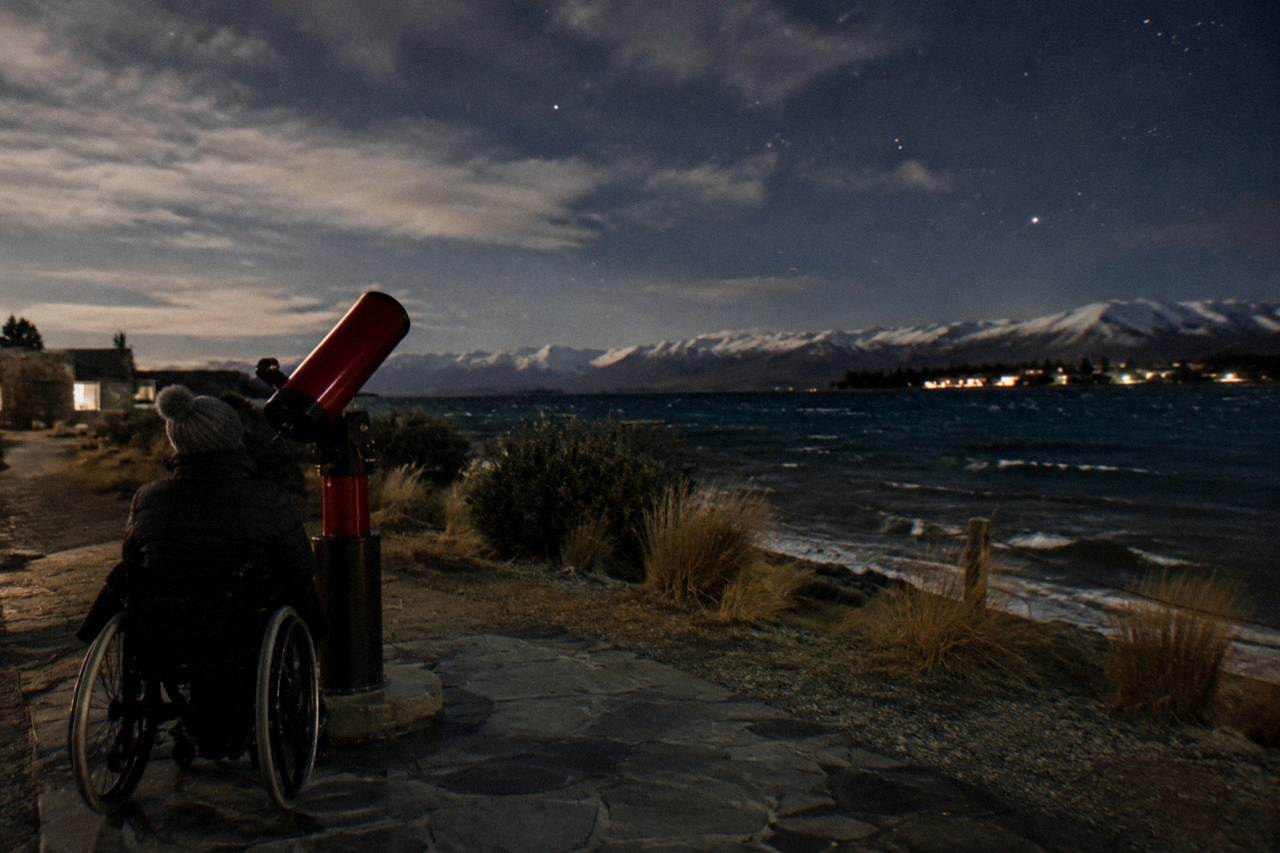
Only one of the twelve stargazing tours covered here states that wheelchair users can take part: the Crater Stargazing Experience at Cowan's Observatory, where wheelchair users follow the coach to the site in their own vehicle. The Mount John Summit Stargazing Experience states it is not wheelchair accessible. For the remaining ten tours the booking pages say nothing about wheelchair access, so the honest answer is to ask each operator directly before booking.
That split is the whole picture, and it matters because stargazing at Tekapo happens in unusual places. Tours run on a mountain summit at 1,029 metres, in private observatory craters, on a 50,000-acre farm, beside a hot pools complex and in a regional park. Terrain, transport and darkness each shape whether a wheelchair user can join, and no single policy covers them all.
The accessibility question is also a transport question. Some tours move you by coach from a lakefront base, some shuttle you to a private site, and some ask you to drive yourself to a meeting point a few minutes out of the village. A tour that meets somewhere you can reach in your own vehicle is a very different proposition from one where a coach climb is part of the experience.
This page walks through what each operator's own information says, tour by tour, then covers the questions worth asking before you book anything. Everything here comes from the booking pages of the twelve tours and the operators' own published details, with prices and durations as each booking page states them.
The three tours above are the ones an access-focused reader most often ends up comparing. The Crater Experience is the one with a stated path for wheelchair users. The Summit Experience is the one that states it is not accessible. The Hot Pools night sits in between: its booking page says nothing about wheelchair access, but it meets at a fully built visitor facility on Lakeside Drive, which is why it belongs in the conversation.
Which Lake Tekapo Stargazing Tours Can Wheelchair Users Join?
One tour states wheelchair users can take part: the Crater Stargazing Experience at Cowan's Observatory, 75 minutes from $78 per person, where wheelchair users follow the coach in their own vehicle. The Summit Stargazing Experience states it is not wheelchair accessible. The other Tekapo tours, from $34.70 to $125.56, state nothing either way, which means access depends on asking the operator about each site individually.
Start with the two tours that actually answer the question, because both come from the same operator, Dark Sky Project, and they answer it in opposite ways. The detail is worth reading closely.
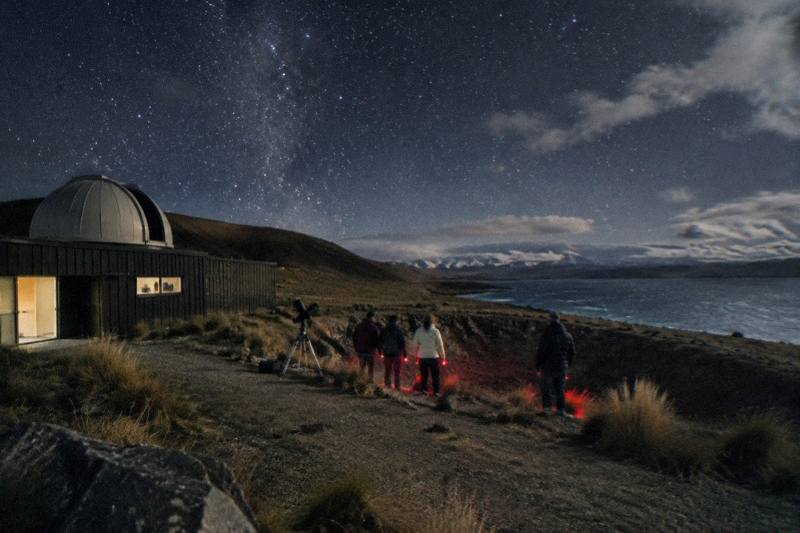
The Crater Stargazing Experience at Cowan's Observatory runs from the Dark Sky Project base at 1 Motuariki Lane on the Tekapo lakefront, drives about five minutes to Cowan's Private Observatory, and uses purpose-built observation craters that shelter viewers from wind and stray light. The operator's information states plainly that wheelchair users can take part, following the coach in their own vehicle. That single sentence is the only explicit, positive accessibility statement on any of the twelve booking pages.
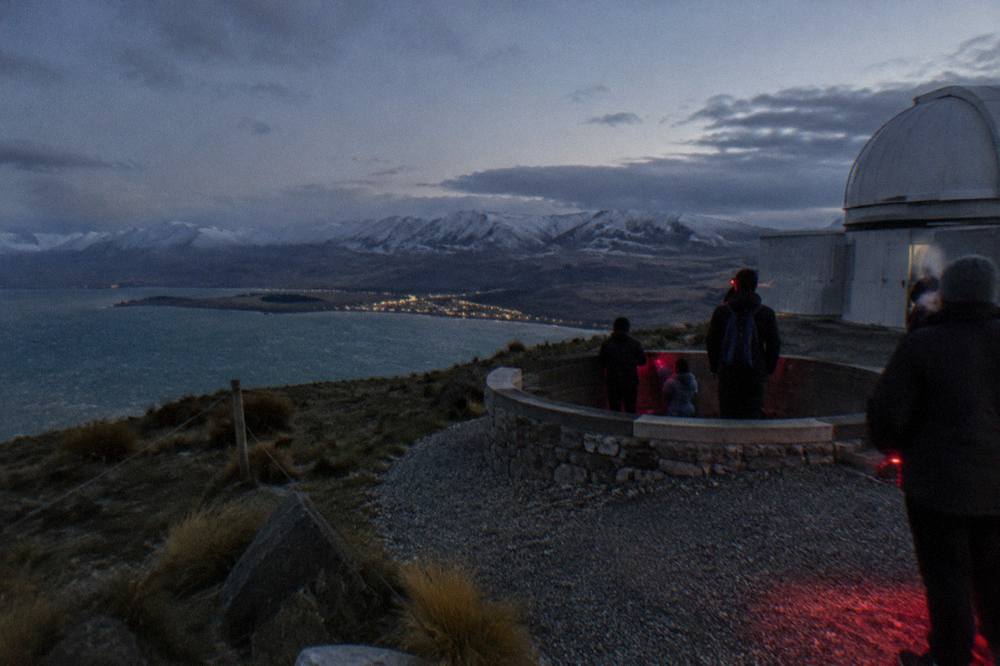
The Mount John Summit Stargazing Experience, from $135 per person for 1 hour 45 minutes, is the other side of the coin. Dark Sky Project's own information states the tour is not wheelchair accessible, and the operator's own description explains why: the summit involves a 100 metre gravel incline plus a few steps, walked in the dark, and the operator asks for moderate fitness. Night access to Mount John is by the tour coach only, so there is no drive-yourself option that would otherwise exist.
Between those two sits everything else. Here is the full access picture as each booking page states it:
| Tour | Price from (per person) | What Dark Sky Project says about wheelchair access |
|---|---|---|
| Crater Stargazing Experience at Cowan's Observatory | $78.00 | Wheelchair users can take part, following the coach in their own vehicle |
| Mount John Summit Stargazing Experience | $135.00 | Not wheelchair accessible |
| Indoor Dark Sky Cultural Astronomy Experience | $34.70 | Nothing stated |
| Chameleon Stargazing Shared Tour | $73.00 | Nothing stated |
| Alpine Stargazing Experience with a Guide | $56.00 | Nothing stated |
| Ultimate Stargazing Experience | $125.56 | Nothing stated |
| Astro Experience (Astro Tekapo) | $59.00 | Nothing stated |
| Hot Pools and Stargazing (Soak in the Stars) | $102.63 | Nothing stated |
| Mt Cook Stargazing Experience | $56.00 | Nothing stated |
| Twizel Stargazing Experience with a Guide | $68.23 | Nothing stated |
| Twizel Stargazing Tour with an Astronomer and Telescope | $67.00 | Nothing stated |
| Twizel Japanese-Language Zen Stargazing Experience | $56.00 | Nothing stated |
If you're weighing which of these experiences offers the best value beyond accessibility, the guide to whether the Dark Sky Project stargazing tour is worth it compares what each option includes and who it suits.
To see exactly what the Dark Sky Project's Summit and Crater tours and indoor session cover, the full guide to the Dark Sky Project Tekapo stargazing tour walks through each experience.
Read the middle rows carefully: "nothing stated" is not a no. It means the booking page is silent, and silence can hide either a workable arrangement or a genuine barrier. Only the operator can tell you which, and the section on questions to ask later in this page covers exactly how to phrase it.
The Crater Experience earns its place as the default starting point for a wheelchair user, but it still deserves a direct conversation with Dark Sky Project before booking. Ask about the ground surface at the observation craters, the distance from the parking area to the viewing position, and whether a companion ticket works with the arrangement. The 24 hour free cancellation wording on the booking page gives you a full refund window if the answers change your mind.
Why Is The Mount John Summit Tour Not Wheelchair Accessible?
The Mount John Summit Stargazing Experience states it is not wheelchair accessible because the summit site sits at 1,029 metres and reaching the viewing area involves a 100 metre gravel incline plus a few steps, walked in darkness, with night access by coach only. The operator asks for moderate fitness, and no drive-up option exists after dark.
Mount John is the University of Canterbury's research observatory, New Zealand's largest professional research facility, with four research-grade telescopes. It sits above Lake Tekapo at 1,029 metres, exposed to wind and, in winter, often snow. The Summit tour's 1 hour 45 minutes includes coach transport of about 15 minutes each way from the Dark Sky Project base, then that gravel climb and those steps to reach the telescopes and the dome.
Daytime access is different. The private access road and the Astro Cafe are open in the daytime, with a small per-vehicle fee paid at the gate, and the drive is about 15 minutes from the village. What is not possible is the evening stargazing experience, because after dark the road closes to the public and the tour coach is the only way up.
That daytime option is a real consolation, not a consolation prize dressed up as one. The views across the Mackenzie Basin by day are the same geography the stargazing tours trade on, and a daylight visit pairs well with an evening Crater Experience booking: see the mountain by day, stargaze from the accessible observatory craters by night. The Mount John Observatory stargazing tour guide covers the summit experience in full detail for anyone weighing it up.
For able-bodied travellers in your group, the Summit tour remains the headline Tekapo experience: rated 4.6 across 348 reviews, with an extreme cold weather jacket loaned, guide lasers for naked-eye viewing and a 16 inch telescope in the dome, minimum age 10. Splitting a party, some on the summit coach and others on the Crater tour from the same base at 1 Motuariki Lane, is a workable pattern since both check in at the same lakefront building about 15 to 20 minutes before departure.
How Does Wheelchair Access Work At Cowan's Observatory?
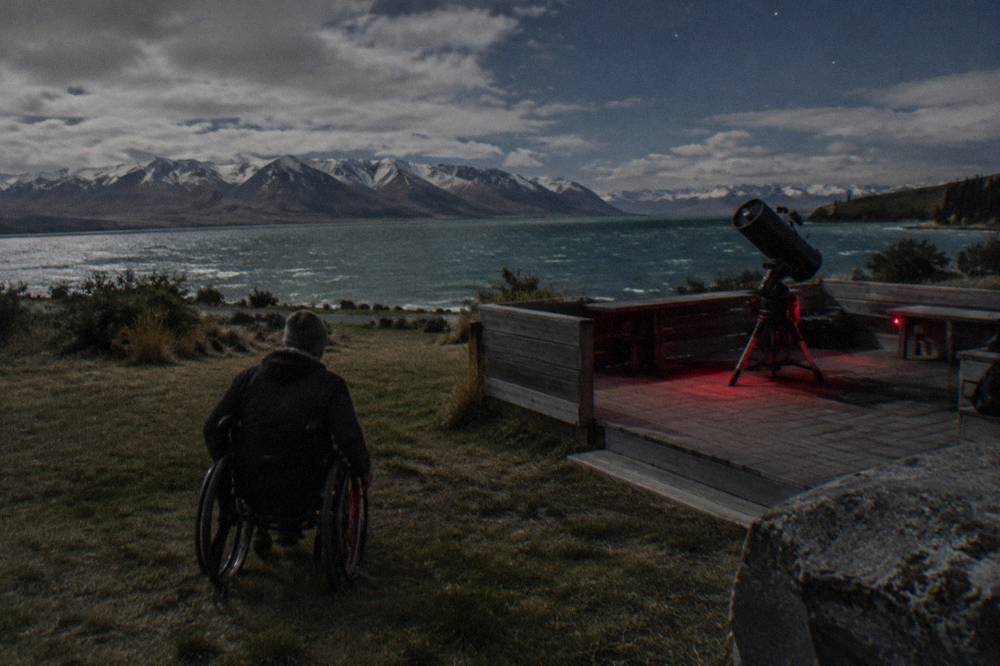
Wheelchair users on the Crater Stargazing Experience drive to Cowan's Private Observatory in their own vehicle, following the tour coach from the Dark Sky Project base at 1 Motuariki Lane. The site uses purpose-built observation craters that shelter viewers from wind and light, with 14 inch telescopes and a dome, on a 75 minute tour from $78 per person, minimum age 5.
The follow-the-coach arrangement matters more than it might sound. The default tour moves everyone by coach for the roughly five minute drive, so a wheelchair user arriving by car simply repeats that journey behind the coach, arrives at the same time, and joins the same guided session at the craters. It removes the coach step-up and the fixed seating, which are the two barriers a coach-only format usually creates.
What the operator's statement does not spell out is the finer detail, and that is where a pre-booking phone call earns its keep. Worth asking: is the path from the parking area to the observation craters firm and level or grass and gravel; is there a designated viewing position with space for a chair beside it; can a companion assist at the eyepiece; and how does the telescope height adjust. Operators who state wheelchair users can take part usually have answers ready for all of these.
The tour itself runs 75 minutes, rated 4.6 across 91 reviews, with powerful telescopes operated from the sheltered craters. Unlike the Summit tour, jackets are not stated as provided for the Crater Experience, so dress for a cold night regardless of season: Dark Sky Project says it is cold at night even in summer, and the operator tells Crater guests to layer warm clothing. Thermals, a windproof layer, a hat and gloves are the baseline.
Weather handling for Dark Sky Project works the same across its outdoor tours: the team decides as close to departure as possible, and if outdoor stargazing is not possible guests are offered an indoor alternative, a reschedule, a voucher or a refund. Low cloud is often blocked by the basin's topography, so a cloudy forecast does not automatically mean a cancellation. The booking page adds free cancellation up to 24 hours before the start for a full refund, which applies as a booking rule rather than a weather policy.
Can Wheelchair Users Do The Tekapo Springs Hot Pools Stargazing Night?
The Hot Pools and Stargazing night, Soak in the Stars, states nothing on its booking page about wheelchair access, so nothing can be promised here. It meets at Tekapo Springs, 300 Lakeside Drive, a built visitor complex with hot pools between about 36 and 38 degrees, and hotel pickup from the township is available on request, subject to availability.
The reason this tour belongs in an access conversation is the venue, not a stated policy. But "typically" is not a fact, and the booking page is silent, so the answer is a phone call to Tekapo Springs asking specifically about pool entry, changing facilities and the outdoor stargazing area away from the pools.
The tour runs 90 minutes from $102.63 per person, rated 4.3 across 121 reviews, minimum age 10, with exclusive evening use of the hot pools, a floating hammock, a woolen blanket, hot drinks and guided stargazing outside the pools. It is also the only tour of the twelve with pickup stated: hotel pickup and drop off from Lake Tekapo township, on request only and subject to availability, which can simplify the evening if the vehicle question is the hard part.
Its cloud policy is its own: the tour runs even when cloud limits the telescopes, swapping in an indoor virtual reality session while the pool stays included, and a 25 percent refund applies if under 30 minutes of telescope viewing happens. That policy belongs to this operator alone and is not a rule about stargazing tours generally.
The Tekapo Springs hot pools and stargazing tour guide has the fuller picture on this night.
What Should Wheelchair Users Ask Before Booking A Tekapo Tour?
Ask four things before booking any Tekapo stargazing tour as a wheelchair user: whether the viewing area is reachable over firm, level ground; whether you can use your own vehicle instead of a coach or shuttle; whether a companion can assist at the telescope; and what happens to your payment if the operator cannot accommodate you on the night. The last one matters because weather policies do not cover access.
Phrase the questions around the site, not around the phrase "wheelchair accessible", which means different things to different operators. A flat gravel car park and a grass paddock can both be described as accessible by a booking desk that has never pushed a chair across either. Naming the journey, from vehicle to eyepiece, gets you a concrete answer.
Here is a question set that works for each meeting-point type:
| Meeting situation | Tours it applies to | Questions worth asking |
|---|---|---|
| Coach from a base building | Summit, Crater | Can a wheelchair user follow in their own vehicle? Is the path from parking to viewing firm and lit? |
| Shuttle to a private site | Alpine, Ultimate | Is the shuttle equipped for a chair? What is the surface at the farm site? Is there step-free seating? |
| Drive yourself to the meeting point | Chameleon, Astro Tekapo, Hot Pools | Distance and surface from parking to the viewing area? Accessible toilets on site? |
| Outdoor site in another town | Mt Cook, the Twizel tours | Terrain at the viewing site? Any walking segment? Support for a companion assistant? |
Payment protection is the quiet fourth question. Every one of the twelve booking pages states free cancellation up to 24 hours before the start for a full refund, which is generous, but access problems can surface on the night itself, after that window has closed. Ask the operator directly what happens if you arrive and the arrangement discussed at booking turns out not to work. A written reply, even a short email, is worth keeping.
For background on the wider picture, the Aoraki Mackenzie International Dark Sky Reserve, designated in 2012 and covering 4,367 square kilometres of the national park and the Mackenzie Basin, is what makes these tours possible; DarkSky International explains what the reserve designation involves. And if a winter trip is on the cards, night driving on SH8 and SH80 can bring black ice, frost and freezing fog; the NZTA Journey Planner shows conditions before you decide to self-drive to a tour.
Is The Indoor Dark Sky Experience A Wheelchair-Friendly Alternative?
The Indoor Dark Sky Cultural Astronomy Experience is a 45 minute indoor, guided exhibition from $34.70 per person, rated 4.4 across 80 reviews, and because it runs inside a building at 1 Motuariki Lane with no outdoor segment, it avoids every terrain and transport barrier the outdoor tours face. Its booking page states nothing explicit about wheelchair access, so confirm with Dark Sky Project, but nothing about the format works against a chair.
It must be said clearly: this is not stargazing. It is a cultural astronomy experience in four zones, with a restored 125 year old Brashear telescope on display and a guide through Maori understanding of the sky, and there is no outdoor sky viewing at all. But for a traveller who cannot join an outdoor night, it is a genuine, weather-proof evening option that keeps the group together, and it is the cheapest product of the twelve at $34.70.
Practically, it pairs naturally with an evening when the rest of a party is on the Crater tour: both run from the same base at 1 Motuariki Lane, check-in is 15 to 20 minutes before departure, and the indoor session runs whatever the sky is doing. A mixed party can split, meet back at the lakefront, and nobody has spent the night waiting in a car.
Where Else Can Wheelchair Users Stargaze Around Lake Tekapo?
Beyond the tours, Lake Tekapo has free, self-directed stargazing spots where access is set by the location you choose rather than by an operator, and the village lakefront itself sits under the reserve's dark skies. District plan lighting rules apply in the village, and in-town viewing is better than in most New Zealand towns.
This is the fallback that no booking page will tell you about. The reserve's lighting rules apply across the whole Mackenzie Basin, so a wheelchair user positioned on a paved lakefront path or at a drive-to viewpoint is still looking at a genuinely dark sky, weather permitting, and the Moon, bright planets and the brightest star fields are all naked-eye objects. What you lose against a tour is the telescope, the guide and the dark-adapted site away from village lights.
Pick spots you can scout in daylight first. Anywhere you can park beside where you sit is the test, and a short evening drive to a lakefront pull-off beats a long walk to a darker patch. Check the moon before you plan: a new moon gives the darkest sky and a full moon washes out faint stars and the Milky Way, per Dark Sky Project's own guidance. The free stargazing spots at Lake Tekapo guide lists the options in detail, and the Lake Tekapo stargazing moon phase calendar shows which nights are darkest month by month.
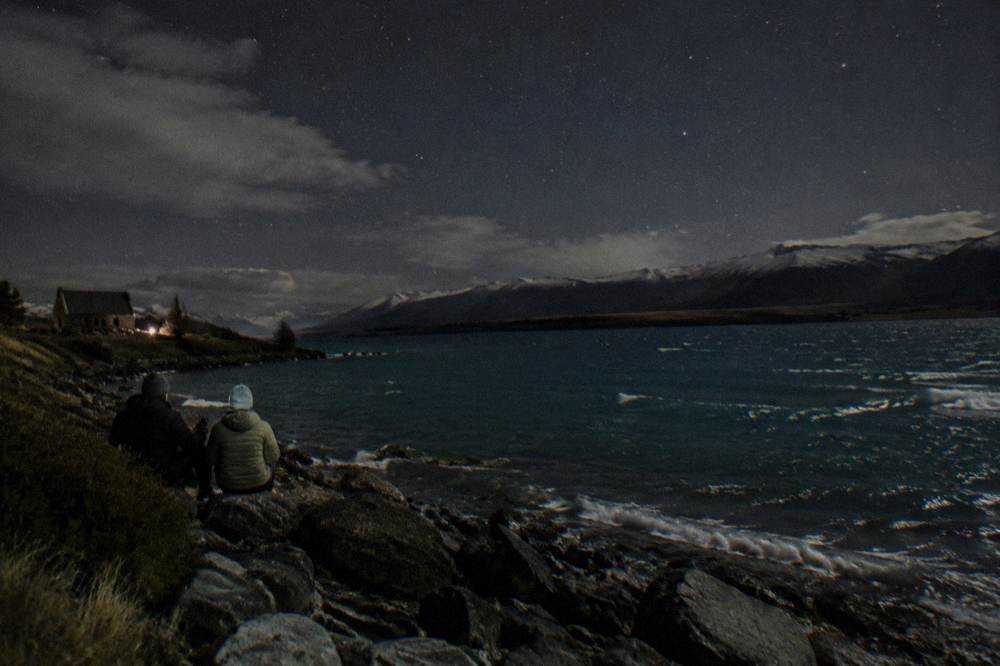
One thing not to attempt: the Church of the Good Shepherd at night. The fenced grounds close at dusk and night access inside the fence is not permitted, so the famous building can only be photographed after dark from outside the fence on public paths. It is a working, protected sacred site, and the lakefront paths outside the fence are the lawful place to be, which for a wheelchair user is also the more practical place.
The broader context for planning is on Lake Tekapo Stargazing, which covers all twelve tours, the moon calendar and what each operator's weather policy says. For access specifically, the short version stands: book the Crater Experience with a phone call first, skip the Summit tour, and treat everything else as unknown until the operator confirms.
Common Questions About Wheelchair Access At Lake Tekapo Stargazing
Is A Lake Tekapo Stargazing Tour Wheelchair Accessible?
One tour states yes: the Crater Stargazing Experience at Cowan's Observatory, where wheelchair users follow the coach in their own vehicle. The Mount John Summit Experience states it is not wheelchair accessible. The other ten tours state nothing, so contact each operator before booking.
Can Wheelchair Users Do The Mount John Summit Stargazing Tour?
No. The booking page states the tour is not wheelchair accessible: the summit involves a 100 metre gravel incline and a few steps in the dark, night access is by coach only, and moderate fitness is asked for. The summit road and cafe are open in the daytime with a per-vehicle gate fee.
Which Tekapo Stargazing Tour Should A Wheelchair User Book?
The Crater Stargazing Experience at Cowan's Observatory is the only tour with a stated path for wheelchair users, following the coach in your own vehicle. It runs 75 minutes from $78 per person, minimum age 5, with 14 inch telescopes at purpose-built observation craters. Call Dark Sky Project first to confirm surface and viewing details.
Does The Hot Pools And Stargazing Tour Accept Wheelchair Users?
The booking page states nothing about wheelchair access, so nothing can be promised. The tour meets at Tekapo Springs, a built visitor complex, and offers hotel pickup from the township on request subject to availability. Ask Tekapo Springs directly about pool entry and the outdoor stargazing area.
Can You Stargaze At Lake Tekapo Without A Tour If You Use A Wheelchair?
Yes, self-directed viewing works well because the whole village sits inside the dark sky reserve under district plan lighting rules. Choose a spot you can park beside, scout it in daylight, and check the moon phase, since a full moon washes out fainter stars.