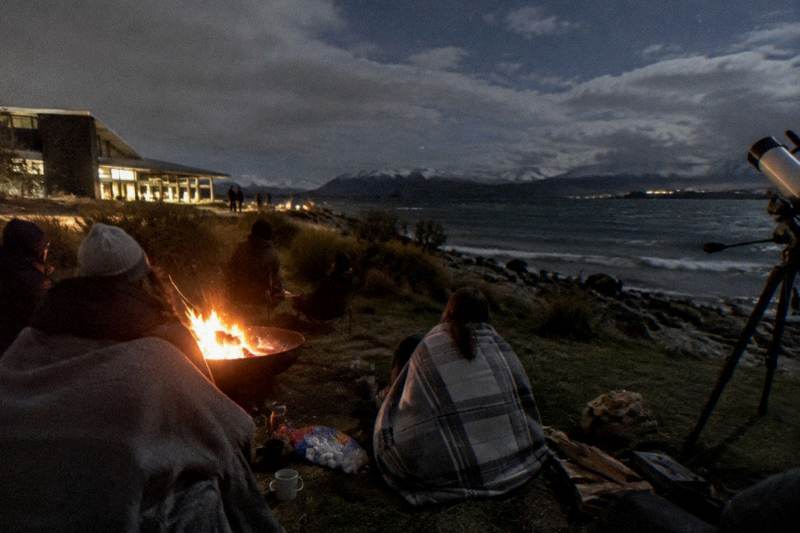
Can You Take Photos On A Lake Tekapo Stargazing Tour?
Photo rules on Lake Tekapo stargazing tours: which operators let you take pictures, which include a free photo, flash and white light rules, and what to know before you pack a camera.
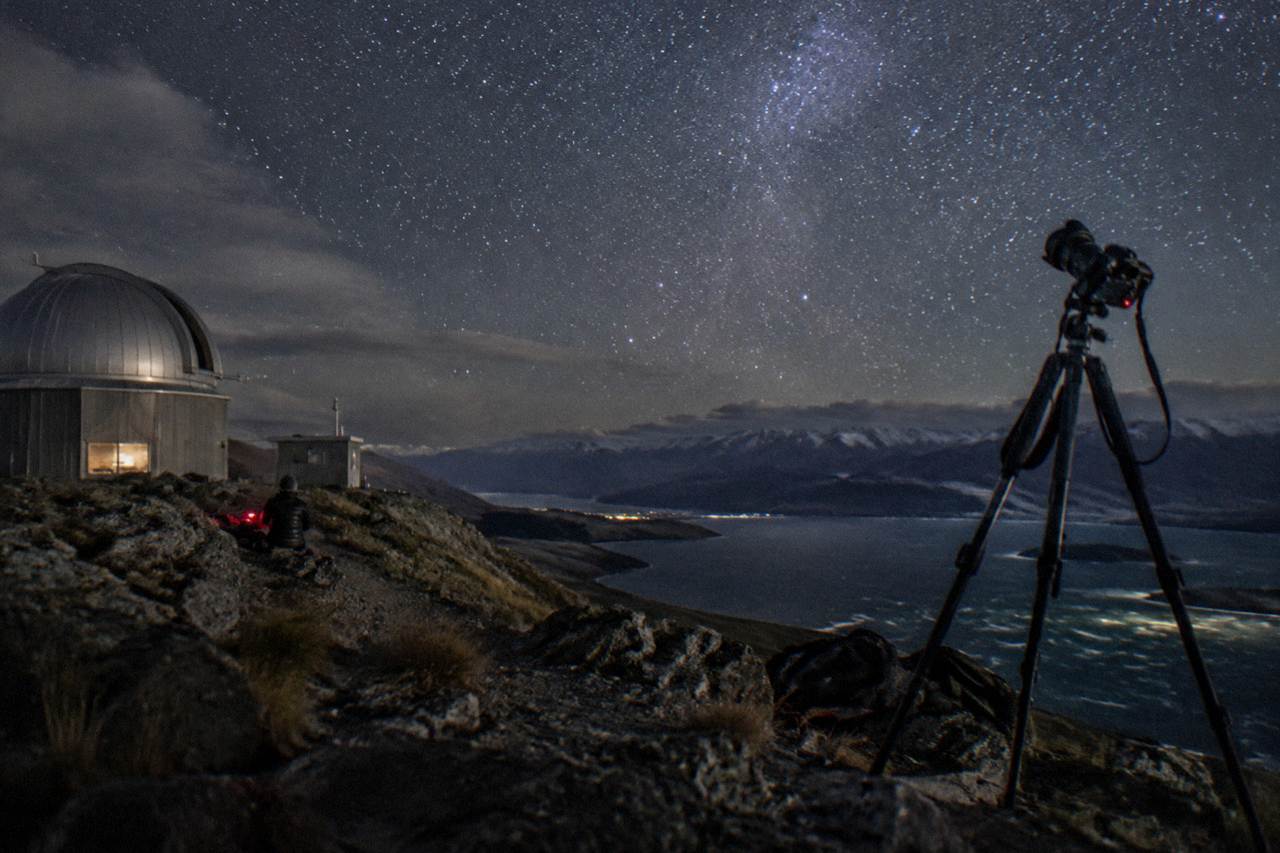
Yes, you can take photos on a Lake Tekapo stargazing tour, and every outdoor tour covered here permits personal photography. The single condition that applies everywhere is that flash and white light stay off, because even one burst ruins the dark-adapted eyes of everyone around you. Several operators also include a photo of your group taken during the session, at no extra charge.
That plain answer hides a fair amount of variation between the twelve tours covered here. Some operators actively help photographers: the Mount John Summit Stargazing Experience, run by Dark Sky Project from its base at 1 Motuariki Lane, allows photos with the flash off, and its guides share astrophotography tips during the 1 hour 45 minute session on the summit at 1,029 metres. Others simply tolerate cameras while keeping the focus on the guide's telescope and laser tour of the sky.
A handful of tours build photography into the product itself. The Chameleon Stargazing Shared Tour includes a digital souvenir photo, as does the Alpine Stargazing Experience with a Guide, the Ultimate Stargazing Experience, the Astro Experience from Astro Tekapo, the Mt Cook Stargazing Experience, the Twizel Stargazing Tour with an Astronomer and Telescope, and the Japanese-language Zen Stargazing Experience in Twizel. On those nights you leave with at least one image even if your own efforts at a dark site come out black.
Before choosing on photography alone, it helps to see the three formats side by side: the most reviewed small-group tour in Tekapo, the longest premium session, and the Mount Cook alternative inside the same dark sky reserve.
The rest of this page walks through the rules tour by tour, the flash and white light etiquette that keeps a group happy, what to expect if you want to bring a serious camera, and where else around the village you can photograph the night sky on your own.
Which Lake Tekapo Tours Let You Take Photos?
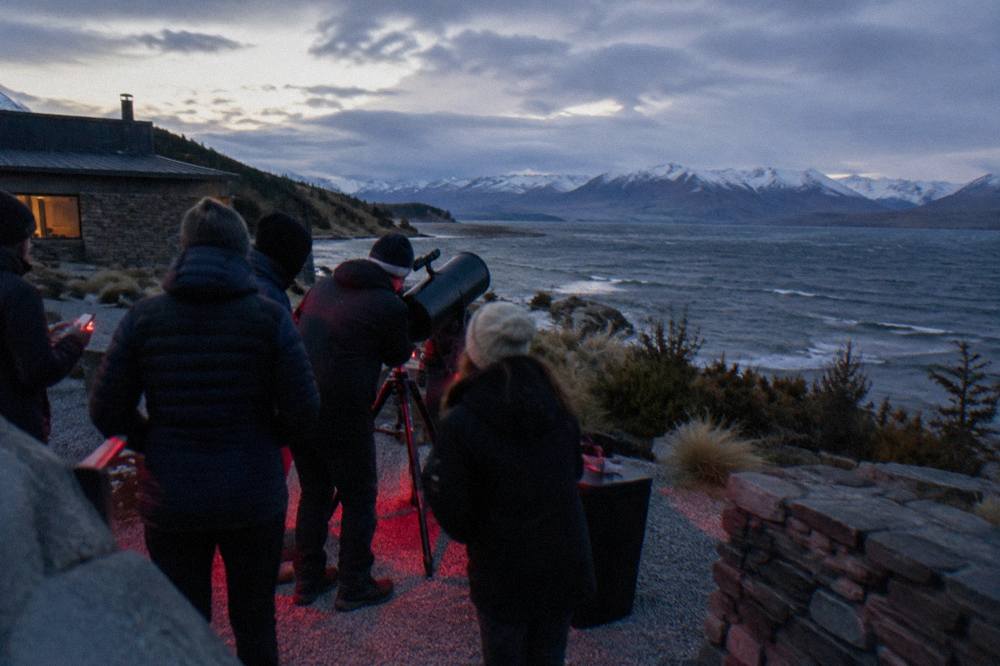
All of the outdoor tours based in Lake Tekapo allow you to take photos during the session, so the choice comes down to how much help you get rather than whether a camera is welcome. The Mount John Summit tour permits photos with the flash off and shares astrophotography tips, while Chameleon, Alpine, Ultimate and Astro Tekapo each add a digital photo of the experience.
The differences sit in the details. Dark Sky Project's two outdoor products, the Summit Experience and the Crater Stargazing Experience at Cowan's Observatory, both welcome cameras; the Summit session stands out because its guides actively pass along astrophotography pointers while the group moves between naked-eye viewing, telescopes and the 16 inch telescope inside the dome. The Summit runs 1 hour 45 minutes from $135.00 per person, rated 4.6 across 348 reviews, and the Crater session runs 75 minutes from $78.00 per person, rated 4.6 across 91 reviews. Neither states that a photo is included, so treat any image from those nights as something you take yourself.
The independent operators are where the included-photo benefit appears. Chameleon Stargazing, checking in at 70 Andrew Don Drive, includes a digital souvenir photo alongside hot chocolate, marshmallows, outdoor seats and blankets on its 90 minute tour, from $73.00 per person and rated 4.9 across 789 reviews, the second-deepest review pool after Alpine's 864. Silver River Stargazing's Alpine tour, meeting at Kiwi Treasure on Rapuwai Lane before a shuttle to a private farm site, includes a complimentary digital photo too, from $56.00 per person, rated 4.6 across 864 reviews, with warm down jackets provided.
| Tour | Operator | Photo included | From (USD, per person) | Duration |
|---|---|---|---|---|
| Mount John Summit Stargazing Experience | Dark Sky Project | Photos allowed, flash off; astrophotography tips | $135.00 | 1 hour 45 minutes |
| Crater Stargazing at Cowan's Observatory | Dark Sky Project | - | $78.00 | 75 minutes |
| Chameleon Stargazing Shared Tour | Chameleon Stargazing | Yes, digital souvenir photo | $73.00 | 1 hour 30 minutes |
| Alpine Stargazing Experience with a Guide | Silver River Stargazing | Yes, complimentary digital photo | $56.00 | 1 hour 15 minutes |
| Ultimate Stargazing Experience | Silver River Stargazing | Yes, photo included | $125.56 | 2 hours |
| Astro Experience | Astro Tekapo | Yes, photo included | $59.00 | 1 hour 30 minutes |
| Hot Pools and Stargazing (Soak in the Stars) | Tekapo Springs and Tekapo Stargazing | - | $102.63 | 1 hour 30 minutes |
One tour left out of that table deserves a caveat. The Indoor Dark Sky Cultural Astronomy Experience at 1 Motuariki Lane is a 45 minute guided exhibit, from $34.70 per person, built around a restored 125 year old Brashear telescope on display and the Maori understanding of the sky; it involves no outdoor sky viewing, so it is not a photography outing in any sense, and no photo inclusion is stated for it.
If the digital souvenir photo is a deciding factor, the Chameleon Stargazing shared tour pairs it with one of the two deepest review pools; if you would rather learn to shoot your own frames, the Summit's tip-sharing guides are the stronger fit. For a broader comparison of formats and prices, the guide to Lake Tekapo stargazing tours compared lays out all twelve.
What Are The Flash And White Light Rules On A Stargazing Tour?
No flash and no white light is the standing rule on stargazing tours, and it exists because human eyes need many minutes to adapt to darkness, while a single white beam undoes that adaptation instantly for everyone nearby. The Mount John Summit tour states photos are allowed with the flash off; other operators apply the same logic to torches, phone screens and camera screens.
The reasoning is physiological, not bureaucratic. Under a truly dark sky in the Aoraki Mackenzie reserve, your pupils open and your eyes switch to the light-sensitive cells that can pick out faint stars, the Milky Way's glow and the subtle smudges of distant clusters. That adaptation builds slowly. One flash photograph, one bright phone screen held at chest height or one white headtorch sweeping the group resets a dozen people back to square one, and a guide then has to wait for everyone's night vision to rebuild before the faint objects come back.
Practical etiquette follows from that. Disable the flash on your phone or camera before the session starts, not during it. Turn your screen brightness down as far as it goes, and shield it with a hand when you check settings. If you need light to find a seat, a jacket zipper or a dropped glove, ask the guide first: tour operators use red light precisely because red preserves night vision far better than white, and a guide will usually walk you over rather than let you fumble in the dark. The question of what to wear matters here too, since cold hands fumble with buttons and touchscreens; the guide to what to wear on a Lake Tekapo stargazing tour covers layering in detail, and Dark Sky Project notes it is cold at night even in summer.
Booking logistics are friendlier than the light rules. All 12 booking pages state free cancellation up to 24 hours before the start for a full refund, which matters for a photography trip in particular: you are booking a dark sky, not a clear one, and the freedom to reshuffle your dates near a new moon is worth having. Which nights those are is covered in the Lake Tekapo stargazing moon phase calendar.
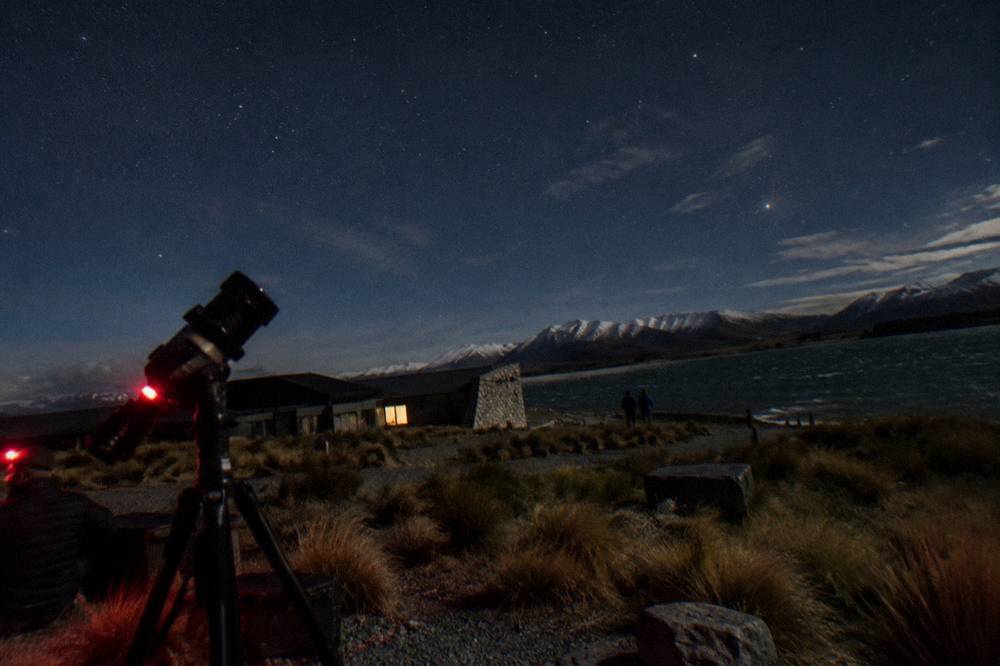
Wondering whether the souvenir photo covers you if your own shots fail? Check availability for a night that suits, knowing free cancellation up to 24 hours before the start for a full refund applies.
Do Any Lake Tekapo Tours Include A Photo Of Your Group?
Seven of the twelve tours covered here include a photo, listed plainly on their booking pages: Chameleon Stargazing, Alpine Stargazing, the Ultimate Stargazing Experience, the Astro Experience, the Mt Cook Stargazing Experience, the Twizel Stargazing Tour with an Astronomer and Telescope, and the Japanese-language Zen Stargazing Experience in Twizel. The Dark Sky Project tours state no included photo.
This is the quiet differentiator in Tekapo stargazing. Taking your own usable image of the night sky is genuinely hard for a first-timer: a phone held up to a telescope eyepiece usually produces a blurred disc, and a handheld shot of the sky usually produces black. An operator-supplied photo, typically a frame of the group or the site under the stars taken by the guide, sidesteps all of that and guarantees you go home with something.
The two Silver River products make a neat pairing. The Alpine Stargazing Experience, from $56.00 per person, includes a complimentary digital photo alongside 14 inch telescopes, astro-lasers and warm down jackets on a private 50,000 acre farm site, with a group maximum of 10. The Ultimate Stargazing Experience, from $125.56 per person, doubles the duration to 2 hours, brings a 16 inch telescope and the same group maximum of 10, and also includes a photo; it holds a 5.0 rating across 17 reviews. The operator's own weather terms say the Ultimate requires good weather, with a different date or a full refund offered if it is cancelled for poor conditions.
Away from the village, the Mt Cook Stargazing Experience meets at the Tasman Glacier Car Park in Mount Cook National Park, from $56.00 per person, rated 4.8 across 17 reviews, and includes a photo alongside deep sky observation through high-quality telescopes. It starts outside Lake Tekapo, about 1 hour 15 minutes by road, and involves no transfer from the village. In Twizel, Stargaze Mackenzie's tour with an astronomer, from $67.00 per person and rated 5.0 across 77 reviews, includes a photo on a laser-guided telescope session, and the Zen Stargazing Experience, a Japanese-language tour meeting at Market Place in Twizel, includes both a photo and a hot drink; it is a new listing with no reviews yet, so no rating claim is possible.
Can You Use Your Own Camera Or Phone At Mount John Observatory?
You can bring your own camera or phone on the Mount John Summit tour, with the flash off, and guides share astrophotography tips during the session, which is the most explicit photographer support of any tour here. Visitors cannot drive up Mount John in the evening: night access is by the operator's coach only, so your gear needs to travel with you on the bus.
The Summit session is structured around photography-friendly moments. The 1 hour 45 minutes includes coach transport of about 15 minutes each way from the base at 1 Motuariki Lane, naked-eye orientation with guide lasers, telescope viewing, and time in the observatory dome with a 16 inch telescope. Photos are allowed throughout with the flash off, and guides pass along astrophotography pointers. Minimum age is 10, an extreme cold weather jacket is loaned on this tour only, and the terrain involves a 100 metre gravel incline plus a few steps in the dark, so a moderate fitness level and a bag you can carry securely both matter.
What no operator or page can promise is the sky itself. Dark Sky Project states plainly that it cannot guarantee clear skies, the Milky Way or the Aurora Australis, and its weather calls are made as close to departure as possible, with an indoor alternative, a reschedule, a voucher or a refund offered if outdoor stargazing is not possible. If astrophotography is the whole point of your trip, building flexibility into your dates matters more than any camera choice, and the moon phase calendar guide helps you pick nights with the most moon-free dark hours.
Daytime is a different story and worth knowing for photographers who want the observatory itself. The private access road and the Astro Cafe are open in the daytime, with a small per-vehicle fee paid at the gate and no vehicles over 12 seats allowed. Mount John is the University of Canterbury's research observatory, New Zealand's largest professional research facility, with four research-grade telescopes. The separate question of access is covered in full in can I drive up to Mount John Observatory stargazing.
Where Else Can You Photograph The Night Sky Around Lake Tekapo?
Outside the tours, the lakefront and the public paths around the village are freely photographable at night, and the Church of the Good Shepherd can be shot only from outside its fence, because the gates close at dusk and night access inside the grounds is not permitted. Free spots around the lake are the natural complement to a tour night.
The church deserves its own warning, because it is the most photographed building in the Mackenzie and the most misunderstood at night. The fenced grounds close at dusk, so a night image of the stone chapel against the stars is taken from public paths beyond the fence, not from inside. It is a working, protected sacred site: no drones around the church or the village, no photography inside, a koha is requested, and services or weddings can close it during the day. Parking on Pioneer Drive is very limited.
For do-it-yourself night photography, the same light discipline that governs tours governs the lakefront: a phone screen at full brightness is unwelcome anywhere people are watching the sky, and headlights sweeping a pull-off have the same effect as a flash on a tour. The guide to free stargazing spots at Lake Tekapo lists the locations worth walking to after dark, and the broader Aoraki Mackenzie dark sky reserve guide explains why the district plan lighting rules across the 4,367 square kilometre reserve keep the basin's skies dark in the first place. To understand how a remote lakeside village grew into one of the planet's best-known stargazing destinations, the explainer on Tekapo's stargazing fame traces the observatory's role and breaks down what the guided tours cost and include.
Weather shapes the whole outing. At night the highways into and around Tekapo can carry black ice, frost, freezing fog and stock or wildlife in the cold months, so check conditions with the NZTA Journey Planner before driving to a dark spot. And for anyone weighing the effort of a DIY night against simply joining one, the piece on whether a Tekapo stargazing tour is worth it works through the trade-offs.
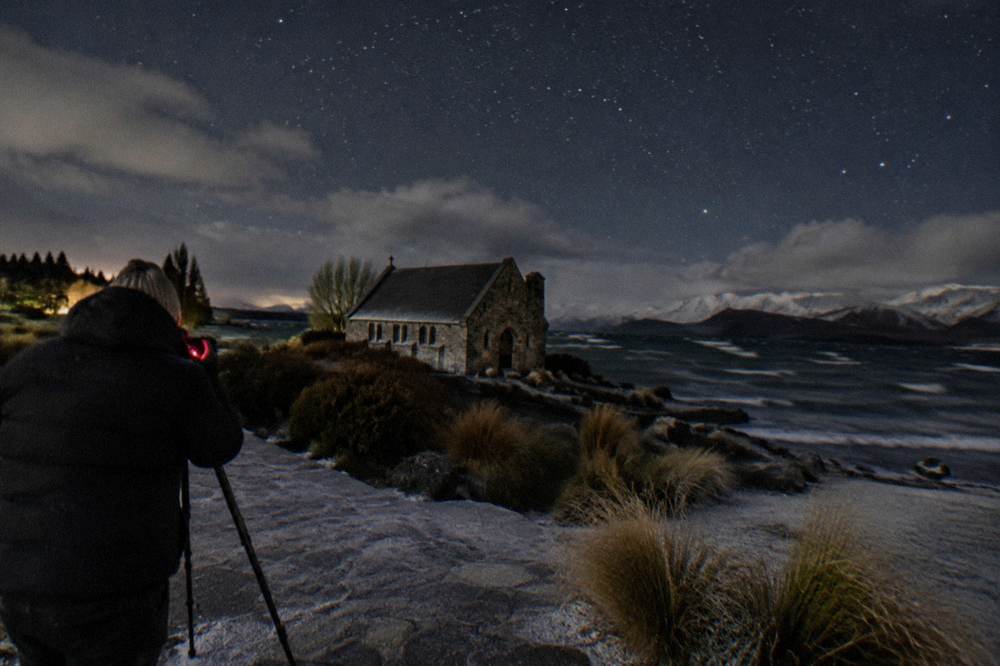
A final planning note for photographers who want both a guided night and a solo night: stack them. Book a tour for the first clear-looking evening, when a guide can show you the sky and hand you a souvenir photo regardless, then use the following night for your own shooting from a free spot, with the light etiquette and site knowledge fresh in mind. Every tour here allows that plan, and all 12 booking pages state free cancellation up to 24 hours before the start for a full refund if the sky has other ideas. To lock in that first-night slot, the guide to booking Lake Tekapo stargazing tours ahead of time covers which operators fill up fastest and how late you can safely wait.
Whatever the choice, the advice from Lake Tekapo Stargazing is the same: kill the flash, dim the screen, and let the reserve do the rest.
Common Questions About Taking Photos On A Lake Tekapo Stargazing Tour
Can You Take Photos On A Lake Tekapo Stargazing Tour?
Yes. Photography rules are set by each operator, so check the booking page, with flash and white light off. The Mount John Summit tour states photos are allowed with the flash off and its guides share astrophotography tips, and seven tours include a digital photo of the experience.
Is Flash Photography Allowed On Stargazing Tours?
No. Flash and white light are off limits on stargazing tours because they destroy the night vision the whole group has spent minutes building. Disable your flash before the session and dim phone and camera screens.
Which Tekapo Stargazing Tours Include A Free Photo?
Seven of the twelve: the Chameleon Stargazing Shared Tour, the Alpine Stargazing Experience, the Ultimate Stargazing Experience, the Astro Experience, the Mt Cook Stargazing Experience, the Twizel Stargazing Tour with an Astronomer and Telescope, and the Zen Stargazing Experience.
Can You Photograph The Church Of The Good Shepherd At Night?
Only from outside the fence. The gates to the fenced grounds close at dusk and night access inside is not permitted, so night images are taken from the public paths beyond the boundary. Drones are not allowed around the church or the village.
Can You Use A Tripod On A Stargazing Tour?
No tour states a tripod policy either way, so check with the operator before booking if a tripod matters to you. Group sizes are small on several tours, with maximums of 10 on Alpine, Ultimate and Astro Tekapo and 14 on Chameleon, so floor space can be tight.
Do You Need A Good Camera To Enjoy A Stargazing Tour?
No. Phones work for casual shots with the flash off, and the seven tours with an included photo hand you an image from the night regardless. If you want to learn astrophotography properly, the Mount John Summit tour's guides share tips during the session.