Why Is Tekapo Famous For Stargazing?
The reserve designation, Mount John Observatory, the lake and the lighting rules that made Lake Tekapo a stargazing name, plus what the tours actually cost and include.
Tekapo is famous for stargazing because it sits inside the Aoraki Mackenzie International Dark Sky Reserve, a 4,367 square kilometre zone designated in 2012, beneath Mount John, New Zealand's largest professional research observatory. Add district plan lighting rules, a high-altitude lake basin and a dozen guided tours, and the village became the practical centre for night sky tourism.
That is the short version. The longer version is a story about geography, a university observatory, a district council willing to regulate light, and an industry that grew up around all three. The Mackenzie Basin sits at altitude in the South Island's east, where the Southern Alps shelter it from much of the coastal weather and the settlement pattern is thin: a village here, a farm there, long dark gaps between. Darkness, in other words, was already in place before anyone thought to protect it.
The protection came in 2012, when DarkSky International designated the Aoraki Mackenzie area an International Dark Sky Reserve, taking in Aoraki / Mount Cook National Park and the Mackenzie Basin together. Dark Sky Project, the Ngai Tahu Tourism operation on the Tekapo lakefront, calls it the first reserve to reach gold tier standing. That is an operator claim, but the designation itself is a matter of public record, and it put the region on the international map for travellers planning trips around the night sky rather than the daytime views.
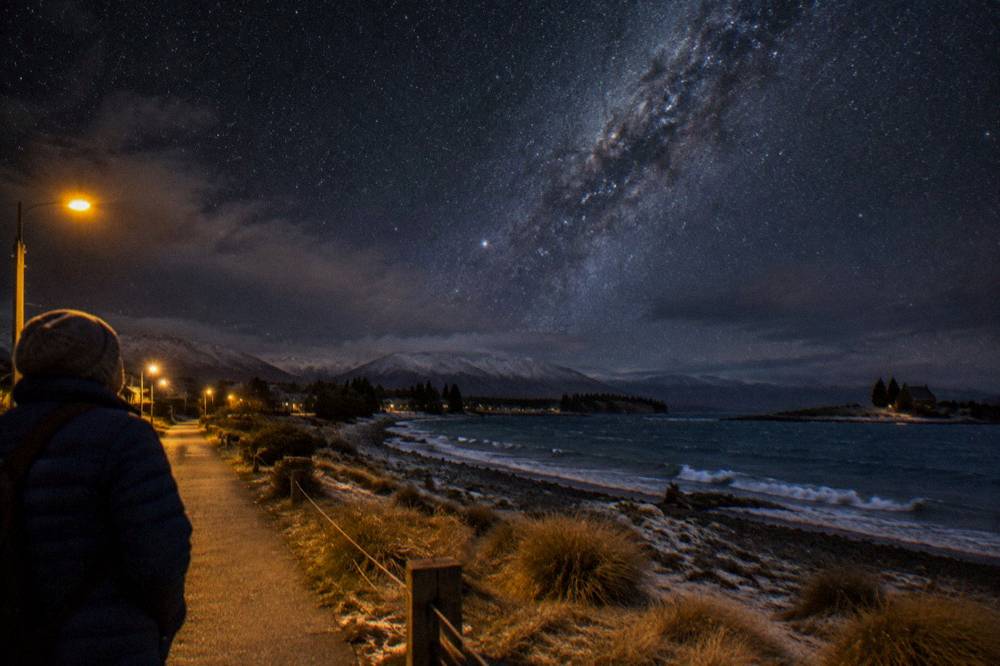
Fame then compounded. Tour operators set up in the village, the tours drew hundreds of reviews per tour, photographers spread the image of a small stone church beside a turquoise lake under a bright band of stars, and the loop closed: the more people came for the sky, the more the sky became the reason to come. Today the fame is self-sustaining, and the village has the touring infrastructure to match it.
The 12 tours covered here split across three families: Dark Sky Project's three experiences at its lakefront base, five small-group stargazing options around Lake Tekapo, and four tours based at Mount Cook and Twizel. Prices run from $34.70 per person for the 45 minute indoor cultural session to $135 for the Mount John Summit night. Three tours tie for the cheapest outdoor night at $56 each.
Is Lake Tekapo Inside A Dark Sky Reserve?
Yes. Lake Tekapo sits inside the Aoraki Mackenzie International Dark Sky Reserve, the largest dark sky reserve in the Southern Hemisphere at 4,367 square kilometres. The reserve covers Aoraki / Mount Cook National Park and the Mackenzie Basin, and DarkSky International designated it in 2012. District plan lighting rules apply across the whole area.
A dark sky reserve is not a national park designation and it is not a light switch that turns the region black. It is a formal recognition, with ongoing obligations, that a large area has exceptional night sky quality and active protection for it. In the Mackenzie's case the protection is written into the district plan. Those rules apply across the reserve, which is why a petrol station forecourt in Twizel looks dimmer than the same forecourt in Christchurch.
The scale matters. A 4,367 square kilometre reserve means the darkness is not a single protected hilltop with a town glowing ten minutes away in every direction. Tekapo village is small, Twizel is small, and between and around them is high country, two large lakes, and a national park. A tour site on a farm outside the village, or a car park in the Tasman Valley, looks out over tens of kilometres of near-unlit land.
For travellers, the reserve designation is what turns a nice view into a reliable one. You cannot promise a clear night, and no honest page will, but the darkness between settlements is a structural feature rather than a lucky accident. That is the practical difference between stargazing in the Mackenzie and stargazing almost anywhere else on a New Zealand itinerary.
The reserve also explains why the fame is regional, not just local. Tekapo is the busiest base, but Mount Cook village and Twizel sit inside the same boundary, and each has its own tours. Choosing between them is largely a question of where you are sleeping: the Mount Cook versus Tekapo and Twizel question comes down to driving times and tour style, since the sky overhead is protected the same way in all three.
Why Does Mount John Observatory Matter For Tekapo Stargazing?
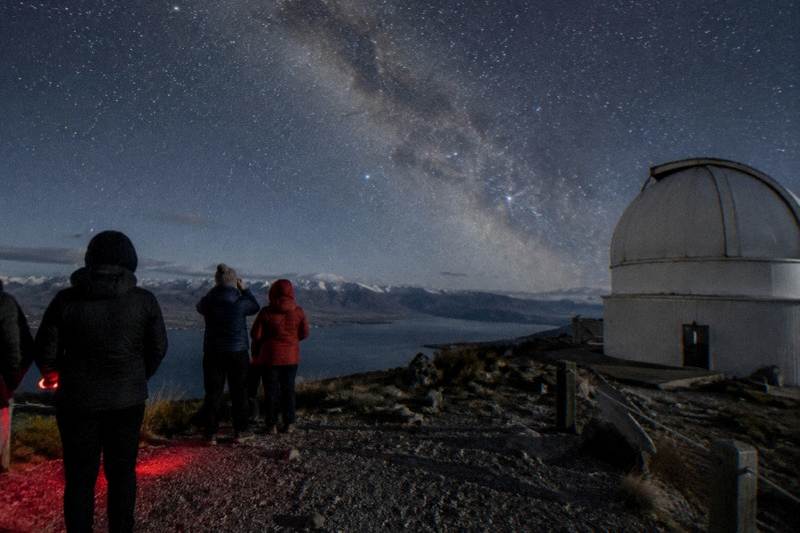
Mount John matters because it is the University of Canterbury's research observatory, New Zealand's largest, with four research-grade telescopes used throughout the year on the summit at 1,029 metres above the lake. The observatory put Tekapo on the scientific map decades before tourism arrived, and the tours now drive up the same mountain road.
The observatory is the origin story. Astronomers chose the Mount John summit for its darkness, altitude and relatively stable atmosphere, and the research operation has been existed as a phrase. The presence of a professional observatory is also part of what made the reserve designation credible: this was already a place where serious astronomy happened.
Visitors cannot drive up the mountain in the evening. Night access to the summit road is limited to the Dark Sky Project coach, which is why the Mount John Summit Stargazing Experience, 1 hour 45 minutes from $135 per person and rated 4.6 across 348 reviews, includes about 15 minutes of transport each way. In the daytime the road and the Astro Cafe are open, with a small per-vehicle fee paid at the gate, which is a separate visit from any tour.
The summit tour itself mixes naked-eye viewing with guide lasers, telescopes on the summit, and a 16 inch telescope in the dome. Minimum age is 10, a cold weather jacket is loaned, and the walk from the coach involves a 100 metre gravel incline plus a few steps in the dark, so moderate fitness helps. Dark Sky Project's weather terms, for this operator only, allow for cancellation in bad weather with an indoor alternative or a full refund offered.
For most visitors the observatory's role is atmospheric rather than technical: it explains why the tours here feel established rather than improvised. Guides on the summit tours work alongside a working research facility, and the coaching, jackets and dome access reflect a working research facility. The fame of Tekapo stargazing is, in part, borrowed credibility from the scientists on the hill.
How Do Lake Tekapo Stargazing Tours Work?
Lake Tekapo's tours run 45 minutes to 2 hours, meet at a stated point in or near the village, and cost from $34.70 to $135 per person. Each has its own meeting place, group cap and weather terms. Eight of the 12 meet in or beside Tekapo; the rest start at Mount Cook or Twizel.
The mechanics are simple once you see the pattern. You book a date, you get an evening meeting point, you check in early, and a guide takes a small group to a viewing site with telescopes, chairs or both. Chameleon Stargazing, for example, checks in at 70 Andrew Don Drive, runs 90 minutes with about 30 minutes of naked-eye guiding before the telescopes come out, includes hot chocolate and marshmallows, a digital souvenir photo, and caps the group at 14 with a minimum age of 5. It is the second most reviewed tour covered here, rated 4.9 across 789 reviews, from $73 per person.
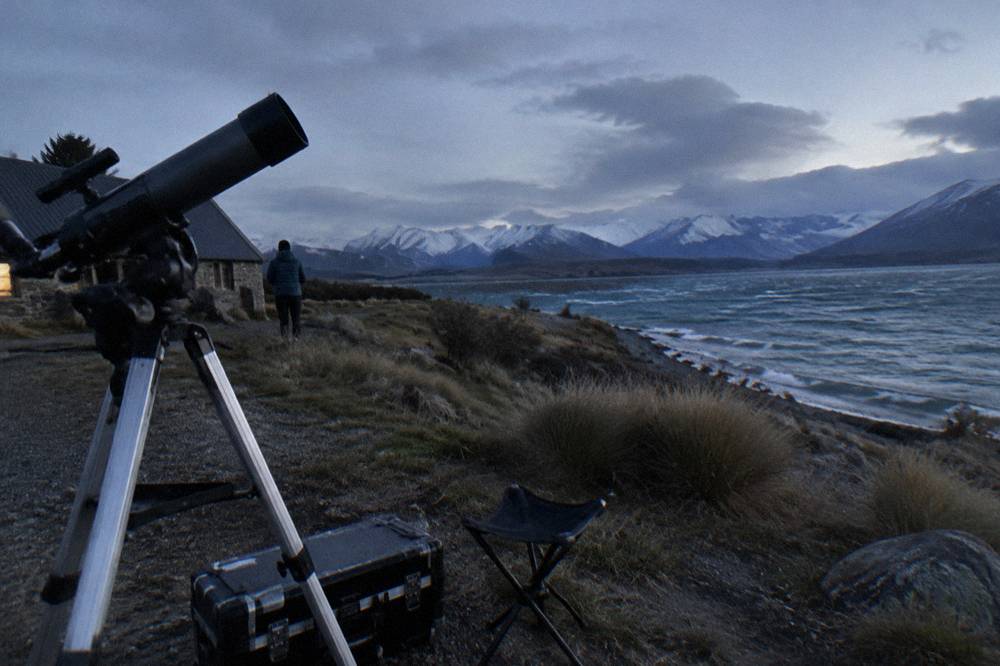
Silver River Stargazing, which appears as Go Tekapo on some booking pages, checks in at Kiwi Treasure, the information centre at 12 Rapuwai Lane, then shuttles to a private 50,000 acre farm site with 14 inch telescopes and warm jackets provided. The Alpine Stargazing Experience, from $56 for 75 minutes and rated 4.6 across 864 reviews, is tied for the cheapest outdoor night. Astro Tekapo meets at its own site in Takapo Regional Park, four minutes by car from the village, with a 9.25 inch telescope and a smart telescope, hot chocolate and blankets, from $59. If you'd rather weigh all the viewing locations before booking, the comparison of Lake Tekapo's best stargazing spots covers everything from the free lakefront to the private farm sites and Mount John.
The indoor option is different in kind. The Indoor Dark Sky Cultural Astronomy Experience is a 45 minute guided exhibit from $34.70, group max 26, built around a restored 125 year old Brashear telescope and Maori understanding of the sky. It is weather independent, which is exactly its value: it offers something when the cloud is low, though it is an exhibit, not sky viewing.
| Tour | Duration | From (USD) | Rating | Meets |
|---|---|---|---|---|
| Mount John Summit Stargazing Experience | 1 hour 45 minutes | $135.00 | 4.6 from 348 reviews | 1 Motuariki Lane, Tekapo |
| Crater Stargazing at Cowan's Observatory | 75 minutes | $78.00 | 4.6 from 91 reviews | 1 Motuariki Lane, Tekapo |
| Chameleon Stargazing Shared Tour | 1 hour 30 minutes | $73.00 | 4.9 from 789 reviews | 70 Andrew Don Drive, Tekapo |
| Alpine Stargazing Experience | 1 hour 15 minutes | $56.00 | 4.6 from 864 reviews | 12 Rapuwai Lane, Tekapo |
| Ultimate Stargazing Experience | 2 hours | $125.56 | 5.0 from 17 reviews | 12 Rapuwai Lane, Tekapo |
| Hot Pools and Stargazing (Soak in the Stars) | 1 hour 30 minutes | $102.63 | 4.3 from 121 reviews | Tekapo Springs, 300 Lakeside Drive |
| Mt Cook Stargazing Experience | 1 hour 15 minutes | $56.00 | 4.8 from 17 reviews | Tasman Glacier Car Park |
| Twizel Stargazing Tour with an Astronomer | 1 hour 15 minutes | $67.00 | 5.0 from 77 reviews | 50 Kate Cameron Drive, Twizel |
The hot pools night deserves its own note because it is the only tour with pickup. Soak in the Stars, run by Tekapo Springs and Tekapo Stargazing from 300 Lakeside Drive, offers pickup and drop off from the Tekapo township on request and subject to availability, includes hot pool entry, a floating hammock, a woollen blanket and hot drinks, and runs 90 minutes from $102.63 per person, minimum age 10. Its cloud policy is distinctive: the night runs even when cloud limits the telescopes, switching to an indoor virtual reality session with the pools still included, and a 25 percent refund applies if fewer than 30 minutes of telescope viewing happen.
Booking behaviour is the practical question. All 12 booking pages state free cancellation up to 24 hours before the start for a full refund, and tours often sell out, so the usual advice is to book the night you want and keep the cancellation window in mind rather than waiting to see the forecast. Operators make their own weather calls, and those terms belong to each operator: Dark Sky Project decides as close to departure as possible, while Stargaze Mackenzie in Twizel runs only in clear conditions and offers a refund or reschedule if cancelled. More on that in the weather and cloud cancellation guide.
What Role Does The Lake Play In Tekapo's Night Sky?
The lake's role is mostly about setting and stability rather than astronomy. Lake Tekapo's open water and surrounding hills give tours dark horizons and a famous foreground, and the basin's topography often holds back low cloud, which is one reason the same village can run tours most nights rather than a handful.
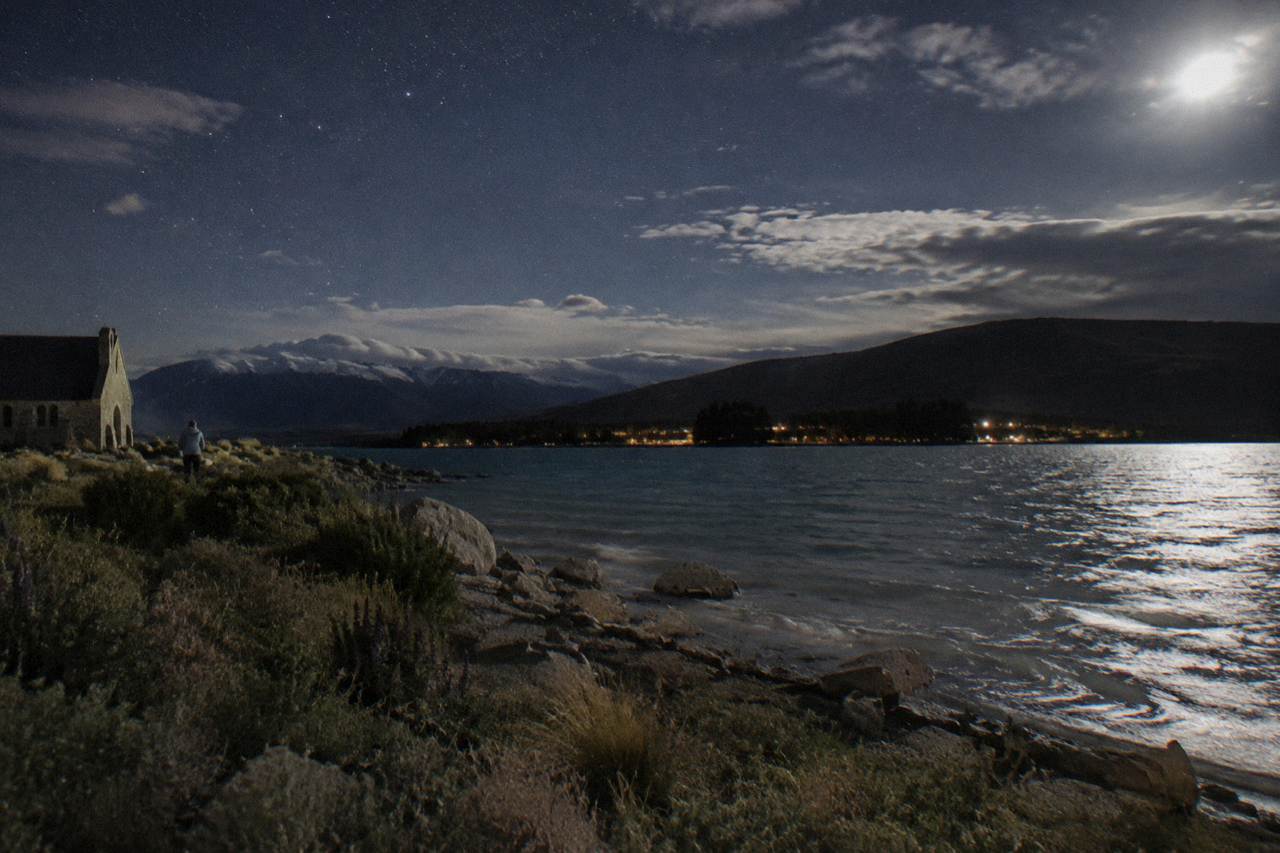
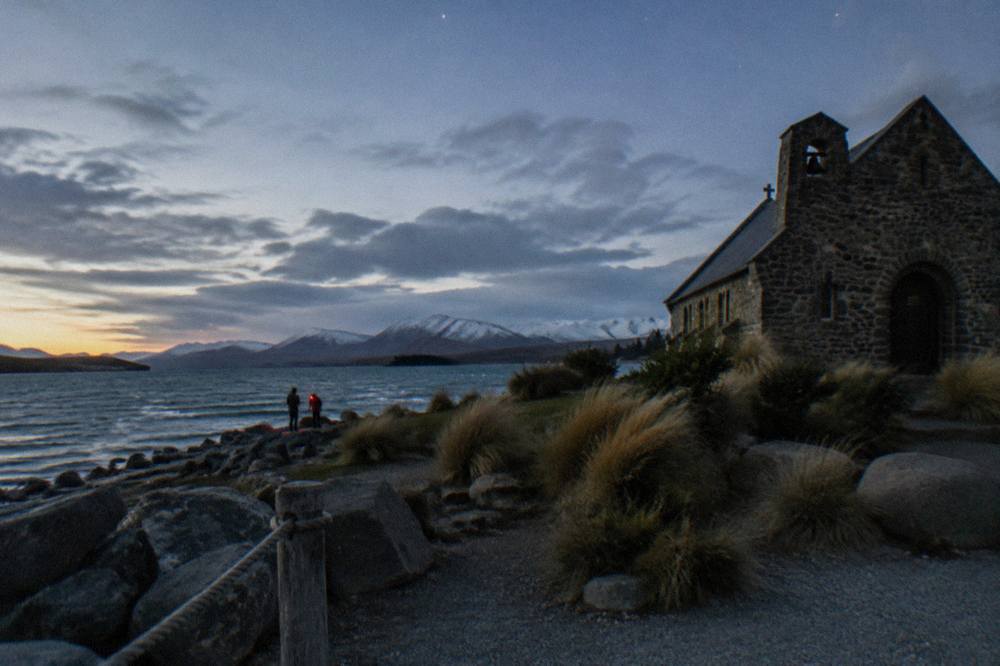
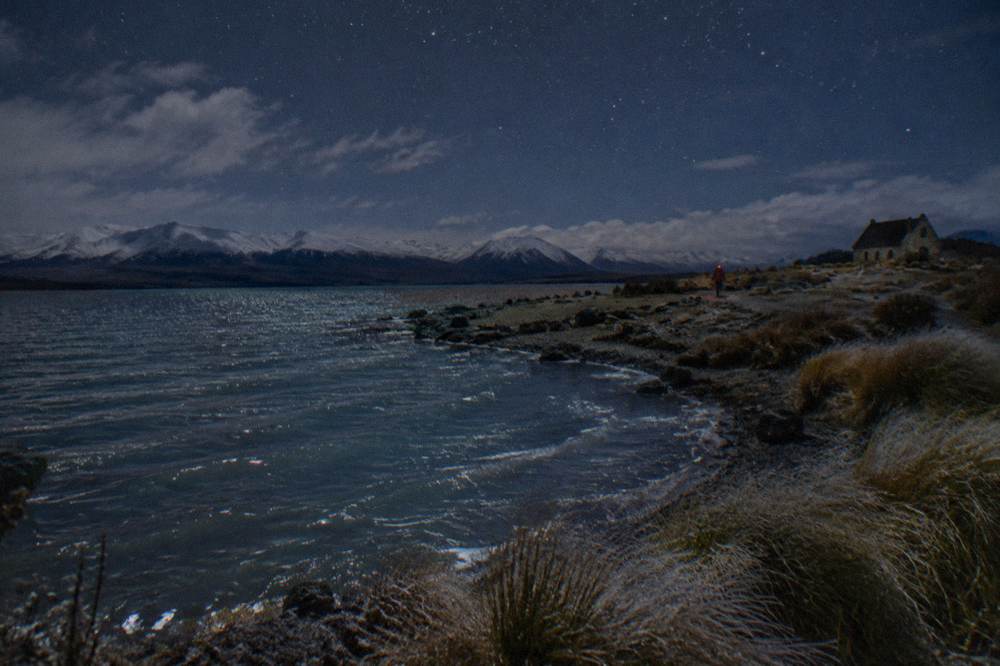
Every famous photograph of Tekapo stargazing has the lake in it. The Church of the Good Shepherd sits on the shoreline, and its image under the night sky, taken from the public paths outside the fence because the grounds close at dusk, did as much for the village's fame as any designation. The church is a protected, working sacred site with a koha requested, no drones allowed and no interior photography, but from outside the fence at night the composition is exactly what the postcards promise.
Physically, a large lake moderates the ground around it. The basin funnels and traps air in ways that often leave the sky above the village clear while cloud sits lower down, and Dark Sky Project notes that low cloud is often blocked by the basin's topography, so cloud alone does not always cancel a tour.
The lake gives tours a second product in daylight, which is part of the fame loop too. Travellers come for the turquoise water and the alpine scenery, stay the night because the drive from Christchurch or Queenstown is about three hours, and then discover that the evening activity is stargazing. Very few people arrive in Tekapo primarily for the daytime; many leave talking about the night. The sky converts a lunch stop into an overnight stay, and that economic fact is why the touring infrastructure exists at this scale in a small village.
One caution belongs here. Night driving on the highways around the lake can involve black ice, frost, freezing fog and stock or wildlife on the road in the cold months, so anyone planning to chase the sky on their own after a tour should check the NZTA Journey Planner for conditions rather than assuming the road behaves like it did at midday.
Do The Lighting Rules Protect Tekapo Stargazing?
Yes. District plan lighting rules across the reserve, which keeps the sky over Tekapo, Twizel and Mount Cook darker than anywhere else on a typical New Zealand route. The rules are the enforceable backbone of the 2012 reserve designation.
This is the least glamorous part of the fame and arguably the most important. Darkness is not a default state; it erodes one porch light, one car park floodlight and one billboard at a time. The Mackenzie's rules, written into the district plan rather than left to goodwill, mean that new development inside the reserve has to design its lighting around the sky.
The practical effect for a visitor is subtle but real. The village at night is dim by the standards most travellers are used to, with light kept low and close to the ground, and walking from a brightly lit restaurant in Christchurch to a Tekapo car park takes a few minutes of eye adjustment that pays for itself the moment you look up. Tours take advantage of this: several sites are only minutes from the village yet sit under genuinely dark horizons.
The rules are also why the fame has a fighting chance of lasting. Regions elsewhere have lost their skies to sprawl, and the Mackenzie's protection is one of the reasons DarkSky International's designation has held since 2012. Local debate continues about growth, but the lighting framework applies across the whole 4,367 square kilometres, from the Tekapo lakefront to the Tasman Valley.
For tour buyers this means the sky quality is not dependent on any single operator's site choice. A farm paddock outside Tekapo, a crater-style observatory at Cowan's, a regional park site, or a car park under Mount Cook all sit inside the same protected darkness, so the choice between tours comes down to group size, price, comfort and style rather than whose patch of sky is better. The tours compared guide works through those differences in detail.
Is Tekapo The Best Place To Stargaze In New Zealand?
Tekapo is the most famous stargazing place in New Zealand and the most practical for most travellers, with the most tours, the deepest booking infrastructure and a research observatory overhead. Whether it is the best depends on your priorities: Mount Cook and Twizel sit inside the same reserve.
Fame and optimality are different claims, and this site is careful about the second. What can be said plainly: the Aoraki Mackenzie Reserve is the largest of its kind in the Southern Hemisphere, Tekapo is its busiest base, and the 12 tours covered here represent more guided stargazing options than most regions offer. New Zealand has other dark areas, but nowhere else combines the designation, the observatory, the accommodation and the tour density.
Within the region, the choice is real. Mount Cook village is about 1 hour 15 minutes from Tekapo, Twizel sits between, and both are inside the reserve. The Mt Cook Stargazing Experience meets at the Tasman Glacier Car Park in the national park, 75 minutes from $56, rated 4.8 across 17 reviews, with high-quality telescopes for deep sky observation. The Hermitage also runs its own Big Sky Stargazing up there, a neighbouring option outside the 12 tours covered here.
Twizel's options suit travellers overnighting south of Tekapo. The Twizel Stargazing Tour with an Astronomer, 75 minutes from $67 and rated 5.0 across 77 reviews, meets at 50 Kate Cameron Drive with a minimum age of 6, and runs only in clear conditions, with a refund or reschedule offered if weather cancels. There is also a Japanese-language Zen tour from $56, a new listing with no reviews yet, and a Go Tekapo evening with a group cap of 20. All meet in Twizel; none implies a transfer from Tekapo.
Timing matters as much as place. Darkness in Tekapo varies enormously across the year: November nights give 4.1 to 6 hours of astronomical darkness starting between about 22:22 and 23:24, while June gives 11.3 to 11.5 hours starting near 19:00. A full moon washes out faint stars and the Milky Way, so new moon nights, such as 9 December 2026, are when the sky can show its faintest detail. The moon phase calendar and the best time guide cover this properly.
The honest summary is that Tekapo earned its fame and keeps it for good reasons: protected darkness at scale, a scientific anchor on the summit, and enough tours that any traveller, from a family with five year olds to a photographer with a tripod, can find a night that fits. For a first visit, the Chameleon Stargazing Shared Tour is the approachable default, and Lake Tekapo Stargazing compares all 12 options side by side for those who want to dig deeper.
Common Questions About Why Tekapo Is Famous For Stargazing
Why Is Tekapo Famous For Stargazing?
Tekapo is famous because it sits inside the Aoraki Mackenzie International Dark Sky Reserve, designated in 2012 and spanning 4,367 square kilometres, beneath the Mount John research observatory, with district plan lighting rules protecting the darkness and a dozen guided tours making it easy to experience.
Is Lake Tekapo An Official Dark Sky Reserve?
Yes. DarkSky International designated the Aoraki Mackenzie area an International Dark Sky Reserve in 2012, and it is the largest dark sky reserve in the Southern Hemisphere at 4,367 square kilometres, covering Aoraki / Mount Cook National Park and the Mackenzie Basin.
Can You See The Milky Way From Lake Tekapo?
The Milky Way can be visible from Tekapo on clear, moon-free nights, and the sky is protected enough that faint detail is often easier to see here than elsewhere in New Zealand. No operator guarantees it: a full moon washes out the Milky Way, and cloud can block any night, so timing around a new moon helps.
Why Is There An Observatory At Lake Tekapo?
Mount John, the hill above the lake, hosts the University of Canterbury's research observatory, New Zealand's largest professional research observatory, with four research-grade telescopes used throughout the year. Its summit road is closed to private vehicles at night, with access limited to the Dark Sky Project coach.
How Much Does A Tekapo Stargazing Tour Cost?
Tours covered here run from $34.70 per person for the 45 minute indoor cultural experience to $135 for the Mount John Summit night. Three outdoor tours tie for the cheapest night at $56: Alpine Stargazing at Tekapo, Mt Cook Stargazing, and the Japanese-language Zen tour in Twizel.
Is Tekapo The Only Place To Stargaze In The Mackenzie?
No. Twizel and Aoraki / Mount Cook village sit inside the same reserve, about 1 hour 15 minutes from Tekapo at Mount Cook village, and each has its own stargazing tours. The sky protection is identical across the reserve, so the choice between bases comes down to your itinerary and preferred tour style.