What Time Do The Stars Come Out In Lake Tekapo?
Astronomical darkness at Lake Tekapo starts between about 18:56 in midwinter and 23:54 in midsummer. Here is how that shapes stargazing tour start times through the year.
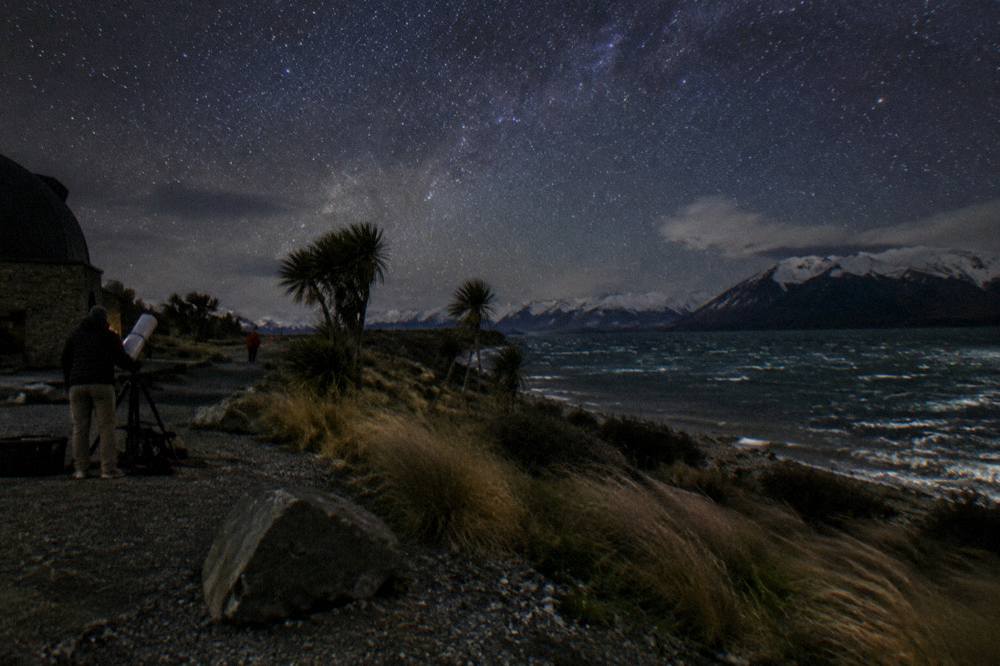
Stars are technically overhead all day; what changes at Lake Tekapo is when the sky gets dark enough to see them. That moment swings by roughly five hours across the year, from before 7 pm in June to nearly midnight in late December.
In Lake Tekapo, the stars come out once astronomical darkness begins, which happens as early as about 18:56 on midwinter nights and as late as 23:54 on midsummer nights. That means the timing shifts by roughly five hours across the year, so the season you visit strongly shapes when the night sky fills with stars. Astronomical darkness means the Sun sits more than 18 degrees below the horizon, the point at which faint stars and the Milky Way can appear against a properly black sky. In November 2026, for example, darkness begins between 22:22 at the start of the month and 23:24 at the end, because daylight saving pushes everything an hour later on the clock.
That five hour swing is the single biggest planning fact for a Tekapo stargazing trip, and it catches a lot of summer visitors off guard. A family that books a tour slot for 9 pm in January may find the sky still glowing with twilight, while the same slot in June delivers a sky that has been fully dark for two hours already. Tour start times follow darkness rather than the clock: operators schedule their nights so guests arrive under a dark sky, which means departure times shift month by month and sometimes week by week across a season.
The reason for the swing is latitude plus daylight saving. Lake Tekapo sits far enough south that summer days stretch long, and New Zealand daylight time runs from late September until early April, adding an hour to the evening on top of the natural effect. The computed darkness figures for the Tekapo lakefront show the result plainly: June delivers about 11.3 to 11.5 hours of astronomical darkness per night, while December shrinks to 3.5 to 4 hours. Summer stargazing at Tekapo is real, but it is a late, compressed version of it, and anyone planning around a fixed bedtime should know that before booking. For a clearer sense of how the evening actually unfolds, the breakdown of every Lake Tekapo stargazing tour length shows how those compressed darkness hours fit into a typical outing.
Three quick picks for an evening under that sky, covering the main formats and price points:
The Chameleon Stargazing Shared Tour is the highest rated of the three, at 4.9 across 789 reviews, from $73 per person for 90 minutes with a 9.25 inch telescope, a smart telescope, hot chocolate and a digital souvenir photo. The Mt Cook Stargazing Experience and the Alpine Stargazing Experience with a Guide both start from $56 per person, one under the sky of the national park at the Tasman Glacier Car Park, the other on a private 50,000 acre farm with 14 inch telescopes and warm jackets provided. All 12 booking pages state free cancellation up to 24 hours before the start for a full refund.
When Does Astronomical Darkness Begin Each Month?
Darkness begins between 22:22 and 23:24 in November 2026, between 23:26 and 23:54 in December, and between 18:56 and 18:58 in June 2027, which is both the earliest and the longest-window month of the year. The full pattern runs in a smooth curve through the calendar: late starts through the summer holidays, a fast slide through autumn, a long early-dark stretch over winter, and a slow climb back through spring. The table below gives the local clock time astronomical darkness starts on the first and last night of each month, alongside how much dark night you actually get.
| Month | Darkness begins (first to last night) | Astronomical darkness per night | Nights with 3+ moon-free dark hours |
|---|---|---|---|
| November 2026 | 22:22 to 23:24 | 4.1 to 6 hours | 13 of 30 |
| December 2026 | 23:26 to 23:54 | 3.5 to 4 hours | 12 of 31 |
| January 2027 | 23:53 to 23:12 | 3.6 to 5.3 hours | 13 of 31 |
| February 2027 | 23:10 to 22:13 | 5.4 to 7.3 hours | 15 of 28 |
| March 2027 | 22:11 to 21:11 | 7.3 to 9.1 hours | 18 of 31 |
| April 2027 | 21:09 to 19:23 | 9.1 to 10.4 hours | 19 of 30 |
| May 2027 | 19:21 to 18:56 | 10.5 to 11.3 hours | 21 of 31 |
| June 2027 | 18:56 to 18:58 | 11.3 to 11.5 hours | 20 of 30 |
| July 2027 | 18:58 to 19:19 | 10.9 to 11.5 hours | 20 of 31 |
| August 2027 | 19:19 to 19:49 | 9.7 to 10.8 hours | 19 of 31 |
| September 2027 | 19:50 to 21:26 | 8.1 to 9.6 hours | 18 of 30 |
| October 2027 | 21:27 to 22:19 | 6.1 to 8 hours | 17 of 31 |
Two practical readings of that table. First, the December and January rows are the tight ones: darkness arrives close to midnight and lasts under four hours, so a summer tour slot is necessarily a very late night, and younger children especially may struggle with it. Second, the moon-free column matters as much as the clock: a night can be technically dark for six hours and still washed out by a bright Moon for most of them, so the darkest sky needs both darkness and lunar timing to line up. The darkest nights pair late-autumn or winter darkness with a new moon.
For readers who want the lunar side mapped night by night, the Lake Tekapo moon phase calendar pairs these dusk times with the moon-free windows for every month of the season, and the winter versus summer comparison digs into what each season's sky actually feels like on the ground.
How Late Do Lake Tekapo Stargazing Tours Start?
Tour start times are not fixed public schedules: each operator sets departures that follow darkness, so summer tours run late into the evening while winter ones can start shortly after dinner, and the only reliable way to know your slot is the operator's own booking calendar. No operator publishes a guaranteed clock time, and the same tour can start hours apart in June versus January. What is fixed, and worth comparing before you book, is duration and price, because those tell you how much of the dark window a tour will occupy.
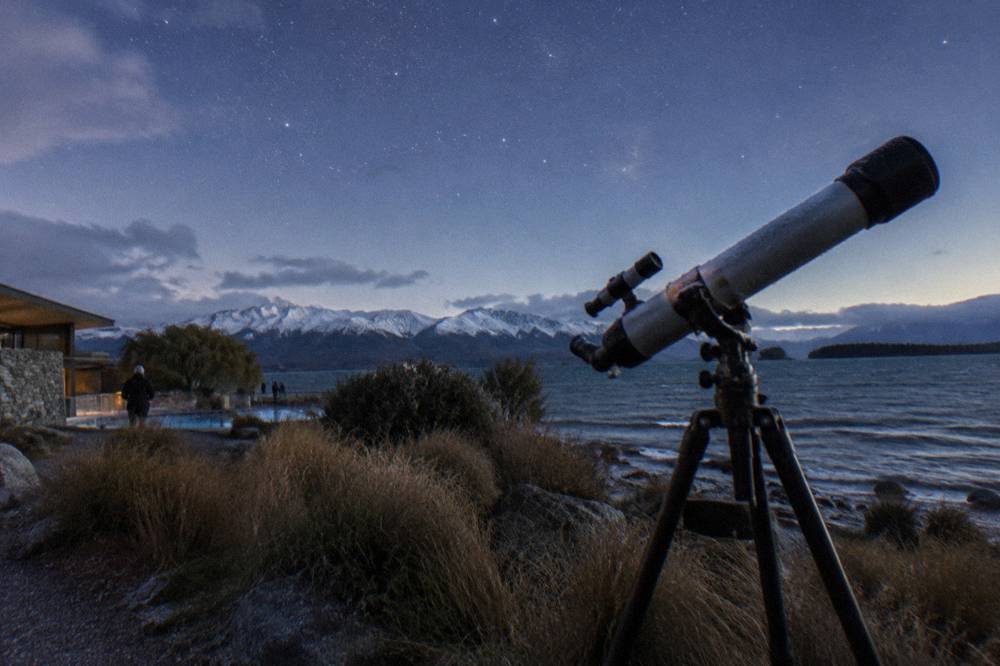
The durations matter once you see how narrow the summer window is. The Mount John Summit Stargazing Experience runs 1 hour 45 minutes from $135 per person, rated 4.6 across 348 reviews, including coach transport up the summit road. The Crater Stargazing Experience at Cowan's Observatory is 75 minutes from $78, rated 4.6 across 91 reviews. The Chameleon tour is 90 minutes; the Alpine tour 1 hour 15 minutes; the Ultimate Stargazing Experience a fuller 2 hours from $125.56 with a 16 inch telescope. When the dark window is only 3.5 hours in December, a 2 hour tour consumes more than half of it before travel and check-in are counted.
One timing quirk worth knowing: on the Mount John summit, night access is by the tour coach only. Visitors cannot drive up Mount John in the evening, so the tour's departure time is also the only way to be on that summit after dark. The Astro Cafe and the private road are open in the daytime, with a small per-vehicle fee paid at the gate, but evening access belongs to the coach, which is why the Summit tour's departure slot is not just a convenience but the whole mechanism of the night.
Practical check-in timing adds to the clock time too. Dark Sky Project asks guests to check in at its lakefront base about 15 to 20 minutes before departure. Silver River Stargazing asks about 15 minutes early at Kiwi Treasure, the information centre at 12 Rapuwai Lane, before a shuttle to its private farm site. Chameleon asks for 10 to 15 minutes at 70 Andrew Don Drive. Budget the tour duration, plus check-in, plus travel, when you work out how late your night actually runs.
Wondering whether an evening slot is worth the money before you commit? Free cancellation up to 24 hours before the start for a full refund takes most of the risk out of booking ahead.
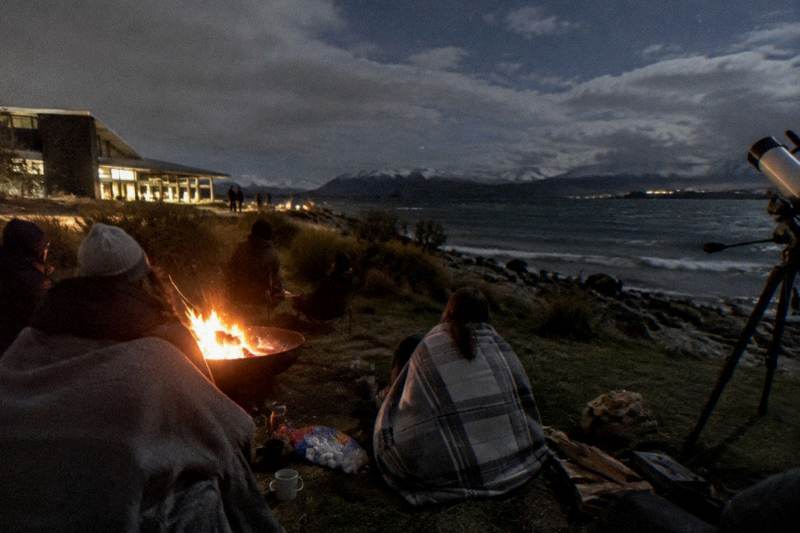
The Chameleon tour in particular is built around the evening rhythm: about 30 minutes of naked-eye orientation under the darkening sky, then telescope time, then hot chocolate and marshmallows from outdoor seats with blankets. At 90 minutes from $73 with a group capped at 14 and a minimum age of 5, it is one of the few tours that works for families with younger children even on a later summer slot, and the digital souvenir photo means the night survives past bedtime.
Does The Season Change When Stars Appear At Tekapo?
Yes, and dramatically: the season moves first darkness by about five hours, from about 18:56 in June to 23:54 in late December, and it also changes how long the dark window lasts, from 11.5 hours at the winter peak down to 3.5 hours at the summer trough. A winter night at Tekapo can be fully dark before 7 pm and stay that way for over 11 hours. A December night barely gets dark at all by comparison, with the sky reaching true darkness close to midnight and giving it up again fewer than four hours later.
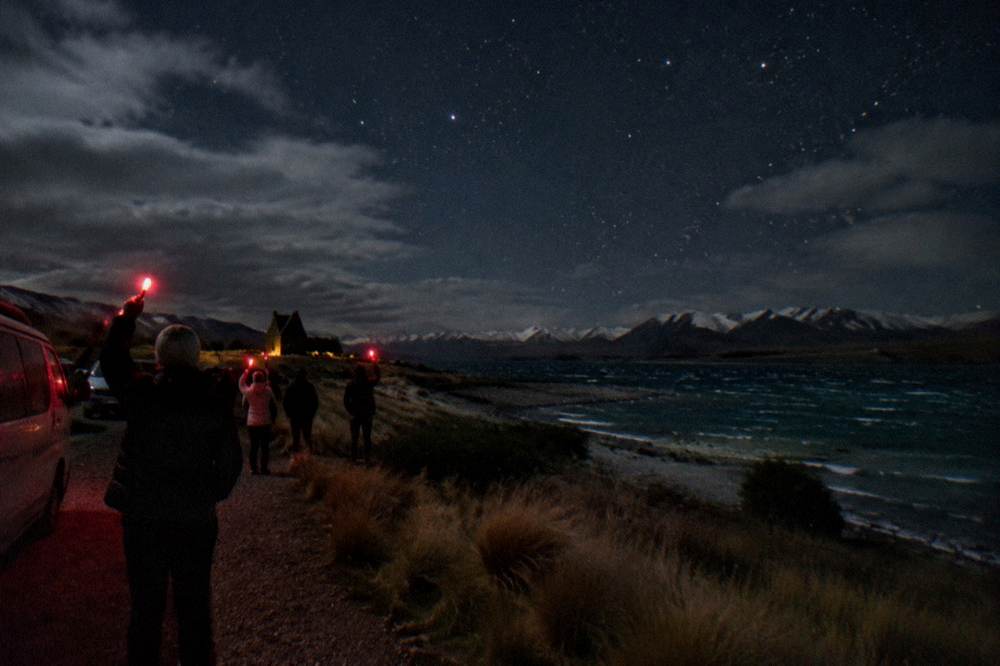
The shoulder seasons are the quiet sweet spot for people who want dark skies without a midnight finish. March 2027 darkness begins between 22:11 and 21:11 with 7.3 to 9.1 dark hours per night; April slides from 21:09 to 19:23 as daylight saving ends in early April. September and October rebuild the dark hours on the way into the new season. Dark Sky Project says winter months are often the clearest and darkest, though it is cold at night even in summer, so the trade for an early start is serious clothing.
That clothing point is not a footnote. The Mount John summit sits at about 1,029 metres with high wind exposure, and it often snows there in winter. The Summit tour loans extreme cold weather jackets, and the Alpine tour provides warm down jackets; for other tours you layer your own thermals, jersey and hat. If a 7 pm winter start appeals precisely because it is early, plan for it to be one of the colder hours of your day. The full clothing breakdown is in the guide to what to wear stargazing at Tekapo.
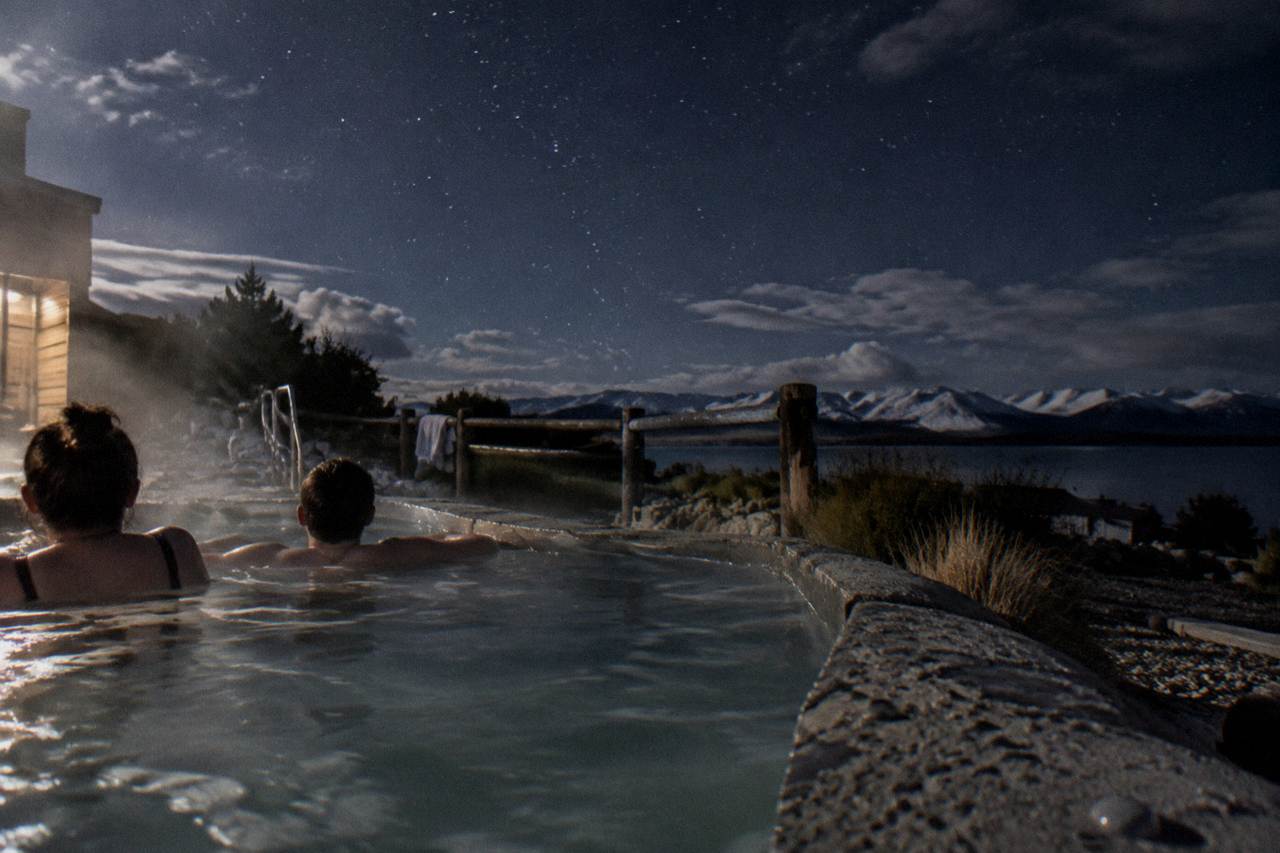
For travellers who want the sky but not the standing in the cold, the Hot Pools and Stargazing night from Tekapo Springs runs 90 minutes from $102.63, rated 4.3 across 121 reviews, minimum age 10, with hot pool entry included, a floating hammock, a woolen blanket, hot drinks and pickup from the Tekapo township on request subject to availability. Its cloud policy is its own: the tour runs even when cloud limits telescopes, with an indoor virtual reality session, and a 25 percent refund applies if under 30 minutes of telescope viewing happens.
Does The Moon Change When You See Stars In Lake Tekapo?
The Moon can override the clock entirely: a full moon washes out faint stars and the Milky Way even at maximum darkness, while a new moon gives the darkest sky regardless of season, so the lunar cycle matters as much as the dusk time on the calendar. In November 2026 the full moon falls on the 25th and the new moon on the 9th; in December, the 24th and the 9th. A tour on the nights around a full moon still shows bright objects and planets through a telescope, but the faint glow of the Milky Way suffers badly.
This is why the moon-free column in the monthly table above is worth reading alongside the dusk times. June 2027 has 20 of 30 nights with three or more moon-free dark hours; December 2026 has 12 of 31, and those nights are already squeezed into under four hours of darkness. For a summer trip aimed at the Milky Way, the new moon dates, 2026-12-09 and 2027-01-08, are the nights to build the itinerary around, and they will still be late nights by any standard.
The interaction of moon and season also explains why two visitors can describe the same tour so differently. A March tour near the new moon of 2027-03-08 sees a sky dark from about 22:11 with hours of moonless depth; a March tour near the full moon of the 22nd sees a shorter effective window for faint objects. Same tour, same operator, different weeks, and often a very different review written afterwards.
How Should You Plan Your Evening Around The Start Time?
Work backwards from the darkness table: pick the month, find when darkness begins, expect the tour to start at or shortly after that time, and add check-in and travel to get your real night length, then sanity-check the moon before you lock the date. A June evening can start before 7 pm and still deliver hours of dark sky; a December evening will not get going until nearly midnight, so plan dinner late, sleep in that morning, and set expectations with anyone in the group who fades early.
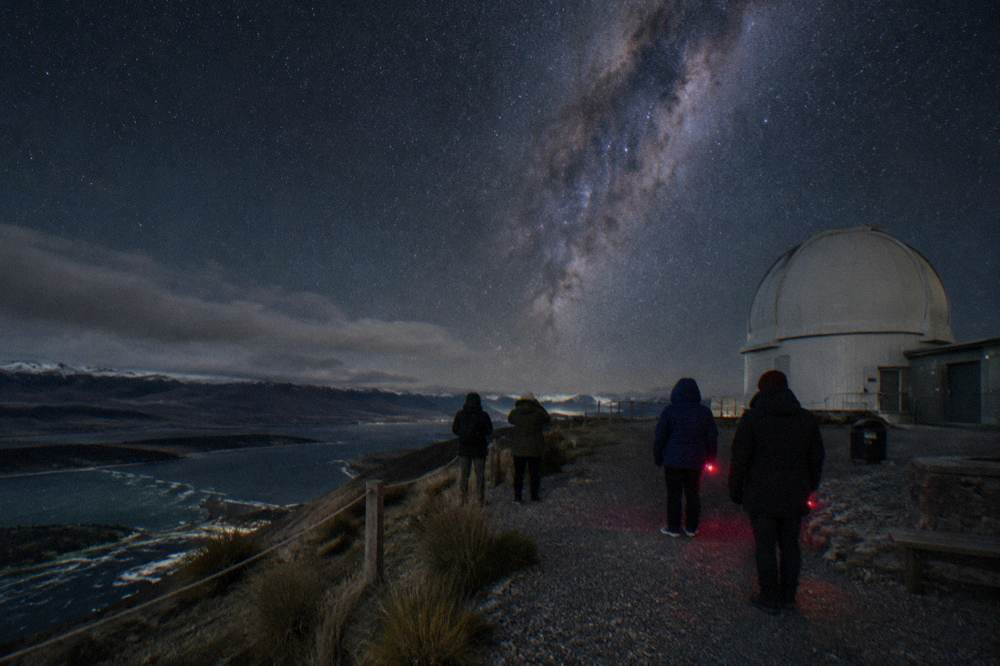
A few worked examples from the durations and prices of the tours covered here. A Chameleon evening in February, 90 minutes from $73, darkness starting between 23:10 and 22:13, can end well after midnight early in the month. An Alpine evening in June, 75 minutes from $56, darkness from about 18:56, can have you back indoors by 9 pm. The Mt Cook Stargazing Experience from $56 meets at the Tasman Glacier Car Park, and the village is about 1 hour 15 minutes by road from Tekapo, so add that drive to any Mount Cook night. At night, SH8 and SH80 can carry black ice, frost, freezing fog and stock or wildlife in the cold months; the NZTA Journey Planner is the place to check conditions before you commit to a drive.
Booking rhythm follows from the timing. Dark Sky Project notes that same-day booking can be possible but tours often sell out, and the nights around a new moon in high season are the ones that fill first, because everyone reading about stargazing has seen the same dates. Booking ahead costs nothing in flexibility in one respect: all 12 booking pages state free cancellation up to 24 hours before the start for a full refund. Weather is a separate matter entirely, and each operator handles it differently; the weather and cloud cancellation guide covers those policies operator by operator.
The deeper background on why this patch of sky works so well is in the guide to the Aoraki Mackenzie dark sky reserve, designated in 2012 and covering 4,367 square kilometres of the national park and the Mackenzie Basin, held dark by district plan lighting rules. And if the whole question feels like it needs a simpler summary of which tour suits which traveller, the full comparison of Lake Tekapo Stargazing options across all 12 nights out is the place to start.
Common Questions About When Stars Come Out In Lake Tekapo
What Time Do The Stars Come Out In Lake Tekapo?
When astronomical darkness begins: about 18:56 in midwinter, between 22:22 and 23:24 in November 2026, and as late as 23:54 in late December. Tour start times follow darkness, so check the operator's calendar for your exact date.
Do Stargazing Tours In Tekapo Run Late In Summer?
Yes. With darkness starting close to midnight in December and January and lasting only 3.5 to 5.3 hours, summer tours necessarily run very late. Plan for a night that ends after 1 am door to door on longer tours.
When Is The Sky Darkest At Lake Tekapo?
On moon-free nights in the colder months. A new moon gives the darkest sky, and June delivers about 11.3 to 11.5 hours of astronomical darkness per night, the longest window of the year.
Does A Full Moon Ruin Stargazing At Tekapo?
A full moon washes out faint stars and the Milky Way, though telescopes still show bright objects and planets. The nights around the new moon, 2026-12-09 for example, are the ones to build a trip around.
How Long Is A Stargazing Tour In Lake Tekapo?
Durations range from 75 minutes for the Crater Experience to 2 hours for the Ultimate Stargazing Experience, with several Tekapo tours at 90 minutes. Add 10 to 20 minutes for check-in and any travel to the meeting point.
Can I Book A Tekapo Stargazing Tour Last Minute?
Sometimes, but tours often sell out, especially around new moon dates in high season. All 12 booking pages state free cancellation up to 24 hours before the start for a full refund, so booking ahead carries little risk.