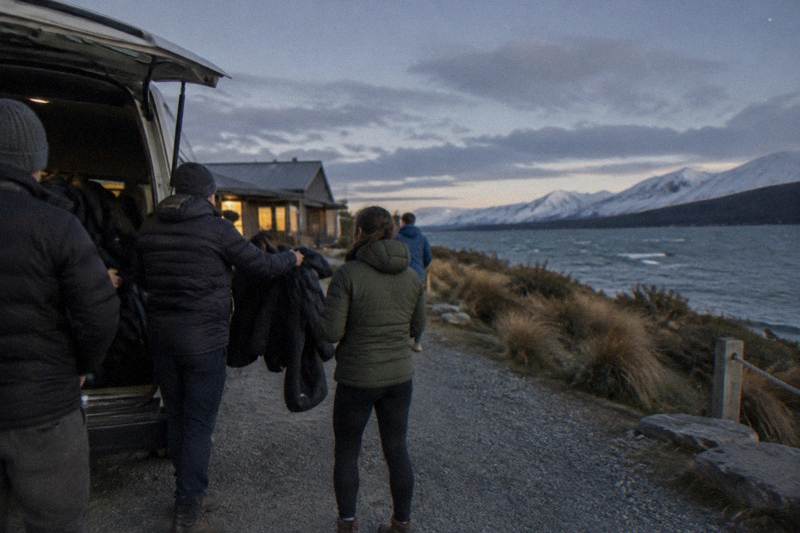
Are Warm Jackets Provided On A Tekapo Stargazing Tour?
Only two Lake Tekapo stargazing tours provide warm jackets. Here is which ones, what the others offer instead, and what to wear on a cold Mackenzie Basin night.
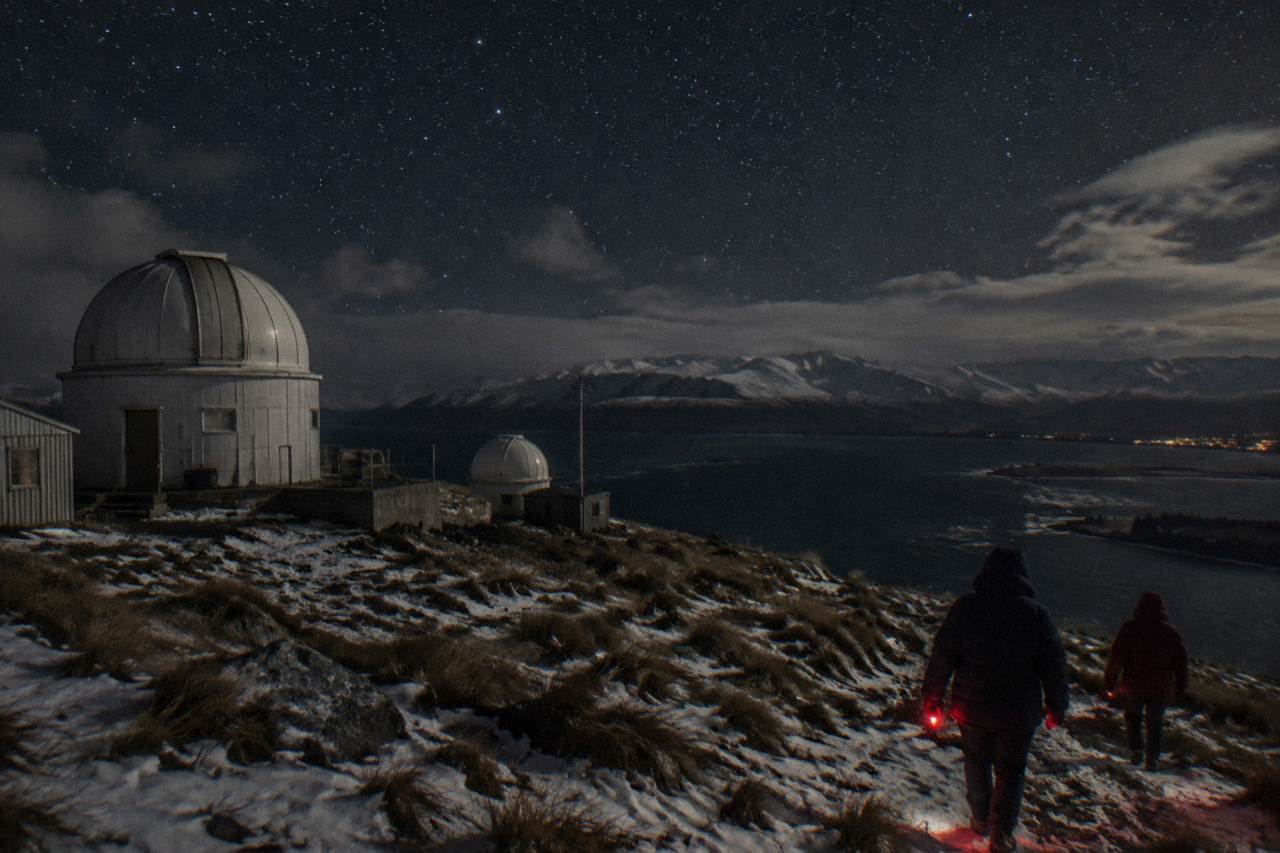
Only two stargazing tours at Lake Tekapo provide warm jackets: the Mount John Summit Stargazing Experience, which loans an extreme cold weather jacket for the exposed summit, and the Alpine Stargazing Experience with a Guide, which hands out warm down jackets. Every other tour expects you to bring your own layers, though several provide blankets, chairs or hot drinks instead.
On a Lake Tekapo stargazing night, only two of the tours covered here hand you a jacket: the Mount John Summit Stargazing Experience, at from $135.00 per person, and the Alpine Stargazing Experience with a Guide, at from $56.00 per person. The other Tekapo operators ask you to bring warm clothing yourself. Some soften the night with blankets, seats or a hot drink instead.
That distinction matters more at Tekapo than at most stargazing places. The tours here run at night, often late at night in the summer months, at the bottom of the Mackenzie Basin or on a summit at 1,029 metres. Dark Sky Project, the operator on Mount John, tells guests plainly that it is cold at night even in summer, and that its summit site has high wind exposure and often snows in winter. A jacket you did not bring is not something you can fix at 11pm in a village with a handful of shops.
The good news is that the answer is simple and stable. The two jacket tours are clearly labelled on their booking pages, and the others make up for it in small ways: Chameleon Stargazing runs outdoor seats and blankets with hot chocolate and marshmallows, the hot pools tour wraps you in a woolen blanket after a soak, and Astro Tekapo gives each guest a moon chair and a fleece blanket beside its telescope. This article walks through each tour in turn, then covers what to actually wear, because even on the jacket tours the jacket is the outer layer, not the whole outfit.
Which Lake Tekapo Tours Provide A Warm Jacket?
Two tours provide jackets. The Mount John Summit Stargazing Experience, 1 hour 45 minutes, from $135.00, loans an extreme cold weather jacket at the summit. The Alpine Stargazing Experience with a Guide, 1 hour 15 minutes, from $56.00, provides warm down jackets at its private farm site.
The Mount John Summit tour is the one that needs it most. The coach climbs to the University of Canterbury's research observatory at 1,029 metres, a site chosen for its darkness and its exposure, and the walking part of the tour includes a 100 metre gravel incline plus a few steps in the dark. Dark Sky Project's own clothing guidance for the Summit lists thermals, a jersey and a jacket for summer, and thermals, a snow jacket, gloves, scarf, hat and sturdy ankle-covering shoes for winter. The loaned extreme cold weather jacket sits on top of that; it replaces your outer shell, not your layers underneath. If you are weighing this tour against its sibling, the Dark Sky Project summit versus crater experience comparison covers the differences in detail.
The Alpine tour is the gentler of the two jacket tours. Silver River Stargazing, listed as Go Tekapo on some booking pages, checks guests in about 15 minutes early at Kiwi Treasure, the Lake Tekapo information centre at 12 Rapuwai Lane, then shuttles everyone to a private 50,000-acre farm site with 14 inch telescopes and astro-lasers. Chairs, telescopes and warm down jackets are provided, and the tour is capped at 10 guests, rated 4.6 across 864 reviews. At from $56.00 it is also tied for the cheapest outdoor night among the 12 tours, alongside the Mt Cook and Twizel Zen experiences at the same price.
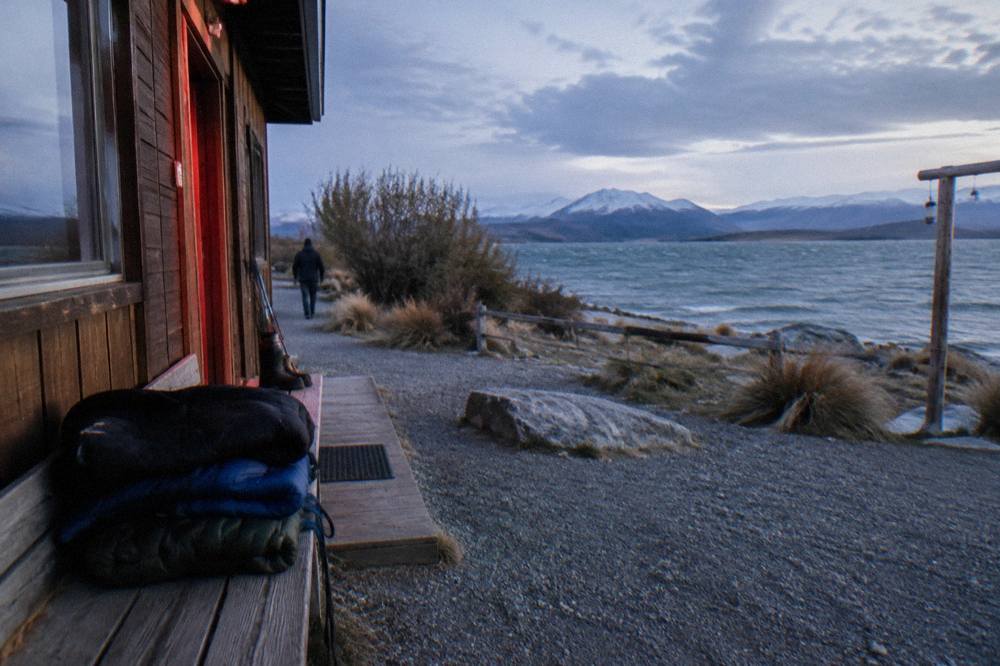
A quick reference table for the two jacket tours, plus a note on where each one starts:
| Tour | Duration | From (USD) | Jacket | Group max | Meets |
|---|---|---|---|---|---|
| Mount John Summit Stargazing Experience | 1 hour 45 minutes | $135.00 | Extreme cold weather jacket loaned | - | Dark Sky Project, 1 Motuariki Lane |
| Alpine Stargazing Experience with a Guide | 1 hour 15 minutes | $56.00 | Warm down jackets provided | 10 | 12 Rapuwai Lane, then shuttle |
One caution worth stating directly: the Crater Stargazing Experience at Cowan's Observatory, also run by Dark Sky Project, does not provide jackets. Its booking page tells guests to layer warm clothing. The crater walls at Cowan's Private Observatory shelter the viewing area from wind and light, which helps, but the shelter is not a substitute for a proper jacket on a winter night in the basin. Anyone choosing between the Summit and Crater tours on warmth alone should know the loaned jacket belongs to the Summit only.
If a jacket handled for you sounds like the deciding factor, the Summit Experience is the one to check first. Check availability beside the Mount John Observatory stargazing tour guide, which covers the summit, the dome telescope and the road access rules.
What Keeps You Warm On The Tekapo Tours Without Jackets?
The other Tekapo tours offer blankets, seats or hot drinks rather than jackets. Chameleon Stargazing provides outdoor seats and blankets plus hot chocolate and marshmallows. The hot pools tour provides a woolen blanket, a floating hammock and hot drinks. Astro Tekapo provides a moon chair, a fleece blanket and hot chocolate. The indoor session needs none of it.
Chameleon Stargazing is the standout for comfort among the non-jacket tours. Its signature 90-minute night, rated 4.9 across 789 reviews, from $73.00 per person, runs about 30 minutes of naked-eye viewing under a guide's laser before moving to a 9.25 inch telescope and a smart telescope. Guests get outdoor seats and blankets through both halves, plus hot chocolate and marshmallows and a digital souvenir photo to take away. Group size is capped at 14, the minimum age is 5, and check-in is at 70 Andrew Don Drive, a 4 minute drive or about 25 minute walk from the village, where you should arrive 10 to 15 minutes early. The Chameleon Stargazing at Lake Tekapo guide covers the full evening.
The hot pools tour, Soak in the Stars, takes a different approach to warmth entirely: you spend the first part of the night in water. The three Tekapo Springs hot pools run between about 36 and 38 degrees, the tour includes exclusive use of the pools, and the night comes with a floating hammock, a woolen blanket and hot drinks. Minimum age is 10, the tour is 90 minutes, from $102.63, rated 4.3 across 121 reviews, and it is the only tour of the 12 that offers hotel pickup, from the Tekapo township on request and subject to availability. This operator's cloud policy is its own: the night runs even when cloud limits the telescopes, with an indoor virtual reality session instead, and a 25 percent refund applies if under 30 minutes of telescope viewing happens.
Astro Tekapo keeps things simple. Its stargazing site sits in Takapo Regional Park, 4 minutes by car from the village or about 25 minutes on foot, with no shuttle. Each guest gets a moon chair and a fleece blanket beside the premium 9.25 inch telescope and smart telescope, and hot chocolate is included, along with a photo. The tour is 90 minutes, from $59.00, capped at 10 guests, minimum age 6. One point on ratings honesty: it carries 11 reviews, too few for a confident star rating, so judge it on what is included rather than a score.
The Indoor Dark Sky Cultural Astronomy Experience needs no jacket at all. It is a 45-minute guided walk through four zones at 1 Motuariki Lane, from $34.70, with a restored 125-year-old Brashear telescope on display and a focus on Maori understanding of the sky. It is an indoor exhibit with no outdoor sky viewing, which makes it the fallback many families pair with an outdoor night, and the one fully indoor option.
How Cold Does A Lake Tekapo Stargazing Night Get?
Tekapo nights are cold in every season, and the stargazing tours run in the darkest hours, often close to midnight in summer. Dark Sky Project says winter months are often the clearest and darkest, and that it is cold at night even in summer. The summit at 1,029 metres has high wind exposure and often snows in winter, which is why that tour alone loans an extreme cold weather jacket.
The timing is the part visitors underestimate. Because New Zealand daylight saving ran from 27 September 2026 and runs to early April 2027, summer darkness starts very late: in December 2026 true astronomical darkness begins between 23:26 and 23:54, and lasts only 3.5 to 4 hours. In November 2026 it begins between 22:22 and 23:24. A December stargazing tour can finish close to 2am, standing still, at altitude, in wind. Standing still in cold air is a different experience from walking in it, and it is why blankets and chairs feature so heavily in what the operators provide.
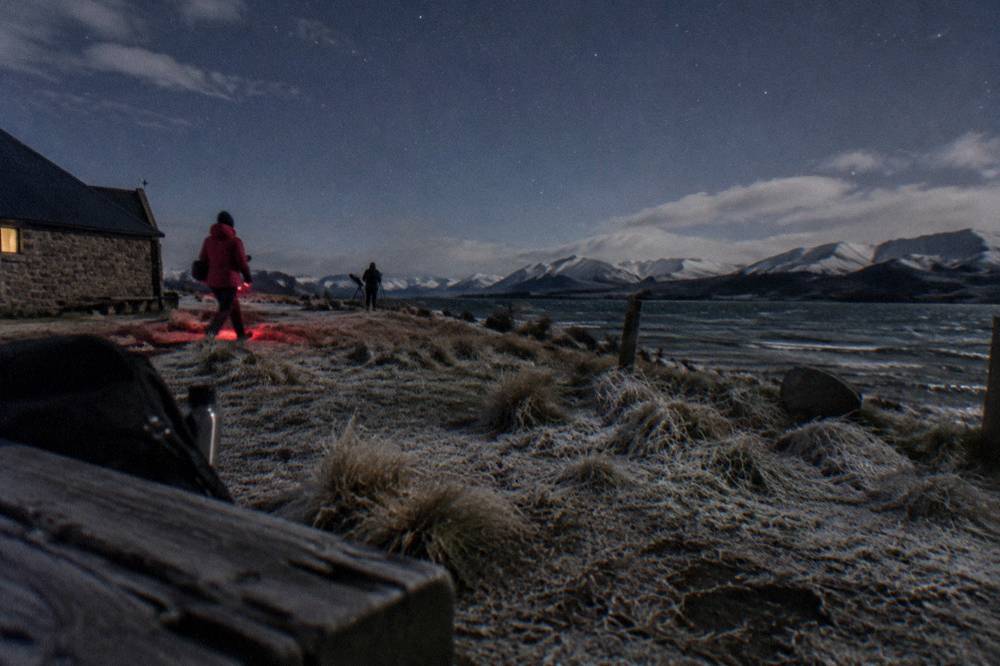
The seasonal shape of the darkness is worth knowing when you book. The computed darkness figures for the Tekapo lakefront show the longest dark nights in June, at about 11.3 to 11.5 hours with dusk near 19:00, and the shortest in December. By March 2027 darkness stretches to 7.3 to 9.1 hours per night, starting between 22:11 and 21:11. Longer nights mean earlier tours and more of them, but the temperature drops further. A winter booking trades comfort for darkness, and the moon matters as much as the month: the Lake Tekapo stargazing moon phase calendar tracks the new and full moon dates that decide how dark the sky can be.
Wind is the hidden factor. The basin funnels cold air, and the purpose-built observation craters at Cowan's Observatory exist precisely because ordinary open ground is exposed. On the nights when a tour runs, the air temperature can sit near freezing even when the day was mild, and the wind chill on Mount John can be well below that. Dark Sky Project's clothing advice treats gloves, scarf and hat as standard winter kit, not extras, and its summer list still includes thermals and a jersey.
What Should You Wear Stargazing At Lake Tekapo?
Dress in layers regardless of which tour you book. Summer nights need thermals, long pants, a jersey, a jacket and a hat. Winter needs thermals, a snow jacket, gloves, a scarf, a hat and sturdy ankle-covering shoes. On the two jacket tours the loaned jacket replaces your outer shell only, so the layers underneath are still your job.
That layering advice comes from Dark Sky Project's own clothing guidance, and it applies to every outdoor tour in the basin, not just theirs. The principle is simple: you will stand still for an hour or more, you cannot warm up by moving, and the moment you are cold the tour stops being fun. Thermals are the piece people skip and regret most, because a jacket over a t-shirt does very little when the wind picks up. The what to wear on a Lake Tekapo stargazing tour guide goes deeper on fabrics and footwear.
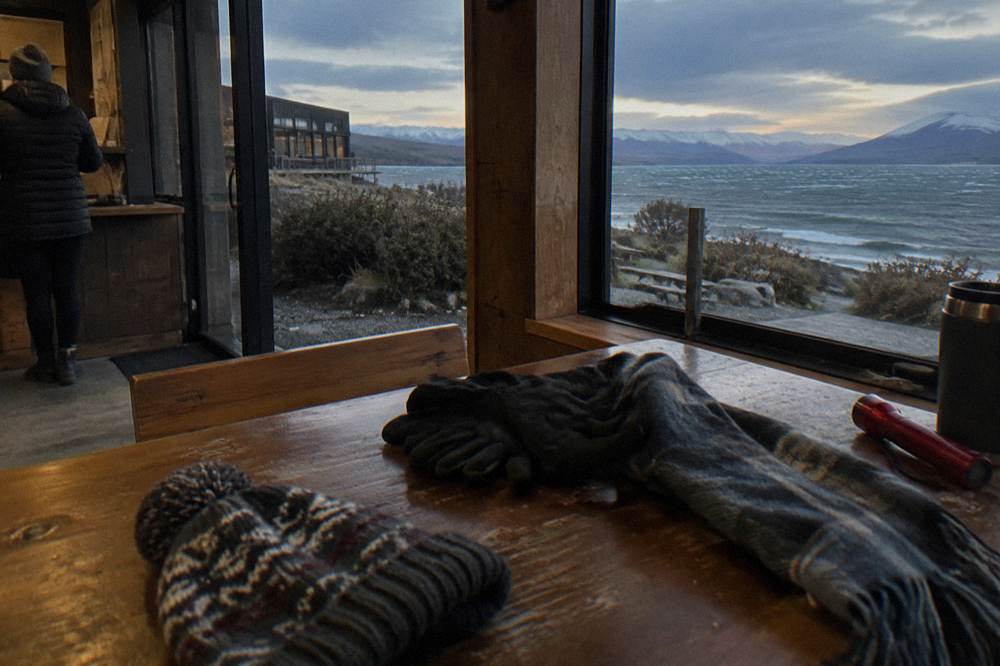
Footwear deserves its own line. Sturdy ankle-covering shoes are Dark Sky Project's winter recommendation for the Summit tour, and the reason is the terrain: the summit walk includes a 100 metre gravel incline plus a few steps, negotiated in the dark with only low lighting. Farm paddocks, regional park tracks and observatory gravel are the surfaces on the other tours. Sneakers on a frosty night are a common and avoidable mistake.
A packing summary by tour, using only what each booking page commits to:
| Tour | Provided for warmth | You bring |
|---|---|---|
| Mount John Summit | Extreme cold weather jacket | Thermals, hat, gloves, layers, sturdy shoes |
| Alpine Stargazing | Warm down jacket, chairs | Thermals, hat, layers |
| Crater at Cowan's | Wind-sheltered craters only | Full warm clothing, layer up |
| Chameleon | Seats, blankets, hot chocolate | Warm clothing underneath |
| Hot Pools (Soak in the Stars) | Woolen blanket, hot drinks, hot pools | Swimwear, warm clothing for after |
| Astro Tekapo | Moon chair, fleece blanket, hot chocolate | Warm clothing underneath |
The hot pools tour is the one row that reads differently: the swimwear matters because you are in 38-degree water first, but the woolen blanket and warm clothing matter for the telescope half of the night, and the minimum age of 10 means this is not a toddler option. For younger children, Chameleon and the Crater tour both allow age 5, and Astro Tekapo allows 6, so warmth decisions and age decisions often get made together.
Do Mount Cook And Twizel Stargazing Tours Provide Jackets?
None of the four Mount Cook and Twizel stargazing tours lists a jacket among what is provided. The Mt Cook Stargazing Experience, from $56.00, meets at the Tasman Glacier Car Park in the national park. The Twizel tours meet in Twizel itself. All four expect you to arrive dressed warmly, and none lists a transfer from Tekapo.
The Mt Cook Stargazing Experience is the Silver River family's national park night: 1 hour 15 minutes, from $56.00, with high-quality telescopes for deep sky observation and a photo included, rated 4.8 across 17 reviews. It meets at the Tasman Glacier Car Park on Tasman Valley Road, inside the same Aoraki Mackenzie dark sky reserve, and the drive from Tekapo is about 1 hour 15 minutes. Nothing in its inclusions covers clothing, so the full winter kit is on you, and the night drive itself demands care: SH8 and SH80 can carry black ice, frost, freezing fog and stock or wildlife in the cold months, so check conditions with the NZTA Journey Planner before setting out.
Twizel has three tours. The Twizel Stargazing Tour with an Astronomer and Telescope, from Stargaze Mackenzie, runs 1 hour 15 minutes with a powerful telescope and laser-guided tour, minimum age 6, rated 5.0 across 77 reviews, from $67.00, meeting at 50 Kate Cameron Drive. This operator's policy is to run only in clear conditions, with a refund or reschedule if weather cancels. The Twizel Stargazing Experience with a Guide, from the Go Tekapo family, is from $68.23, capped at 20 guests, and requires good weather, offering a different date or a full refund if cancelled. And the Zen Stargazing Experience is a Japanese-language tour from Zen Stargazing, from $56.00, 1 hour 30 minutes, with telescope viewing of the Moon, planets and star clusters, a hot drink and a photo included, meeting at Market Place in Twizel; it is a new listing with no reviews yet, so there is no rating to report.
None of those three Twizel tours lists jackets. The Zen tour lists blankets, chairs, a hot water bottle and hot drinks, and the Stargaze Mackenzie astronomer tour lists seating. Twizel sits between Tekapo and Mount Cook on the highway, on the highway toward the national park, and the practical read is simple: a Twizel night is a full-layers night. If you are deciding between basing yourself in Tekapo or further north, the Mount Cook stargazing tour and Twizel stargazing tour guides compare the three bases in detail.
Is A Provided Jacket A Reason To Pick One Tour Over Another?
A provided jacket is a genuine tiebreaker on cold-month nights, but it should not override the experience itself. The Summit tour suits visitors who want the observatory and can handle a dark gravel walk. The Alpine tour suits visitors who want a lower price, a farm setting and warmth handled. Chameleon's blankets and hot chocolate cover comfort almost as well.
Think of it as three warmth strategies rather than a ranked list. Strategy one: the operator handles the outer layer, which is the Summit and Alpine tours. Strategy two: the operator provides stationary comfort, seats, blankets and hot drinks, which is Chameleon and Astro Tekapo. Strategy three: warmth is mostly yours, which covers the Crater tour and the Mount Cook and Twizel nights apart from the Zen tour's blankets and hot water bottle. A family with young children in July has a different best answer from a couple visiting in March, and the same tour can feel generous or thin depending on the month.
Price sits alongside comfort in that decision. The Alpine tour at from $56.00 is tied for the cheapest outdoor night of the 12, tied with the Mt Cook and Twizel Zen experiences at the same price, and it provides down jackets. That combination, plus 864 reviews at 4.6, makes it the practical cold-weather value pick. The Summit tour at from $135.00 is the most expensive outdoor night and the only one on the Mount John research-observatory summit, which is what you are paying for beyond the jacket. Chameleon at from $73.00 sits between them with the strongest review record, 4.9 across 789 reviews. All 12 booking pages state free cancellation up to 24 hours before the start for a full refund, which takes some pressure off the choice.
One last planning note that ties back to timing. Cold bites hardest at the end of a long still night, when you have been standing out in the dark for hours with little reason to move around. Whether you bring your own jacket or borrow one, plan the layers for the coldest half hour of the tour, not the first. And for anyone whose night is clouded off, remember that weather policies belong to each operator: Dark Sky Project offers an indoor alternative, a reschedule or a full refund, while its own pages say the team decides as close to departure as possible, because low cloud is often blocked by the basin's topography and cloud alone does not always cancel a night.
The short version of all of this: two tours hand you a jacket, four more hand you a blanket, a chair or a warm drink, and the rest trust you to dress like a local. Either way, the sky over the Mackenzie Basin rewards the preparation.
Common Questions About Warm Jackets On Tekapo Stargazing Tours
Are Warm Jackets Provided On A Tekapo Stargazing Tour?
On two of them. The Mount John Summit Stargazing Experience loans an extreme cold weather jacket, and the Alpine Stargazing Experience with a Guide provides warm down jackets. The other Tekapo tours ask you to bring your own warm clothing; Chameleon, Astro Tekapo and the hot pools tour provide blankets, seats or hot drinks instead.
Does The Crater Tour At Cowan's Observatory Provide Jackets?
No. The Crater Stargazing Experience does not provide jackets; guests are told to layer warm clothing. The purpose-built observation craters shelter the viewing area from wind and light, but you still need your own full cold-weather kit, especially in winter.
What Should I Wear Under A Loaned Jacket On The Mount John Summit Tour?
Dark Sky Project's guidance for the Summit is thermals, long pants, a jersey and a hat in summer, and thermals, a snow jacket, gloves, a scarf, a hat and sturdy ankle-covering shoes in winter. The loaned extreme cold weather jacket is the outer layer only; the layers underneath are still yours to bring.
Do The Twizel Stargazing Tours Provide Jackets Or Blankets?
None of the three Twizel tours lists jackets. The Japanese-language Zen tour lists blankets, chairs, a hot water bottle and hot drinks, and the Stargaze Mackenzie astronomer tour lists seating. Dress in full warm layers for any Twizel night, and plan your own transport: all three meet in Twizel, not Tekapo.
Which Tekapo Stargazing Tour Is Warmest Overall?
The hot pools tour, Soak in the Stars, starts in hot pools at roughly 38 degrees with a woolen blanket and hot drinks around the stargazing half. Among the dry-land tours, the Alpine and Summit experiences provide jackets, and Chameleon provides seats, blankets and hot chocolate with marshmallows.
Is It Cold On A Tekapo Stargazing Tour In Summer?
Yes, it can be. Dark Sky Project says it is cold at night even in summer, and summer tours run very late: in December darkness only begins between 23:26 and 23:54. Expect near-freezing air on exposed ground, and bring thermals and a hat regardless of the season.