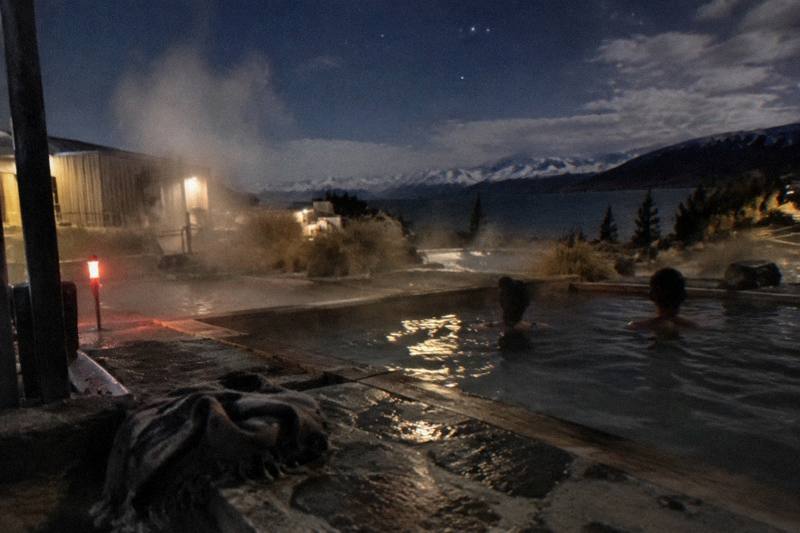
Hot Pools Vs Observatory Stargazing At Lake Tekapo: Which To Book
Two very different ways to spend a Lake Tekapo night: soaking in hot pools while a guide points out constellations, or riding a coach to a mountain observatory for serious telescope time. Here is how the formats compare on price, warmth, age limits and what happens when cloud arrives.
Short answer
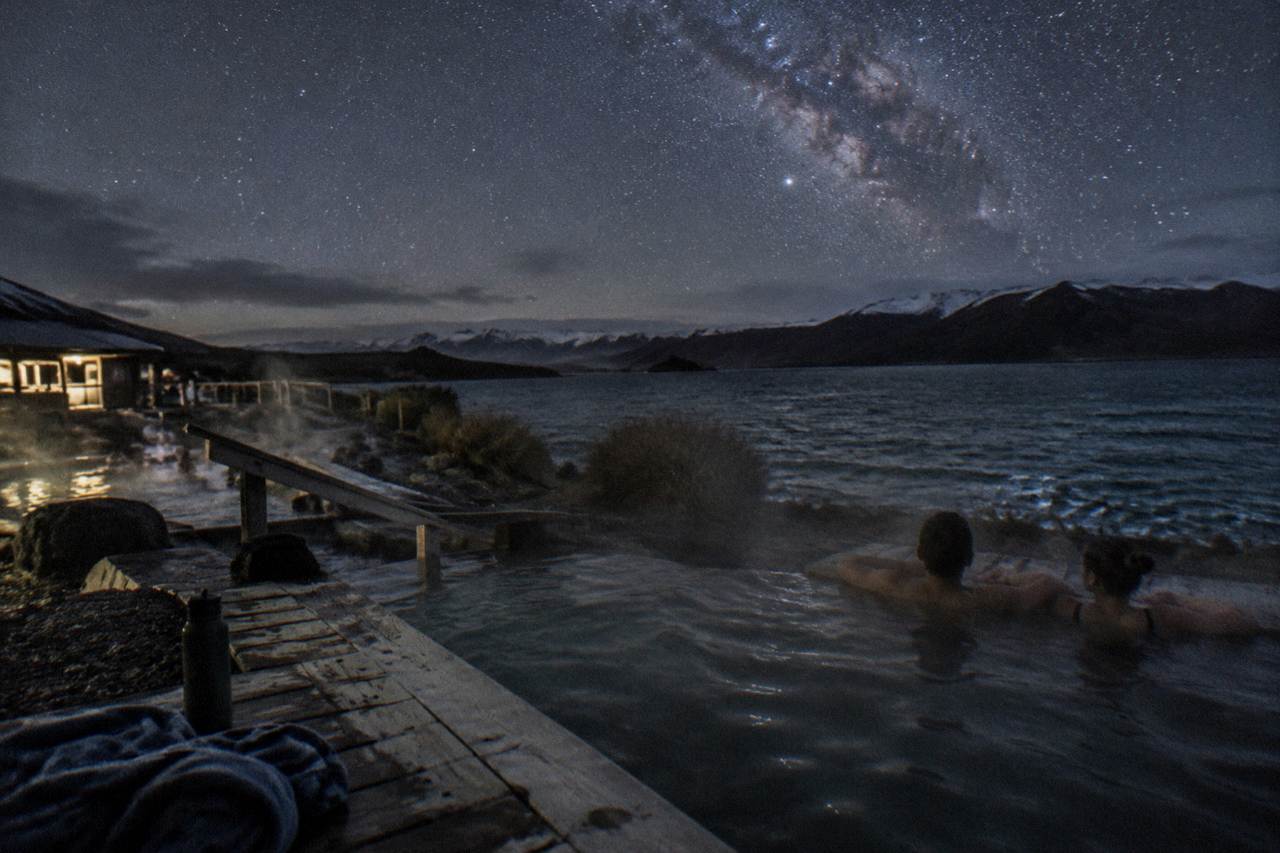
Soak in the Stars costs from $102.63 per person for 90 minutes in the hot pools with stargazing, minimum age 10. The observatory nights run from $78.00 for the 75 minute Crater Experience at Cowan's Observatory and from $135.00 for the 1 hour 45 minute Mount John Summit. The Crater tour takes children from age 5, the youngest of the three.
Tekapo's stargazing scene offers two fundamentally different nights out, and the choice between them shapes everything from how warm your feet are to how much telescope time you get. One format wraps the sky around a soak in hot pools at lake level. The other puts you on a coach and climbs to a working research observatory at 1,029 metres, or to a private observatory on the lakefront fringe, where the telescopes are the point.
The three tours most readers weigh against each other are Soak in the Stars, the hot pools and stargazing night run from Tekapo Springs at 300 Lakeside Drive, and the two Dark Sky Project observatory nights, the Mount John Summit Stargazing Experience and the Crater Stargazing Experience at Cowan's Observatory. All three meet in or near the Tekapo township, all three are guided, and all 12 booking pages for the tours covered here state free cancellation up to 24 hours before the start for a full refund. Beyond that, they diverge quickly. This guide compares them on the things that actually decide the booking: price, duration, warmth, minimum ages, telescope scale and each operator's own plan for cloudy skies. If you're still unsure whether a paid stargazing night earns its price tag, the verdict on whether a Tekapo stargazing tour is worth the money weighs cost, length and review pools across the operators before you commit.
What Is The Real Difference Between The Two Formats?
The hot pools tour is a bathing experience first, with stargazing built around the soak itself, while the observatory tours are true astronomy experiences, with transport and telescopes built around them rather than warm water. One centers on relaxing in hot water beneath the night sky, and the other centers on the sky itself. Soak in the Stars gives you 90 minutes with exclusive use of the hot pools, a floating hammock, a wool blanket and hot drinks, plus guided stargazing outside the pools. The Summit tour spends its 1 hour 45 minutes partly on a coach ride of about 15 minutes each way up Mount John, then naked-eye guiding with lasers, telescopes and a 16 inch telescope inside the dome. The Crater tour runs 75 minutes at Cowan's Private Observatory with 14 inch telescopes in purpose-built observation craters. Same sky, same reserve, three almost entirely different evenings on the ground.
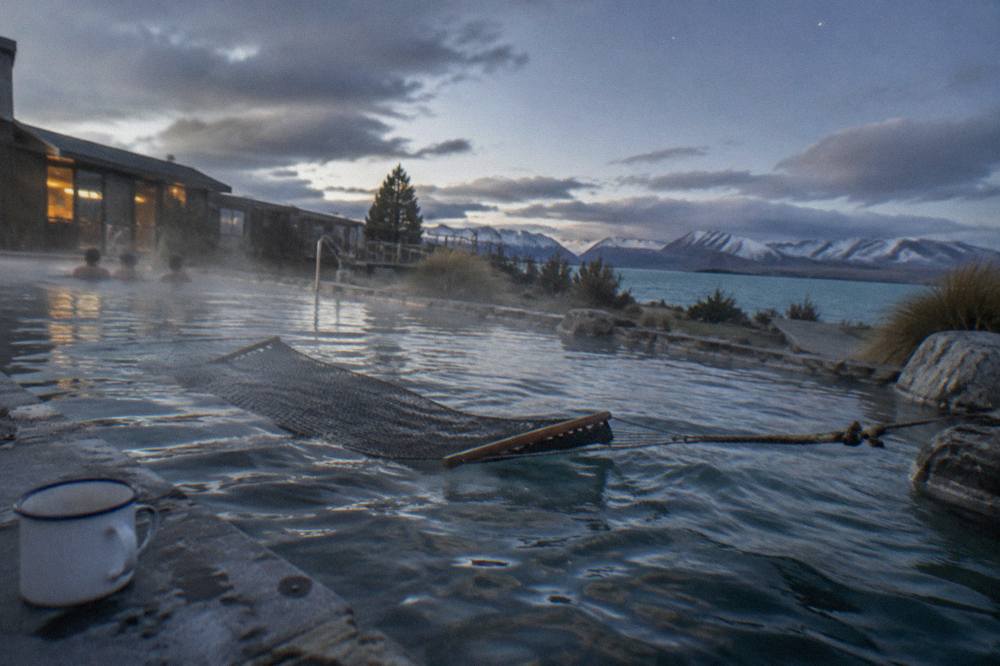
The difference in posture says a lot. On the pools night you are horizontal, warm and wet, and the sky is something you sink into between soaks. The operator runs guided stargazing outside the pools, and when cloud blocks the telescope there is a virtual reality session indoors instead. On the Summit night you are standing on an exposed mountain shoulder in whatever the season throws at you, dressed in thermals and, on that tour, a loaned extreme cold weather jacket. The reward is darker sky and larger instruments, plus the simple novelty of standing beside a working research observatory after dark.
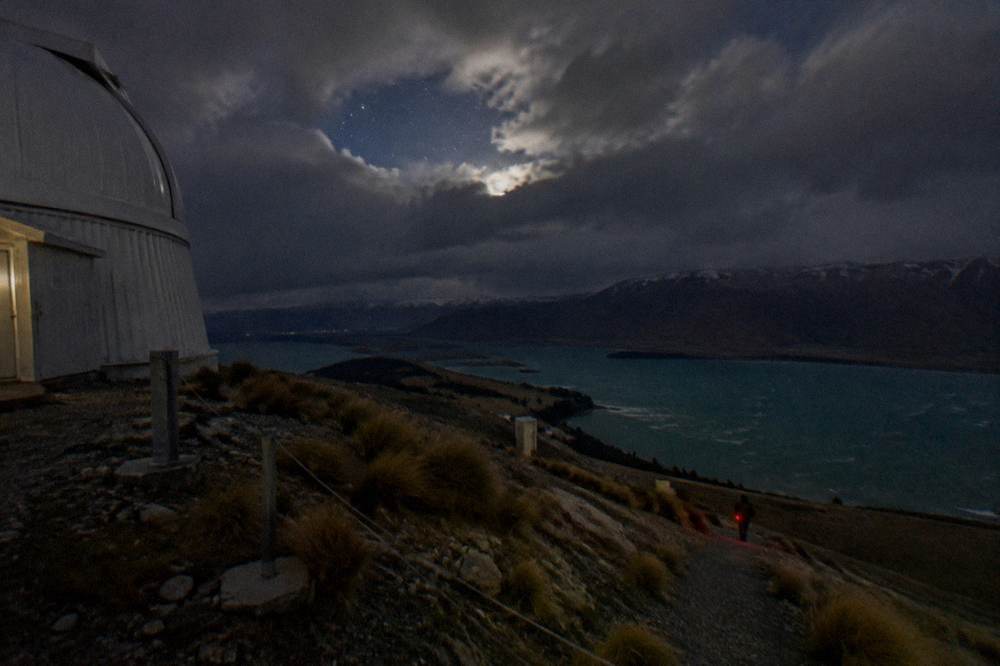
It is also a difference of altitude and access. The pools sit at lake level at Tekapo Springs. The Summit tour climbs to the Mount John Observatory summit, the University of Canterbury's research facility and New Zealand's largest professional research observatory, home to four research-grade telescopes used throughout the year. Visitors cannot drive up Mount John in the evening: night access is by the tour coach only, which is part of what you are paying for. The Crater tour stays lower, about a 5 minute drive from the Dark Sky Project base at 1 Motuariki Lane, at a private observatory whose observation craters are built to shelter from wind and light.
Neither format is the whole story of Tekapo stargazing, and there are small-group farm tours and Twizel options that split the difference on price. If you want the wider picture first, the Lake Tekapo stargazing tours compared guide lays out all three families side by side before you narrow to this two-way choice.
Which Costs More: Hot Pools Stargazing Or An Observatory Night?
The observatory answer depends on which night you pick: the hot pools stargazing at Soak in the Stars starts at $102.63 per person, which is pricier than the Crater Experience at $78.00 yet cheaper than the Summit Experience at $135.00, so the pools night costs more than one observatory option but not the other. The Crater tour is the least expensive of the three, and the pools tour undercuts the Summit by a little over $30 while including hot pool entry. All figures are per person, priced per person on the operators' own terms, and each tour carries the same booking rule of free cancellation up to 24 hours before the start for a full refund.
| Tour | Format | Duration | From (USD, per person) | Rating | Minimum age |
|---|---|---|---|---|---|
| Hot Pools and Stargazing (Soak in the Stars) | Hot pools plus guided stargazing, Tekapo Springs | 1 hour 30 minutes | $102.63 | 4.3 across 121 reviews | 10 |
| Mount John Summit Stargazing Experience | Coach to observatory summit, 1,029 m | 1 hour 45 minutes | $135.00 | 4.6 across 348 reviews | 10 |
| Crater Stargazing Experience at Cowan's Observatory | Private observatory, observation craters | 75 minutes | $78.00 | 4.6 across 91 reviews | 5 |
Price alone misleads here, because the three products include different things. The pools price carries hot pool entry, a hot drink and hotel pickup from the Tekapo township on request, subject to availability, the one tour of the twelve where pickup is offered. The Summit price carries the coach, a loaned extreme cold weather jacket and the dome's 16 inch telescope. The Crater price carries neither jackets nor a stated drink, so budget for warm layers you already own. Add up what you would otherwise pay for separately, a soak, a drink, a jacket for the cold, before assuming the cheapest ticket is the cheapest night.
Review pools differ in size and that matters when you read the ratings. The Summit's 4.6 comes from 348 reviews, the largest pool of the three. The pools tour's 4.3 across 121 reviews is the softest score of the group. The Crater tour's 4.6 across 91 reviews sits level with the Summit on a smaller sample. None of these numbers predicts your weather, and all three pools are large enough that the scores describe a real pattern rather than a handful of nights.
If price is the deciding lever and none of these three fits, the cheapest outdoor nights among the 12 tours are a three-way tie at from $56.00 per person, held by the Alpine Stargazing Experience at Lake Tekapo, the Mt Cook Stargazing Experience and the Japanese-language Zen tour in Twizel. Those are different formats again, and the tie means none of the three can be called the single cheapest night out. The Alpine tour is the one of the three that meets in Tekapo itself, checking in at 12 Rapuwai Lane before a shuttle to a private 50,000-acre farm site with 14 inch telescopes, astro-lasers and warm down jackets provided, so a tighter budget does not mean leaving the village.
Is The Hot Pools Tour Or The Observatory Better With Kids?
For children aged 5 to 9 the Crater Experience is the only one of the three that can take them, with a stated minimum age of 5; both the pools night and the Summit require age 10 or over at the time of the tour. That single number settles many family decisions before anything else is weighed, and it is worth checking passports and birth dates against it before you book rather than after. The Crater tour's observation craters also shelter from wind, which helps with younger bodies in the Mackenzie cold.
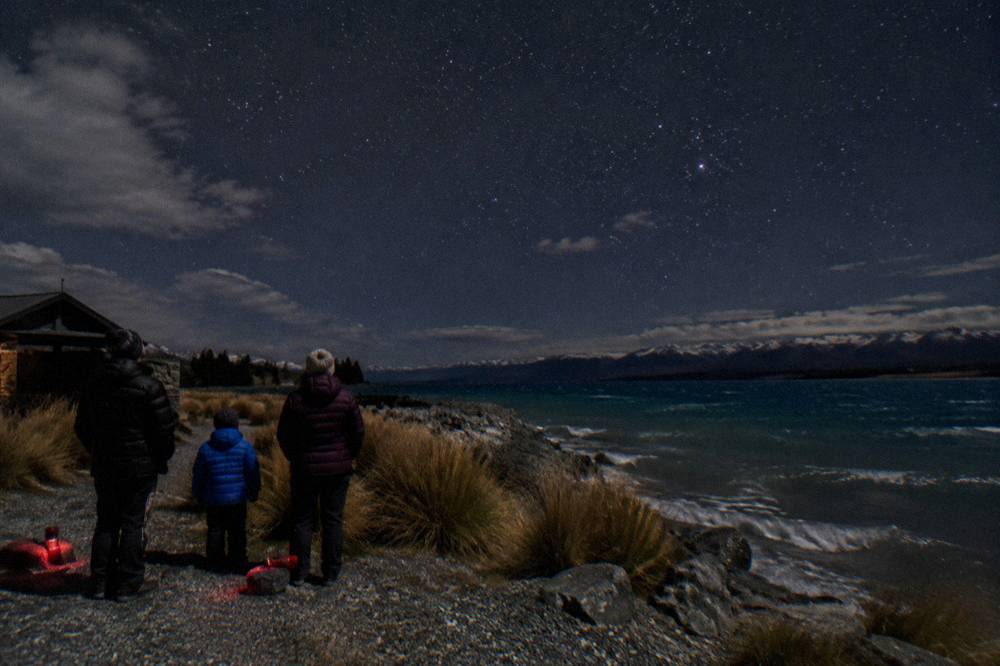
For children of 10 and over, the choice becomes about temperament. A ten-year-old who tolerates cold and wants to look through a big telescope will get more from the Summit, where guides share astrophotography tips and photos are allowed with the flash off. A ten-year-old who wilts at the word "thermals" will last the full 90 minutes of the pools night happily, because the worst case is a hot drink and a warm soak while the guide talks about the sky. Minimum ages are per tour and the other operators state none, as set out in the kids guide; for the full family picture see the Lake Tekapo stargazing with kids guide.
Worth knowing alongside the age rules: the pools night's minimum age of 10 pairs with an adults-only pool at Tekapo Springs, the Tekapo pool, so check which pool your family soaks in before booking. And the Summit tour requires moderate fitness, a 100 metre gravel incline plus a few steps in the dark, and is not wheelchair accessible, while the Crater tour can take wheelchair users who follow the coach in their own vehicle. Neither accommodation question is obvious from a booking page thumbnail, and both are worth an email to the operator before you book.
What Happens When Cloud Rolls In At Lake Tekapo?
Each of the three operators runs its own cloud plan, and they are not the same: the pools tour runs even when cloud blocks the telescope, with an indoor virtual reality session instead, while both Dark Sky Project tours offer an indoor alternative, a reschedule or a refund when outdoor stargazing is not possible. Reading the fine print before you book matters more here than in most destinations, because no operator can guarantee clear skies, the Milky Way or the southern lights, and the Mackenzie basin's changeable weather makes the fine print live on plenty of nights.
The pools operator's policy is the most unusual of the twelve. Soak in the Stars runs even if some or none of the sky is visible, switching to an indoor virtual reality session, and the hot pools stay included regardless. If fewer than 30 minutes of telescope viewing happen, a 25 percent refund applies. That policy is valid for tours from 18 June 2026 and belongs to this operator alone. For a traveller whose priority is the soak, the sky is effectively a bonus that cannot fully cancel your night, which is precisely why the format suits weather-hedged itineraries.
Dark Sky Project's own pages describe a different approach for its two observatory tours. The team decides as close to departure as possible, because forecasts are indicative and low cloud is often blocked by the basin's topography, so cloud alone does not always cancel a departure. If outdoor stargazing is not possible, guests are offered an indoor alternative, a reschedule, a voucher or a refund. The operator also notes that it cannot guarantee clear skies, the Milky Way or the Aurora Australis, and it runs no aurora tours, so anyone chasing the southern lights specifically is looking in the wrong place on any of these three nights.
The booking-layer rule sits on top of all three: every one of the 12 booking pages states free cancellation up to 24 hours before the start for a full refund. That is a booking rule, not a weather policy, and it will not help you at 9pm under thick cloud. For the deeper treatment of forecast-reading and cancellation timing, the Lake Tekapo stargazing weather and cloud cancellations guide covers the whole question.
How Do The Telescopes And Guides Compare?
The Summit tour offers the largest instrument of the three, a 16 inch telescope in the Mount John dome, the Crater tour offers 14 inch telescopes from its observation craters, and the pools tour pairs guided stargazing outside the pools with a virtual reality session indoors when cloud blocks the telescope. Telescope scale is where the observatory format earns its price, and the gap between a 16 inch dome instrument and a telescope beside a hot pool is real and visible in the eyepiece on a good night.
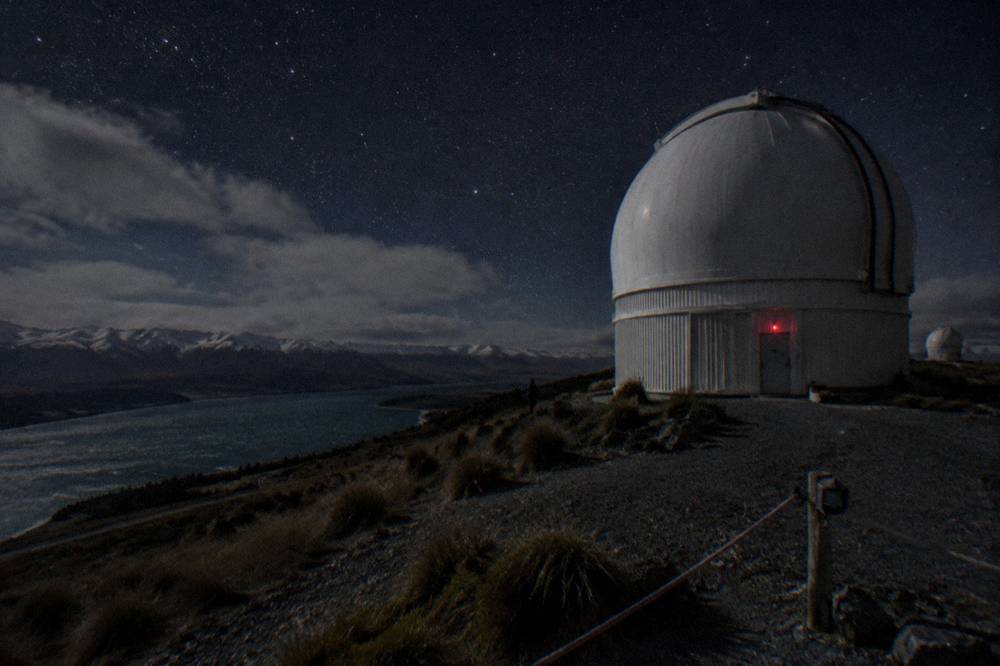
All three tours are guided, and the guiding styles differ with the settings. On the Summit, guides use lasers for naked-eye orientation before the telescopes, and the summit sits above much of the basin's ground light. At Cowan's Observatory, the craters themselves are the design feature: purpose-built hollows that shelter viewers from wind and stray light while the 14 inch telescopes work. At the pools, the guide works with whatever sky the night gives, moving between the soaking guests and the telescope outside.
| Tour | Telescope | Guiding style | Jacket loaned | Hot drink | Photo included |
|---|---|---|---|---|---|
| Mount John Summit | 16 inch telescope in the dome, plus telescopes and guide lasers | Naked-eye guiding then dome viewing | Yes, extreme cold weather jacket | - | Photos allowed, flash off; tips shared |
| Crater at Cowan's Observatory | 14 inch telescopes and a dome | Guided viewing from sheltered craters | - | - | - |
| Soak in the Stars | Telescope outside the pools; virtual reality indoors on cloudy nights | Guiding woven around the soak | - | Yes | - |
A dash in the table means the booking page does not say. What is safe to conclude: if the telescope is the reason you are travelling to a dark sky reserve, the Summit and Crater nights are built around it, and the Summit's dome instrument is the largest of the three. If the telescope is a nice extra to a warm evening, the pools format treats it that way.
The pools tour states no group maximum. The two Dark Sky Project tours state none either. Among Tekapo's other operators, the small-group tours cap at 10 or 14, if intimacy matters more to you than instruments, and the Lake Tekapo small-group stargazing tours guide compares those directly.
How Dark Is The Sky From The Pools Versus Mount John?
Mount John's summit at 1,029 metres sits above much of the basin's ground light, while the pools sit beside the village at lake level, and all three tours operate inside the Aoraki Mackenzie International Dark Sky Reserve, designated in 2012. The reserve spans 4,367 square kilometres across Aoraki / Mount Cook National Park and the Mackenzie Basin, and district plan lighting rules across the whole area, which is why even the village-adjacent pools enjoy a genuinely dark sky. DarkSky International lists the reserve's designation on its own pages at darksky.org.
Altitude is not the only variable. The moon matters as much as ground light on any given night, and a full moon washes out faint stars and the Milky Way while a new moon gives the darkest sky, as Dark Sky Project's own FAQ puts it. Computed for the Tekapo lakefront, November 2026 gives 4.1 to 6 hours of astronomical darkness per night with 13 nights offering 3 or more moon-free dark hours, while June 2027 stretches to about 11.3 to 11.5 hours with 20 such nights. Winter nights are longer, colder and, in Dark Sky Project's words, often the clearest and darkest.
For a full month-by-month breakdown of darkness hours and moon-free nights, the Lake Tekapo stargazing moon phase calendar carries the computed table for the year ahead. Choose your date before you choose your format, because a moon-free winter night flatters every format, and a full-moon summer night flattens all three. It is also fair to say the gap between the pools and the summit narrows on a moonless, still night, when even lake-level sky in a village delivers far more than most travellers expect.
Which Lake Tekapo Stargazing Format Should You Actually Book?
Book the hot pools night if warmth and comfort lead the decision, the Crater Experience if price or young children do, and the Summit if telescope scale and the mountain itself are the point of the trip. Each format serves a different priority, so the right choice depends on whether comfort, budget and family, or telescope scale tops your list. Each format wins cleanly on its own criterion, and no single tour wins all three, which is why the comparison stays alive in every booking window and why honest guides refuse to crown one overall champion. The right answer depends on who is travelling with you and what the forecast holds.
Warmth first. It is cold at Tekapo at night even in summer, Dark Sky Project says so plainly, and the Summit at 1,029 metres has high wind exposure and often snows in winter. The Summit loans a jacket; the Crater tour tells guests to layer up on their own. The pools tour is the only one of the three where the cold is optional, and for many travellers that decides it before any telescope is discussed. For the clothing checklist per tour, see what to wear on a Lake Tekapo stargazing tour.
| If this matters most | Book this tour | Why it wins |
|---|---|---|
| Staying warm no matter the sky | Soak in the Stars | The hot pools tour runs through cloud, and only severe weather such as snow, extreme ice or lightning cancels it |
| Lowest price of the three | Crater Experience | From $78.00 per person, 75 minutes, sheltered observation craters |
| Children aged 5 to 9 | Crater Experience | Minimum age 5, the youngest stated age of the three |
| Largest telescope | Mount John Summit | 16 inch telescope in the observatory dome at 1,029 m |
| Pickup from the township | Soak in the Stars | The only tour of the twelve with pickup, on request, subject to availability |
| Longest guided night | Mount John Summit | 1 hour 45 minutes including the coach each way |
Then practicalities. The pools tour is the only one of the twelve with hotel pickup, on request from the Tekapo township subject to availability; both Dark Sky Project tours state pickup is not included, and both check in at the base, 1 Motuariki Lane, about 15 to 20 minutes before departure. Same-day booking can be possible but tours often sell out, which cuts both ways when the forecast is uncertain. Roads at night can carry black ice, frost and wildlife in the cold months, so check conditions on the NZTA Journey Planner before driving to any meeting point.
Finally, honesty about the sky. None of the three operators promises stars, and this article will not either. What the comparison shows is which trade-offs each format makes with the sky it is given: the pools tour still gives you a warm soak when cloud blocks the sky, the Crater tour buys shelter and price, and the Summit buys darkness and instrument scale in exchange for cold and cost. Match the format to the traveller, and the sky becomes the bonus rather than the bet. Travellers who want the deepest dive into the observatory side before deciding can also read the Dark Sky Project Summit vs Crater Experience comparison, which splits the two observatory nights in finer detail than this two-format guide needs to.
Common Questions About Hot Pools Vs Observatory Stargazing At Lake Tekapo
Is The Hot Pools Stargazing Tour Or The Mount John Summit Tour Better?
They suit different travellers. Soak in the Stars, from $102.63, keeps you warm in the hot pools for 90 minutes with guided stargazing outside them, minimum age 10. The Summit, from $135.00, spends 1 hour 45 minutes on the mountain with a 16 inch telescope in the dome, a loaned jacket and cold conditions. If warmth leads, book the pools; if telescopes lead, book the Summit.
How Much Do Hot Pools Stargazing And Observatory Tours Cost At Lake Tekapo?
Soak in the Stars costs from $102.63 per person including hot pool entry. The Crater Stargazing Experience at Cowan's Observatory costs from $78.00 per person, and the Mount John Summit Stargazing Experience from $135.00 per person. All prices are per person as the operators present them.
Can Children Under 10 Do A Lake Tekapo Stargazing Tour?
Of these three, only the Crater Experience at Cowan's Observatory, with a minimum age of 5. Both Soak in the Stars and the Mount John Summit Experience require age 10 or over. Other Tekapo operators state minimum ages of 5 or 6, so families with younger children have options beyond these two formats.
What Happens If It Is Cloudy On The Night Of My Stargazing Tour?
It depends on the operator, and each policy belongs to its operator alone. The pools tour runs even when cloud limits the telescope, with an indoor virtual reality session instead and the pools still included, and a 25 percent refund applies if under 30 minutes of telescope viewing happen. Dark Sky Project decides close to departure for its tours and offers an indoor alternative, a reschedule, a voucher or a refund if outdoor stargazing is not possible.
Do The Hot Pools And Observatory Tours Both Have Telescopes?
All three include telescope viewing when the sky allows. The Summit has a 16 inch telescope in the Mount John dome, the Crater tour has 14 inch telescopes in sheltered observation craters, and the pools tour has a telescope outside the pools, with virtual reality indoors when cloud blocks it. The observatory tours are built around the instruments; on the pools night they are one element of the evening.
Can I Cancel A Lake Tekapo Stargazing Tour If My Plans Change?
All 12 booking pages for the tours covered here state free cancellation up to 24 hours before the start for a full refund. That is a booking rule rather than a weather policy, so weather-night decisions follow each operator's own cloud policy instead.