Does A Tekapo Stargazing Tour Include Telescope Viewing?
Telescope viewing is part of most Lake Tekapo stargazing tours, but the telescopes, viewing time and formats differ by operator. Here is what each of the 12 tours actually includes.
Yes, telescope viewing is a core part of eleven of the twelve Tekapo-area stargazing tours, with apertures ranging from 9.25 inch to 16 inch instruments, smart telescopes on some nights, and guided pointing rather than self-service equipment. The one exception is the Indoor Dark Sky Cultural Astronomy Experience, a 45 minute indoor exhibit where a restored 125 year old Brashear telescope is on display only, with no outdoor sky viewing.
That short answer covers the shape of the question, but the details decide which tour you actually enjoy. A telescope on a stargazing tour is not one uniform thing. On the Mount John Summit Stargazing Experience you get naked-eye time with guide lasers on the summit at 1,029 metres, then telescopes and a 16 inch instrument inside the observatory dome. On the Chameleon Stargazing Shared Tour the first half of the 90 minutes is deliberately naked eye, about 30 minutes, before the telescopes come out. Same town, same reserve, very different nights.
It also matters how much eyepiece time a small group allows. A group capped at 10 people sharing two or three instruments moves through the eyepiece quickly. A group of 20 moves slower. And on the hot pools night the telescope sits beside the pools rather than defining the evening, with an indoor virtual reality session if cloud blocks the view.
This page works through every tour covered here, what its telescope setup is, how the night is structured, and which trips give the most time at the eyepiece. Prices are per person in USD as shown on each booking page.
Which Lake Tekapo Stargazing Tours Include Telescopes?
Eleven of the twelve Lake Tekapo stargazing tours include live telescope viewing, spanning all three areas covered here: the village itself, the wider Tekapo sites, and the Mount Cook and Twizel starts. The Hot Pools and Stargazing night also offers telescope viewing outside the pools, while the only tour without it is the 45 minute indoor exhibit.
The split matters because travellers often book on price or timing alone and only later discover the format. The three Dark Sky Project tours are the Summit (1 hour 45 minutes, from $135.00, rated 4.6 across 348 reviews), the Crater Experience at Cowan's Observatory (75 minutes, from $78.00, rated 4.6 across 91 reviews) and the indoor session (45 minutes, from $34.70, rated 4.4 across 80 reviews). The five small-group Tekapo tours are Chameleon (90 minutes, from $73.00, rated 4.9 across 789 reviews), Alpine (75 minutes, from $56.00, rated 4.6 across 864 reviews), Ultimate (2 hours, from $125.56, rated 5.0 across 17 reviews), Astro Tekapo (90 minutes, from $59.00, 11 reviews) and the Hot Pools night (90 minutes, from $102.63, rated 4.3 across 121 reviews). The four Mount Cook and Twizel tours round out the twelve.
Most of the eleven outdoor tours name a guide and a telescope in their tour details, so the question is never whether an eyepiece appears, but what kind, how long you spend at it, and what surrounds it. The table below is the short version.
| Tour | Area | Telescope stated | Duration | From (USD) |
|---|---|---|---|---|
| Mount John Summit Stargazing Experience | Lake Tekapo | High-powered telescopes and an observatory dome on the summit | 1 hour 45 minutes | $135.00 |
| Crater Stargazing at Cowan's Observatory | Lake Tekapo | Powerful telescopes from purpose-built observation craters | 75 minutes | $78.00 |
| Indoor Dark Sky Cultural Astronomy Experience | Lake Tekapo | Restored 125 year old Brashear telescope on display only | 45 minutes | $34.70 |
| Chameleon Stargazing Shared Tour | Lake Tekapo | 9.25 inch telescope plus a smart telescope | 1 hour 30 minutes | $73.00 |
| Alpine Stargazing Experience with a Guide | Lake Tekapo | 14 inch telescopes and astro-lasers | 1 hour 15 minutes | $56.00 |
| Ultimate Stargazing Experience | Lake Tekapo | 16 inch telescope | 2 hours | $125.56 |
| Astro Experience (Astro Tekapo) | Lake Tekapo | Premium 9.25 inch telescope plus a smart telescope | 1 hour 30 minutes | $59.00 |
| Hot Pools and Stargazing (Soak in the Stars) | Lake Tekapo | Guided stargazing outside the pools, virtual reality indoors if cloud blocks the telescope | 1 hour 30 minutes | $102.63 |
| Mt Cook Stargazing Experience | Mount Cook | High-quality telescopes for deep sky observation | 1 hour 15 minutes | $56.00 |
| Twizel Stargazing Experience with a Guide | Twizel | Powerful telescope | 1 hour 15 minutes | $68.23 |
| Twizel Stargazing Tour with an Astronomer and Telescope | Twizel | Powerful telescope, laser-guided tour | 1 hour 15 minutes | $67.00 |
| Twizel Japanese-Language Zen Stargazing Experience | Twizel | Telescope viewing of the Moon, planets and star clusters | 1 hour 30 minutes | $56.00 |
If you are choosing primarily for eyepiece time, the two-hour Ultimate Stargazing Experience is the longest night of the twelve and carries a 16 inch telescope, the largest aperture on a small-group tour here. Its group cap is 10. It has 17 reviews, so the rating pool is small even though it reads 5.0. For the broadest review base, Chameleon's 789 reviews and Alpine's 864 reviews are the two largest pools among the tours covered here.
What Kind Of Telescopes Do Lake Tekapo Tours Use?
Apertures on Tekapo tours run from 9.25 inch to 16 inch, and several operators pair a main telescope with a smart telescope that stacks images on a screen. The Dark Sky Project Summit tour uses a 16 inch telescope inside the Mount John observatory dome; its Crater tour uses 14 inch telescopes from purpose-built observation craters; Chameleon and Astro Tekapo each run a 9.25 inch instrument plus a smart telescope. To see how those telescopes fit into each evening, the guide to the Dark Sky Project's Tekapo tours spells out what every experience includes, from the indoor session to the weather terms.
Aperture is the honest way to compare: a wider mirror gathers more light, which pulls fainter detail out of star clusters, nebulae and galaxies. On paper the Ultimate Stargazing Experience and the Mount John dome share the biggest instrument class at 16 inch, while the Alpine tour on Silver River Stargazing's private 50,000 acre farm site runs 14 inch telescopes plus astro-lasers, the handheld green pointers guides use to trace constellations for the naked eye.
The smart telescope is worth a word because it changes what you actually look at. On Chameleon and Astro Tekapo nights the smart telescope feeds a live stacked image to a screen, which shows colour in nebulae that the human eye through an eyepiece cannot resolve. Purists prefer the eyepiece; families with children often love the screen, because waiting at an eyepiece in the cold is harder for a six year old than watching a tablet image build. Astro Tekapo sets a minimum age of 6, Chameleon sets 5, and the Mount John Summit sets 10.
The choice of instrument also reflects the site. Cowan's Private Observatory, home of the Crater Experience, uses purpose-built observation craters, sunken enclosures that shelter viewers from wind and stray light, which is a genuinely different experience from standing in an open paddock. The Mount John summit at 1,029 metres gets you to the University of Canterbury's research observatory, New Zealand's largest professional research observatory, with four research-grade telescopes used throughout the year, and the public 16 inch instrument in the dome beside them. Visitors cannot drive up Mount John in the evening; night access is the coach only.
The Alpine tour is the value end of the telescope ladder: from $56.00 per person, 14 inch telescopes, astro-lasers, warm down jackets provided, a complimentary digital photo, and a group cap of 10. It checks in about 15 minutes early at Kiwi Treasure, the Lake Tekapo information centre at 12 Rapuwai Lane, then shuttles to the farm site. The companion page on small group stargazing at Tekapo compares it tour by tour.
Do You Spend The Whole Tour Looking Through The Telescope?
No tour here is continuous eyepiece time. Guides typically open with naked-eye orientation, constellations and sky stories traced by laser or by hand, then move the group to the telescopes for the second half of the night. Chameleon states this structure outright: about 30 minutes naked eye, then telescopes, across its 90 minutes. The Mount John Summit tour likewise mixes naked-eye time with guide lasers before telescopes and the dome.
This structure is not padding. Human eyes need several minutes to adjust, and a guide talking through the Southern Cross, the Magellanic Clouds and the Milky Way's glow while that adaptation happens is what makes the later eyepiece views land. A tour that parked you at a telescope in minute one would waste the best asset the Aoraki Mackenzie reserve has, a 4,367 square kilometre patch of protected darkness, designated in 2012, held partly by district plan lighting rules.
How the balance falls depends on group size and duration. With 75 to 90 minute tours and caps of 10 to 14, each guest usually cycles through several objects at one or two instruments. The Twizel Stargazing Experience with a Guide allows up to 20 guests, the largest cap among the outdoor tours, which means more waiting between views even with a powerful telescope. The indoor exhibit caps at 26, but as noted it is a display, not viewing.
Weather shapes the night too, and each operator handles it differently. Dark Sky Project says its team decides as close to departure as possible, that forecasts are indicative, and that low cloud is often blocked by the basin's topography so cloud alone does not always cancel; if outdoor stargazing is not possible, guests are offered an indoor alternative, a reschedule, a voucher or a refund. Astro Tekapo offers a full refund if sky conditions are too cloudy for stargazing. Stargaze Mackenzie in Twizel runs only in clear conditions and offers a refund or reschedule if cancelled. Silver River Stargazing's own policy is reschedule or refund by preference and availability. These are each operator's terms, not a shared rule, and none of them can promise a clear sky, the Milky Way or the southern lights. Those flexible reschedule and refund policies are easier to use when seats remain, so the guide to booking a Lake Tekapo stargazing tour in advance explains which operators sell out first and how far ahead to reserve.
Does The Hot Pools And Stargazing Tour Include Telescope Viewing?
Yes, the Hot Pools and Stargazing night includes guided stargazing with telescope viewing outside the Tekapo Springs hot pools, and the 90 minute experience also gives you exclusive evening use of the pools, a floating hammock, a woolen blanket and hot drinks, from $102.63 per person with a minimum age of 10. It is the only tour of the twelve with hotel pickup, on request from the Tekapo township and subject to availability.
The telescope here serves the evening rather than leading it. You soak, you drift in the hammock, and the guide brings the sky to the group outside the pools. Where this tour differs sharply from every other night here is its cloud policy: the tour runs even if some or none of the sky is visible, switching to an indoor virtual reality session while the hot pool entry stays included, and a 25 percent refund applies if under 30 minutes of telescope viewing happens, under a policy the operator applies to tours from 18 June 2026. If snow, extreme ice or lightning cancels the night you get an alternative date or a full refund.
That makes it the right choice for a traveller whose first priority is the soak and whose second is the sky, and the wrong choice for someone counting eyepiece minutes. At 4.3 across 121 reviews it is the lowest-rated of the Tekapo outdoor tours.
The full hot pools and stargazing tour guide covers the evening in detail, and the hot pools vs observatory comparison weighs it against the Mount John nights for telescope-first visitors.
What About The Indoor Dark Sky Session?
The Indoor Dark Sky Cultural Astronomy Experience, from $34.70 per person for 45 minutes, is a guided indoor exhibit with no outdoor sky viewing and no telescope viewing of the live sky; its telescope is a restored 125 year old Brashear telescope on display, and the session walks through four zones including Maori understanding of the sky. It is weather independent and operates with a group cap of 26.
Calling it stargazing would be misleading, and the tour details do not claim it. What it is, is a good bad-weather option and a genuine cultural briefing: the Maori navigation and calendar tradition around the night sky is real content that the outdoor tours touch only briefly. At 4.4 across 80 reviews it holds its own. Families with very young children, for whom a 10 pm outdoor start in the cold is a stretch, sometimes pair the indoor session with a DIY look at the free lakeside spots on another night.
If a telescope under a real sky is what you came for, put your money on any of the outdoor tours instead. The price gap is real, from $34.70 indoor versus from $56.00 for the least expensive outdoor nights, but the outdoor floor is lower than many visitors expect.
Can You Get Telescope Viewing Near Mount Cook And Twizel?
Yes, four tours outside Lake Tekapo village include telescope viewing: the Mt Cook Stargazing Experience meets at the Tasman Glacier Car Park from $56.00, and three Twizel tours run from $56.00 to $68.23, including a 5.0 rated astronomer-led option across 77 reviews and a Japanese-language tour. Mount Cook and Twizel sit inside the same Aoraki Mackenzie reserve, so the darkness is the same protected sky.
The Mt Cook Stargazing Experience, run by Silver River Stargazing, rated 4.8 across 17 reviews, meets at the Tasman Glacier Car Park on Tasman Valley Road, about 1 hour 15 minutes by road from Tekapo village, and brings high-quality telescopes for deep sky observation with a complimentary photo. There is no transfer from Tekapo implied here; you drive yourself to the car park. The Hermitage hotel also runs its own Big Sky Stargazing inside the national park, which sits outside the tours covered here, so treat it only as a neighbouring option to research separately.
In Twizel, the Stargaze Mackenzie tour, Twizel Stargazing Tour with an Astronomer and Telescope, from $67.00, rated 5.0 across 77 reviews, is the strongest review story of the four: a powerful telescope, a laser-guided tour, a minimum age of 6, a photo included, and a weather policy of running only in clear conditions with a refund or reschedule if cancelled. It meets at 50 Kate Cameron Drive in Twizel. The Twizel Stargazing Experience with a Guide, from $68.23, runs up to 20 guests from the Mackenzie Country Hotel corner with a powerful telescope. And the Zen Stargazing Experience is a Japanese-language night, from $56.00, meeting at Market Place in Twizel, with telescope viewing of the Moon, planets and star clusters, a hot drink and a photo; it is a new listing with no reviews yet, so there is no rating to report.
None of the Twizel or Mount Cook tours implies a pickup from Tekapo; each states its own meeting point, and in the cold months SH8 and SH80 between them can carry black ice, frost, freezing fog and stock or wildlife after dark, so the NZTA Journey Planner is the place to check conditions before driving to a start point.
How Much Telescope Time Do You Get For Your Money?
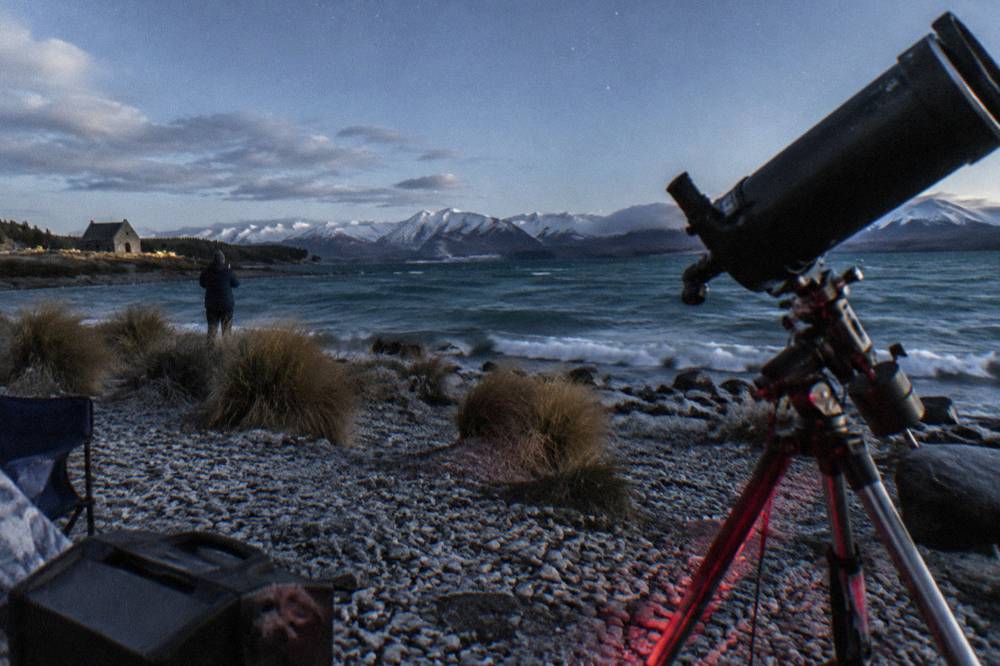
Prices for telescope time run from $56.00 per person, the shared floor rate for the Alpine tour at Tekapo, the Mt Cook tour and the Japanese-language Zen tour in Twizel, up to the premium Mount John Summit from $135.00 and the two-hour Ultimate from $125.56, which deliver the dome experience and the longest night respectively, and all twelve booking pages allow free cancellation up to 24 hours before the start for a full refund.
Duration per dollar is not the whole story, but it is a fair filter. The Ultimate Stargazing Experience at 2 hours from $125.56 gives the most total night for the money at the top end, with a 16 inch telescope, a group cap of 10 and a photo included. The Mount John Summit at 1 hour 45 minutes from $135.00 buys something no other tour can: the summit observatory, coach transport up the private road, an extreme cold weather jacket loaned, and a 16 inch telescope in the dome, with a minimum age of 10. The Crater Experience at 75 minutes from $78.00 is the mid-price Dark Sky Project option with a minimum age of 5 and those sheltered observation craters.
At the value end, note that the tie is genuine: Alpine at Tekapo, Mt Cook and Zen in Twizel all sit at $56.00, and none of the three is the single cheapest. Alpine is the only one of the three with a large review pool, 4.6 across 864 reviews, plus provided jackets and a photo. For a deeper look at the Alpine Stargazing Experience, the tour page carries the full detail. Chameleon at $73.00 sits slightly above the floor and adds a hot chocolate with marshmallows, blankets, seats and a digital souvenir photo to a 9.25 inch plus smart telescope setup, capped at 14 guests, minimum age 5.
One timing note that telescope hunters underrate: the Moon is not the enemy. Around full moon the faint deep sky objects suffer, but the Moon itself, planets and bright star clusters through a 14 or 16 inch telescope can be spectacular, and several tours here, Zen in Twizel included, name exactly those targets. The moon phase calendar page on Lake Tekapo Stargazing works through which nights give three or more moon-free dark hours.
Which Lake Tekapo Tour Gives The Most Telescope Viewing?
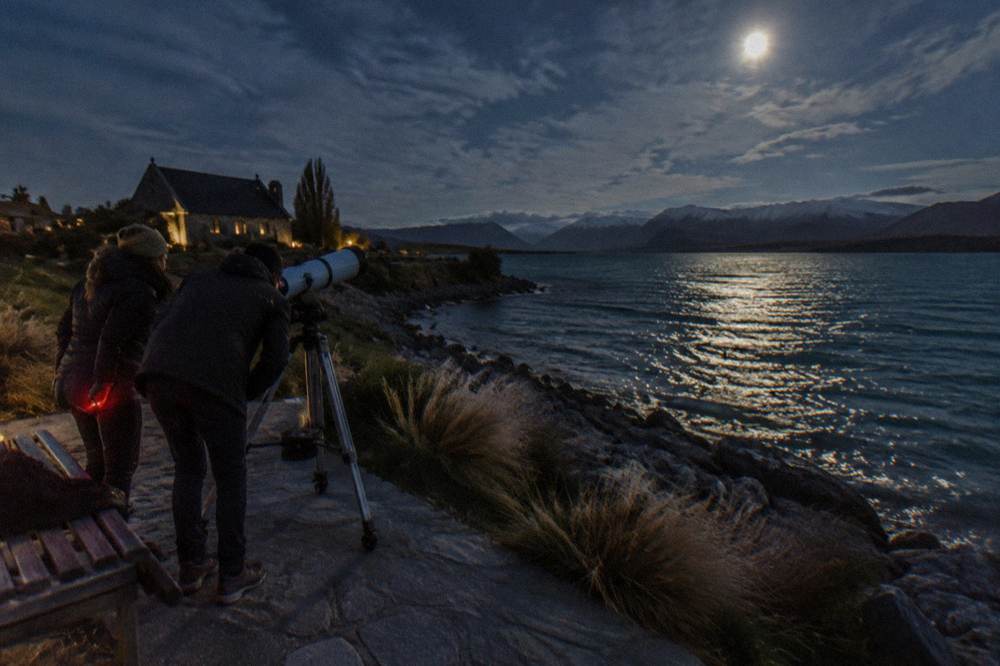
For pure eyepiece priority, the two-hour Ultimate Stargazing Experience with its 16 inch telescope and cap of 10 gives the longest structured night, while the Mount John Summit pairs a 16 inch dome telescope with the summit's research-observatory setting. For value, the Alpine tour's 14 inch telescopes and 10 person cap from $56.00 is the strongest combination of aperture, intimacy and price among the 12 tours covered here.
Think of it as three honest tiers. Tier one is instrument and setting: Mount John Summit and Ultimate. Tier two is small-group intimacy and inclusions: Alpine, Chameleon and Astro Tekapo, all capped at 10 or 14, two of them with hot drinks and photos included. Tier three is format: the hot pools night if the soak leads, the indoor exhibit if weather or young children rule the evening out, and the Mount Cook or Twizel starts if your base is elsewhere in the Mackenzie.
Booking behaviour is the last practical point. Dark Sky Project says same-day booking can be possible but tours often sell out, and the smaller operators run genuinely small caps, so a summer visit, when darkness itself starts close to midnight and tour slots compress into fewer hours, sells out fastest. The reserve's own designation is held by DarkSky International, which lists Aoraki Mackenzie as an International Dark Sky Reserve designated in 2012; the darkness is protected, your seat on the coach is not, until you book it. Every booking page states free cancellation up to 24 hours before the start for a full refund, so early booking carries little risk.
Common Questions About Telescope Viewing On Tekapo Tours
Does A Tekapo Stargazing Tour Include Telescope Viewing?
Yes. Eleven of the twelve tours covered here include live telescope viewing, with apertures from 9.25 inch to 16 inch and smart telescopes on some tours. The exception is the Indoor Dark Sky Cultural Astronomy Experience, a 45 minute indoor exhibit where a restored 125 year old Brashear telescope is on display only, with no outdoor sky viewing.
Do All Lake Tekapo Stargazing Tours Have Telescopes?
All except the indoor exhibit. The Mount John Summit tour uses high-powered telescopes and a 16 inch telescope in the observatory dome, the Crater tour uses 14 inch telescopes from purpose-built observation craters, Chameleon and Astro Tekapo each run a 9.25 inch telescope plus a smart telescope, and the Ultimate tour uses a 16 inch telescope.
Is The Telescope Viewing Guided Or Do You Use It Yourself?
Guided. Most tours name a guide, and guides point the instruments at targets and talk you through what you are seeing. Nights typically open with naked-eye orientation, constellations traced by laser or by hand, before the group moves to the telescopes; Chameleon states about 30 minutes of naked-eye time first.
What Happens To The Telescope Viewing If It Is Cloudy?
It depends on the operator, and each sets its own terms. Dark Sky Project offers an indoor alternative, a reschedule, a voucher or a refund if outdoor stargazing is not possible. Astro Tekapo offers a full refund if sky conditions are too cloudy. The Hot Pools tour runs with an indoor virtual reality session instead and applies a 25 percent refund if under 30 minutes of telescope viewing happens. No operator can promise a clear sky.
Which Tekapo Stargazing Tour Has The Biggest Telescope?
The largest apertures are the 16 inch telescopes on the Mount John Summit tour, inside the observatory dome at 1,029 metres, and on the two-hour Ultimate Stargazing Experience. The Alpine tour runs 14 inch telescopes, and Chameleon and Astro Tekapo run 9.25 inch instruments paired with a smart telescope.
Do Children Get To Use The Telescopes Too?
Yes, subject to each tour's minimum age: 5 at the Crater tour and Chameleon, 6 at Astro Tekapo and the Stargaze Mackenzie tour in Twizel, and 10 at the Mount John Summit and the Hot Pools night. The other tours state no minimum age. Smart telescopes with a screen view, on the Chameleon and Astro Tekapo nights, are often the easiest start for younger children.